AI古装男性绘画进阶:古代公子与侠客英雄的服饰角色视觉设计
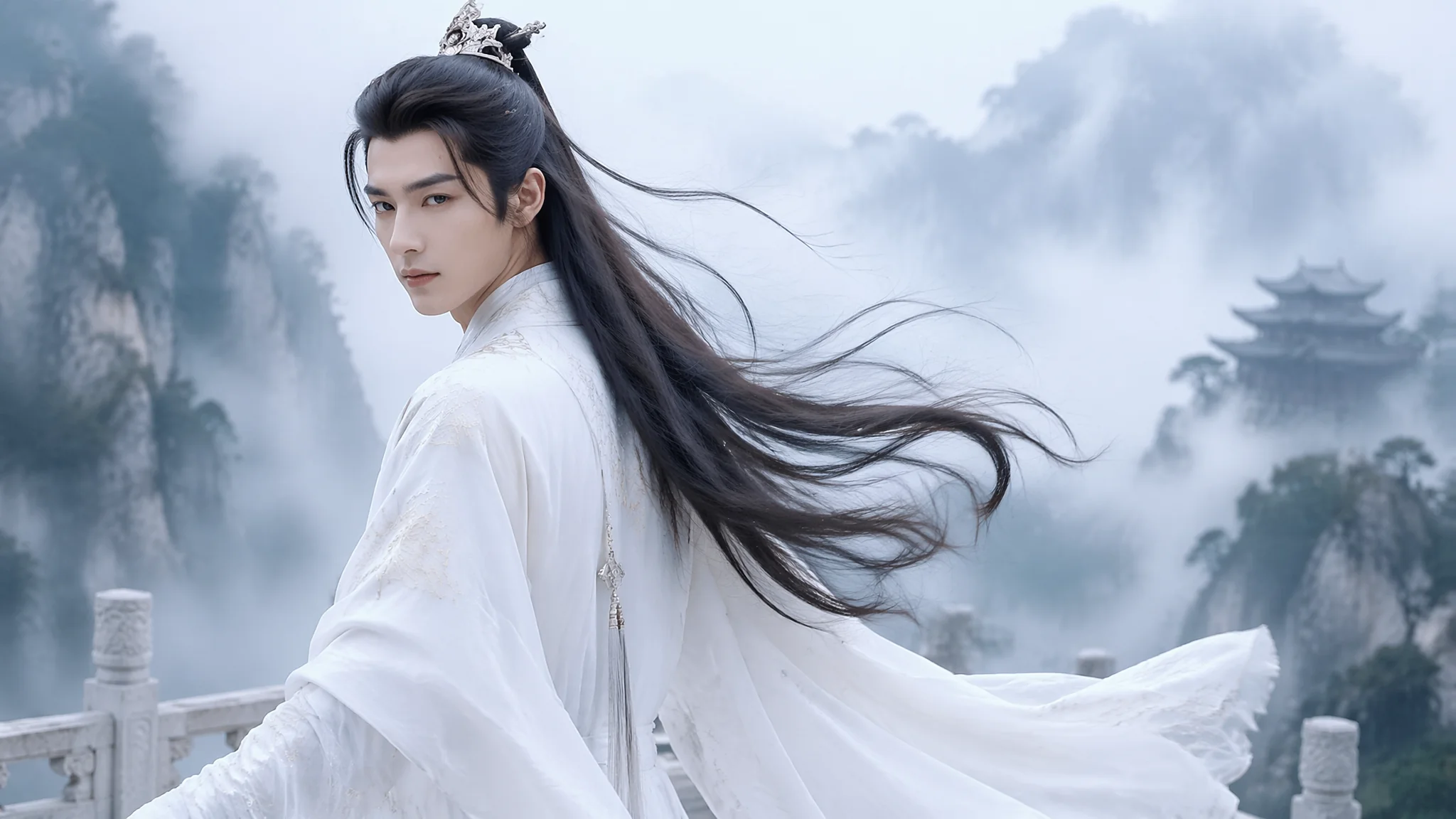
我有一个写古风网文的朋友——他的小说封面需要一张"白衣公子月下独酌"的插图。他找我帮忙用AI生成,说"一个穿白色古装的帅哥坐在屋顶上喝酒就行了,很简单的"。我花了三个晚上才明白这句话里面有多少坑。第一个晚上,"white ancient Chinese robe"出来的衣服是一团白色——没有层次、没有褶皱、没有面料质感,看着像套了一个白色塑料袋。第二个晚上,"sitting on rooftop drinking"的pose老是歪——要么身体悬空在瓦片上方,要么酒杯穿过了手指。第三个晚上解决了"月下"的光线——月光不能太亮(会冲掉白衣的细节),也不能太暗(脸就看不见了)。最后他拿到图说"这张就很对——衣角被风吹起来那一下,有江湖的味道"。今天把这套古装男性角色从"穿古装的男人"升级到"有朝代有身份有气质的古代男性"的完整方法写出来。
古代男性服饰的朝代坐标——汉唐宋明四个时代的视觉特征对照
AI不会区分朝代——你写"ancient Chinese male clothing",AI返回的是一个大杂烩:汉朝的深衣+唐朝的圆领袍+宋朝的方巾+明朝的补服混在一起。正确做法是指定朝代的建筑词汇。汉代特征:"Han dynasty style——the garment is a deep robe (shenyi) with wide sleeves and a wrap-around closure, the fabric is plain silk in deep colors (black, crimson, dark blue) with minimal embroidery, a simple cloth head covering (jin) or a small hat (guan), the overall silhouette is dignified and restrained"。唐代特征:"Tang dynasty style——a round-collared robe (yuanlingpao) with narrow sleeves for daily wear, vibrant colors like deep red, purple, and gold are common, a leather belt with decorative plaques around the waist, a fu tou (a type of head wrap with two wing-like extensions), the silhouette is confident and open reflecting Tang cosmopolitanism"。宋代特征:"Song dynasty style——a straight-sleeved long robe (zhiduo) in muted refined colors like pale blue, celadon, and dove gray, the fabric is finer and lighter than Tang, a square scholar's cap (fangjin) or a soft head wrap, the silhouette is slender and scholarly, the overall look is intellectual and restrained"。明代特征:"Ming dynasty style——a round-collared official's robe with a square rank badge (buzi) on the chest, the fabric is rich brocade with dragon or cloud patterns, a black gauze official's hat (wushamao) with rigid wing extensions, the silhouette is formal and imposing"。这四种风格在Prompt中必须明确朝代名+特征服饰名——"Han dynasty shenyi"比"ancient Chinese robe"准确一百倍。朝代服饰的系统知识可以在中国国家博物馆的数字展厅里找到各朝代服饰的实物照片。古风绘画的基础框架参考AI古风绘画。
四大古装男性原型的完整Prompt体系——文人、侠客、将帅、修士
文人公子(魏晋/宋代风)——关键词是"清、雅、逸"。Prompt:"a refined scholar-gentleman standing beneath a flowering plum tree——he wears a flowing white silk robe with wide sleeves and a blue-grey outer gauze robe (dachang) over it, a white jade hairpin secures his half-up hairstyle, he holds an open scroll of poetry in one hand while the other gently touches a plum blossom branch, the expression is contemplative with a hint of a gentle smile, the build is tall and slender, the atmosphere is serene and cultured"。侠客剑客——关键词是"冷、孤、劲"。Prompt:"a lone swordsman walking through a bamboo forest in the rain——he wears a dark indigo cross-collar robe with the right sleeve torn and tied back with a leather strap, a worn straw hat shields his face, a simple longsword (jian) is strapped diagonally across his back, a gourd of wine hangs from his belt, his hair is partially loose with strands clinging to his damp face, the expression is unreadable but there is a deep weariness in his eyes"。将帅戎装——关键词是"雄、威、重"。Prompt:"a military general in full Song or Ming dynasty armor standing on a battlefield ridge——he wears layered lamellar armor (shanwenjia) over a deep red battle robe, a flowing cape billows behind him in the wind, a commander's helmet with a red tassel, one hand rests on the hilt of a massive sword planted in the ground, the expression is grim and determined, smoke rises from the battlefield below"。仙侠修士——关键词是"虚、仙、逸"。Prompt:"a Daoist cultivator floating above a mountain peak at dawn——he wears layered white and pale blue robes that defy gravity, the fabric flows and swirls as if underwater, a floating sword hovers beside him, his long white hair streams upward in the celestial wind, a faint glowing aura surrounds his body, the expression is transcendent and otherworldly"。四种原型的骨骼差异:文人——清瘦纤细;侠客——精瘦有肌肉线条;将帅——宽肩壮硕;修士——不食人间烟火的仙气。体型的差异和服饰一样重要——同一个人穿不同的古装,但体型不对角色就不成立。角色原型设计的更多思路参考AI角色设计教程。
古风场景与道具——让角色"活"在古典世界里的关键要素
古装角色脱离了古典场景就像一个演员站在了错误的舞台上。四个场景模块:建筑、植物、气象、道具。建筑模块——文人场景:"a traditional Chinese scholar's garden with a moon gate, a small pavilion (ting) on a rockery, a koi pond reflecting the moonlight, Taihu stones arranged aesthetically"。侠客场景:"a simple thatched hut inn at a mountain pass, wooden tables worn smooth by years of use, lanterns hanging from the eaves, a distant mountain range visible through the open window"。将帅场景:"a military camp at night with rows of tents, a central command tent with a war map table, torches flickering in iron holders, weapons stacked in racks"。仙侠场景:"a floating immortal realm with jade palaces drifting among clouds, giant spirit beasts flying in the distance, crystalline trees with glowing fruits, waterfalls that flow upward"。植物也是朝代标志——梅兰竹菊(文人四君子)、松树(长寿坚韧)、桃花(仙侠/世外桃源)。道具模块——文人:书卷、古琴、酒樽、折扇、围棋。侠客:长剑、酒葫芦、斗笠、蓑衣、马。将帅:印信、虎符、令旗、战鼓、长枪。修士:拂尘、葫芦、飞剑、八卦镜、丹炉。场景与道具的组合就是角色的"故事暗示"。更多古风场景构造参考AI背景场景绘画和AI奇幻世界绘画。
古装男性的气质与动态——从"站桩"到"活人"的姿态设计
AI画古装男性最容易出现的问题不是衣服不对——而是人物站得像服装店的塑料模特。静态站桩→有动作→有情绪→有故事,是古装角色从及格到高级的四级跳。文人的动态——"the scholar is in the middle of writing calligraphy——his right hand holds a brush hovering just above the paper, his left hand holds back the flowing sleeve, ink droplets have splattered on the corner of the paper, his expression is focused and inspired, the brush is about to make the final stroke of a poem"。侠客的动态——"the swordsman is leaping across the rooftops at night——his body is horizontal in mid-air, his robe and hair trail behind him, one hand balances while the other reaches for the next roof edge, the full moon silhouettes his figure, the moment is frozen at the peak of motion"。将帅的动态——"the general is pointing forward with his sword while turning back to rally his troops——his cape swirls dramatically, his warhorse rears up beneath him, his mouth is open in a battle cry, the flag bearer behind him leans into the wind"。修士的动态——"the cultivator is forming a hand seal with glowing spiritual energy condensing between his palms——his robes float weightlessly, his hair rises gently as if unaffected by normal gravity, the energy forms a complex glowing array of light characters"。动态的核心是"捕捉一个正在发生的故事瞬间而非一个摆好的姿势"。姿势设计的更多技巧参考AI人物姿势设计与动态构图指南。关于古风场景的视觉灵感可以到Pixiv搜"古風"标签——日本画师对"中国古风"的理解虽然偶有偏差但动态构图非常值得学习。
常见问题
AI画的古装男性总是"男生女相"——过于阴柔不像古代男性?
这是AI训练数据中"美男子"标签偏向女性化特征导致的。强化男性骨相:"masculine facial bone structure——defined jawline, prominent brow ridge, straight nose bridge, the face is handsome but distinctly male not androgynous, the skin has natural texture not airbrushed smooth"。加年龄感也有帮助:"the character is a mature man in his late twenties or early thirties with subtle signs of age like faint smile lines——he is not a teenage idol"。
古代盔甲的金属质感AI总是画得像"塑料壳"——怎么调?
金属材质的关键词:"polished iron lamellar armor with a dark metallic sheen——the metal plates show subtle scratches and wear from battle, the surface reflects cold light in sharp specular highlights, the armor is functional and battle-worn not decorative or pristine"。加"battle-worn"和"scratches"立刻把塑料感转成了金属感。
能把古装角色画成"水墨画风格"——融入中国传统绘画美学?
可以,用风格化叠加Prompt:"ink wash painting style (shuimo hua)——the character and background are rendered in black ink with varying concentrations creating shades from deep black to pale gray wash, the brushwork is expressive and loose with visible brush strokes, splashes of ink create atmospheric effects, negative space is used extensively, a single red seal stamp (chop) in the corner, the overall feel is that of a traditional Chinese hanging scroll painting"。水墨风格更多技巧参考AI动漫风格绘画里关于传统绘画风格的部分。