AI古埃及文明绘画:法老金字塔与尼罗河畔的辉煌历史视觉再现
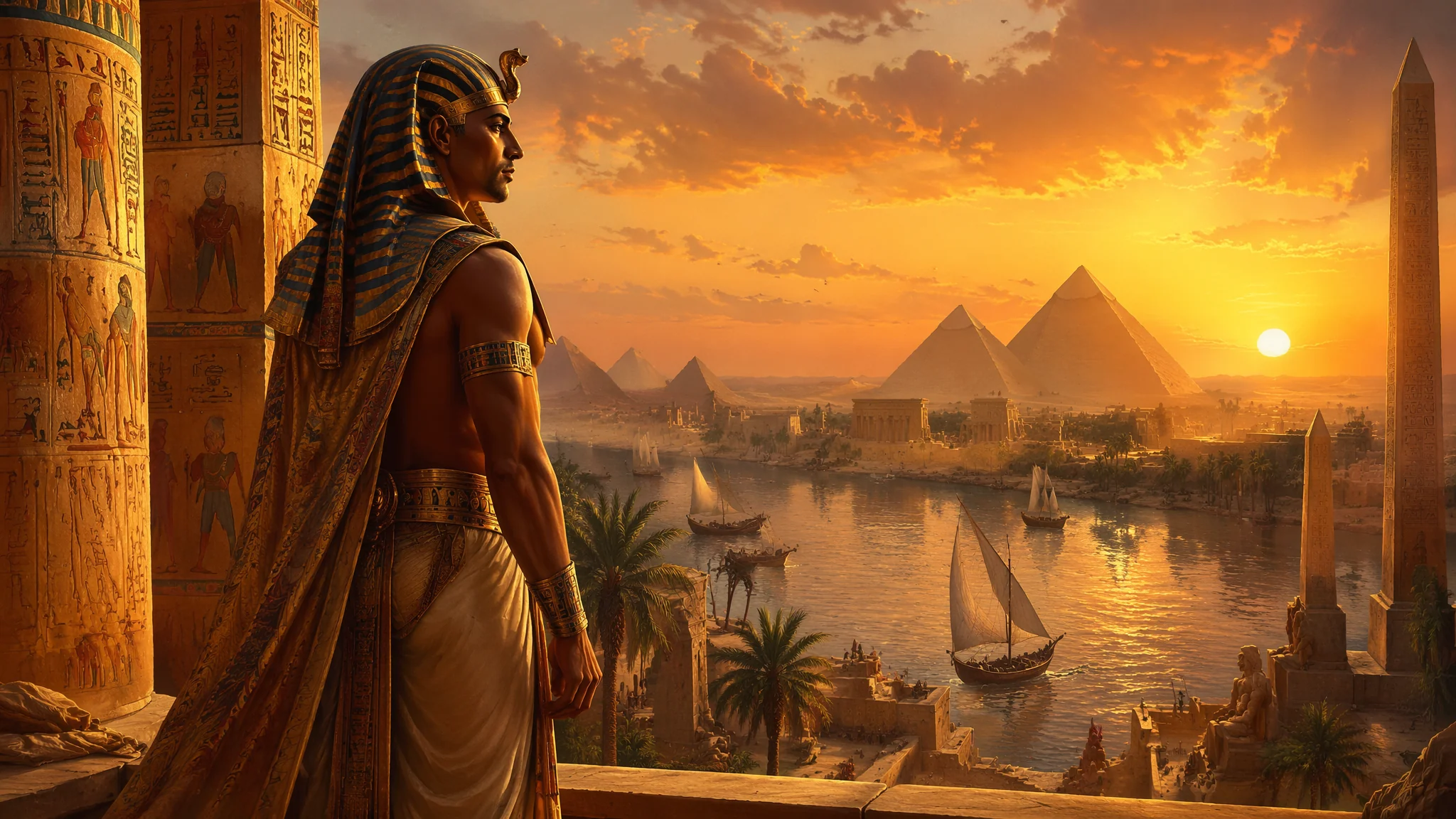
我一直觉得古埃及是人类文明史上最"AI友好"的视觉题材——因为古埃及艺术的语法本身就是高度程式化的:正面律(人物头和腿是侧面、眼睛和肩膀是正面)、分层叙事(画面从上到下按重要性排列)、象形文字作为画面不可分割的装饰元素——这些高度规则化的视觉语法和AI的工作方式(从规则中学习模式)天然契合。但第一次用AI画古埃及场景我就踩了大坑:写"ancient Egypt"生成的图充满了《木乃伊》电影的金色沙尘滤镜和好莱坞式的异域想象,而真正古埃及文明的那种干燥、锐利、几何化的视觉质感荡然无存。要让AI还原真正的古埃及美学而非好莱坞的埃及想象,需要一套完全不同的Prompt策略。
古埃及文明跨度超过三千年——从早王朝到托勒密时期,建筑风格、服饰细节、艺术语法都在演变。但AI对"ancient Egypt"的理解全部压缩成了三个视觉锚点:金字塔+金色沙漠+眼线妆。这三个元素本身没错,但仅仅三个元素无法区分"新王国时期的底比斯神庙"和"旧王国时期的吉萨金字塔群"——它们是跨越一千多年的不同文明阶段。做古埃及AI绘画的第一步不是写Prompt——是明确你要画的是哪个时期的古埃及。如果不写清楚时期,AI默认给你一个"所有历史时期搅拌在一起的埃及大杂烩"。关于历史文明AI绘画的更多方法论,AI中国古代风格绘画中有关类似的历史还原思路。
古埃及建筑的Prompt拆解——金字塔不是三角锥,神庙不是石头堆
AI对"金字塔"的默认理解是一个光滑的纯金色三角锥立在纯色沙漠上——和真实的吉萨金字塔群差距巨大。真实的金字塔表面原本覆盖着白色石灰岩外壳(大部分已脱落),周围有葬祭庙和堤道,背景也不是一望无际的纯沙漠。吉萨金字塔群的正确Prompt:"the Giza pyramid complex as it may have appeared in the Old Kingdom period, the Great Pyramid still covered in smooth white Tura limestone casing gleaming under the harsh Egyptian sun, the pyramidion at the apex possibly capped with electrum, the surrounding funerary temples and causeways connect to the Nile in the distance, the desert is not empty —— workers, priests, offerings, and boats are visible providing scale against the monumental architecture, the sky is a cloudless deep blue"。神庙建筑的Prompt:"the hypostyle hall of an Egyptian temple, massive sandstone columns carved to resemble papyrus bundles, each column covered in deeply incised hieroglyphs and painted in the original vibrant colors —— lapis blue, ochre red, malachite green —— that have survived in the protected interior, shafts of sunlight pierce through clerestory windows creating dramatic light beams through the dusty air, the floor is polished stone reflecting the colored columns"。关于建筑在历史语境中的再现,大都会艺术博物馆的埃及馆在线藏品中,有大量的神庙建筑复原图和考古照片——这些是写建筑Prompt的最佳视觉参考。
古埃及人物与服饰——亚麻、黄金、假发与眼线
古埃及人的形象在AI里有两个极端:要么画成好莱坞式的"白人演员穿埃及戏服",要么画成过于模糊的"古代中东人"。真实的古埃及人具有独特的入种特征和高度程式化的装扮方式。法老形象:"an Egyptian pharaoh from the New Kingdom period, wearing the nemes headdress with its distinctive blue and gold stripes, the uraeus cobra emblem on the forehead, a broad golden usekh collar covering the upper chest, a sheer white linen kilt with gold-threaded pleating, the skin is rendered in the traditional reddish-brown ochre color used for male figures in Egyptian art, the eyes are heavily lined with black kohl extending to the temples, the expression is serene and eternal as befits a living god"。王后/艳后形象:"an Egyptian queen wearing a long form-fitting white linen dress so fine it is nearly transparent, a wide golden collar with lapis lazuli and carnelian inlays, a heavy black wig with golden ornaments and beads woven throughout, the head is crowned with the vulture headdress or a simple gold circlet with a rearing cobra, the makeup includes green malachite eye shadow and black kohl liner, henna patterns on the hands"。普通埃及人:"everyday ancient Egyptians along the Nile, men wearing simple short linen kilts, women in long sheath dresses with shoulder straps, children often naked or minimally clothed, the skin tones range from light brown to deep brown reflecting the North African population, the people are engaged in daily activities —— fishing, farming, baking bread, weaving linen"。关于服饰文化还原的更多关键词体系,AI时尚服装绘画中有历史服装的Prompt拆解方法。
古埃及的色彩体系——不只是金色和沙色
好莱坞把古埃及压缩成了一个只有"金色+沙色"的调色板——但真实的古埃及色彩体系极其丰富且具有象征意义。埃及六原色及其象征意义的Prompt写法。黑色(Kemet,尼罗河淤泥的颜色,象征再生与肥沃):"the black silt-rich soil of the Nile riverbank after the annual flood recedes, dark and fertile against the golden desert beyond, the black represents life and rebirth in Egyptian iconography"。白色(Hedj,纯洁与神圣):"the white limestone of temple walls and statues, bleached by the Egyptian sun for millennia, the white linen garments worn by priests during rituals, the color of purity and the sacred"。红色(Desher,沙漠与混沌):"the red-orange sand of the vast Sahara desert stretching beyond the Nile valley, the color of chaos and the hostile wilderness, but also the red ochre used in depicting male figures in tomb paintings"。蓝色(Irtiu,尼罗河与天空):"the deep lapis lazuli blue imported from Afghanistan at great cost, inlaid into golden funerary masks and jewelry, the blue of the life-giving Nile and the infinite sky above Egypt"。绿色(Wadj,植物与新生):"the malachite green used as eye paint and in amulets, the vibrant green of the papyrus marshes along the Nile banks, the color of new growth after the flood and the promise of resurrection"。黄色(Khenet,永恒与太阳):"the warm yellow-gold of the eternal sun god Ra, the gold leaf covering statues of deities and the funerary masks of pharaohs, the color of the immortal flesh of the gods"。配色方案要写进Prompt全局:"the color palette follows the ancient Egyptian scheme —— lapis blue, ochre red, malachite green, gold yellow, limestone white, and Nile black —— the colors are used symbolically not naturalistically"。关于AI绘画色彩体系的应用,AI绘画色彩理论应用指南中有不同文明的配色方案对比。
尼罗河场景——埃及文明的生命线不是沙漠是河流
好莱坞给我们灌输了一个"沙漠古埃及"的印象——但古埃及文明的全部生命力都在尼罗河两岸宽约十公里的绿色走廊里。尼罗河日常场景:"the Nile River in flood season, the water is a rich brown-green carrying fertile silt from the Ethiopian highlands, papyrus reeds grow thick along the riverbanks, felucca boats with triangular white sails navigate the waters laden with grain and goods, the riverbanks are lined with palm trees and cultivated fields of wheat and flax, in the distance the desert escarpment rises sharply marking the boundary between the living world and the dead"。尼罗河黄昏:"sunset over the Nile at Thebes, the sky is ablaze with orange and purple, the setting sun reflects in a long golden line across the river, a funeral barge carrying a sarcophagus crosses the river to the west bank necropolis, the Colossi of Memnon are silhouettes against the dying light, ibises fly overhead"。纸莎草沼泽:"papyrus marsh in the Nile Delta, dense thickets of towering papyrus reeds, the stalks are triangular and topped with feathery umbels, a small reed boat navigates through the narrow channels, herons and ibises wade in the shallows, the scene is lush and green —— this is the Egypt of life and abundance, not the desert of death"。关于自然场景的AI绘画方法,AI背景场景绘画中有河流植被的完整Prompt体系。
古埃及艺术风格的AI再现——从墓室壁画到神庙浮雕
古埃及艺术最核心的特征是"正面律"(Frontalism)——人物头部为侧面、眼睛为正面、肩膀为正面、腰以下为侧面。AI不理解这种程式化语法,但可以通过风格词和构图约束来实现。墓室壁画风格:"ancient Egyptian tomb painting style, flat two-dimensional figures arranged in horizontal registers like a narrative frieze, the figures follow the Egyptian canon of proportions with the 18-grid system, the human figures are rendered in the traditional frontalist style —— heads in profile, eyes shown frontally, shoulders facing forward, hips and legs in profile, the skin of men is painted red-ochre and women in pale yellow, the background is a warm stone color, hieroglyphic inscriptions accompany the scenes explaining the narrative"。神庙浮雕风格:"sunken relief carving on a temple wall, the figures are deeply incised into the sandstone with the outlines crisp and sharp, the carving was originally painted but the colors have faded over time leaving traces of pigment in the deeper recesses, raking sunlight throws the relief into dramatic contrast, the scale of the figures follows hierarchical proportion —— the pharaoh is giant, the enemies are tiny"。纸莎草卷风格:"illustration on papyrus scroll, the figures are drawn in ink with the distinctive Egyptian line quality —— confident, continuous, without hesitation or correction, the colors are applied in flat washes within the outlines, the papyrus has a warm beige-brown tone with visible fiber texture, the edges are slightly frayed"。《埃及亡灵书》的视觉风格可以参考大英博物馆的在线馆藏——他们扫描了著名的"阿尼亡灵书"纸莎草卷,放大细节后画面中每一笔的走向都清晰可见。
常见问题
AI古埃及文明绘画的典型问题集中在历史准确性、风格纯度和好莱坞滤镜的去除上。AI画的古埃及总是像好莱坞电影场景,怎么还原真实感?
好莱坞埃及和真实埃及有三个关键区别。第一:颜色——好莱坞版是"金色沙尘滤镜覆盖一切",真实版是"强烈的太阳直射光+鲜明的原色对比"。去滤镜的方法:在Prompt里明确写"no golden haze, no Hollywood color grading, crisp and sharp desert light, the colors are direct and unmediated"。第二:人物——好莱坞版经常用白人演员穿埃及服装,真实版是北非入种特征。写清人种:"North African features, skin tone ranging from olive to deep brown, the physical features consistent with the indigenous population of the Nile Valley"。第三:装饰——好莱坞版的埃及装饰过度繁复,真实埃及的装饰虽华丽但服务于宗教象征。写"symbolic decoration serving religious function rather than ornamental excess"。
古埃及的象形文字在AI画里怎么处理?是真的文字还是乱码?
AI生成的"象形文字"95%是视觉上的乱码——看起来像但不具备任何实际语义。如果你需要真实的象形文字出现在画面上,两种方法:①在Prompt里指定清晰的象形文字图案——"the cartouche of Pharaoh Ramesses II carved clearly into the stone"——AI对法老的名字图案有一定程度的识别;②后期手动替换——把AI生成的乱码象形文字用Photoshop替换为正确的象形文字图案。如果你做的是严肃的历史复原项目,第二种方法是唯一可靠的选择。
AI古埃及绘画可以做商用吗?比如做游戏原画或书籍插图?
古埃及文明作为历史题材没有版权问题——金字塔、神庙、法老都是公共领域的历史素材。需要注意的唯一风险是:不要在Prompt里引用具体影视作品的视觉风格(比如写了"in the style of The Mummy movie"),那可能会引入该影视作品的版权视觉元素。安全的写法是用历史学术描述——"Old Kingdom funerary architecture""New Kingdom tomb painting style"——这些基于历史的描述不会触犯任何版权。游戏原画对历史准确性的要求因项目而异——如果做的是《刺客信条:起源》那种历史向项目,建议配合考古学参考资料来写Prompt。
画古埃及这一年,我逐渐理解了一个真相:我们以为我们在"画古埃及",其实大多数时候我们在"画我们对古埃及的想象"。AI只是忠实地把这种想象还给了我们——金色的沙尘滤镜、好莱坞式的异域风情、过度装饰的法老——这些不是AI的错,是我们的Prompt里没有写出足够的历史细节。当你开始用考古学的精确度来写古埃及Prompt——当你写的不再是"ancient Egypt"而是"the mortuary temple of Hatshepsut at Deir el-Bahari during the Opet Festival in the 18th Dynasty"——AI给你的就不再是'像古埃及'的图,而是'是古埃及'的图。这两个字之间的差距,是三千年的文明和你三分钟写Prompt的功夫。