AI动物风格绘画:从写实到卡通的全品类动物视觉创作教程
画动物是AI绘画里"入门最容易、精通最难"的题材。入门容易是因为AI对动物的理解远超对人脸的理解——猫就是猫,虎就是虎,基本不会翻车。精通难是因为大部分人只会写"a cat"——出来的永远是大圆眼+粉鼻子的宠物猫标准照。但动物绘画的可能性远不止于此——国家地理式的野生纪实、皮克斯式的角色设计、齐白石式的水墨写意、赛博朋克式的机械兽——每一种都是完全不同的视觉体系。这篇把六种动物画风的Prompt方法拆给你。
去年帮一个儿童绘本项目画动物角色,甲方说了一句话让我重新理解了"动物绘画"这件事——"我不要那种'像动物'的动物,我要那种'像人'的动物。"他的意思是——动物角色要有人类的表情和情感,但不能失去物种特征。一只熊可以像大叔一样憨厚,但它首先得是一只熊——不是一个人穿着熊的皮套。
这个"既像动物又像人"的平衡点就是动物绘画最难的地方。太像动物=纪录片截图,太像人= furry。AI默认是往"像动物"那边倒——因为训练数据里动物照片远多于动物角色设计。所以做角色向的动物,你需要用力把AI往"人格化"方向拉。
六种动物画风Prompt框架
国家地理写实风。"a majestic Siberian tiger walking through deep snow in the Russian Far East, every whisker and fur strand sharply defined, the tiger's breath visible as vapor in the freezing air, its amber eyes are focused and intense——the gaze of an apex predator, the muscles ripple under the thick winter coat with each deliberate step, shot with a 600mm telephoto lens, shallow depth of field, the background is a blur of snow-covered birch forest, National Geographic documentary photography"。野生动物摄影的Prompt核心——写"摄影器材"(600mm telephoto lens)比写"真实感"更有效。
皮克斯3D卡通风。"a Pixar-style 3D animated anthropomorphic red panda character, exaggerated cute proportions——oversized round head, huge expressive eyes with large pupils, tiny compact body, soft fluffy fur with subsurface scattering giving it a warm glow, the character stands on two legs wearing a tiny barista apron, holding an espresso cup in its small paws, the expression is eager and slightly nervous, Pixar character design language——appealing shapes, clear silhouette, emotional readability"。皮克斯风的关键——"emotional readability"——三米外看到剪影就能读懂情绪。
水墨写意风。"a traditional Chinese ink wash painting of a crane standing in shallow water, the bird's body is suggested with just a few masterful brushstrokes——the neck is a single confident curve of dark ink, the wings are dry brush texture with flying white (feibai) effect, the legs are thin elegant lines tapering to nothing, the negative space around the crane is as important as the ink itself, rice paper texture visible, a red seal stamp in the corner, Qi Baishi influence"。"飞白"(feibai)——干笔快速掠过纸面留下的断续纹理——是水墨动物最容易被AI忽略但最有味儿的细节。
赛博机械兽风。"a biomechanical wolf with its anatomy exposed as intricate machinery, the fur is partially replaced by carbon fiber plating and titanium skeletal structures, the muscles are synthetic fiber bundles with visible tension cables, one eye is organic amber while the other is a glowing red optic sensor, the transition between flesh and machine is seamless——not a robot wearing fur but a fusion, the wolf stands in a neon-lit cyberpunk alley with steam venting from its mechanical joints"。
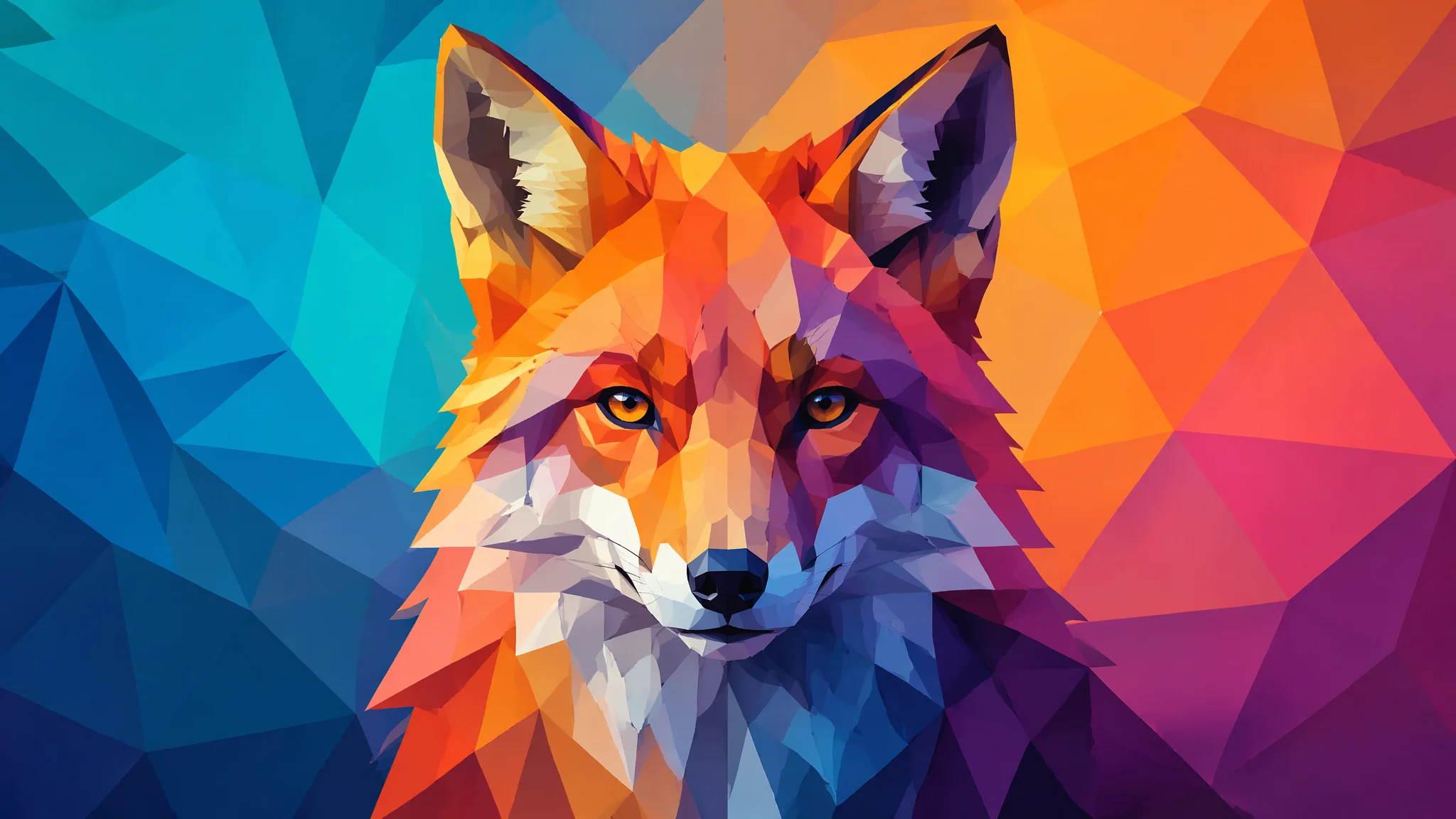
装饰图案风。"a geometric flat design illustration of a fox composed of faceted triangular polygons, the color palette is Art Deco——burnished gold, deep teal, and terracotta, the fox is depicted mid-leap with its tail creating a sweeping circular composition, the style is like a stained glass window or an enamel jewelry piece, clean vector lines, symmetrical design elements"。
儿童绘本风。"a charming watercolor and ink line children's book illustration of a bear and a rabbit sharing a picnic, the bear is huge and gentle with slightly clumsy proportions, the rabbit is tiny and alert, the linework is loose and sketchy with visible ink splatters, the watercolor wash goes slightly outside the lines in places adding to the handmade charm, warm earthy color palette, the mood is tender and whimsical, like a classic storybook from the 1960s"。
物种特征控制——让老虎像老虎、让猫像猫
AI画动物翻车最常见的方式:物种特征模糊。你写"tiger",AI给你一只大橘猫画了几条黑条纹。你写"wolf",AI给你一只哈士奇染了灰毛。想让AI精确捕捉物种特征,你需要告诉它"这个物种区别于近亲的解剖学特征"。
物种特征关键词表:
老虎vs狮子:老虎——"vertical slit pupils, white spots on the back of the ears (ocelli), stripes that extend through the fur to the skin, more muscular build with shorter legs than a lion"。狮子——"round pupils, the male's mane frames the face and darkens with age, tawny uniform coat color, the body is built for short bursts not sustained speed"。
狼vs狗:狼——"straight bushy tail carried low, narrower chest with legs that appear longer, yellow-gold eyes not brown, the muzzle is longer and the ears are more triangular and erect, the gaze is direct and unblinking"。狗——"tail curves upward, broader chest, more varied eye colors, softer facial expression, ears vary by breed"。
豹vs猎豹:豹——"rosette spots (rings of black with brown center), stocky muscular build, climbs trees, the spots are irregular in size"。猎豹——"solid black spots, tear-streak black lines from the inner eye to the mouth, slender aerodynamic build, the body is built for speed with a flexible spine and long tail for steering"。
这些解剖学差异点在AI训练数据中是存在的——但AI不会主动区分它们,除非你在Prompt里明确写出。写对四个解剖特征,物种识别准确率从60%升到95%。动物解剖参考可查阅 国家地理 的动物摄影档案。
动物表情——别把动物画成"长了毛的人"
动物有表情,但和人类不一样。狗开心的时候不是咧嘴笑——是张嘴喘气、舌头歪一边、耳朵放松后贴。猫满足的时候不是微笑——是半闭眼、缓慢眨眼、耳朵朝前微垂。把人类的表情直接平移给动物=恐怖谷。把动物的自然行为翻译为"表情"=传神。
动物表情的"物种正确"Prompt:
狗的开心:"a happy golden retriever, mouth open in a relaxed pant with the tongue lolling slightly to the side, ears soft and slightly back, eyes squinted in contentment, the whole body wiggles with barely contained excitement, tail a blur of wagging motion"。狗用全身表达开心——不只是脸。
猫的满足:"a contented cat doing a slow blink, eyes half-closed in a relaxed squint, ears facing forward and slightly drooped, whiskers relaxed and pointing slightly forward, the cat is kneading its paws on a soft blanket, the purr is almost visible in the relaxed throat muscles"。
狼的警觉:"a wolf standing alert, ears pricked forward and swiveling independently, nose twitching as it tests the air, the body is coiled and still——every muscle ready to react, the eyes are fixed on something outside the frame, the intensity is not aggression but focus"。
表情上的"物种正确"比"萌化"更重要——这是让你的动物"像动物"的底线。
常见问题
AI画的卡通动物为什么总是"恐怖谷"——像人又不像人?
恐怖谷出现在"人化程度恰好卡在60%-80%之间"。解决方法:要么退回更卡通(30%人化——大头大眼圆滚滚的身体),要么前进到更写实(100%动物)。别停在中间。写Prompt时用"fully anthropomorphized / cartoon proportions / stylized character design"表示卡通端,用"realistic wild animal / natural behavior / wildlife photography"表示写实端——选一端不要骑墙。
水墨动物画出来为什么总像"黑色剪影加点毛笔笔触"?
因为AI不理解"写意"——它理解的"水墨"是"用黑色+加水降低不透明度"。要写出水墨的笔法:"varying ink density within a single brushstroke——the stroke starts dark and wet and ends dry and pale / the brush is held at an angle creating thick-thin line variation / the ink bleeds slightly into the rice paper at the edges / the unpainted areas are as deliberate as the painted areas"。水墨的关键是"一笔之内有浓淡干湿"。
做儿童绘本的动物角色,色调上有什么讲究?
儿童绘本的配色三原则:一,主角色调用暖色系(棕、橙、暖黄)——冷色系动物(蓝色/紫色)天然有距离感;二,避免纯黑——用深棕或深灰代替,纯黑对婴幼儿视觉冲击过大;三,背景色比角色暗淡——保证角色在页面上的视觉焦点地位。儿童视觉心理学参考 美国儿科学会 的儿童视觉发展研究。
AI画的机械动物总是"机器人上贴了毛",怎么做出真正的"生物机械融合"?
关键在于"过渡区"——不是机械和肉体各占一半面积,而是它们之间的过渡是渐变的。Prompt写:"the mechanical parts grow organically from the living tissue——not bolted on but integrated, the carbon fiber weave transitions seamlessly into muscle fiber, the edges where metal meets fur are blurred and indistinct, the biomechanical fusion looks like it evolved naturally"。渐变过渡+进化的逻辑。生物机械设计的更多案例见 AI科幻绘画。
在动物园看过一只老老虎,下午三点,它趴在玻璃窗边,半张脸在阳光里半张脸在阴影里,眼睛半闭着。它没在看任何东西——就只是待着。但那个画面比任何张牙舞爪的"老虎咆哮图"都更有力量。动物绘画的最高境界不是"画出它的凶猛或可爱"——是"画出它自己在待着的样子"。别替它演,看它怎么看自己。
觉得有用的话分享给也喜欢动物的朋友吧。