AI战场战争绘画:硝烟弥漫与宏大史诗氛围的历史场景创作
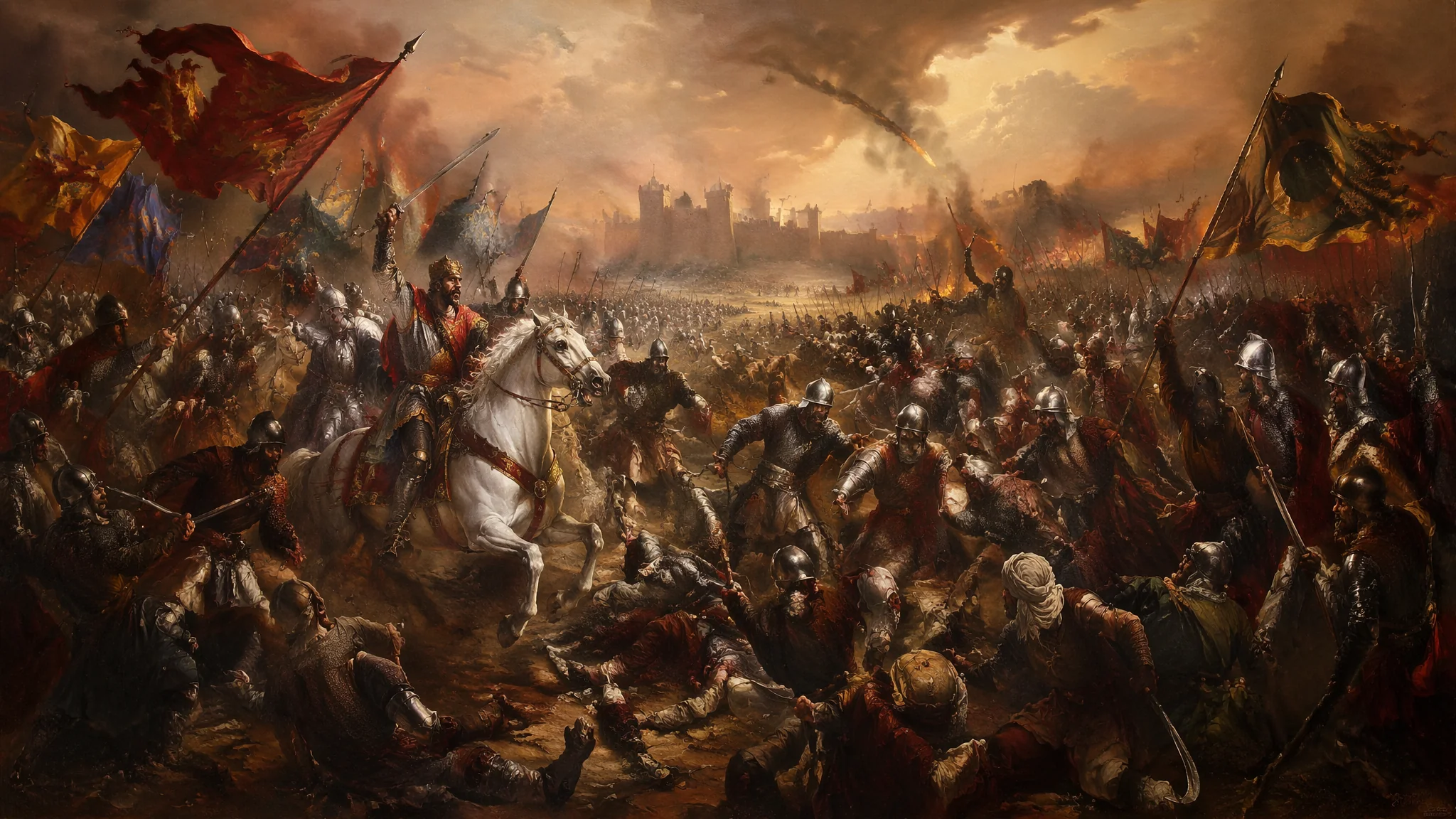
战场题材是AI绘画里技术难度最高的类别之一——你要同时处理大规模人群、复杂光影(火焰和硝烟)、动态动作和情绪氛围,四个维度任何一个拉胯整张图就废了。
我第一次尝试用AI画战争场景的时候,出来的画面让我哭笑不得——一群士兵拿着扭曲到不像话的武器站在整洁得像高尔夫球场的草坪上,天上飘着几朵棉花糖一样的"硝烟"。后来我花了一个月的时间,参考了大量战争电影的分镜和古典战争油画(尤其是拿破仑战争时期的巨幅油画),才慢慢摸清了门道。战争场景的AI绘画和摄影棚人像完全是两套逻辑——你需要的不是"精确",而是"氛围的正确性"。《滑铁卢战役》那种全景式战争画之所以震撼,是因为画家用构图和光影把观众的情绪拉进了战场中心。这个洞察来自我反复研究英国国家美术馆馆藏战争油画时的体会。
战争场景的三种经典构图模式
战争画面的构图决定了观众"站在哪里看"——是上帝视角的俯瞰、还是战壕里的第一人称、又或是英雄主义的低角度仰望,三种视角传递的情绪完全不同。全景俯瞰式(史诗感最强):"aerial panoramic view of ancient battlefield, thousands of soldiers clashing below, two massive armies colliding in valley, dust clouds rising, cinematic wide shot"。这种构图适合表现战争的"规模",但缺点是缺乏情感代入——观众离得太远。平视中景式(最能讲故事):"eye-level view of frontline soldiers charging through smoke, bayonets gleaming, comrades falling, muddy trench warfare, intense emotional documentary style"。低角度英雄式(适合主角特写):"low angle shot of commander on horseback silhouetted against burning sky, banner waving dramatically, heroic revolutionary war aesthetic"。我的经验是:先确定你想要的"观战位置",再围绕这个位置去构建prompt的其他部分。构图基础理论在AI电影级画面构图技法里有系统讲解。
硝烟、火焰与尘土:战场特效的三驾马车
战争场景的氛围90%靠烟、火、尘三种元素撑起来——没有它们,再多人也像在搞cosplay聚会。硝烟:"thick acrid gunpowder smoke hanging low over battlefield, layered smoke in shades of grey and brown, sunlight barely piercing through dense haze, volumetric battlefield fog"。火焰:"orange flames and black smoke rising from burning structures, fire reflecting on soldiers' faces, embers floating through air like fireflies, distant explosions illuminating smoke clouds from within"。尘土:"dust clouds kicked up by cavalry charge, swirling sand and debris in air, gritty particulate atmosphere, ground-level dust haze obscuring feet of soldiers"。三种元素叠加时的顺序很重要:先写主光源(如"golden hour sun breaking through smoke"),再写烟雾的大氛围,最后写局部的火焰和尘土细节。我试过的最有效的一段复合prompt是:"ancient Chinese battlefield at sunset, thick smoke and dust filling the air, distant fires burning on the horizon, horse cavalry silhouetted against orange smoky sky, epic historical war scene in style of Chinese historical epic film"。这个公式套到其他历史时期的战场也能用。关于特效元素的完整关键词库,AI火焰元素绘画技法大全里的烟雾描写同样适用于战场。
不同历史时期战场的视觉差异
古代、中世纪、近代和现代战争——四个时期的战场在视觉上有根本性差异,AI能理解但不能替你区分,你得写清楚。古代冷兵器战场:"ancient Greek hoplite phalanx, bronze armor reflecting sunlight, massed spears forming forest of points, dust rising from sandaled feet, Aegean blue sky backdrop"。中世纪战场:"medieval battle of armored knights, heraldic banners and coats of arms, chainmail and plate armor glinting, broadswords and shields clashing, muddy churned ground"。拿破仑时期:"Napoleonic era battle, infantry in blue and white uniforms forming line formation, musket volleys producing white smoke wall, cavalry with sabers drawn, tricolor flag amidst chaos"。近代(一战/二战):"World War I trench warfare, barbed wire and mud, soldiers in steel helmets, no man's land with shell craters, bleak grey sky, documentary photography style"。写历史时期的关键在于:不只是写时间词("ancient"),还要写那个时代的"材质"(青铜vs钢铁)、"队列形式"(方阵vs散兵线)、"环境细节"(沙土地vs泥泞战壕)。
人群与个体的平衡:AI战场中的人物处理
战场上的人物分三个层级:远景的"人群"(crowd)、中景的"小组"(squad)、近景的"个体"(individual hero)——不同层级的提示词策略完全不同。远景人群不需要个体特征,用"mass of soldiers""sea of infantry""countless warriors""swarming troops"这类模糊量化词即可。中景小组需要一些可辨识的姿势和动作:"squad of soldiers advancing with rifles raised, some crouching some standing, coordinated military movement"。近景个体需要完整的人物描述,包括表情、装备、甚至是服装上的泥渍和破损:"close-up of a weary soldier, mud-splattered face with thousand-yard stare, torn uniform, blood on hands, raw emotion of war"。一个常见错误是在全景构图里还写"detailed facial expression on every soldier"——AI会尝试给每个人都画脸,结果就是一张图里几百个扭曲的小人脸,恐怖又滑稽。在AI军事人物绘画技法里对人物的分层处理有更详细的说明。
天气与时间对战场氛围的加成
同样的战场内容,天气不一样完全是两张画——雨战、雪战、夜战、雾战,每种天气都是一个全新的情绪加成器。雨战:"rain-soaked battlefield, wet mud reflecting firelight, rain streaking down on soldiers' faces, miserable cold atmosphere, water droplets on weapons and armor"。雪战:"winter battle in blizzard conditions, white snow stained with red, soldiers trudging through deep snow, breath visible in freezing air, pale winter light"。夜战(戏剧效果最强):"night battle illuminated only by fire and explosions, dramatic orange and black chiaroscuro, soldiers as dark silhouettes against flames, muzzle flashes lighting faces briefly"。雾战(神秘感加成):"morning fog shrouding battlefield, shapes emerging from mist, muffled sounds of distant combat, eerie grey atmosphere"。我最喜欢用夜战+雨战的组合——火焰映在湿漉漉的地面上,那种视觉效果AI表现力特别强。
战争绘画的情绪层次:从激昂到悲悯
好的战争画不是展示"打仗有多酷",而是传递战争本身的复杂情绪——恐惧、勇气、悲悯、荒谬。AI能理解情绪词。激昂型:"heroic charge into battle, flag raised high, inspiring leadership, noble sacrifice, epic glory of combat, dramatic sky"。悲悯型(我更偏好的方向):"aftermath of battle, wounded soldiers being carried by comrades, quiet moment of humanity amidst carnage, anti-war sentiment, somber and reflective mood"。恐惧型:"sheer terror on faces, chaos and confusion of close combat, sensory overload of battlefield, soldier shielding from explosion"。荒谬型(最难做但最有深度):"surreal battlefield scene, contrast of beautiful landscape with horrors of war, absurd juxtaposition, Magritte-inspired war commentary"。情绪的实现方式有两种:直接写情绪词("sorrowful""heroic""terrifying")或写引发该情绪的物理细节("a lone soldier weeping over fallen comrade")。第二种方式效果更稳定、更细腻。
常见问题
AI战场战争绘画的高频问题包括人群控制、历史准确度和氛围营造。AI画的战场人物为什么总是变形?
这是AI在处理远景人物群像时的固有问题——它会把每个人脸都尝试渲染清楚,但分辨率不够就产生了扭曲。解决方法是写"distant figures with obscured faces""crowd rendered as impressionistic masses not individuals"。
怎么保证历史战场的装备准确性?
AI对历史装备的认知来自训练数据,准确性约60-70%。关键在于写装备的具体名称而非笼统词——"lorica segmentata armor"而非"Roman armor","Brown Bess musket"而非"old gun"。
战争画面太血腥会被AI拒绝生成吗?
会的。MJ和SD都有内容过滤器。如果要表现战争的残酷性,用暗示而非直白的血腥——"aftermath""somber""devastation""loss"这类氛围词比"blood""gore"更安全也更高级。
觉得有用的话分享给朋友吧。