AI京剧脸谱绘画进阶:中国传统戏曲角色的色彩符号与艺术创新
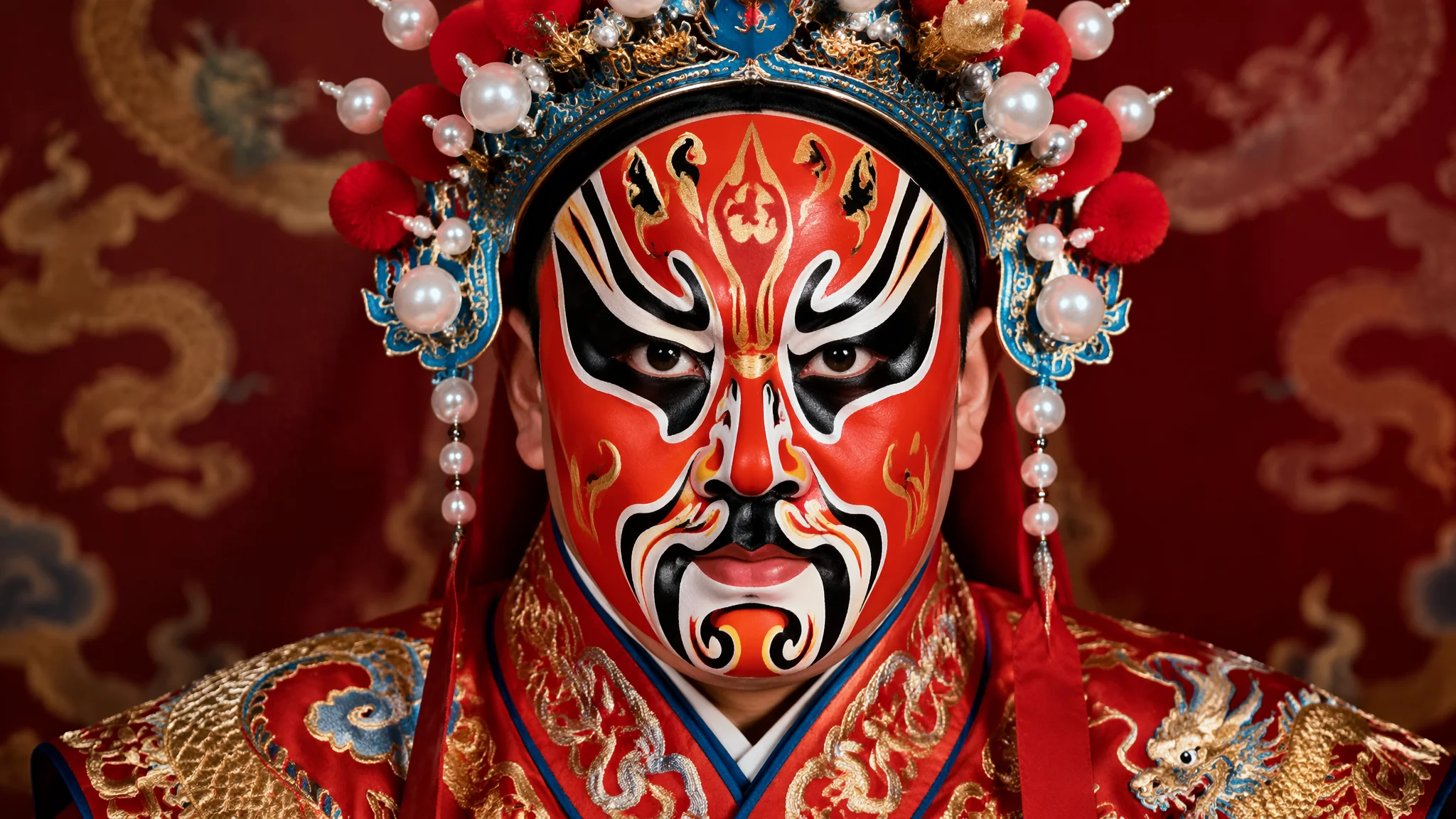
基础篇里我把脸谱的色彩符号学讲了一遍——红忠紫孝黑正白奸。但你真拿那些Prompt去跑就会发现一个问题:颜色对了,脸谱也像了,可每张脸谱都是"正面标准照"——AI默认给你一个正对镜头、表情静止、构图居中的脸谱。像教科书插图,不像艺术作品。突破这个天花板需要的不是更好的颜色描述——是谱式变化、角度动态和跨媒介融合。这篇是我在基础篇之后又折腾了两个月的新发现,专门解决"像但不动人"的问题。
基础篇写完之后我犯了一个错误——沉迷于"还原度"。每天琢磨怎么让AI画的脸谱更接近梅兰芳舞台上的样子。画了四十多张高还原度脸谱之后一个做文创的朋友看了一眼说"你画得跟脸谱非遗数据库一样——很准,但没人会买来做T恤"。这句话打醒了我。脸谱的AI创作有两个方向:一是数字化保存(追求还原),二是艺术创新(追求表现力)。基础篇解决了第一个,进阶篇要解决第二个——怎么在保留脸谱文化基因的前提下让AI画出具有当代审美张力的作品。关于脸谱的色彩基础,AI京剧脸谱绘画基础篇里有完整的色彩符号对照表。
谱式变化——从"整脸"到"碎脸"的AI复杂度控制
京剧脸谱有十几种谱式——整脸、三块瓦脸、十字门脸、碎脸、歪脸、象形脸。不同谱式的视觉复杂度差异巨大,AI在处理时需要的描述精度也不同。整脸(最简单):"a complete-face painted opera mask design, the entire face covered in a single base color with only the eyebrows eye sockets and mouth defined by subtle darker outlines, the pattern clean and minimal, the expression dignified and imposing"。三块瓦脸(中等复杂度):"a three-tile face opera mask pattern, the forehead and cheeks divided into three distinct color blocks with exaggerated eyebrow patterns that extend upward into the forehead, the eye sockets outlined in a bold contrasting color creating a dramatic widened-eye effect"。碎脸(最高复杂度):"a fragmented face opera mask with highly complex multi-colored patterns covering every inch of the face, intricate swirling lines interwoven with geometric motifs, asymmetrical design elements on the left and right sides, fine details extending to the ears and jawline, the visual density resembling an ornate ceramic glaze pattern"。复杂度递进的关键控制词是"clean and minimal"→"bold contrasting color blocks"→"highly complex multi-colored fragmented patterns"。在中国文化网的京剧脸谱专题里有不同谱式的实物图片——对着实物写Prompt比凭记忆准确得多。
纹样生成的"算法化思维"——让AI理解脸谱纹饰的组织逻辑
脸谱的纹样不是随机涂鸦——它有一套组织逻辑:从额头中心向外辐射的主纹+从眼角向太阳穴延伸的辅纹+从鼻梁向两侧展开的底纹。三层纹样叠加构成了脸谱的视觉结构。让AI理解这套逻辑的Prompt写法:"the mask pattern follows a systematic radial organization—a dominant central motif on the forehead acting as the visual anchor, secondary flowing lines radiating from the inner corners of the eyes toward the temples like calligraphic brushstrokes, tertiary background textures filling the cheeks with fine repeating patterns reminiscent of classical chinese brocade, the overall design reading as intentional ornamentation rather than random decorative scribbling"。纹样的风格切换:"traditional beijing opera mask紋飾 rendered in the precise disciplined lines of gongbi court painting, the brushwork sharp and controlled, each line placed with calligraphic intention"。对比现代解构版:"the same mask纹飾 deconstructed and reinterpreted through a contemporary graphic design lens—the traditional motifs simplified into bold geometric abstractions, the color palette expanded to include neon accents, the composition asymmetrical and dynamic"。这种"先定义组织逻辑再选风格"的写法比直接塞一大堆描述词稳定——AI理解"纹样是怎么组织起来的"之后,即使换了风格,脸谱的结构感也不会崩塌。
角度与动态——打破"正面证件照"的构图突破
脸谱的正面视图是基础,但侧面、仰视、俯视以及动态瞬间能让脸谱从"标本"变成"表演"。四分之三侧面脸谱:"a three-quarter profile view of the painted opera face, the mask pattern wrapping around the curvature of the cheekbone and jaw, the design on the far side partially visible suggesting the continuation of the pattern, the angle creating depth and dimension that the flat frontal view lacks"。仰视角度:"a low-angle shot looking up at the opera mask from below, the chin and jawline dominating the foreground, the forehead pattern receding dramatically, the perspective emphasizing the imposing heroic presence of the character, the angle used in traditional chinese opera photography to convey power"。动态面部瞬间:"the opera performer mid-performance captured in a fleeting expression, the mask纹飾 creasing and stretching with the facial muscles beneath, beads of sweat on the temples causing subtle smudging at the edges of the painted lines, the mask alive and animated rather than a static artifact"。关于人物动态与角度的更多技巧,AI人像视频绘画里有从摄影角度到面部动态的完整方法论。
跨界融合——脸谱元素在当代设计中的AI应用
脸谱的出路不只是戏曲舞台——它在国潮服装、潮玩手办、街头涂鸦和数字藏品里都有惊人的表现力。国潮服装印花:"a streetwear hoodie featuring a deconstructed beijing opera mask graphic print, the traditional mask pattern fragmented and reassembled in a distressed punk aesthetic—silk-screen texture, paint drips, halftone dots overlaying the classical 纹飾, the red and black color scheme preserved but treated with a grunge filter"。潮玩手办设计:"a designer vinyl toy interpretation of a beijing opera mask character, the traditional facial 纹飾 translated into sculpted relief on a stylized chunky figure, matte and gloss finishes differentiating the color zones, the proportions exaggerated in the signature urban toy aesthetic—oversized head tiny body"。在Behance搜"Chinese opera mask modern design"能看到全球设计师做的大量脸谱创新方案——从品牌Logo到运动鞋到时装印花。这些跨界案例比戏曲本身更接近AI擅长的视觉领域。
脸谱的"去脸谱化"——保留神韵但脱离面部载体
脸谱的终极进化方向之一是"去脸谱化"——把脸谱的色彩逻辑和纹样规律从人脸这个载体上拿下来,放到抽象构图、产品设计甚至建筑表皮上。抽象色彩构成:"an abstract composition inspired by beijing opera mask color theory—blocks of vermilion red black and white arranged in a dynamic asymmetrical layout, the color proportions following the traditional mask color hierarchy, the shapes suggesting facial features without explicitly depicting a face"。陶瓷器皿纹饰:"a ceramic vase glazed with patterns derived from beijing opera mask 纹飾—the familiar swirling lines and geometric motifs wrap around the vessel's surface, the three-dimensional curve of the vase interacting with the two-dimensional pattern in unexpected ways, traditional craftsmanship meeting contemporary form"。这种"去脸谱化"的创作思路打开了一个全新的应用空间——脸谱不再只是一个"被画的物件",而是一套可以被提取、解构、重组到任何媒介上的视觉语言系统。关于中国传统视觉元素的现代转化,AI古风绘画里有更多从传统到当代的设计思维参考。
常见问题
脸谱的复杂纹样在AI里总是糊成一团——细线粘连、色块溢出?
提高分辨率是最直接的解法——1024x1024以下脸谱细节基本保不住。Prompt层面加"crisp sharp lines with clean separation between color zones, the edges of each pattern element defined with calligraphic precision, no color bleeding or blurring between adjacent 纹飾 elements"。
想要不同流派的脸谱风格(京派vs海派)怎么写?
京派脸谱用"bold thick outlines, high contrast color blocking, angular geometric patterns, the northern school's characteristic strength and vigor"。海派脸谱用"finer more delicate linework, softer color transitions, more naturalistic shading around the eyes, the southern school's emphasis on grace and subtlety"。
AI脸谱总是画成日本能面或者歌舞伎——怎么锁定在京剧?
加文化锚定词:"distinctly Chinese beijing opera, not Japanese noh mask not kabuki makeup, the specific color symbolism of Chinese opera—red for loyalty white for treachery—rather than Japanese theatrical conventions"。
脸谱这个题材我前后折腾了超过两百张图,从入门到进阶跨了小半年。最大的心得是:传统文化题材的AI创作,最难的不是技术——AI的渲染能力对传统纹样绰绰有余——难的是"度的把控"。太还原就成了非遗档案(有价值但没传播力),太放飞就成了文化挪用(有流量但没根基)。那个中间点——既有文化基因又可被当代审美接受——需要创作者对传统和当代两套视觉语言都有足够的理解。这也是为什么AI时代真正稀缺的不是"会用AI的人",而是"懂文化的人"。