AI鸟类绘画大全:从麻雀到孔雀的多样鸟类品种生成技法
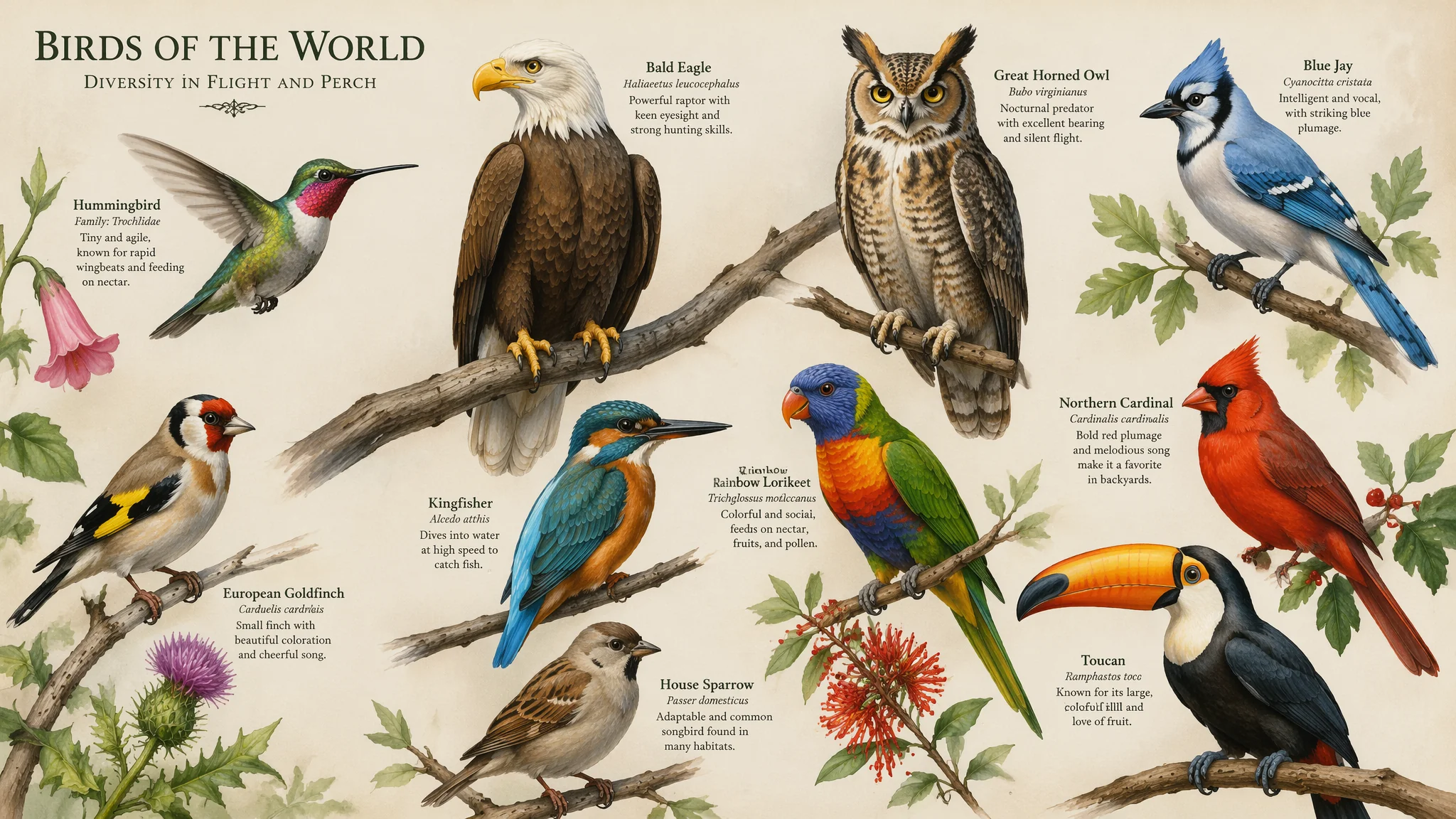
AI画鸟有一个奇怪的"降级规律"——你写"bird",AI给你一只麻雀大小的棕色不明生物;你写"eagle",AI给你一只看起来很凶但羽毛质感像塑料玩具的猛禽;你写"peacock",AI给你一只开屏但羽毛上的眼状斑纹乱成一团的东西。问题的根源是AI对鸟类的理解停留在"有翅膀+有喙+有羽毛"的结构层面,没有深入到不同鸟种之间体型比例、喙形、站姿、羽毛微观结构的巨大差异。这篇把十种常见鸟类的AI配方全部拆给你。
拍鸟(观鸟摄影)是我坚持了五年的业余爱好。长焦镜头追着翠鸟、扛着三脚架等白鹭起飞——这些经历让我对鸟类的形态细节有了一种"肌肉记忆"式的敏感。当我把这种敏感带到AI鸟类绘画中时,发现的第一个问题是:AI画鸟时最敷衍的部位不是羽毛——是脚。鸟的爪子(对趾足、前趾足、并趾足、异趾足)在不同种类之间差异极大,但AI一律画成"三前一后"的通用鸡爪。关于特定鸟类(如鹦鹉和蜂鸟)的AI创作细节,AI鹦鹉鸟类绘画和AI蜂鸟绘画里有更深入的专项分析。
雀类:从麻雀到金翅雀的小型鸣禽配方
麻雀(sparrow)是AI画鸟的最大受害者——因为训练数据太杂,"sparrow"在很多图片里只是一个"背景里模糊的棕色小鸟"。画好麻雀的关键是抓住它独有的三个视觉特征:圆润的体型(不像山雀那么修长)、粗短的圆锥形喙(吃种子用的喙型)、以及脸颊上那块黑色斑纹(这是麻雀的标志性特征,没有它就不是麻雀)。
| 雀类品种 | 核心视觉特征 | prompt关键词 |
|---|---|---|
| 家麻雀 | 圆胖体态、黑颊斑、粗短喙 | plump round body, black cheek patch, thick conical seed-eating beak, brown streaked back |
| 金翅雀 | 金黄色翼斑、红色面部 | bright yellow wing bars visible in flight, red face mask, slender body, twittering on a thistle |
| 山雀 | 白脸颊、黑头顶、小巧 | white cheek patch, black cap on head, tiny acrobatic posture hanging upside down on a branch |
| 文鸟 | 粗厚白喙、灰褐色体羽 | thick pale beak, soft grey-brown plumage, often in pairs, perching closely together on a reed |
麻雀的正确prompt:"a Eurasian tree sparrow perched on a branch, plump round body with brown and black streaked back feathers, distinctive black cheek patch on white face, thick short conical beak, small alert eyes, soft morning light, natural bokeh background"。如果你只写"sparrow"而不写"Eurasian tree sparrow",AI可能会给你一只美国麻雀(American sparrow)——两者是完全不同的科。关于鸟类学名的精确使用在专业级鸟类AI创作中至关重要。动物绘画的通则参考AI自然风景绘画中的野生动物表现部分。
水鸟与涉禽:白鹭、翠鸟与丹顶鹤的长腿长喙美学
水鸟是AI鸟类绘画中"身材比例"最容易出错的一个大类——白鹭的脖子应该比身体还长、翠鸟的喙应该和头部一样长、丹顶鹤的腿应该是身体高度的两倍。AI画水鸟最常见的错误是把这些长比例特征"正常化"——把白鹭的脖子缩成鸭子的长度。
三种经典水鸟的prompt对比——白鹭:"a great egret standing in shallow water, extremely long S-curved neck longer than its body, pure white plumage, long slender black legs with bright yellow feet, needle-sharp yellow beak pointing downward in hunting stance, reflection in still water, misty morning marsh"。翠鸟:"a common kingfisher perched on a branch overhanging a stream, disproportionately large dagger-shaped beak as long as its head, brilliant cyan blue back feathers contrasting with orange underparts, tiny body compact and alert, poised to dive, iridescent feather sheen"。丹顶鹤:"a red-crowned crane standing in a snowy marsh, extremely long legs twice the height of the body, elegant elongated neck, white body with black secondary flight feathers like a skirt, the red crown patch vivid against the white head, graceful and statuesque posture, winter morning"。这三种水鸟的体型比例完全不同——如果你不写比例描述,AI会把它们画成类似的"长颈长腿的白色大鸟"。关于湿地生态场景的搭配,AI水系景观绘画中有完整的湿地环境构建指南。
猛禽与猫头鹰:鹰隼与鸮类的气场关键
猛禽的"凶"不是靠呲牙(鸟没有牙)而是靠眉脊——眼睛上方突出的骨骼结构让猛禽看起来始终在"皱眉"。AI画鹰的时候经常把眉脊弱化,出来的鹰看起来"温和"——温和的鹰不是鹰,是大号的鸽子。猫头鹰的视觉核心则是"面盘"——脸部的圆形羽毛排列,这是猫头鹰最独特的视觉特征。
鹰隼类prompt:"a golden eagle in profile, prominent bony brow ridge creating an intense fierce expression, sharply hooked beak with the curve clearly defined, powerful talons gripping a rocky perch, dark brown body feathers with golden nape feathers catching the light, majestic and formidable, against a mountain sky"。猫头鹰prompt:"a great horned owl perched on a mossy branch at twilight, distinctive facial disc with concentric rings of feathers framing large forward-facing orange eyes, ear tufts raised like horns, mottled brown and grey camouflage plumage, head rotating slightly to stare directly at viewer, mysterious and wise"。这两个prompt中的"bony brow ridge"和"facial disc"分别是鹰和猫头鹰的视觉锚点——抓住这两个词就能抓住各自的神韵。关于鸟类神态的更多捕捉技巧,AI人像绘画中对眼神和面部结构的表现逻辑同样适用于鸟类(眼部周围的骨骼和肌肉结构决定表情)。
孔雀与鹦鹉:华丽羽毛的AI极限挑战
孔雀的尾屏是AI鸟类绘画的终极考题——上百根羽毛每根上面都有眼状斑纹(eyespot),这些斑纹必须沿着羽毛方向呈放射状排列。AI画孔雀翻车的典型画面是:尾屏的形状是对的,但眼状斑纹变成了混乱的彩色圆点,没有按照羽毛的方向排列。鹦鹉的挑战则是"色彩分区"——金刚鹦鹉的脸部白色区域、翅膀的蓝黄渐变、尾羽的红蓝过渡——颜色之间必须有清晰的边界而不是互相晕染。
孔雀prompt:"an Indian peafowl displaying its full train in a sunlit garden clearing, each long feather of the train ending in a perfectly formed iridescent eyespot with concentric rings of gold blue and green, the eyespots aligned following the natural curve of each individual feather, the overall fan shape perfectly radial and symmetrical, the bird's iridescent blue neck and breast contrasting with the green and gold of the train, bright sunlight making each eyespot shimmer"。鹦鹉prompt:"a scarlet macaw perched on a tropical branch, vivid red body feathers, bright yellow wing coverts with clear color separation from red, blue flight feathers at wing tips, white facial patch with subtle feather lines and black beak, the color blocks distinct and not blending into each other, tropical rainforest background with dappled sunlight"。华丽鸟类的色彩控制核心是"color blocks distinct and not blending"——告诉AI保持色彩之间的边界清晰。鸟类羽毛的材质表现可以参考AI服装设计中关于羽毛装饰的处理技法。真实鸟类摄影参考可以访问Unsplash上的野生动物摄影专区,以及eBird上全球鸟类观察者上传的真实鸟类照片。
常见问题
AI画的鸟为什么总是"站着的"?能画飞行的鸟吗?
飞行姿态是AI鸟类绘画的第二个高难度动作(第一是孔雀开屏)。飞行中的鸟需要同时解决翅膀姿态、羽毛展开、身体角度和动态模糊四个变量。飞行鸟的关键prompt要素:"bird in mid-flight, wings fully spread showing primary and secondary flight feathers separated like fingers, wings at the downstroke position, body angled slightly forward, motion blur on wingtips suggesting speed, against a clear sky or blurred landscape background"。写清楚"翅膀处于下拍位置"(wings at the downstroke position)和"初级飞羽像手指一样分开"两个细节,飞行感才对。
十种鸟类放在同一张图里能做吗?
一张图放十种不同体型的鸟,AI通常会搞混——小麻雀被放大、大孔雀被缩小,所有鸟趋向于一个"平均体型"。更好的做法是做"鸟类图鉴"风格的网格布局:用AI分别生成每种鸟的独立肖像(统一用侧面视角、统一背景、统一光线),然后在排版软件中拼成九宫格或十宫格。这种"分别生成+统一排版"的策略既保证了每种鸟的精度,又获得了整体感的视觉统一性。
中国特有的鸟类(如朱鹮、褐马鸡)AI能画吗?
中国特有鸟种在AI训练数据中的占比很低,直接写中文名或英文名效果可能不理想。解决办法是用"同属近亲+独特特征描述"的策略:比如朱鹮(crested ibis)——先写"an ibis with a distinctive crest of elongated feathers on the nape",再用"red skin on the face without feathers, long curved black beak with red tip, white plumage with pinkish tinge during breeding season"来锁定朱鹮的独有特征。对于训练数据不足的特有物种,详细的形态描述比学名更有效。
上周在杭州西溪湿地蹲了三个小时拍翠鸟。它站在一根伸出水面的枯枝上,每隔几分钟就一个猛子扎进水里叼出一条小鱼。那种蓝色——不是天空的蓝也不是大海的蓝,是一种只有翠鸟背羽才有的电光蓝。AI可以准确地调出那个色值,但它永远不知道你为了看到那一抹蓝色在蚊子堆里蹲了三个小时的滋味。
这篇如果让你的AI鸟类从"棕色不明生物"进化到"能辨认品种",分享给同样热爱观鸟的朋友吧。