AI校园风景绘画:教学楼与操场青春的校园环境视觉创作
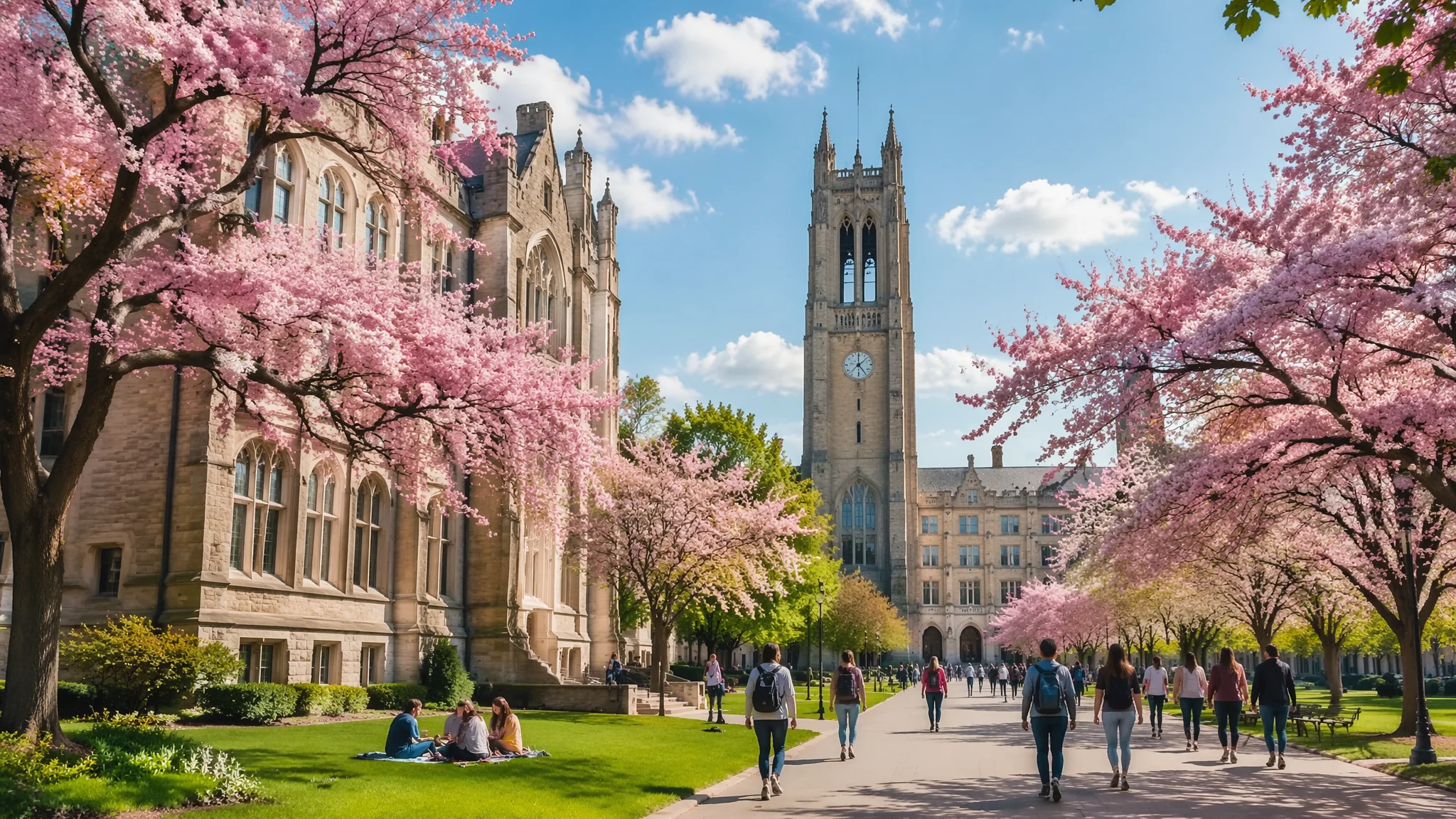
上周有个做独立游戏的朋友找我帮忙——他的视觉小说需要一个校园背景,用AI跑了五十多张图,没有一张能用的。要么教学楼长得像写字楼、要么操场比例严重失调、要么整个画面干干净净但就是没有"青春感"。我问他要了Prompt一看——他写的是"beautiful school campus"。这句话AI只能给你一个"它理解的学校平均数"——结果就是毫无特点。校园是一个人对"青春"二字的视觉记忆载体,需要精确到"那条铺着梧桐落叶的林荫道""那个夕阳把篮球架影子拉得老长的操场"。这篇教程是我帮那位朋友做完全套校园场景后的经验记录,从建筑到手绘感到季节变化,每一个Prompt坑我都替你踩过了。
教学楼——不同年代建筑的Prompt语法差异
AI对"teaching building"的默认理解是欧美那种红砖老楼加上钟楼——如果你要的是一栋中国当代中学的教学楼,必须用材质和年代词来纠正它的默认审美。老教学楼和新教学楼的Prompt写法完全不是一回事。
90年代中式老教学楼:"concrete teaching building with white mosaic tile exterior faded by decades of rain, blue metal-framed windows with some rust spots, exterior staircases with iron railings painted green but peeling, water stains trailing down from window sills, a large analog clock above the main entrance slightly yellowed with age"。重点是"旧的痕迹"——水渍、锈迹、褪色——这些让建筑"活"起来的细节。新建现代化教学楼:"contemporary teaching building with glass curtain wall and white aluminum panels, geometric design with asymmetrical window placement, solar panels on flat roof, sleek entrance with automatic sliding glass doors, polished concrete plaza in front"。新建校园的问题往往是画出来像写字楼——加"solar panels on roof"和"student bicycles parked near entrance"这两个校园专有标识可以有效拉回学校感。关于不同建筑风格的材质表达,AI建筑风格绘画教程里有更完整的建筑Prompt拆解。
操场与运动场——动态线与空间纵深的平衡
操场场景最容易出的问题是:平面感。一个标准塑胶跑道画出来像个二维色块贴在地面上,没有纵深、没有"这个操场真的能跑"的感觉。纵深感的制造需要三条线同时起作用——跑道线的汇聚、篮球架的高低透视、远处建筑的尺度缩小。
操场Prompt:"wide sports field with red polyurethane running track, white lane lines converging toward distant vanishing point, soccer goal with white net slightly swaying in breeze, basketball courts with faded yellow boundary lines, distant school building reduced in scale by atmospheric perspective, scattered fallen leaves on the track surface suggesting autumn"。核心是vanishing point和atmospheric perspective——前者制造几何透视,后者制造空气透视,两个一起用才有真实的空间感。加动态元素让操场不空洞:"after school hours, a few students jogging on the outer lane seen from distance, one basketball rolling slowly across the court, wind stirring the flag on a tall pole near the main stand"。人的活动量要控制——太多变运动会开幕式,太少变鬼城。操场色彩方面,Unsplash上搜"school sports field"能看到大量真实操场的色彩参考——塑胶跑道的红不是大红,是偏暗的砖红;草坪的绿不是翠绿,是带有枯黄斑点的橄榄绿。
校园林荫道——植物种类决定"校园感"的准确度
一条"校园林荫道"到底种的是什么树——法国梧桐和香樟给出来的校园感觉完全不一样。不指定树种AI就给你最普通的绿色树——结果像公园长椅旁边的随便一条路。
法桐林荫道(北方校园经典):"tree-lined campus path flanked by tall plane trees with mottled bark, dense canopy forming a natural green tunnel overhead, dappled sunlight falling through gaps in leaves creating shifting patterns on the asphalt path below, fallen plane tree leaves in golden-brown scattered on the ground in autumn"。樱花校道(日式校园):"cherry blossom tunnel along campus main path, pale pink petals falling gently like snow, some petals accumulated on the ground forming a pink carpet, school building visible at the far end through the floral arch, spring soft light with slight warmth in the air"。香樟小道(南方校园):"camphor tree avenue with evergreen dense foliage, small black berries dropped on the pavement, the trees have been there for decades with thick trunks and exposed roots, shade is deep and cool even in summer, cicada shells occasionally visible on bark"。植物种类选对了,校园的地理位置和文化属性就出来了。更多植物绘画技巧在AI水果绘画教程进阶的植物材质章节有交叉参考价值。
四季与天气——同一个校园的四种打开方式
如果你需要做视觉小说那种"同一个场景、不同时间"的组图——四季变化是性价比最高的区分方式。但AI不擅长"被动地改变季节"——你需要主动告诉它每个季节这个场景"发生了什么具体的事"。
春——"same campus courtyard in spring: cherry blossoms or magnolia in full bloom, students sitting on grass reading, light spring breeze lifting a girl's skirt slightly, everything tinted with soft pink and fresh green"。夏——"same campus courtyard in summer: intense green foliage heavy with summer heat, cicada buzzing implied by hazy air, students seeking shade under trees, bright harsh sunlight creating strong contrast between sunlit and shaded areas, a half-drunk water bottle left on a bench"。秋——"same campus courtyard in autumn: golden and red leaves covering the ground, a student sweeping leaves with a bamboo broom near the corner, warm but crisp light, someone's scarf caught by wind, the air has a slight chill visible in characters' slightly reddened cheeks"。冬——"same campus courtyard in winter: bare tree branches forming intricate silhouettes against pale grey sky, students in thick padded jackets exhaling visible breath, a thin layer of frost on benches, warm yellow light spilling from classroom windows contrasting with cold exterior"。同一个场景的核心锚点(建筑形状、道路走向、标志物位置)在四个季节里保持不变——只改植被状态、光线色温、人物着装。如果想深入每个季节的光影逻辑,Behance上搜"seasonal landscape illustration"能找到专业插画师处理四季色调的参考。
室内场景——教室、走廊与图书馆的光源设计
室内校园场景的成败全在光源。教室的光源组合决定了这张图是"上午第三节课"还是"放学后空无一人的黄昏"。不同时段、不同楼层、不同朝向——光线逻辑必须自洽。
上午的教室:"classroom with large windows on the left, bright morning sunlight streaming in at a low angle casting long rectangular light patches across desks and floor, dust motes dancing visibly in the sunbeams, blackboard on the right with chalk writing slightly smudged, books and pencil cases on desks looking lived-in"。傍晚的教室:"same classroom at dusk, windows now show orange-purple sky, fluorescent ceiling lights just turned on creating mixed cool-warm lighting, long shadows from desks stretching toward the back wall, a forgotten jacket draped over a chair, the classroom feels empty but recently vacated"。图书馆的核心是光的层次感:"university library reading room with tall arched windows, afternoon light filtering through translucent curtains creating soft diffuse illumination, individual reading lamps on wooden desks providing warm focused pools of light, tall bookshelves in background receding into darkness, the contrast between warm lamp light and cool ambient window light creates a quiet contemplative mood"。窗光和灯光的色温差是图书馆氛围的灵魂——不要把它们调成一致。关于室内场景的布光逻辑,AI室内空间绘画教程有更系统的光源分层方法。
常见问题
校园建筑画出来比例严重失调怎么办?
AI对建筑尺度的判断依赖于"参照物"。在Prompt里加一个明确的尺度参照:"a student standing near the entrance provides scale reference, the student should reach approximately one-fifth of the first floor height"。人的身高是AI最容易识别比例的参照物——放了人,门窗的尺寸就会自动调整到合理范围。
怎么让校园场景有"年代感"而不是"破旧感"?
年代感和破旧感的分界线在于"维护痕迹"。九零年代的校园建筑有岁月痕迹但干净整齐——Prompt加"aged but well-maintained, walls have patina from years but are clean, old wooden doors with brass handles polished from decades of use but still shiny"。关键在well-maintained和polished from use——旧但被爱护着,不是旧但被遗弃了。
校园全景和特写之间怎么过渡才不割裂?
用同一个视觉锚点元素串起来。比如全景里有一棵标志性的老银杏树在操场角落——特写的时候就拍银杏树下的长椅、银杏叶落在长椅上的细节。锚点元素在两张图里都出现,大脑会自动把它们联系起来。Prompt不需要写"这是同一个校园"——观众的眼睛会自己完成这个推理。
最后说一句:画校园场景最打动人的往往不是"大而全"的全景——而是那些你在真实校园里真的会停下来看的东西。篮球架生锈的那个螺丝、被涂鸦过的课桌角落、图书馆窗台上晒着太阳的那盆绿萝。这些"不必要的细节"才是让观众觉得"这就是我学校"的关键。下次写Prompt的时候,在建筑描述之外,给画面里塞一个小物件——一份翻开的作业本、一个忘记带走的保温杯——你会发现整个画面的真实感立刻上了一个台阶。