AI骑兵战马绘画:历史战争中的骑兵冲锋与铁骑雄风视觉
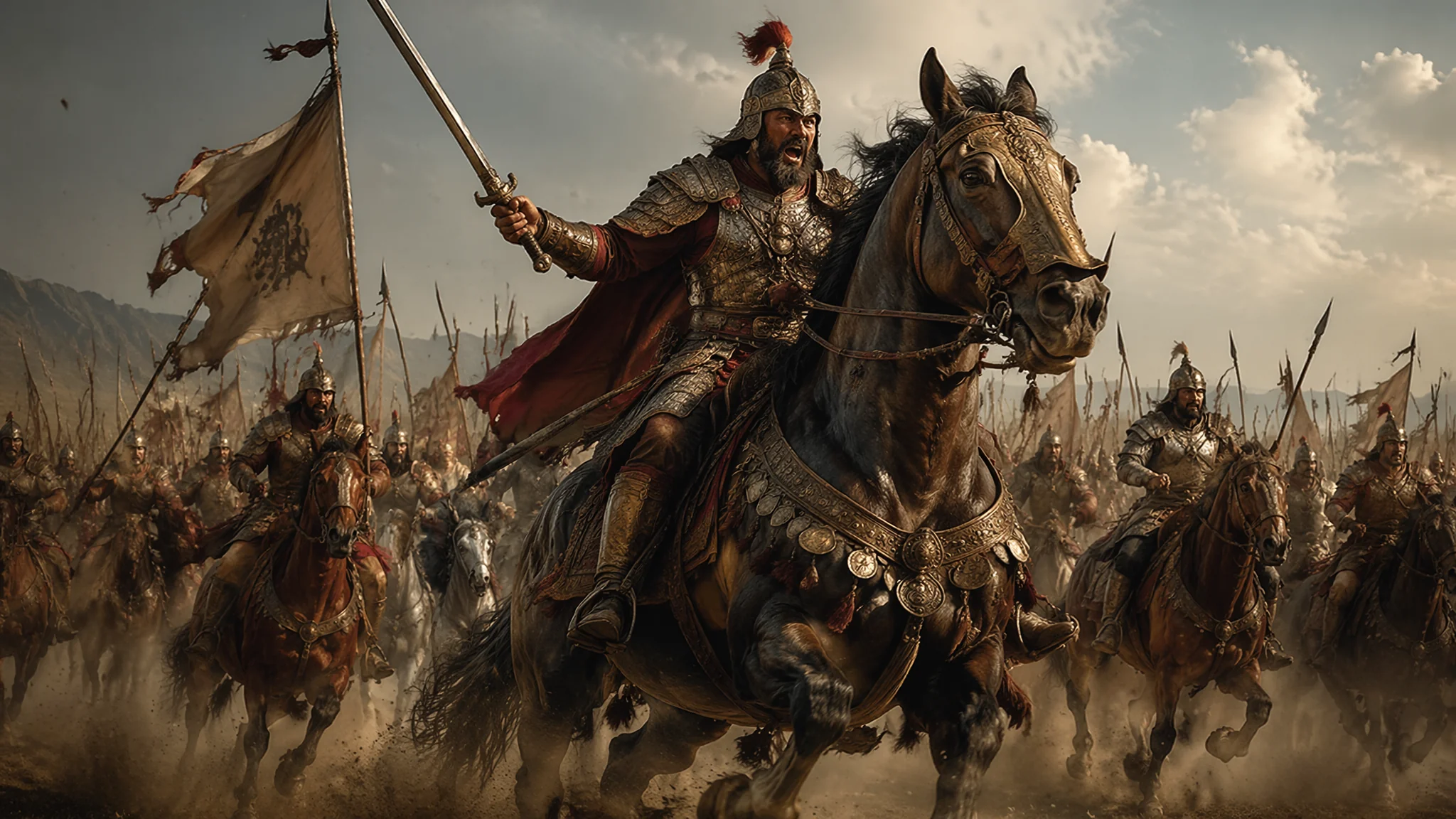
简单说:AI画骑兵战马,最难的不是马——是「冲锋感」。静态的马谁都会画,但要把千军万马从山坡上俯冲下来的那种压迫感塞进一张图里,需要同时控制战马动态、骑士兵器、尘土光影三套视觉系统。
第一次用AI画骑兵冲锋,我写了"ancient cavalry charging on battlefield, epic"。出来的是一匹马站在草原上,旁边站了个拿长矛的人——像旅游景点合影。后来我翻了三天骑兵战术史资料,才发现问题出在:没有告诉AI骑兵是「怎么冲」的。蒙古骑兵是骑射、欧洲骑士是枪骑冲锋、三国骑兵是刀骑混战——三种骑兵的视觉语言完全不同。
三种骑兵风格的视觉基因
蒙古草原骑射手——"Mongol horse archer, shooting bow backward while riding at full gallop, composite bow drawn, fur hat and deel robe, vast steppe background, dust clouds behind galloping hooves, Parthian shot technique"。蒙古骑兵的核心不是「冲」而是「转」——马上回身射箭(帕提亚射法)。写提示词时一定要加"twisting torso backward on horseback, bow fully drawn, arrow about to release",AI才能画出那种动态扭曲感。
欧洲重装骑士——"medieval knight in full plate armor charging with couched lance, armored warhorse with caparison, thunderous gallop, lance pointed forward, visor down, Crusader battlefield"。欧洲骑士的灵魂在「直线冲击力」——人马合一像一枚炮弹。加"couched lance under arm, charging in formation, horse barding glinting in sun"来强化编队感。铠甲质感参考AI角色设计教程里的金属材质处理章节。
三国骑兵——"Three Kingdoms era Chinese cavalry, armored general on horseback wielding a guan dao, red cape flowing behind, war drums in background, ancient Chinese battlefield, dust and banners"。三国骑兵的特点是「武将个人英雄主义」——不像欧洲的编队冲锋,而是一员大将单骑突阵的感觉。加"heroic solo charge, swirling dust and banners, dramatic sky"来渲染这种「万人敌」的气场。
战马动态——让马「跑」起来而非「站」着
马的奔跑姿态分四个阶段:腾空、前伸、收缩、蹬地。AI默认的马跑姿通常是「悬浮」状态——四条腿各跑各的。用"full gallop, all four hooves off the ground at the apex of stride, legs gathered under the body, mane and tail streaming horizontally"锁定真正的疾驰瞬间。
马的比例也是坑。写"warhorse proportions: thick neck, broad chest, powerful hindquarters, not a sleek racehorse"来区分战马和赛马。战马是「粗壮」的,赛马是「修长」的。战马体型的更多解剖细节参考AI人体绘画速写里的比例控制方法——人体和马的解剖逻辑是相通的。
战场氛围——尘土、火光和旗帜
战场氛围三要素:dust clouds(尘雾)、banners(旗帜)、dramatic sky(戏剧化天空)。「dust clouds kicked up by hundreds of galloping hooves, golden hour backlight through dust, silhouetted cavalry emerging from haze」——尘土是骑兵AI绘画的「氛围放大镜」。逆光穿过尘雾的效果能让画面瞬间拥有电影级史诗感。
兵器金属反光用「sunlight glinting off spear tips and armor, scattered specular highlights through dust」。旗帜写「tattered battle banners snapping in the wind, red and black color scheme, ancient Chinese or Mongolian motifs」。战场上更多大场景构图逻辑在AI宽幅风景绘画里有系统讲解。史诗级战争场景可以参考Midjourney社区里的历史战争题材优秀案例,在Civitai上也有很多骑兵题材的LoRA模型可以配合使用。
兵器与盔甲的细节把控
骑兵的兵器是区分朝代和文化的视觉锚点。蒙古骑兵用复合弓和弯刀——"Mongol recurve bow with distinctive shape, small and compact for horseback use, curved saber with a slight forward bend, the bowstring is taut with an arrow nocked and ready"。欧洲骑士用长枪和十字剑——"knight's lance with a steel tip and wooden shaft, the lance is couched under the arm in a charging position, a medieval longsword hangs from the belt in an ornate scabbard"。
铠甲的光线反射是关键。金属甲写「polished steel armor catching sunlight with sharp specular highlights, each rivet and joint visible, the armor shows signs of wear——minor scratches and dents that tell a story of past battles」。皮甲写「weathered leather armor with visible grain and stitching, darker patina in areas of frequent contact, the leather has molded to the rider's body over years of use」。战场上铠甲的磨损痕迹比崭新闪亮的铠甲更有叙张力——因为它在说「这个人打过仗」。更多装备材质技巧参考AI角色设计教程里的材质系统。
群像冲锋——从单人到大场面
单人骑兵画好了,进阶就是群像——千军万马的冲锋场面。群像的难度不在数量,在层次——"cavalry charge with multiple riders in formation, the front riders are large and sharply detailed in the foreground, the middle ranks are partially obscured by dust and motion blur, the rear is a mass of silhouettes emerging from the dust cloud, the depth is created by atmospheric perspective"。
群像构图最容易翻车的地方是——AI会把所有骑兵画成「复制粘贴」。避免这个问题的关键:「each rider has subtle differences in posture, horse color, and equipment, some horses are dark bays while others are chestnuts or greys, the formation has a natural organic flow not a rigid grid」。给AI强调每个骑兵是个体——不同的马色、不同的姿势、不同的装备细节。大场面史诗感的完整构建在AI宽幅风景绘画里有更系统的讲解。
骑兵AI绘画的色调与后期——从历史画到电影感
骑兵题材的色调决定了画面是「历史纪录片」还是「好莱坞大片」。历史感色调——「desaturated color palette with muted earth tones, the image has a slight sepia warmth like an old photograph, the colors are faded by time and dust, the atmosphere is historical and documentary-style」。
电影感色调——「cinematic color grading with teal and orange contrast, deep shadows with a slight blue tint, warm golden highlights on the armor and dust, the overall look is epic and immersive like a big-budget historical film」。电影感的核心是青橙对比(teal and orange)——阴影偏青蓝、高光偏暖橙——这是好莱坞史诗片的通用调色公式。在Adobe Photoshop的Camera Raw里做青橙对比也很方便——阴影色温-10偏蓝、高光色温+10偏暖。
还有一种风格——水墨骑兵——「ink wash painting style, ancient Chinese cavalry rendered in expressive black ink brushstrokes on aged rice paper, the horses are suggested with a few bold strokes rather than fully rendered, negative space is used masterfully, traditional Chinese painting aesthetics」。水墨风格对于中国骑兵题材特别合适——寥寥数笔画出千军万马的气势,比写实风格更有东方韵味。色调和风格的系统探索见AI色调绘画。
总结——骑兵AI绘画的核心心法
画好骑兵就三件事:搞清楚马是怎么跑的、搞清楚骑兵是哪个时代的、搞清楚战场的尘土往哪边吹。马的动态决定了画面的「真实感」——观众不一定懂马,但大脑能识别不自然的运动轨迹。时代背景决定了装备、服饰、战术的正确性——唐朝骑兵和蒙古骑兵在AI眼里是同一种「骑马的人」,你得用提示词把它们拆开。尘土和光影决定了画面的「史诗感」——没有尘土的战场像操场阅兵,有了逆光穿透的尘雾,二十个骑兵也能拍出斯巴达三百勇士的气势。
最后分享一个自己总结的骑兵AI绘画检查清单:马的奔跑姿态对不对(看四蹄是不是在同一帧里处于不同的运动相位)、兵器铠甲符不符合时代(别画成穿越剧)、尘土的位置合不合理(骑兵在草地上冲锋不应该扬起沙漠级沙尘)、光影方向是不是统一的(太阳和反光不能来自两个方向)。每次出图后花三十秒对照这四条过一遍,骑兵AI绘画的成功率能从60%提升到90%。如果你按这个清单检查完觉得没问题,那这张图就可以拿出去——别人会以为你是历史战争题材的专业画师。
常见问题
AI画的战马为什么总像旋转木马上的假马?
因为AI默认的马参考来源是静态摄影而非动态抓拍。加"dynamic action shot, motion blur on legs, dust trail, mid-gallop capture, National Geographic wildlife photography style"。动作摄影的关键词能触发AI调用动态马匹的训练数据。
骑兵冲锋的构图怎么避免「一坨人挤在中间」?
用"wide angle battlefield panorama, cavalry formation spreading across the frame from left to right, leading riders in foreground sharp, rear ranks fading into dust haze, depth of field with atmospheric perspective"。透视和景深能拉开空间层次。
中国骑兵和欧洲骑兵能混在一个画面里吗?
可以做「架空历史」风格。写"fantasy historical mashup, Mongol horse archers and European knights facing each other across a battlefield, cultural contrast in armor and tactics"。用对比来强化骑兵的文化差异。
觉得有用的话分享给喜欢历史军事的朋友吧。