AI梦境绘画:从清醒梦到噩梦的超现实幻境Prompt创意灵感大全
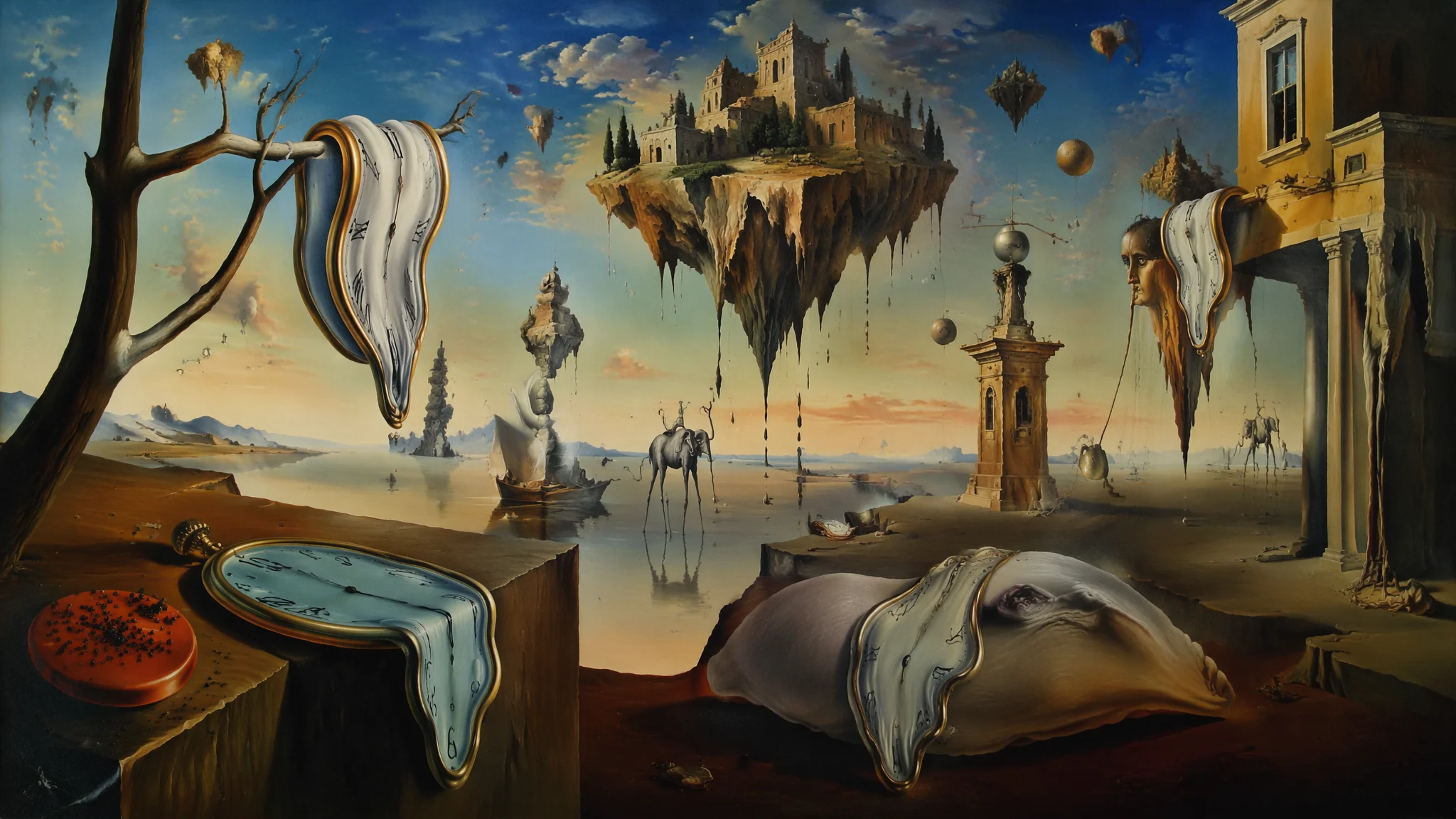
梦境是AI绘画真正的"舒适区"——因为梦不需要遵守物理法则,而AI最不擅长的就是物理法则。在梦境题材里——AI的"不合理"不再是bug,是feature。鱼在天上飞、建筑像液体一样流动、钟表像布一样挂在树枝上——这些在别的题材里是"AI翻车",在梦境题材里就是"超现实主义的杰作"。
试过一个实验——不写任何具体物体的Prompt,只写一种梦的感觉:"the feeling of falling in a dream, the ground rushing up but never arriving, the stomach-dropping sensation of weightlessness, the world above is receding, the world below is dark and formless, this is not a literal fall but the sensation of it"。AI画出了一张没有具象物体的图——只有色彩的垂直流动和一个模糊的人形在无限的下坠中。不是任何东西的图画——是"坠落"这个感觉本身。
梦境是 AI 绘画真正的“舒适区”。梦不需要遵守物理法则,而 AI 最不擅长的就是物理法则——两者刚好互补。在梦境题材里,AI 的“不合理”不再是 bug,而是 feature:鱼在天上飞、建筑像液体一样流动、钟表像布一样挂在树枝上,这些在别的题材里是翻车,在梦境题材里是超现实杰作。
三条主要方向:超现实主义梦境(达利/马格利特风格)、清醒梦(微妙的“不对劲”)、噩梦(暗示式的恐惧)。加上抽象情绪梦(如坠落感、飞翔感),构成完整体系。想同时叠情绪氛围,可以看AI孤独绘画。
三种梦境Prompt模板
超现实主义梦境。“surrealist dreamscape in the style of Dali and Magritte, melting clocks draped over barren tree branches, a steam train emerging from a fireplace, impossible stairs looping back on themselves, the sky simultaneously day and night split by a knife-sharp horizon, oil painting quality”。日常物 + 不可能语境 = 超现实。
清醒梦。“lucid dream state, detailed vivid world but with subtle wrongness, mirrors reflecting things that are not present, doorways leading to places that should not connect, faint sense of control mixed with the uncanny, cinematic composition, warm evening light, slight lens blur at the edges”。“subtle wrongness”是清醒梦的核心。
噩梦。“a nightmare vision, shadows that move against the light source, a familiar place turned hostile—your childhood home but all doors lead to the same dark room, something following just out of sight, fear based on suggestion not gore, cinematic horror atmosphere, cold blue with red pinpoint light”。用暗示比直接展示更可怕。
“梦感”的四条视觉法则
尺度错位。让一个物体大到不合理或小到不合理,“a giant clock larger than the mountain”“a tiny door in the middle of a vast wall”。物体转材质。“clocks made of soft fabric, buildings made of flowing water, clouds made of stone”。空间折叠。“a room whose ceiling is another floor, stairs that loop back into themselves, Escher-like impossible geometry”。光源反常。“shadows falling in the wrong direction, a light source that does not exist in the scene, moonlight that casts warm colors”。这四点是超现实主义的标准套路。
用途与构图
做小说封面(奇幻/文艺):3:4 竖构图 + 大范围留白 + 单一超现实主体,加“minimalist surrealism, subject in lower third, large empty sky”。做专辑封面:正方形 1:1 + 超现实符号 + 强烈色对比 + 加“album cover composition, iconic surreal symbol, single accent color”。做手机壁纸:竖 9:16 + 情绪流动 + 抽象色,加“vertical wallpaper, abstract dreamy gradient, soft flowing colors”。做展览艺术图:宽 21:9 + 舞台化构图 + 加“gallery art print, dramatic wide composition, museum quality”。
常见问题
AI画超现实梦境总是老套,怎么保持“新鲜”?
不要用最俗的“melting clock”“fish flying”。想两个正常不相关的东西,让它们互换属性:把咖啡杯换成海洋、把电梯换成森林、把心脏换成鸟笼。核心是“借用—错位—嫁接”这三步。
做“清醒梦”怎么让画面既真实又诡异?
关键是“99% 真实 + 1% 不对”。真实场景(家里客厅、办公室、街道)+ 一个隐藏的错误(“a door where there should be a window”“shadows without a light source”)。观察者要花几秒才发现哪里不对。
为什么写“nightmare”出图容易变血腥?
AI 遇到 nightmare 容易走血腥暴力。改成暗示式:“suggested threat, unseen presence, ominous atmosphere, no direct violence, psychological horror not gore”。这样出图既有恐惧感又能过审。
梦境题材做艺术展/画册商用有版权风险吗?
题材本身无版权。避坑:不复刻具体艺术家的独特作品(比如原样画达利的记忆的永恒),可以借风格但不复刻构图。加“inspired by surrealism but original composition”比“in the style of Dali”更安全。
最好的梦境画面不是“这只鲸鱼在天上飞好酷”,而是“我醒来之后使劲回忆我到底梦到了什么,只剩下一团模糊的颜色和一种说不清的情绪”。AI 唯一能帮你的,是把那种“说不清的情绪”变成一张让你说“对,就是这个感觉”的画面。
觉得有用的话分享给也爱记录梦境的朋友吧。