AI巨树古木绘画:参天大树与原始森林的史诗级画面创作
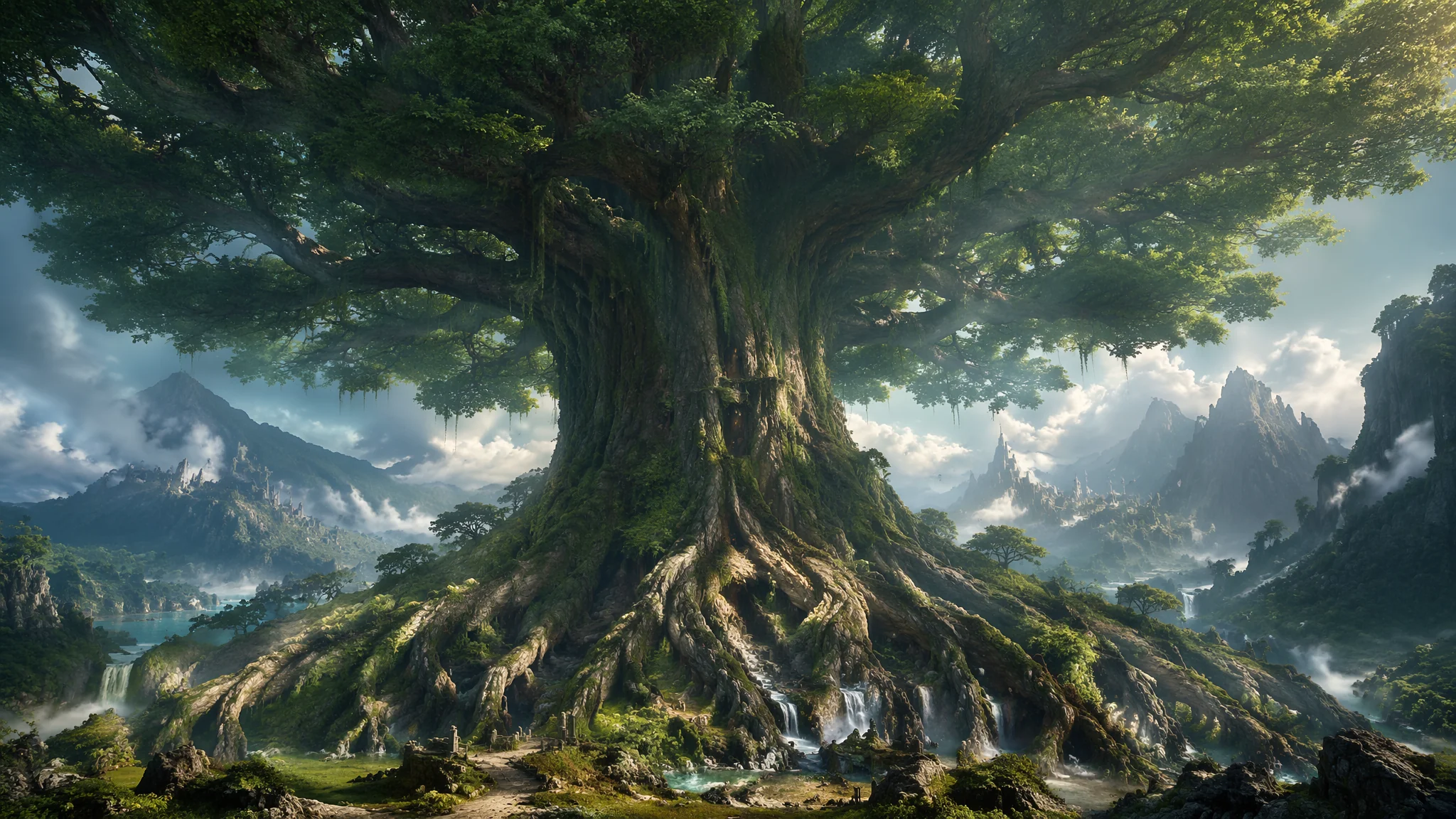
2019年我去加州红杉国家公园,站在一棵名叫"谢尔曼将军"的巨杉脚下。我仰头看了一分钟,然后后背直接贴地——只有躺着才能看到树顶。那棵树高八十四米,树龄超过两千年。后来的三年里我无数次试图用AI重现那种"巨物恐惧+崇敬感"的混合体验,失败了无数次。AI画大树很容易——AI画"让你觉得自己渺小"的大树,需要完全不同的策略。
巨树绘画的核心难题是"尺度感的传达"。一张照片里如果没有参照物(人、房子、车辆),再大的树看起来也只是一棵"普通的树"。AI不会自动帮你建立尺度对比——你必须主动在构图里安排参照物。而且参照物要放在离树足够近的位置,不能在画面角落里缩成像素点。
尺度感的三重建立法:参照物、视角、细节密度
参照物给尺度、仰视视角给压迫感、细节密度给"大"的不可替代感——三重手段叠加,观者的大脑会自动计算出"这棵树有多大"。参照物策略:"tiny human figure standing at base of colossal tree, person appearing as small as an ant against trunk diameter, scale comparison between familiar object and immense natural form, backpack leaning against root showing relative size"。仰视视角:"worm's eye view looking up from base of giant tree, extreme upward perspective with trunk narrowing toward distant canopy, vertigo-inducing vertical composition, tree disappearing into clouds above, viewer feels physically small"。细节密度:"intricate bark texture filling entire frame width, each ridge and furrow of ancient bark telling centuries of growth, massive root system spreading like wooden rivers across forest floor, epiphytic ferns and mosses growing on branches showing tree as entire ecosystem"。三招里参照物最基础但也最容易用错——参照物不能太小,否则观者注意不到;不能太远,否则尺度对比失效。我的经验是:人物离树干的距离不超过画面宽度的四分之一。AI尺度感与宏伟构图表现技法里有更多关于视觉尺度的系统方法论。
树皮肌理:古木的"指纹"——每一道裂纹都是岁月的记录
不同树种的树皮纹理完全不同:红杉是纵向纤维状裂纹、栎树是深沟状龟裂、桦树是横向纸片状剥落、松树是鳞片状叠层。树种名本身就是最精准的纹理关键词。红杉巨木:"giant sequoia bark, thick fibrous reddish-brown bark with deep vertical furrows, spongy fire-resistant texture, trunk diameter spanning entire frame, bark plates interlocking like puzzle pieces"。古栎树:"ancient oak tree bark, deeply furrowed with irregular diamond-shaped ridges, moss and lichen colonizing crevices, gnarled contorted trunk suggesting centuries of struggle against elements, Celtic forest atmosphere"。白桦树:"birch tree bark with distinctive horizontal peeling pattern, white papery outer layer curling away revealing orange-brown inner bark, black knot marks creating natural graphic pattern, multiple slender trunks in cluster"。树皮纹理如果只写"detailed bark"AI就给你一层平均化的"树皮纹理贴图"。必须精确到树种——sequoia bark和birch bark在AI模型里的视觉响应差异巨大。Arbor Day Foundation网站上有详尽的树种数据库,包括每种树的树皮、叶子和整体形态的高清照片,是写树皮提示词的最佳参考源。
树冠与光影:从"丁达尔效应"到"树冠天窗"的光线魔法
巨树场景最震撼的光学现象是"丁达尔效应"——阳光穿透树冠缝隙形成可见的光柱,像聚光灯一样打在地面的蕨类植物和苔藓上。丁达尔光柱:"god rays piercing through dense canopy gaps, visible shafts of light cutting through forest dimness, illuminated dust particles and pollen dancing in light beams, cathedral-like light effect in ancient forest"。树冠天窗:"canopy gap opening revealing bright sky above, single shaft of intense sunlight spotlighting forest floor, surrounding area remaining in deep shadow, dramatic contrast between light and dark, spiritual atmosphere in old-growth forest"。林下微光:"dappled forest floor lighting, mosaic pattern of light spots created by canopy leaves, soft green ambient light filtered through chlorophyll-rich foliage, depth created by alternating light and shadow pools"。拍过森林的人都知道——丁达尔效应需要特定的湿度条件。在AI提示词里加"high humidity forest air""morning mist enabling visible light beams",光线效果的真实感会大幅提升。AI自然光效与森林光影技法里有更详细的光影配方。
森林生态系统的层次构建:从林冠到腐殖层的完整垂直结构
原始森林不是只有树——它有五层垂直结构:林冠层、亚冠层、灌木层、草本层、地被层。画面里体现的层次越多,森林的"原始感"越强。林冠层:"emergent canopy layer of oldest tallest trees, upper branches interlacing to form continuous green roof, epiphytic plants and moss gardens growing on high branches, bird nests and squirrel dreys visible in branch forks"。中层结构:"understory layer of younger trees and tall shrubs, dappled light conditions, climbing vines ascending toward canopy, tree ferns with unfurling fronds, layered depth between foreground trunks and background forest"。地面层:"forest floor covered with decomposing leaf litter, fallen giant tree trunk acting as nurse log for new saplings, mushrooms emerging from rotting wood, ferns and mosses carpeting the ground, fungal mycelium network hinted by mushroom clusters"。五层全写进去可能提示词太长——我通常会选三个重点层展开写,另外两层用概括性词汇带过。比如主打林冠+地面,灌木层就用"lush understory vegetation"一笔带过。AI生态系统场景绘画指南里有关于自然场景层次构建的更多内容。
奇幻巨树的想象力边界:从世界树到精灵森林的史诗级创作
奇幻巨树不用遵守现实树种的生物学限制——但需要遵守"视觉可信度"的约束。一棵树可以大到承载一座城市,但树干与树枝的承重关系要看起来合理。世界树:"Yggdrasil-style world tree connecting earth and sky, roots embedded in bedrock with waterfalls cascading from exposed roots, trunk wide enough to contain entire civilization, canopy extending into stratosphere with clouds caught in upper branches"。精灵巨树:"elven great tree city, architecture seamlessly integrated into living wood, spiral staircases carved into trunk, glowing windows nestled among branches, bioluminescent fungi providing ambient light, harmony between civilization and nature"。古树精:"sentient ancient tree with face formed by natural bark formations, wise eyes in knot holes, branch arms reaching protectively over forest creatures, fantasy illustration style with Studio Ghibli influence"。奇幻巨树的约束条件不是"对或错",而是"画面内部的物理逻辑是否自洽"——树干粗细、树枝角度、树叶面积三者之间要有合理的结构关系。读者潜意识里会做这个判断。AI奇幻世界观构建与场景设计里有更多奇幻场景的系统创作方法。
常见问题
AI巨树绘画常见问题集中在尺度感传达、树种识别准确度和森林空间表现方面。AI画的"大树"为什么看起来就是一棵普通的树?
缺参照物。加一个站在树脚下的小小人物(大小约为树干直径的百分之一到二十分之一),观众的尺度感瞬间被激活。没有参照物的大树,在照片里就是一棵普通的树。
树皮画得像"塑料管"怎么办?
问题出在缺乏树种特异性纹理。把通用的"tree bark"替换为具体树种的学名或俗名——"sequoia bark""oak bark""birch bark""pine bark"。不同树种的树皮在AI模型里有独立的视觉区,精确度远高于通用描述。
怎么让画面传达"这棵树很古老"的感觉?
古老感来自三个视觉线索:粗大的树干基部(有明显的板根或膨大)、扭曲挣扎的生长姿态(不是笔直的)、表面附生的其他生命(苔藓、地衣、蕨类)。三条线一起用,树龄感就出来了。
觉得有用的话分享给朋友吧。