AI女扮男装角色绘画:帅气中性美与性别反串的趣味角色设计
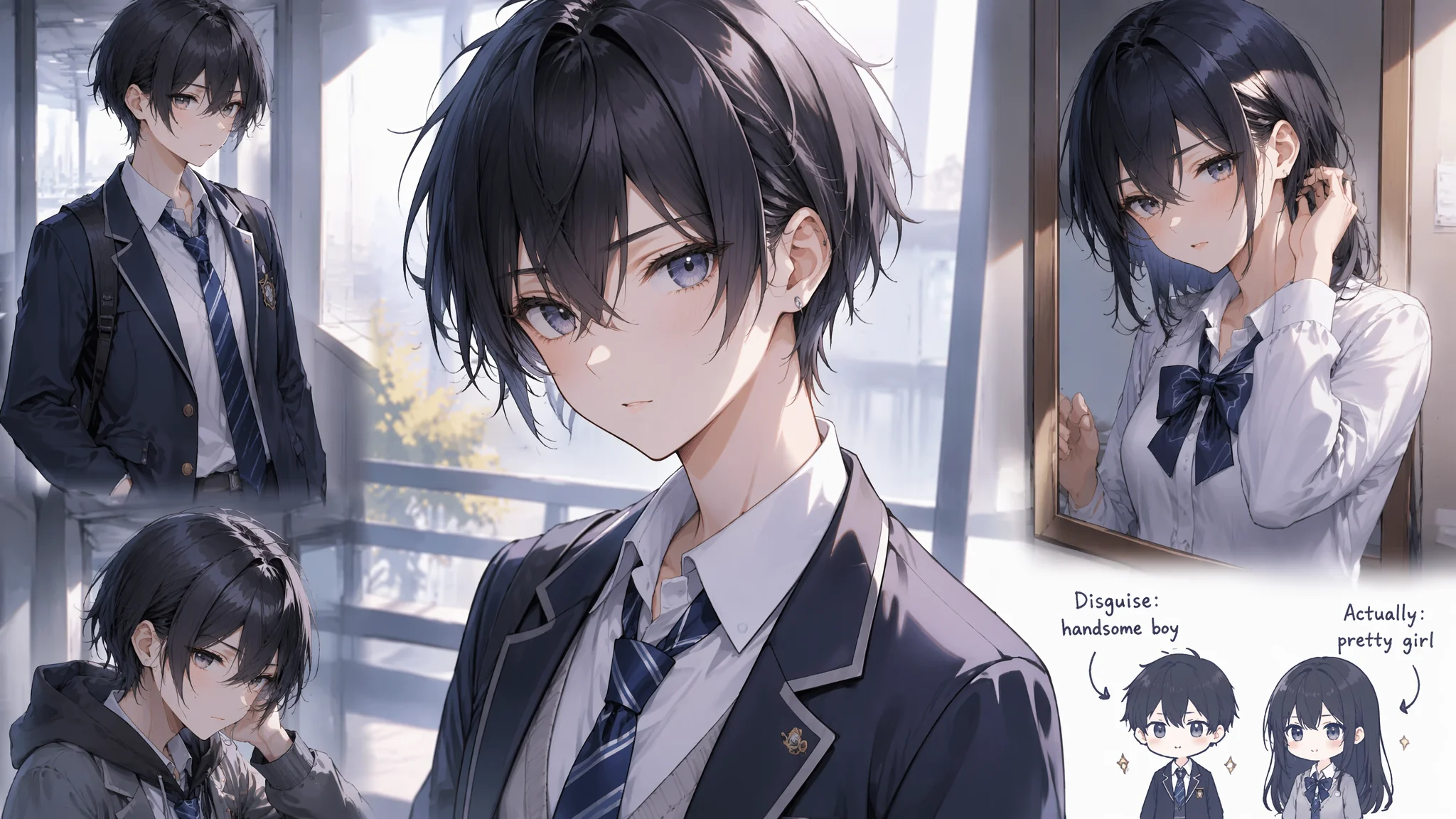
前阵子帮一个网文作者画封面——女主设定是"女扮男装混入军营"的那种。我心想这不难——写个"woman dressed as a man"加上军装描述就行。结果第一批图出来差点把作者笑死——每一张都是烈焰红唇加假胡子。AI对"女扮男装"的默认理解是从喜剧默片里抄来的——夸张到能一眼看穿的那种假扮。真正的女扮男装应该是"看着像男的但隐约觉得哪里不太对"——那个"隐约"才是精髓,也是最难用Prompt写出来的东西。
AI画女扮男装角色的根本困境是:训练数据里"woman wearing men's clothing"大部分对应的是"时尚中性风"或"女性穿男友衬衫"——这些图里的女性特征是保留的(长发、妆容、曲线)。而故事设定里要求的"女扮男装"通常是要"骗过周围人的"——这意味着女性特征必须被主动压制——胸部束平、头发剪短或束起藏好、面部妆容全素、体态模仿男性。这两个场景在视觉上是完全不同的东西——但AI只见过第一种没见过第二种——所以你写"woman disguised as a man"AI会把"disguised"理解成"化装舞会级别的表面伪装"而不是"持续性的身份隐藏"。要让AI画出"真实的女扮男装",你需要从四个维度同时反向定义——告诉AI不要画什么和要画什么同样重要。
面部中性化——让一张女性面孔"看起来像男的"的三个关键调整
性别判断在视觉上的第一优先级不是头发和衣服——是下颌线和眉弓。女性下颌偏圆润、男性下颌偏方正——把这两个骨骼特征调整过来,不换发型不换衣服也能让AI画出来的脸"像男的"。中性化面部写法:"a face with androgynous features that could pass as a young man — the jawline softened but still defined with a subtle squareness to the chin, the eyebrows naturally thick and straight without any arching or shaping, the lips thin and pale without any color or plumpness, the skin tone even and natural without any makeup or blush, the nose straight with a slight prominence to the bridge, the eyes alert and direct without the doe-eyed softness typically associated with feminine faces"。注意我写的是"androgynous features that could pass as a young man"而不是"looks like a man"——目的不是把女性画成男性,而是让女性长一张"可以被误认为清秀少年"的脸。古风题材里写"a young scholar whose delicate features and slender build could belong to either gender"——这种暧昧的写法恰好命中了"看着像男的但隐约觉得哪不对"那个微妙区间。关于面部特征的细化控制,AI肖像绘画教程里有从骨相到皮相的完整面部参数系统。
体型处理——束胸、垫肩和姿态是"隐藏性别"的三件套
AI默认画女性会给曲线——臀部、胸部、腰部都会按女性标准比例来。写女扮男装Prompt的时候必须手动把这三项"压平"——不是写"flat chest"这种粗暴的词,而是用服装结构来合理化体型的平坦。束胸写法:"the chest appearing flat beneath the garment, the torso wrapped in binding cloth that smooths the natural contours of the body, the binding creating a uniform straight line from shoulders to waist without any curves"。垫肩/宽肩写法:"the shoulders broadened and squared by structured padding inside the jacket, the silhouette deliberately masculine with the shoulder line extending beyond the natural frame, creating the inverted triangle shape associated with a fit young man"。男性化站姿:"standing with feet planted at shoulder width, weight evenly distributed, shoulders back and chest slightly puffed in a posture of masculine confidence, hands resting on the hips or crossed over the chest rather than held delicately at the sides"。姿态是性别信号里最容易被忽略的一项——女性站姿重心通常偏一条腿(S曲线)、男性站姿重心平分双腿(H直线)——把站姿写对,性别的"感觉"就对了一半。关于角色体态的更多研究,AI动作姿态绘画里有从性别差异到身份差异的姿态对照分析。
题材与风格——古风女扮男装 vs 现代女扮男装的Prompt路线差异
古风女扮男装的视觉套路是"宽大衣服遮体型+帽子或束发藏长发+书生气质解释面容清秀"——衣服越宽松越容易骗过AI也骗过观众。现代女扮男装则更难——现代男装贴身剪裁,体型差异藏不住,所以需要更强的"中性气质"来弥补。古风路线(花木兰型):"a figure in the loose flowing robes of a Tang dynasty junior military officer, the layered garments deliberately oversized to conceal the wearer's frame, the hair entirely hidden beneath a military cap or futou headwear, the face young and beardless with features refined enough to suggest a well-born youth, only the eyes hinting at a hidden truth"。古风语境下"女扮男装"有一个天然优势——古代男人也穿袍子,衣服不需要太贴身,体型差异自然被遮盖了。现代路线(女扮男装混入男校/职场):"a figure in a loose-fitting men's school uniform blazer worn over a slightly oversized button-down shirt, the pants cut straight without tapering, the hair cut short in a practical androgynous style, the face makeup-free with a complexion that reads as 'clean-featured young man' rather than 'beautiful woman', the overall presentation suggesting a quiet handsome youth who keeps to themselves"。现代路线的关键是"oversized"和"loose-fitting"——用服装的宽松度来合理化体型的平坦。在Pinterest上搜索"crossdressing character design"或"female disguised as male art"能看到日韩画师处理这个题材的高质量作品——特别是韩国网漫里大量女扮男装题材的角色设计。ArtStation上搜索"花木兰"或"Mulan concept art"则可以找到从迪士尼到独立艺术家的各种木兰设计——对比不同版本的面部处理可以学到"如何在保留女性本质的同时让人相信她扮男人是成立的"。
"暴露瞬间"的戏剧张力——领口松开、帽子被风掀落、雨淋湿后
女扮男装题材最有戏剧张力的画面往往不是"完美伪装"——而是"伪装即将暴露"的那一瞬间。领口在战斗中松开露出束胸的布条、帽子被剑挑落长发倾泻而下、雨水淋湿后衣服贴在身上显现出被隐藏的曲线——这种"暴露边缘"的画面是AI绘画里最能产生故事感的构图。领口松开暴露:"the collar of the military uniform torn open in combat, revealing the wrapped cloth binding beneath — a detail that does not belong on a male soldier, the character's hand instinctively moving to cover the torn fabric, the expression a flash of panic quickly suppressed"。帽子被风掀落:"the military cap caught by a sudden gust of wind, long black hair escaping from its confines and streaming in the wind like a dark banner, the moment frozen as the character reaches for the airborne cap, the face now unambiguously revealed as feminine in the unforgiving daylight"。雨中湿衣:"standing in heavy rain, the loose uniform plastered against the body by the downpour, the hidden contours becoming visible through the soaked fabric, the character's arms crossed protectively over the chest, the expression a mixture of defiance and vulnerability"。这些"暴露边缘"的画面在Prompt里要强调的不是"暴露"本身——而是"角色在暴露瞬间的反应"——因为故事感不来自发生了什么,来自角色怎么应对。关于戏剧性瞬间的创作思路,AI角色设计教程里有从日常状态到"关键帧"的设计方法。
常见问题
AI总是把女扮男装画成"穿西装的长发美女"怎么办?
因为你写的Prompt里保留了女性的长发和妆容。两个修正:头发用"hair completely concealed under a cap or cut into a short practical style"、面部用"makeup-free face with no visible cosmetics, no lip color, no defined eyelashes"。去掉这两个默认的女性信号,AI就会往中性方向偏。
怎么让角色"看着像男的但隐约觉得不对"而不是"一眼就是女的"?
写"androgynous beauty"而不是"feminine beauty"——androgynous表示中性美,AI会处理成雌雄莫辨的效果。配合"delicate bone structure that could pass for a young man who has not yet fully matured"——把这个身份合理化之后AI就不会强行画女性特征。
束胸的效果怎么写才不会被AI画成绷带或木乃伊?
不要写"bandages"——AI会往医疗方向偏。写"fabric binding wrapped smoothly across the torso beneath the clothing, the binding made of soft linen strips that flatten without creating bulk"——强调fabric和soft linen,避免medical和wound这两个词。更多服装细节控制参考AI服装时尚绘画。
女扮男装这个题材在AI绘画里比我想象的难做——因为你要对抗的不是Prompt技术,是训练数据的性别刻板印象。AI默认"女人=长发+妆容+曲线"、默认"穿男装的女人=时尚中性风"——你要同时打破这两个默认。后来我找到了窍门:不要告诉AI"这是一个女人在假扮男人"——告诉AI"这是一个面容清秀到性别模糊的年轻人"。当AI不确定画的是男是女的时候——你再加服装和场景的细节——出来的效果反而精准命中"女扮男装"那种微妙的暧昧感。做这个题材让我学到一课:很多时候AI画不好不是因为你描述得不够清楚——是因为你描述的方向和AI的训练数据编码方向不一致。换个角度描述同一个东西,结果可能天差地别。