AI眼镜男生绘画:斯文儒雅与知性气质的男性角色视觉设计
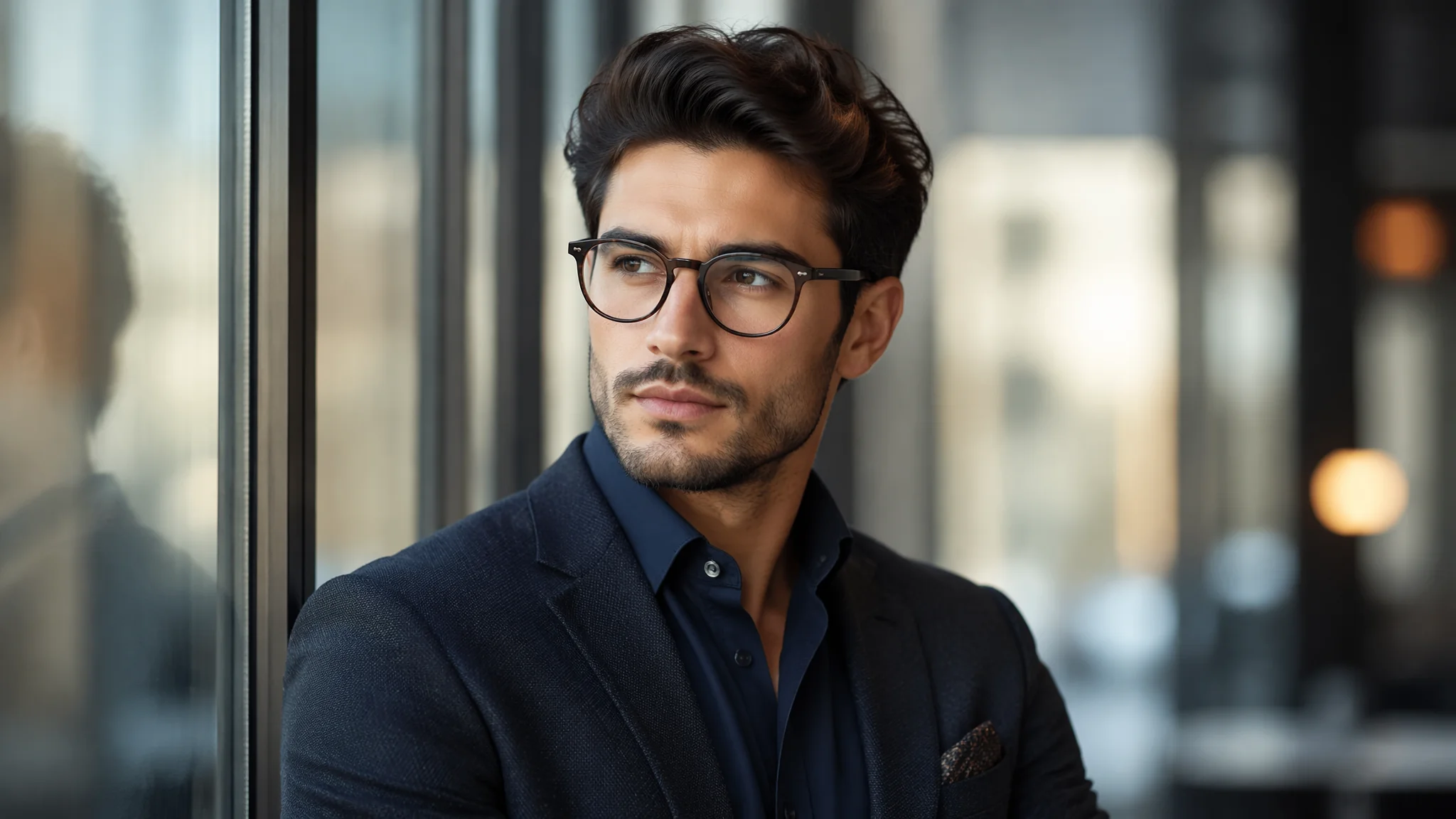
我自己戴眼镜戴了十五年——从初中到研究生。十五年来眼镜从一个"我希望能不戴就不戴"的东西变成了"没有它我反而不习惯自己长什么样"的东西。去年我想用AI画一张"戴眼镜的自画像"——结果AI画出来的人戴着眼镜的样子像是偷了别人的眼镜戴上去的。镜框悬浮在鼻梁上方、镜片里反射出一个不该存在的窗户、镜腿的结束位置在耳朵上方一厘米——每一处细节都在说"我不知道眼镜是怎么工作的"。那之后我花了很多时间研究"怎么用AI画出正确的眼镜"——不只是把镜框画对称——是画出"眼镜和人的脸之间的关系"。这篇把这些关系拆开来讲。
眼镜和脸的关系——AI不理解的"佩戴"逻辑
AI画眼镜最常见的问题是:眼镜看起来像"浮"在脸上而不是"戴"在脸上。根源是AI不理解眼镜的物理支撑系统——鼻梁托、镜腿耳挂、镜框与眉骨的相对位置。眼镜有三个物理接触点:鼻梁(鼻托压在鼻梁两侧)、耳朵顶部(镜腿末端挂在耳后)、以及太阳穴(镜腿内侧轻轻接触)。这三个接触点在画面中都以微妙的方式可见——鼻托处有轻微的皮肤压痕或阴影;镜腿在耳朵后面露出一小截;太阳穴处镜腿的阴影落在皮肤上。
眼镜贴合Prompt的核心写法:"the glasses sit naturally on his face——the nose pads create a subtle indentation on the bridge of the nose visible as a soft shadow, the temples extend back and hook behind the ears, the very end of the temple tips are visible just behind the ears, the glasses cast a faint shadow on his cheekbones where the frames pass close to the face, the fit is precise——the glasses are an extension of his face, not an accessory placed on top of it"。这四句话分别对应:鼻托压痕、镜腿耳后、面部阴影、整体贴合感。缺一个都会让眼镜看起来"浮"着。
关于眼镜在不同光源下的光影处理可以参考AI黑发男性绘画中关于面部配件光影的原理——眼镜和头发都是"叠在脸上的附加物",光学逻辑相通。
镜框选型——不同框型等于不同人格
眼镜框型不是审美偏好——是角色信息的视觉速写。一副眼镜在无声地告诉观众:这个人是做什么的、他的审美倾向是什么、他大概生活在哪个时代。
细金属圆框(约翰·列侬型)——"thin round gold wire-rimmed glasses, intellectual and slightly bohemian, the glasses suggest a creative thinker——a writer, a musician, a philosophy professor, the round shape softens the face"。黑色粗框(建筑师型)——"thick black rectangular acetate frames, bold and architectural, the glasses project competence and precision——an architect, a designer, a tech entrepreneur, the strong lines of the frames create structure on a softer face"。透明/裸色框(极简主义者)——"transparent or pale tortoiseshell acetate frames, barely there aesthetic, the glasses are present but unobtrusive——they correct vision without defining the face, suggests someone who is practical and understated"。半框(知识分子型)——"half-rim glasses with metal upper frame and rimless lower edge, academic and slightly vintage, suggests a scientist or a scholar who cares about function but not fashion"。复古玳瑁圆框(文艺复古型)——"round tortoiseshell glasses with keyhole bridge, vintage 1920s inspired, the glasses suggest a nostalgic romantic——an antique bookstore owner, a jazz musician, a poet who still uses a typewriter"。
框型选择的核心原则:镜框的"硬"或"软"要服务于你角色的整体气质。直线框(方框、矩形)=理性、结构感、现代;曲线框(圆形、椭圆)=人文、柔和、怀旧。这个原则帮你在不写过多外貌细节的情况下,用一副眼镜快速建立角色认知。角色穿搭的更多搭配思路在AI女生服装绘画中也有可以迁移到男装的穿搭逻辑。眼镜框型设计可以参考Warby Parker的镜框分类体系——不同框型对脸型的影响在实体眼镜设计中有大量可视化案例。
镜片的光学——透过镜片看眼睛
戴眼镜的角色最迷人的视觉瞬间是"透过镜片看他的眼睛"。这个看似简单的画面包含了复杂的光学交互:光线穿过镜片→被镜片轻微折射→到达眼睛→被眼睛反射→再次穿过镜片→到达观众的眼睛。正确的镜片光学Prompt:"the prescription lenses subtly alter the appearance of his eyes——the area of the face behind the lenses is very slightly magnified or minified depending on the prescription, there is a faint green or purple anti-reflective coating on the lens surface that is only visible at glancing angles, the eyes behind the lenses are clear and sharp while the lens surface reflects a soft ghost image of the room——this dual image of eyes-through-lens and reflection-on-lens creates the signature 'glasses look'"。
近视镜片(凹透镜)——透过镜片看,眼睛稍微缩小,镜片边缘看过去脸部的轮廓有不连续的错位。在Prompt里:"the lenses are slightly concave——the eyes appear marginally smaller behind them, at the edge of the lenses there is a visible displacement where the face seems to jump"。这个细节非常微妙但一旦画对了,戴眼镜的人看到就会说"对的,这就是戴眼镜看到的世界"。远视/老花镜片(凸透镜)——眼睛稍微放大。大部分AI训练数据里的"戴眼镜的人"都是平面无度数镜片——加上述光学细节能有效打破"平光玻璃"感。镜片光学的物理原理可以参考All About Vision的眼科光学基础——凹透镜和凸透镜的光线折射示意图对理解"镜片后的眼睛为什么看起来不一样"非常有帮助。
四种眼镜男生风格——从学院到复古
学院派斯文型:"a young man in his mid-twenties, thin gold round glasses, slightly messy dark hair that looks like he runs his hands through it when thinking, wearing a soft grey cardigan over a white button-down shirt with the top button undone, sitting in a sunlit university library surrounded by stacks of books and papers, a cup of black coffee going cold beside him, he is deeply absorbed in reading——one hand holds the book the other absently pushes his glasses up his nose, the afternoon light through tall windows creates long shadows across the oak table, the mood is quiet contemplation"。学院派的核心在"沉浸"——他不在乎自己看起来怎么样。
都市精英型:"a professional man early thirties, sleek rectangular dark-framed glasses, hair styled with precision, wearing a well-tailored navy suit with no tie and the collar slightly open, standing by a floor-to-ceiling window in a high-rise office at blue hour, the city lights are beginning to glow outside, he holds a tablet in one hand and pushes his glasses up with the middle finger of the other hand——a gesture of focus, sharp confident expression"。更多写实男性的气质技巧在AI写实帅哥绘画中有深入拆解。
文艺复古型:"a creative type in his late twenties, round tortoiseshell glasses with a vintage keyhole bridge, wavy medium-length hair tucked behind one ear, wearing a corduroy jacket over a band tee, sitting in a cozy indie café with exposed brick walls and hanging plants, a leather journal open on the table with handwritten notes visible, a vintage film camera sits beside the coffee cup, he looks up from his writing with a slight smile——as if the viewer just said something interesting"。文艺型的关键在"环境道具的个人化"——不是随便一个咖啡馆,是有植物、有砖墙、有胶片相机的那种咖啡馆。
极客技术型:"a tech guy with transparent-framed glasses that have a subtle blue-light filtering tint, hoodie with a startup logo, multiple monitors in the background showing code and data dashboards, mechanical keyboard with RGB backlight, he leans back in his chair with hands behind his head——a moment of satisfaction after solving a hard problem, the glasses reflect the glow of the screens, the mood is late-night coding session energy"。极客型的关键在"屏幕光映在镜片上"——蓝紫色的反光是技术男的视觉签名。
常见问题
如何让戴眼镜的角色"摘下眼镜"也看起来像同一个人?
这是一个角色设计层面的问题。如果一个人长时间戴眼镜,摘下来之后鼻梁上会有两个浅色压痕(镜框遮住了紫外线)、眼睛周围肤色比颧骨略浅(镜片挡住了部分光)、眼神比戴眼镜时多了一点迷茫(因为看不清)。在Prompt里写:"he removes his glasses——the bridge of his nose shows two faint red marks where the nose pads rested, the skin around his eyes is slightly lighter than the rest of his face from years of the lenses blocking sunlight, his eyes blink and squint slightly as they adjust to uncorrected vision"。这些细节让"摘下眼镜"成为一个有叙事感的瞬间而非简单的"换了个造型"。
AI把眼镜和墨镜搞混了怎么办——我想画普通眼镜但AI给我墨镜?
在Prompt里明确加"clear prescription glasses with transparent lenses, the eyes are fully visible through the lenses, not sunglasses, not tinted lenses"——把否定格式写全。如果还是出墨镜,查一下你的Prompt里有没有"cool""mysterious""dark""edgy"这些词——AI看到这些词会默认往墨镜方向偏。另外,在Negative Prompt里加"sunglasses, dark lenses, tinted glasses, mirrored lenses, reflective lenses hiding eyes"。
眼镜+口罩的组合怎么画——脸上两个配件容易互相打架?
眼镜+口罩的组合在AI里是"双重重叠结构的噩梦"——口罩压在鼻梁上,眼镜的鼻托又压在口罩上,空间关系很复杂。解法:"he wears a mask that sits high on the bridge of his nose, the glasses are worn over the mask——the nose pads rest on the mask fabric creating a slight indentation, because the mask pushes the glasses slightly higher than normal there is a tiny gap between the lower frame and his cheek, his breath slightly fogs the bottom edge of the lenses on a cold day"。关键细节:口罩把眼镜顶高了一点点、镜片底部有可能起雾——这些物理交互写清楚了,AI就不会画出"口罩和眼镜同时浮在脸上"的效果。