AI绘画古风场景:从仙侠山门到江湖客栈的中国古风建筑Prompt大全
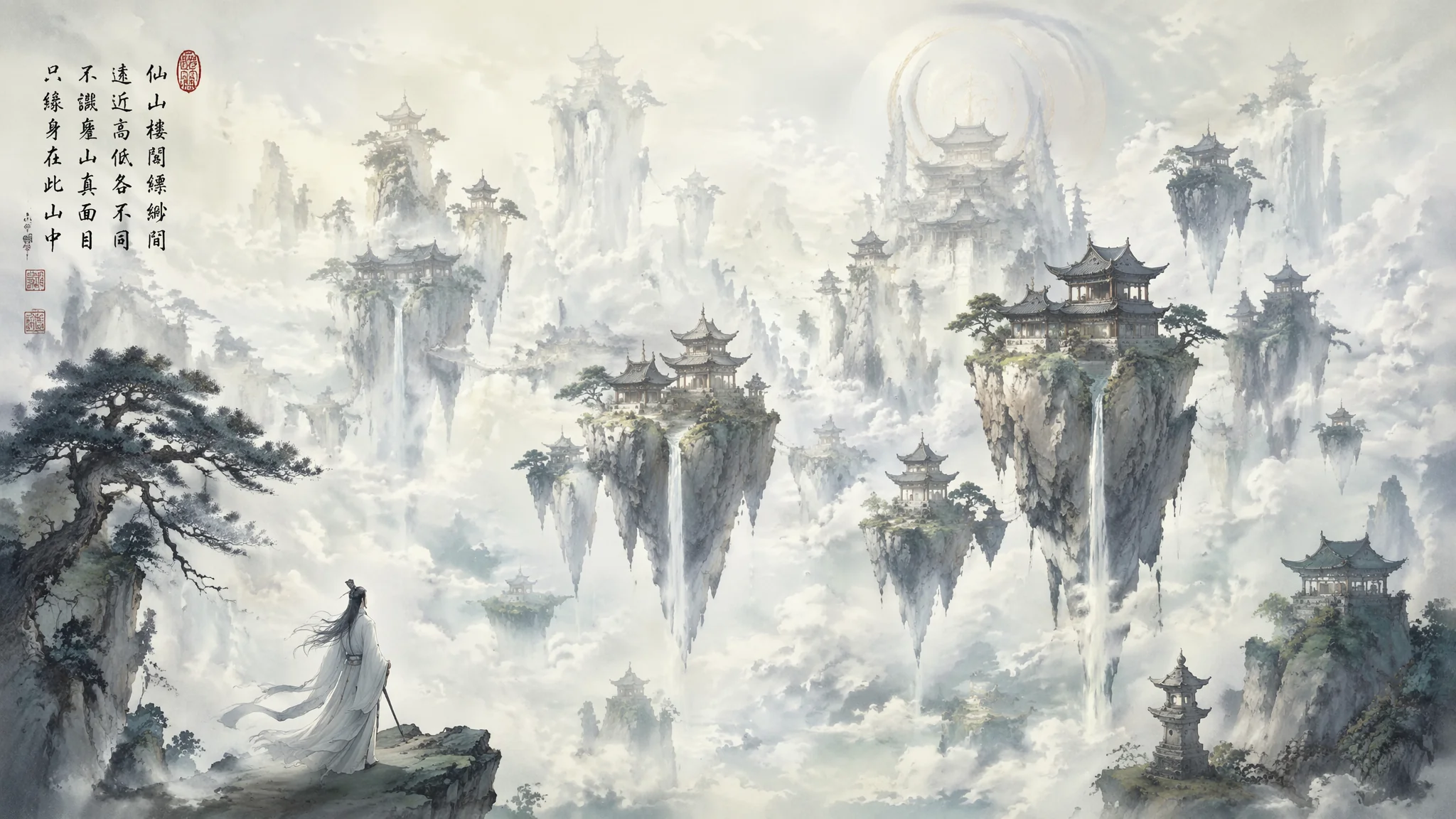
中国古风是AI绘画里热度最高的国产题材——仙侠影视、国风游戏、古言小说——海量的古风内容需求催生了庞大的AI古风绘画产出。但AI对"Chinese ancient style"的理解有两个极端:要么画成旅游景点的仿古商业街(太新),要么画成日式和风建筑(模型混淆)。这篇解决古风场景的"中国性"。
中国古风是 AI 绘画里国产题材热度最高的一档,仙侠影视、国风游戏、古言小说、汉服写真、国潮短剧都在持续需要古风视觉。但 AI 对 “Chinese ancient style”这个词的默认理解有两个极端:一是画成商业步行街那种“仿古景区”,太新太统一;二是滑到日式和风,屋檐弧度、榻榻米、纸窗全跑偏。真正做出“中国古风”味道,需要把朝代、建筑形制、地域和场景类型拆开写。
四条主要方向:仙侠山门(悬浮/云海)、江湖客栈(武侠/边关)、古言庭院(明清/江南)、宫廷殿宇(唐宋/紫禁)。每种对应完全不同的 Prompt 库,随便混着写,AI 会给你一锅无风格东方粥。AI国画入门指南里有水墨相关的补充。
四类古风场景Prompt模板
仙侠山门。“a floating immortal sect gate suspended among misty mountain peaks, ancient Chinese pavilions connected by arched stone bridges over clouds, stairs leading from mortal world below to the celestial realm above, elegant impossibly tall architecture, crane birds circling the highest towers, xianxia aesthetic, cinematic wide shot, painterly matte painting”。核心是“vertical / floating / above the clouds”,让 AI 走仙侠而不是普通山寺。
江湖客栈。“a weathered riverside inn in the Chinese jianghu, wooden structure with faded red lanterns swaying in the wind, travelers in conical bamboo hats resting their swords against the table, innkeeper wiping a ceramic wine jar, dim oil lamp light, atmosphere mixing fatigue refuge and unspoken danger, wuxia cinematic style”。多写细节道具(斗笠、剑、酒坛、油灯)比只写 inn 有效。
古言庭院。“an elegant Ming Dynasty courtyard garden, whitewashed walls with a circular moon gate, koi pond reflecting the curved roof of a waterside pavilion, wisteria hanging from a wooden trellis, a lady in flowing silk robes reading by the window, refined and tranquil, natural spring light”。强调朝代(Ming/Song)+ 建筑细节(月洞门、飞檐、瓦当)+ 江南园林元素。
宫廷殿宇。“a grand Chinese imperial hall in the Forbidden City style, red walls and golden glazed roof tiles, massive vermilion columns, coffered ceiling with dragon and phoenix motifs, wide stone plaza, morning light casting long shadows, Tang or Ming dynasty imperial architecture, epic wide composition”。宫廷题材最重要的是“red walls + golden glazed tiles + vermilion columns”这三件套的组合。
让古风“像中国”而不是“像和风”的六个词
AI 训练数据里日式建筑样本更多,很容易把中式当日式画。用这六个否定/正面词能拉回来:正面:“Chinese hip-and-gable roof(歇山顶)”“curved upturned eaves with subtle warp(飞檐)”“glazed tile roof, not thatched or dark wood”“vermilion red painted wood columns”“white plaster walls with grey brick base”“Chinese wooden lattice windows”。否定:“no Japanese torii gate, no Japanese thatched roof, no Zen minimalism, no bamboo tatami, not Kyoto style”。这一组正负词一叠加,AI 立刻从和风滑回中式。
朝代、地域和光线的组合
朝代不同视觉差别很大:唐:广袖、齐胸襦裙、大气恢弘、飞檐弧度大、色彩浓烈;宋:简约雅致、朴素的白墙灰瓦、青绿山水色调;明:结构规整、白墙黛瓦、江南园林巅峰期;清:更繁复的装饰、多用红色、宫廷题材主色。地域不同:北方厚重(斗拱大、色浓);江南秀气(白墙黑瓦、小桥流水);徽派(马头墙、大面积白墙);岭南(瓦当雕饰多、色彩明快)。
光线上,仙侠用薄雾晨光(cold blue mist + warm golden peaks);武侠用低照度油灯(warm tungsten interior + cold blue exterior night);古言庭院用春日窗光(soft window light through paper screens);宫廷用长影日出(strong side light with long shadows on stone plaza)。把朝代+地域+光线组合写进 Prompt,画面档次会立刻拉开。
常见问题
AI画中国古风为什么老是滑向日式?怎么锁死中式?
三条:一,明确写朝代和地区,比如 “Ming Dynasty Jiangnan style architecture” 而不是 “Chinese ancient”;二,写关键建筑构件的中式名字:hip-and-gable roof(歇山顶)、glazed roof tiles(琉璃瓦)、vermilion columns(朱红柱);三,加否定词组“no Japanese architecture, no torii, no Zen garden, not Kyoto”。这样 AI 才能稳定地在中式区间里出图。
仙侠和武侠的Prompt主要差别在哪?
差别在“垂直/水平”和“光线”。仙侠是垂直向上的(floating, above clouds, celestial realm),光偏冷蓝仙气;武侠是水平地面的(riverside, valley, mountain path),光偏暖黄油灯或阴雨。混着写会两不像。
做古风角色写真背景,选哪种场景最省事、翻车最少?
古言庭院。因为白墙 + 月洞门 + 一角飞檐 + 后花园是 AI 训练最充分的中式场景之一,出图稳定且不容易画错建筑结构。写:“white plaster wall with a circular moon gate in the background, single pine branch, subtle green plants, out of focus courtyard, soft spring light”。
做仙侠/古风壁纸想商用(比如卖壁纸/做小说封面),有版权风险吗?
古风场景本身是通用文化元素没有版权问题。风险主要在两方面:一是不要在 Prompt 用具体真实景点的名字(“紫禁城太和殿”)画得高度相似,可能有地标问题;二是不要用具体某个古装剧/小说 IP 名字,容易出复刻风格。用通用描述+朝代/地域组合最安全。
古风的美不在“古”,在“那个人走过的长廊、倚过的栏杆、望过的月亮都还在,只是人不在了”。把朝代、地域、光线交给 AI,把“空掉的人”留给你自己写进画面里。
觉得有用的话分享给爱古风的朋友吧。