AI泡温泉绘画:日式温泉与氤氲水汽的温暖放松氛围视觉创作
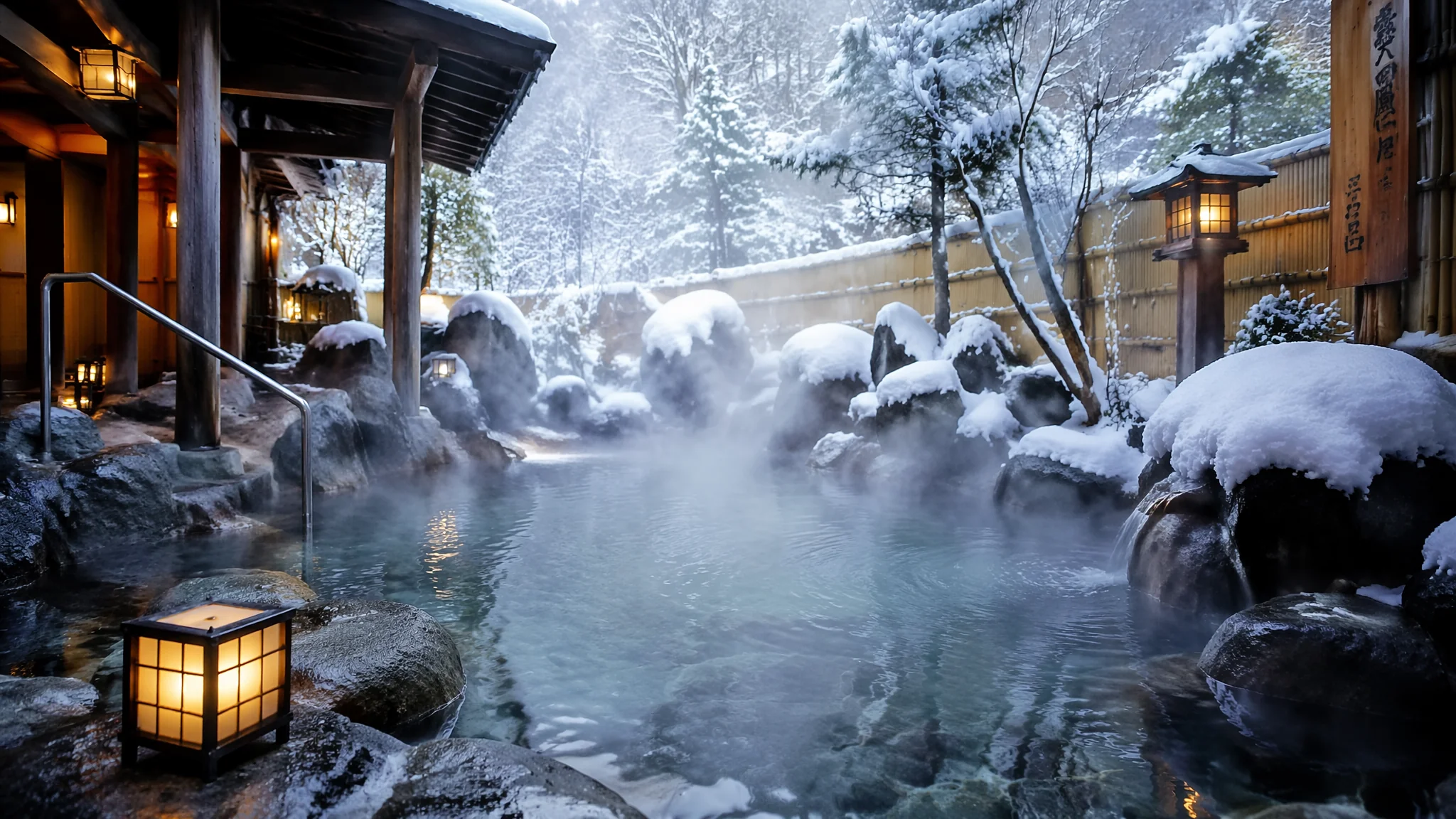
去年冬天去了一趟箱根的温泉旅馆——泡在露天风吕里看雪花落到热水面上瞬间融化,那种"外面零下五度身体却暖到骨头里"的感觉,让我回来之后产生了强烈的冲动:用AI把那种氛围画出来。结果第一轮Prompt跑出来的图让我差点笑出声——AI眼里的"hot spring" = 一个冒着热气的游泳池,水是游泳池那种透明蓝色,人物穿着泳衣,背景是度假村风格的白墙。和日式温泉半毛钱关系都没有。温泉场景的AI绘画难点不在人物也不在场景——在水和蒸汽。水面不是普通的水、蒸汽不是普通的雾——这两样东西的质感画对了,温泉的氛围感至少解决八成。
AI画温泉最容易翻车的三个点是:水面(普通池水和温泉水的颜色/质感完全不同)、蒸汽(不是均匀的雾而是有方向有厚薄的动态水汽)、以及人与水的关系(大部分身体在水下只能看到肩膀和头——AI处理半水下人体经常出错)。我后来花了两周时间挨个解决这三个问题——先从网上找了大概五十张日本温泉旅馆的实拍照片,一张张分析画面里水、蒸汽、石头的视觉特征,然后把这些特征翻译成Prompt描述。发现温泉场景的Prompt有个底层规律:画面氛围的80%来自"水汽的密度和分布"——蒸汽太薄像热水澡、蒸汽太厚像火灾现场。"刚好"的蒸汽是一层薄薄的白纱覆盖在画面上半部分,让背景的石头和树木变得若隐若现——这个"若隐若现"的感觉是Prompt里最难写的东西。
温泉水的颜色与质感——不是游泳池的透明蓝而是矿物感的乳白绿
温泉水因为含有矿物质所以不是透明的——天然温泉的水色通常偏乳白、淡绿或淡蓝灰色,水面有一层薄薄的热气在流动。AI默认画的"water"是透明蓝色——这会让温泉看起来像游泳池或浴缸。温泉水写法:"the hot spring water has a milky pale green-blue tint from dissolved minerals, the water semi-opaque so the body beneath the surface is softly obscured rather than clearly visible, the surface of the water gently steaming with heat, small ripples spreading outward from where the body disturbs the still surface, the overall color a soothing sage-tinged white that feels mineral-rich and natural"。关键在"milky pale green-blue"和"semi-opaque"——前者锁定了矿物色而不是氯水色、后者锁定了水的不透明度(温泉水不是透明的)。水面细节写法:"the surface of the water showing a mirror-like stillness broken only by gentle steam rising in lazy curling wisps, tiny bubbles clinging to the submerged stone edges where the mineral water meets the rock, the water's surface reflecting the grey winter sky in soft distorted patches between the steam"。关于水面和倒影的精细控制,AI水面波纹绘画里有从静水到激流的完整水质表现体系。
蒸汽的层次感——温泉氛围的灵魂全在"水汽"两个字上
蒸汽是温泉画面里最难写的元素——它既要有"存在感"又不能让画面模糊成一片白。好的蒸汽应该分三个层次:贴水面的薄薄热气、中间层飘散的缕缕白烟、远处积累的淡淡雾霭——三层叠加才有"氤氲"的感觉。三层蒸汽写法:"the lowest layer of steam hovering just above the water surface as a thin shimmering heat haze that slightly distorts the air above it, the middle layer of steam rising in individual curling tendrils that twist and dance like slow-moving ghosts, the highest layer of steam accumulating near the ceiling of the outdoor structure or dispersing into the cold air above as a diffuse pale mist, the steam illuminated from within by the warm glow of lantern light making it appear to glow softly"。雪中温泉蒸汽效果写法:"thick white steam rising vigorously from the hot spring water into the freezing winter air, the contrast between the hot water and sub-zero air creating dramatic visible vapor columns, the steam catching the warm orange light of nearby stone lanterns and glowing against the dark snowy landscape, snowflakes falling through the rising steam and melting instantly upon touching the hot water surface"。这里有一个我踩过的坑:不要写"fog"或"mist"——AI会把画面全糊掉。用"steam tendrils"和"heat haze"——前者是丝缕状的动态蒸汽、后者是贴水面的热浪扭曲——这两个词的视觉精度远超fog和mist。在Unsplash上搜索"Japanese onsen"可以找到大量高质量温泉摄影——把图片下载下来放大看蒸汽的形态和层次,对Prompt写作的精度提升有直接帮助。Pinterest搜索"onsen illustration"则能找到各种画师对温泉场景的艺术化处理——特别是吉卜力风格的温泉插画,蒸汽的表现方式非常有参考价值。
日式温泉的场景元素清单——石灯笼、竹垣、积雪和木盆
日式温泉的视觉识别来自一组特定的场景道具——缺了这些道具,温泉就退化成"户外的热水池"。石灯笼提供点状暖光源、竹垣(竹篱笆)提供日式视觉锚点、积雪或枫叶提供季节信号、木盆或小木桶提供功能性道具。场景完整写法:"an outdoor rotenburo surrounded by a natural bamboo fence offering privacy, large moss-covered stones forming the edge of the hot spring pool in an irregular natural shape, a weathered stone lantern standing at the pool's edge with a warm flickering candle glow visible through its carved openings, a wooden ladle and small hinoki wooden bucket resting on a flat stone near the water, the surrounding landscape visible beyond the bamboo fence — either snow-covered pine branches in winter or vermillion maple leaves in autumn"。岩石边缘写法:"the pool edge formed by large irregular volcanic rocks arranged to look naturally placed rather than constructed, dark grey stones covered with patches of soft green moss where the hot steam provides constant moisture, the rocks darkening near the waterline where they are constantly wet, a folded white towel resting on one of the flat rocks"。关于场景道具的搭配逻辑,AI场景背景绘画里有从日式到中式的完整环境风格对照。
人物在温泉中的状态——放松表情、湿发和半浸的身体语言
温泉里的人物不需要摆pose——最好的状态是"不设防的放松"。肩膀自然下沉、头微微后仰靠在石头上、眼睛半闭、嘴角带着不经意的微笑——这种松弛状态和日常拍照的"微笑看镜头"完全是两种东西。放松状态写法:"the figure reclining in the hot spring with shoulders submerged and arms resting loosely on the stone edge, the head tilted back slightly with eyes peacefully closed, the expression one of complete relaxation — the face muscles completely released, a faint contented smile that is barely there, the cheeks flushed pink from the heat of the water, damp strands of hair clinging to the forehead and temples, small water droplets beading on the warm skin"。半浸身体的处理:"only the shoulders, neck and head visible above the water surface, the body beneath the water shown as a softly blurred silhouette through the semi-opaque mineral water, the distortion creating a natural modesty without any explicit detail, the waterline at collarbone level with gentle ripples lapping against the skin"。这里要注意——写角色身体在水下的部分时一定要加"softly obscured"或"distorted by water"——让AI知道水下部分是模糊处理的,避免出现奇怪的透视错误。关于人物放松姿态的更多技巧,AI肖像绘画教程里有一节专门讲不同情绪状态下的面部肌肉变化。
常见问题
AI画的温泉蒸汽把整个画面都弄模糊了怎么办?
蒸汽的描述要加"密度和位置限定":写"thin wisps of steam rising gently, not obscuring the face or the main subject, the steam concentrated near the water surface and dispersing above head level"。明确告诉AI蒸汽在哪里、不遮挡什么——不加限定的steam会被AI理解成"全屏柔焦滤镜"。
温泉水画成游泳池蓝色怎么调?
核心是把蓝色改成偏绿偏灰的乳白色调:"milky jade-green water"或"pale sage-tinted mineral water"。如果你写的是"blue water"——AI会直接调用游泳池数据集。颜色词改了之后水的"温泉感"立刻不同。
雪中温泉和普通温泉的Prompt差异在哪?
雪中温泉的核心是"温度对比"——蒸汽要更浓更白(因为温差大)、石头上的积雪要有融化边缘、人物的脸颊要更红。在Prompt里加"snow accumulating on the surrounding rocks with softened edges where the snow melts from the heat of the spring"——这句把冷热对比视觉化了。参照AI光影绘画里的冷暖光对比技巧。
做完温泉这个题材之后我意识到一个规律:AI最擅长画"清晰的"东西——边缘锐利、材质明确、光影强烈;AI最不擅长画"模糊的"东西——蒸汽、水面下的身体、透过竹帘的光。而温泉场景恰好是"模糊"元素的集中展示——所以它天然就是检验Prompt精确度的最佳试验场。你画蒸汽不是要画"蒸汽"——是要画"蒸汽让后面的石头变得有多模糊、让灯笼的光变得有多柔和"。描述效果而不是描述物质——这个思维方式一旦建立,所有"模糊系"场景的Prompt功力都会上一个台阶。