AI下跪姿态绘画进阶:屈膝跪地的身体动态与情感张力的表现技巧
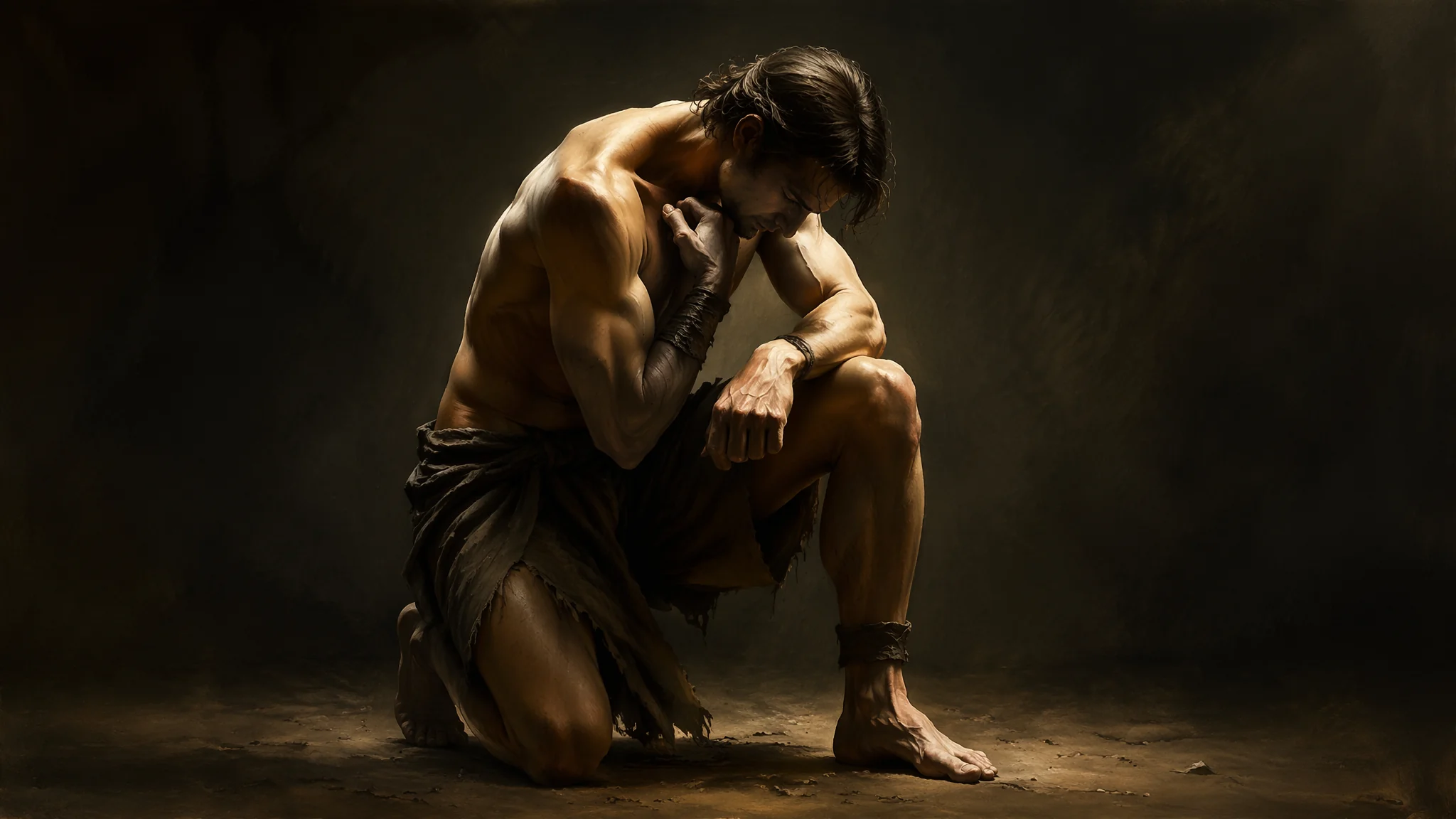
AI画站姿和坐姿已经相当成熟了——但一旦涉及"跪"这个动作,翻车率高得离谱。膝盖穿模、重心悬浮、小腿反向弯曲、脚掌从地面消失……我最初尝试用AI画一张骑士单膝跪地的效忠场景,跑了四十多组图才有一张勉强能用。后来我专门花了两周时间拆解下跪姿态的解剖学和动力学问题,总结出一套针对性的Prompt策略。说真的,下跪是人类身体语言里情感密度最高的姿态之一——从求婚的虔诚、到战败的屈辱、到祈祷的谦卑——AI如果画不好这个姿态,等于丢掉了叙事里最有力的一张牌。
先讲一个原理:AI画不好下跪姿态的根本原因不是模型不行——是训练数据里下跪的图像占比极低。你去LAION-5B里搜"kneeling",返回结果连"standing"的零头都不到。数据不足导致AI对"膝盖弯曲时大腿和小腿的空间关系"缺乏统计理解,所以会胡乱猜测——有时候把小腿塞进地面里,有时候让膝盖悬浮在半空中。解决这个问题的思路不是换模型——是用解剖学级的精确描述来弥补训练数据的不足。在AI下跪姿态绘画基础里我讲了下跪的基本Prompt框架,这篇重点聊进阶技巧——身体动态和情感张力。
单膝跪地的解剖学拆解——为什么AI总是把膝盖画穿模
单膝跪地时力学的核心:着地的那条腿承担70%体重,后腿膝盖是支点而非受力点。写Prompt时要精确描述每条腿的状态:"one knee is on the ground, the shin of the kneeling leg is flat against the floor surface, the foot of the kneeling leg extends backward with the top of the foot touching the ground, the other leg is bent at roughly 90 degrees with the foot planted flat on the ground, the thigh of the planted leg is parallel to the floor, body weight is shifted slightly forward onto the raised knee, the spine maintains a straight alignment from hips to shoulders"。最容易出错的是膝盖和地面的接触面——AI经常把膝盖"插"进地面以下。纠正方法是加Negative Prompt:"knee clipping through floor, floating knee, leg penetrating ground, broken anatomy, impossible leg angle"——同时配合ControlNet的OpenPose来锁定关节位置。关于ControlNet姿态控制的更多细节,AI绘画姿态控制技术里有完整的实操指南。人体解剖学的膝盖结构可以参考Proko人体绘画教程——虽然是手绘教学,但Stan Prokopenko对膝盖在弯曲状态下的骨骼和肌肉变化的讲解是全网最清晰的。
双膝跪地的重心与脊柱曲线——从"垮掉"到"挺直"的六个情感刻度
双膝跪地时脊柱的弯曲程度直接决定情感含义——完全挺直是"庄严祈祷",略微前倾是"恳求哀告",彻底塌陷是"崩溃绝望"。六级脊柱状态与对应的Prompt描述:第一级"挺直"——"spine perfectly straight and upright, shoulders back, chin slightly lifted, the posture of solemn prayer or formal ceremony, the body forms a vertical line from knees to crown"。第二级"微倾"——"spine straight with a subtle forward lean from the hips, about 10 degrees off vertical, hands clasped in front of chest, the posture of earnest supplication"。第三级"前倾"——"upper body leaning forward at roughly 30 degrees, weight shifting onto hands placed on thighs or ground, head bowed slightly, the posture of deep entreaty"。第四级"伏地"——"torso lowered forward until forehead nearly touches the ground, arms extended forward with palms flat on the floor, the posture of prostration or profound reverence"。第五级"后坐"——"body weight settled back onto heels, spine curved into a C-shape, arms hanging limply at sides or wrapped around oneself, the posture of defeat and exhaustion"。第六级"塌陷"——"the body has collapsed, spine crumpled, head hanging between shoulders, arms limp with palms facing upward, the posture of total despair"。在AI氛围情绪绘画里我讲过通过身体语言传达情绪的完整方法论,和这里的脊柱分级体系可以配合使用。
下跪姿态中的手部语言——手放在哪决定角色的心理状态
下跪时的手部位置是角色的"潜台词字幕"——放在大腿上是等待,放在心口是真诚,垂在身侧是无力,撑在地上是崩溃。每种手部姿态的Prompt写法:"hands resting palm-down on thighs, fingers spread slightly, the gesture of patient waiting""one hand pressed flat against the chest over the heart, the universal gesture of sincerity and oath-taking""hands clasped together in front of the body, fingers interlaced tightly, the knuckles white from tension, the posture of desperate prayer""arms hanging at sides with palms facing forward, fingers slightly curled, the passive gesture of surrender""both hands pressed flat against the ground on either side of the knees, supporting upper body weight, fingers splayed against the floor texture, the posture of being physically overwhelmed"。手部的细节还包括手指与地面的互动——"fingertips pressing into soft earth leaving small indentations""knuckles scraping against rough stone floor""one hand gripping the fabric of the pants at the thigh, knuckles white"。这些微观细节是让AI生成的跪姿"有故事感"的关键。
不同文化语境下的下跪含义——Prompt的文化标记词
下跪在西方中世纪是"效忠",在东亚古代是"谢罪",在日本是"正座礼",在伊斯兰文化中是"礼拜"——同一个身体姿态在不同文化里的服装、环境和道具完全不同。西方骑士效忠:"medieval knight kneeling before a monarch, one knee on stone floor of castle hall, head bowed, offering a sword held flat across both palms, wearing plate armor with tabard, torchlight casting dramatic shadows"。东亚古代请罪:"ancient Chinese official kneeling with both knees on ground, forehead touching the floor in kowtow position, wide sleeves of official robes spread on the ground, the setting is an imperial court with dragon-carved pillars"。日本正座:"traditional Japanese seiza kneeling posture, sitting back on heels with back straight, hands placed neatly on lap, wearing formal kimono, tatami mat flooring, the atmosphere is serene and ceremonial"。伊斯兰礼拜:"figure in prostration position during prayer, forehead and nose touching the prayer mat, hands placed flat on either side of the head, the posture of submission to the divine, facing towards Mecca"。关于各文化视觉风格的深度探讨,AI文化风格绘画里有跨文化视觉元素的系统对照。建筑史方面可以参考ArchDaily——虽然不是专门讲跪姿的,但不同文化的建筑环境信息对构建场景非常有帮助。
服装在下跪姿态中的物理变化——衣褶是姿态的"证据"
下跪时衣服怎么变形,是判断画面是否"成立"的最快标准——膝盖处的拉伸褶皱、拖地布料的堆叠、袖口因重力下垂的方向,每一个衣褶都在为姿态作证。膝盖处的布料:"the fabric over the bent knee is stretched taut, creating radial tension lines emanating from the kneecap, the material on the back of the knee forms compression folds"。接触地面的布料:"the hem of the garment pools on the ground around the kneeling figure, the fabric spreads outward in soft folds, the parts touching the floor pick up dust or moisture from the surface"。袖子与手臂的关系:"the long sleeves hang downward pulled by gravity, the cuffs brush against the floor, if arms are raised the sleeves slide back revealing forearms"。这些衣褶细节不写进Prompt的话,AI默认给你"站姿的衣服硬套在跪姿上"——看起来像PS贴图而不是真实的物理互动。在AI时尚服装绘画里有面料物理特性的完整关键词体系。
常见问题
AI下跪姿态创作中的高频困惑集中在解剖准确性、情感表达和跨场景适配方面,逐一解答。AI的下跪姿态膝盖总是变形扭曲怎么办?
膝盖变形通常是模型对"弯曲关节"的理解不够。三个解决路径:①在Prompt里加上"anatomically correct bent knee, the patella is visible as a distinct shape under the skin, the quadriceps tendon is taut above the kneecap"——用具体的解剖名词替代模糊的"kneeling";②Negative Prompt加上"distorted knee, backwards knee, broken leg, extra knee joint, fused legs";③最稳妥的方案是用ControlNet OpenPose直接导入一张正确跪姿的骨骼图,从源头锁定关节位置。
怎样用跪姿表达不同的情感——屈辱、虔诚、悲伤?
情感不在膝盖本身——在脊柱、头部和手。屈辱:脊柱弯曲头部低垂+手无力垂落。虔诚:脊柱挺直+手在心口或合十。悲伤:脊柱塌陷+手掩面或撑地。跪姿的情感标记词是"the posture conveys [emotion], body language reads as [emotion], the overall impression is one of [emotion]"——用元描述告诉AI你要什么情绪,而不是只描述动作。
多人场景中有人下跪有人站立,AI总是处理不好空间关系怎么办?
多人+高低差的场景是AI的终极考验。最可靠的方案是分步生成:先用ControlNet生成跪姿人物的正确姿态 → 再用Inpaint在空白区域生成站立人物 → 最后整体调色统一光影。如果想一步到位,Prompt里要明确写空间层级:"foreground: a kneeling figure, midground: a standing figure looking down at them, the height difference is roughly X, the standing figure's hand rests on the kneeling figure's shoulder establishing physical contact between the two planes"。
画下跪这个姿态画了半年,我最大的感悟是:AI最不擅长的往往是最有叙事力量的东西。站姿、坐姿、走姿——AI画这些已经驾轻就熟,因为训练数据够多。但跪姿、躺姿、坠落、挣扎——这些"非日常"的姿态才是真正考验创作者功底的地方。每当你在AI绘画里挑战一个高难度的姿态,你不是在和AI较劲——你是在和整个训练数据的不均衡较劲。赢了,你就拥有了别人没有的视觉武器。