AI光明女神绘画:圣洁光芒与神圣气质的女性神明角色视觉创作
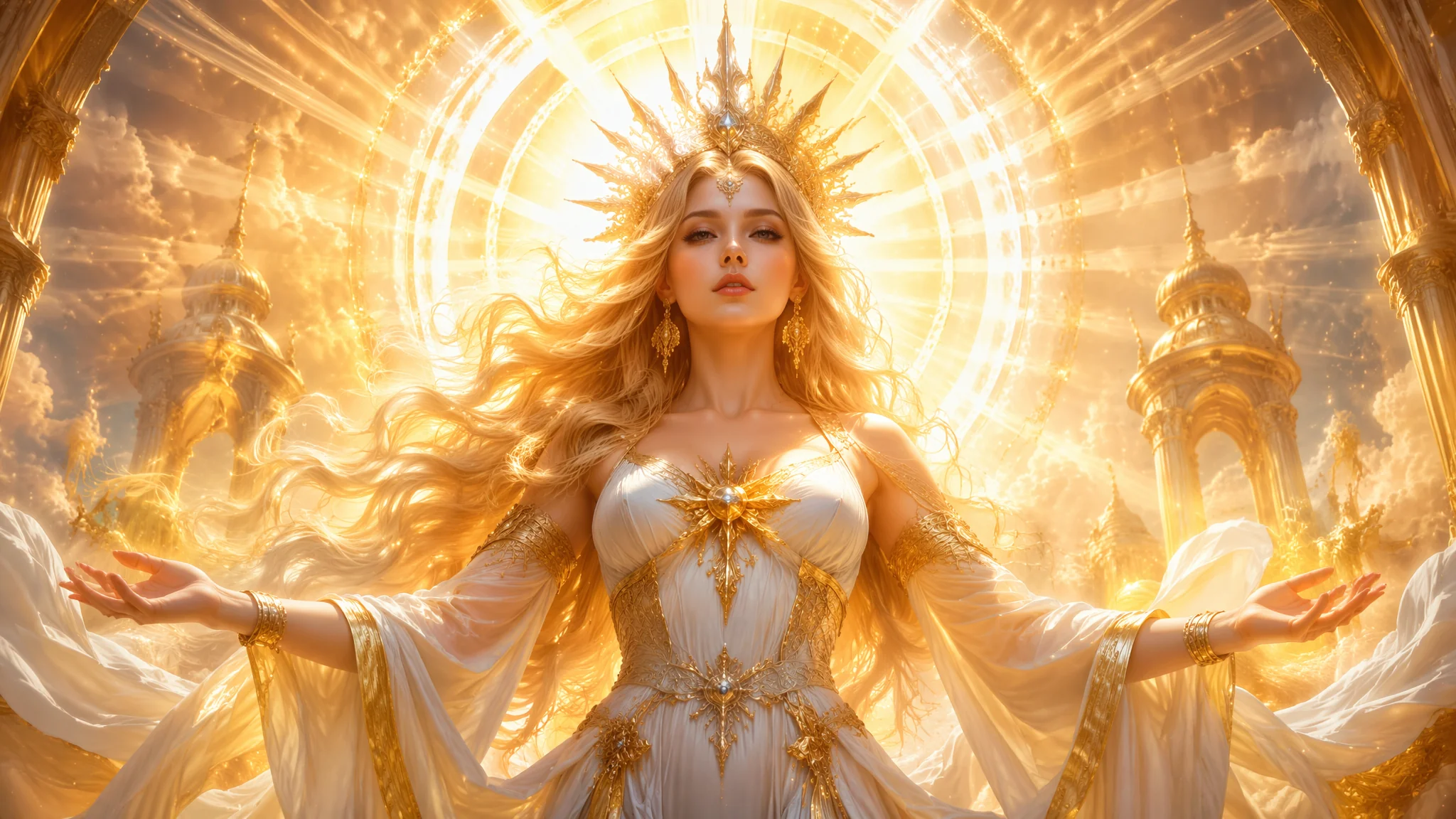
帮一个做独立游戏的团队画光明女神的时候,我犯了一个低级错误——写"goddess of light standing in a beam of sunlight"。AI还给我一个穿着古希腊白裙、站在阳光里的金发美女——美是挺美的,但就是一个普通美女站在阳光里,和"神"没有半毛钱关系。普通人和神明的核心区别不在五官和身材——在"这个人和光的关系"。普通人被光照亮、神明从体内发出光。光明女神不是"站在光里的人"——她是"光从她的身体里向外辐射,她的皮肤是半透明容器、光是她的血液"——这个"由内而外的光"的感觉,是我花了十几轮迭代才在Prompt里找到写法的。
AI画神明角色的本质挑战是:你要让AI画出"不存在的东西"。照片数据集里没有真正的"会发光的人"——所有的"发光"效果都来自后期处理、舞台灯光或CG渲染。AI对"glowing person"的理解主要来自奇幻电影剧照和CG艺术——这意味着如果你不控制发光的"量"和"质",AI要么画成"背后有舞台聚光灯"、要么画成"整个人发光过曝变成一团白色"。我后来找到了一个通用原则:神明的光应该是"分层"的——最外层是扩散到环境中的柔光、中间层是包裹身体的圣光、最内层是皮肤和发丝上最亮的边缘光。三层光加起来才是"神的光"——不是一层均匀的发光滤镜。
"由内而外的光"——把AI从"照亮"扭到"发光"的三个Prompt策略
让AI画出"体内发光"而不是"外部打光"的核心策略:用"emanating from within"代替"illuminated by"、用"translucent skin"创造半透明的光容器效果、用"inner radiance"锁定光源来自角色身体内部。策略一——光源反转:"light radiating outward from within her body rather than falling upon her from an external source, the skin appearing translucent at the edges where the inner light shines through most strongly, the glow concentrated in the chest area and spreading outward through the limbs like light through alabaster"。策略二——半透明容器:"her form appearing as if carved from luminous alabaster or moonstone, the skin having a subtle translucency where brighter inner layers of light are visible just beneath the surface, the overall effect being that of a being made of solidified light given human form"。策略三——光作为身份标识:"she does not merely emit light — she is light temporarily condensed into a human shape, the boundaries of her form slightly blurred where the light escapes containment, small particles of light drifting away from her body like glowing dust caught in a gentle breeze"。三种策略的共同点——不说"照亮"、说"发出"。动词从"illuminate"换成"radiate"和"emanate"——AI对动词的敏感度远高于形容词。关于光源控制的更多技巧,AI光影绘画里有从点光源到环境光的完整控制体系。
三种光明女神的气质路线——晨曦、正午与黄昏对应的神格完全不同
"光明"不是一种东西——晨曦的温柔、正午的炽烈和黄昏的温暖代表三种完全不同的"光明女神"人格。选错了光的色温和强度,角色的神格基调就全错了。晨曦女神(温柔新生):"a goddess of dawn light, the illumination soft and golden-pink like the first rays of sunrise, the light gentle and forgiving rather than harsh and judging, her expression benevolent with eyes that hold the promise of a new beginning, the atmosphere one of hope, renewal and quiet joy, the light color a warm peach-gold that caresses rather than burns"。正午光明女神(威严正义):"a goddess of noonday light, the illumination intense and pure white-gold like the sun at its zenith, the light merciless in its revelation, nothing hidden from her gaze, her expression serene but unyielding, the light so bright it bleaches color from the surroundings, her presence radiating absolute truth and authority"。黄昏光明女神(慈悲守护):"a goddess of the golden hour light, the illumination warm amber with long dramatic shadows, the light gentle with the softness of approaching night, her expression one of protective compassion, the light wrapping around those in her care like a warm blanket, the atmosphere one of safety, closure and peaceful rest"。三种女神的服装也不同——晨曦穿轻盈的薄纱、正午穿金光闪闪的战甲、黄昏穿温暖的羊毛和丝绒。关于不同神格的差异化设计,AI角色设计教程里有从性格到外观的完整映射表。
翅膀材质——羽毛、光翼和能量翼的Prompt写法与适用场景
女神的翅膀不是装饰品——翅膀的材质直接定义了神的"来源"。羽毛翅膀=自然神(希腊/北欧体系)、光翼=天启神(基督教天使)、能量翼=概念神(更现代的幻想设定)。羽毛翅膀写法:"massive wings of pristine white feathers spreading behind her like sails of light, each feather individually defined with a soft pearlescent sheen, the feathers at the wing tips slightly translucent catching the inner light and glowing at the edges, the wings spanning wide enough to enfold and protect, the feather texture impossibly soft and downy at the base near the shoulders"。光翼写法:"wings not of physical matter but of pure concentrated light, the wings formed from layered beams and rays of golden-white radiance that shift and flow like slow-moving aurora, the wing shape defined but the edges dissolving into sparkling motes of light, the wings leaving trails of fading light particles when she moves"。能量翼写法:"translucent energy wings made of interlocking geometric light shapes, the wings looking like stained glass made of solidified radiance, each panel of light bordered by thin glowing lines, the wings humming with barely contained power, small arcs of energy occasionally sparking between wing panels"。翅膀的语言——羽毛让人亲近、光束让人崇敬、能量让人敬畏——选哪种取决于你想要的叙事距离。在ArtStation上搜索"goddess concept art"或"angel character design"可以找到大量顶级概念设计师的女神/天使设计——尤其是翅膀和光效处理的参考价值极高。Pinterest上搜索"light goddess aesthetic"则能看到不同艺术家如何用色彩和构图区分"神的光"和"物理的光"。
神圣表情的微妙控制——慈悲、威严与悲悯之间的毫米级差异
女神的表情是最难写的Prompt元素——因为"神圣表情"不是喜悦不是悲伤不是愤怒——它是人类五种基本表情之外的"第六种"。"神圣"通常表现为:眉毛微垂但不皱、嘴角不上扬但柔和、眼神深远但不空洞——是一种"看着你但不评判你"的超越性注视。写法:"her expression transcends ordinary human emotion — the eyes hold ancient knowing without coldness, the gaze directed slightly downward as if looking upon mortal beings from a great height but with infinite gentleness, the lips soft and still without the tension of a smile or the heaviness of a frown, the overall expression one of profound calm, absolute acceptance, and distant sorrow for all suffering she witnesses but cannot interfere with"。关键短语:"transcends ordinary human emotion"——这句话直接告诉AI不要画喜怒哀乐;"ancient knowing without coldness"——把"知道太多"和"冷漠"区分开(AI很容易把平静表情画成冷漠);"distant sorrow"——给"平静"加了一层悲悯的底色,防止表情变成空白。关于角色表情的精细控制,AI肖像绘画教程里有从微表情到眼神光的系统分析。
常见问题
为什么AI画的女神总是像"穿白裙的普通美女"?
因为缺少"神性标记"——翅膀、光环、从体内发出的光、异常比例的体型或服装(如飘浮的裙摆、发光发丝)。普通人和神的区别在于"反物理学"的视觉元素——物理世界不存在的东西越多,神性感越强。至少要把"发光"和"翅膀"两个锚点都写上。
光环怎么写才能不像P上去的?
不要写"a halo behind the head"——AI会画一个独立在脑后的平面圆圈。写"a soft luminous ring of light that seems to emanate from the crown of the head itself, the light ring semi-transparent and slightly uneven in brightness, as if woven from living light rather than a solid object"。
光明女神和黑暗女神可以用同一套Prompt架构吗?
可以——把"光"换成"暗"就能反转。但要注意黑暗女神的"由内而外"法则同样适用——不是"站在阴影里",而是"阴影从她体内向外扩散"。写"darkness radiating outward from within, shadows clinging to her form like a living cloak"——参考AI光影绘画的暗部处理章节。
画完光明女神这个系列之后我最大的感受是:AI绘画里最难画的不是怪物不是建筑——是"神圣"。因为神圣没有物理参照——你没法拍一张"真正的女神"照片来训练AI。所有关于神圣的视觉知识都来自艺术史——从拉斐尔到穆夏到天野喜孝——不同时代不同文化对"神的光"有不同的编码方式。你想让AI画出哪种神圣感取决于你参考了哪个视觉传统——而Prompt里的每一个词都在投票决定最终偏向哪个传统。画神的过程其实是一个"你心中神是什么样子"的自我拷问——比画任何东西都更能看清自己的审美根在哪里。