AI床上躺姿绘画:慵懒放松与卧室温馨氛围的人物视觉创作
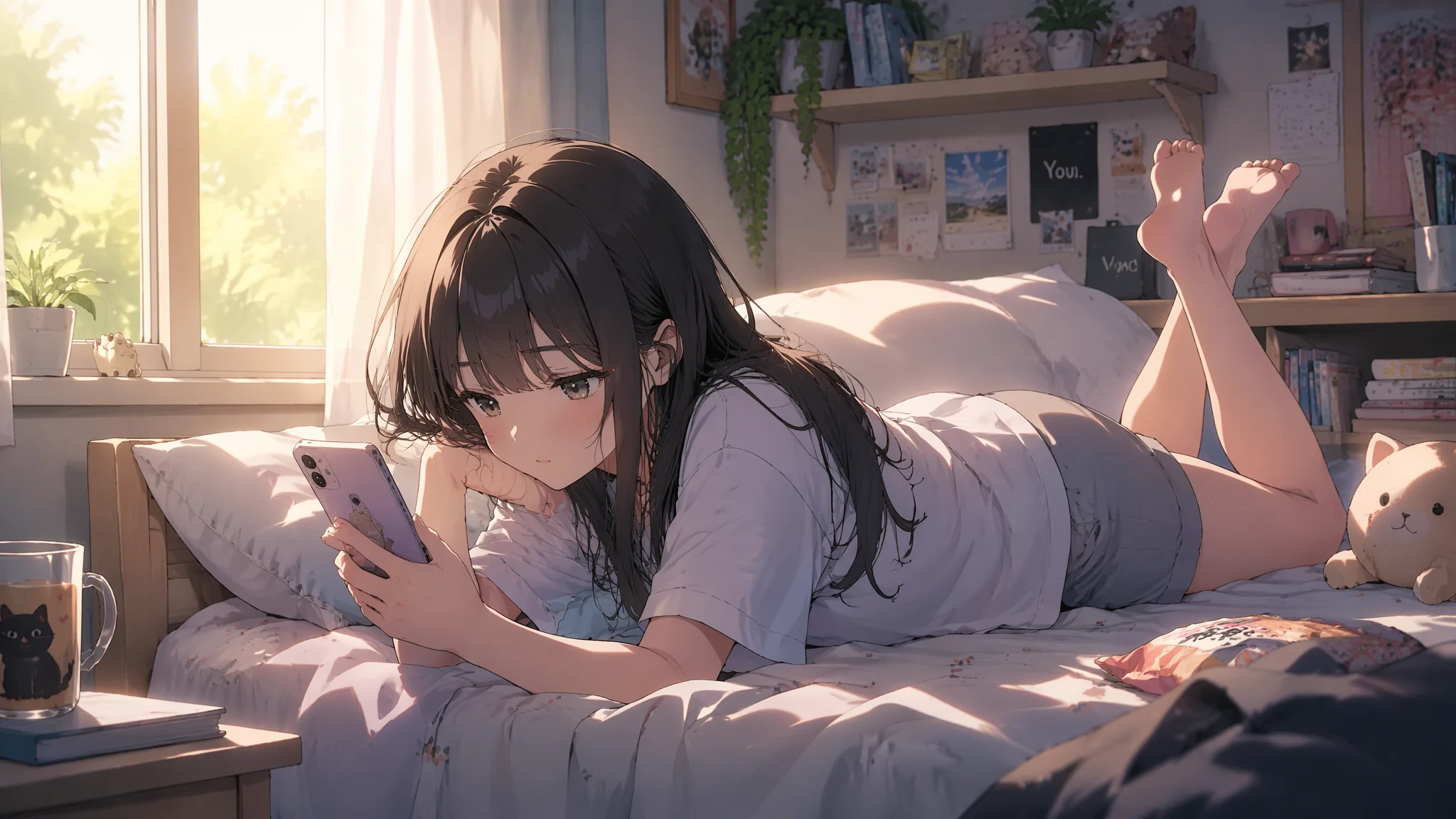
有一次帮一个言情小说作者画封面——女主角清晨在床上醒来的那种慵懒画面。我觉得这个太简单了——"a woman lying in bed in the morning"。跑出来的结果让我怀疑AI是不是对"床"有什么误解:人物悬浮在床单上(身体和床单之间没有凹陷)、被子像一块硬纸板盖在身上(没有任何褶皱和重力感)、枕头饱满得像刚拆封(没有头部压下去的凹陷)。最离谱的是有一张——人物的头发在枕头上方"飘浮"着,完全没有考虑重力。AI根本不知道人躺在床上是什么样子——它只是把"人"和"床"两个元素拼在一起,没有计算它们之间的物理互动。
躺姿是AI人体绘画里翻车率最高的姿势之一——不是因为AI不会画躺着的人(解剖结构它其实能画对),而是因为AI不会画"重力对软材料的影响"。一个人躺在床上,身体会压陷床垫、被子会随身体起伏形成褶皱、枕头会凹陷成头部的形状、头发会散落在枕头上而不是飘在空中——这四个"软材料变形"是躺姿画面真实感的基石。忽略其中任何一个——画面就会从"温馨的早晨"变成"诡异的人体模型展示"。我为了解决这个问题,专门去宜家拍了一组床品展示区的照片——重点拍枕头凹陷、被褥褶皱和人体压痕——然后用这些观察写了一套专门针对"床-人互动"的Prompt关键词。
躺姿的解剖结构——侧躺、仰躺和趴躺的AI表现差异巨大
三种躺姿里AI画得最好的是仰躺(最容易)、最差的是侧躺(最难)。侧躺难在脊柱曲线——人体侧躺时脊柱不是直的,而是一条S型放松曲线,肩膀和髋部着床、腰部悬空——AI经常把侧躺画成"直挺挺地侧立在地面上然后旋转90度"。仰躺写法:"lying on her back on the bed, the body relaxed and naturally aligned, one arm resting loosely above the head bent at the elbow, the other arm lying across the stomach, legs slightly apart in comfortable repose, the face turned slightly to one side, the chest rising and falling in the rhythm of calm breathing, the body weight creating visible depressions in the mattress beneath the heavier points — shoulders, hips and heels"。侧躺写法:"lying on her side with the body following the natural S-curve of the spine in a relaxed fetal-adjacent position, the lower arm extended forward on the mattress with the palm facing up, the upper arm draped along the curve of the waist, the knees slightly bent with one leg stacked slightly forward of the other, the hip pressing deeply into the mattress creating the deepest depression, the waist area where the body arches away from the mattress showing a visible gap between the body and the bed surface"。趴躺写法:"lying face down on the bed with the head turned to one side and resting on a pillow, the arms tucked under the pillow or spread out to the sides, the back rising in a gentle arch, the feet hanging slightly off the edge of the bed or crossed at the ankles, the mattress depressing most deeply under the chest and hip areas"。侧躺最关键的描述是"the waist area arches away from the mattress"——这句话直接告诉AI腰部是悬空的——没有这句话AI会把整个人画成一条直线贴在床上。关于更多人体姿态的细节控制,AI动作姿态绘画里有从站姿到卧姿的完整人体姿态库。
被褥和枕头的物理变形——躺姿真实感的核心全在织物
AI默认画的都是"未被使用过的床"——平整的床单、饱满的枕头、没有褶皱的被子。一个人躺上去之后,床应该变成"被使用过的"状态——床单有身体压痕、枕头有头部凹陷、被子随身体轮廓形成山峦般的高低起伏。枕头变形写法:"the pillow deeply indented where the head rests, the pillow fabric pulling inward toward the center of the depression creating radial tension lines, the pillow edges puffing up slightly in compensation, hair spread across the pillow surface with individual strands following the contours of the depression"。被子褶皱写法:"the duvet draped over the body showing the topography of the figure beneath — peaks at the hip and shoulder, valleys between the legs and at the waist, the fabric pooling in soft folds where it gathers between body parts, the edge of the duvet casually turned down revealing the sheet beneath, the folds organic and asymmetrical not geometric or arranged"。床单压痕写法:"the fitted sheet stretching slightly into the mattress where the body weight presses down, the sheet surface showing slight wrinkling radiating outward from the pressure points, the impression on the mattress visible even through the sheet as a shallow basin around the body's silhouette"。这里面最容易忽略的是"pillow edges puffing up"——枕头被压下去的时候,填充物会向四周挤压让边缘鼓起来。没有这个细节——枕头看起来就像是被切掉了一块而不是被压下去的。在Pexels上搜索"person lying in bed morning"可以找到大量免费的床上人物摄影——放大看枕头和被子的变形细节,每一个褶皱都是Prompt写作的素材。Pinterest搜索"bedroom illustration"则能看到插画师如何处理床上场景——相比摄影,插画对织物变形的"简化但保留关键特征"的处理方式更适合Prompt参考。
晨光的卧室氛围——窗帘透光是躺姿画面的"情绪开关"
床上躺姿的80%氛围感来自光线——尤其是早晨透过窗帘的柔光。这层光线在人物皮肤上形成柔和的亮面、在被子上形成条纹光斑、在空气中形成可见的光束——是画面从"睡觉记录"变成"情绪时刻"的催化剂。晨光写法:"soft morning sunlight filtering through sheer white curtains, the light diffused and gentle casting a warm golden-white glow across the entire room, the window light creating soft-edged stripes of brightness across the rumpled duvet where it passes through curtain folds, dust motes floating lazily in the visible light beams, the light catching the edges of the figure's hair and eyelashes creating a delicate rim light effect"。阴天柔光(另一种氛围):"overcast morning light through the window, the illumination flat and shadowless with a cool blue-grey cast, the room feeling quiet and slightly melancholic, the light soft enough to blur the distinction between shadow and highlight, the atmosphere one of a lazy rainy morning where getting out of bed feels optional"。床头灯光(夜晚/傍晚氛围):"the room lit only by a warm bedside lamp with a fabric shade, the light forming a intimate golden pool centered on the bed while the corners of the room fade into deep shadow, the lamp light catching the texture of the bedding and the softness of the skin, the atmosphere cozy, private and quiet"。光线的色温和方向改变之后,同一张床上的同一个人可以表达完全不同的情绪——晨光是"新的一天开始了"、阴天光是"再睡五分钟"、床头灯是"属于自己的一小段时间"。关于光线与情绪的关系,AI光影绘画里有完整的氛围光配色对照。
不同题材的躺姿风格——言情、日常和暗黑的Prompt路线差异
言情封面需要"唯美而不过分性感"、日常插画需要"真实而不无聊"、暗黑风格需要"压抑而不恐怖"——同一个人躺在床上,三种题材的视觉重点完全不同。言情路线:"a young woman waking up in a sunlit bedroom, the white sheets tangled loosely around her legs, one strap of a silk nightgown slipped off the shoulder in a way that feels accidentally alluring rather than posed, her expression soft and slightly dazed with sleep, her hair a beautiful mess spread across the pillow, the morning light making her skin look luminous"。日常路线:"a person sprawled diagonally across the bed in an ungraceful but comfortable position, wearing an old oversized t-shirt and sweatpants, the bed messy with twisted blankets and a pillow that has fallen to the floor, a phone lying face-down on the mattress nearby, the expression one of lazy contentment — Sunday morning, nowhere to be, nothing to do"。暗黑路线:"a figure lying motionless on an unmade bed in a dark room, the only light coming from a flickering neon sign outside the rain-streaked window casting cold blue and pink light across the scene, the sheets dark and rumpled, the posture unnaturally still, the atmosphere heavy with isolation and unspoken despair, shadows pooling deeply in the corners of the room"。关于不同情绪氛围的角色设计,AI角色设计教程里有从情绪到场景的完整映射体系。
常见问题
AI画的人物总是"悬浮"在床上而不是"陷进去"怎么办?
因为缺少重力描述。加"body weight pressing into the soft mattress creating a visible depression"和"the mattress contouring around the body's shape"——用mattress depression和body contouring这两个概念告诉AI人物和床垫之间有物理挤压关系。床上用品最好再写一句"the bedding showing the imprint of where someone has been lying"。
被子的褶皱总画得像揉成一团的纸怎么办?
褶皱要有"重力逻辑"——写"the duvet draping naturally over the body's contours, the folds soft and flowing rather than sharp and crumpled, the fabric pooling in the valleys between the curves of the body"。强调draping(悬垂)和pooling(汇聚)——这两个词给了褶皱一个"为什么长这样"的物理原因。
床上场景容易画得要么太乱像垃圾堆要么太整齐像酒店怎么办?
"生活感"的床是介于整洁和混乱之间的——有一个精确的平衡点。写"a bed that has been slept in but not abandoned — the sheets slightly rumpled, one pillow askew, the duvet half-draped and half-tossed aside, the kind of bed that looks inviting to crawl back into"。关键词是"slept in but not abandoned"——睡过了但不脏乱——更多日常生活场景氛围参照AI卧室室内绘画。
床上的躺姿是我做过最"反直觉"的AI绘画题材——因为它看起来越简单做起来越难。你会觉得"不就是一个人躺在床上吗有什么好研究的"——直到你看到AI画出来的那堆反重力悬浮人。这个题材教会我一件事:AI绘画的难度不取决于"题材有多宏大"——而取决于"物理交互有多复杂"。画宇宙星空很简单(大部分是空的空间)、画床上躺姿很难(全是软材料形变)。判断一个AI绘画任务难不难——看画面里有多少"被另一个物体影响形态的软材料"。软材料越多越难。