AI男汉服绘画:中国传统男性汉服与古风俊美书生的角色设计
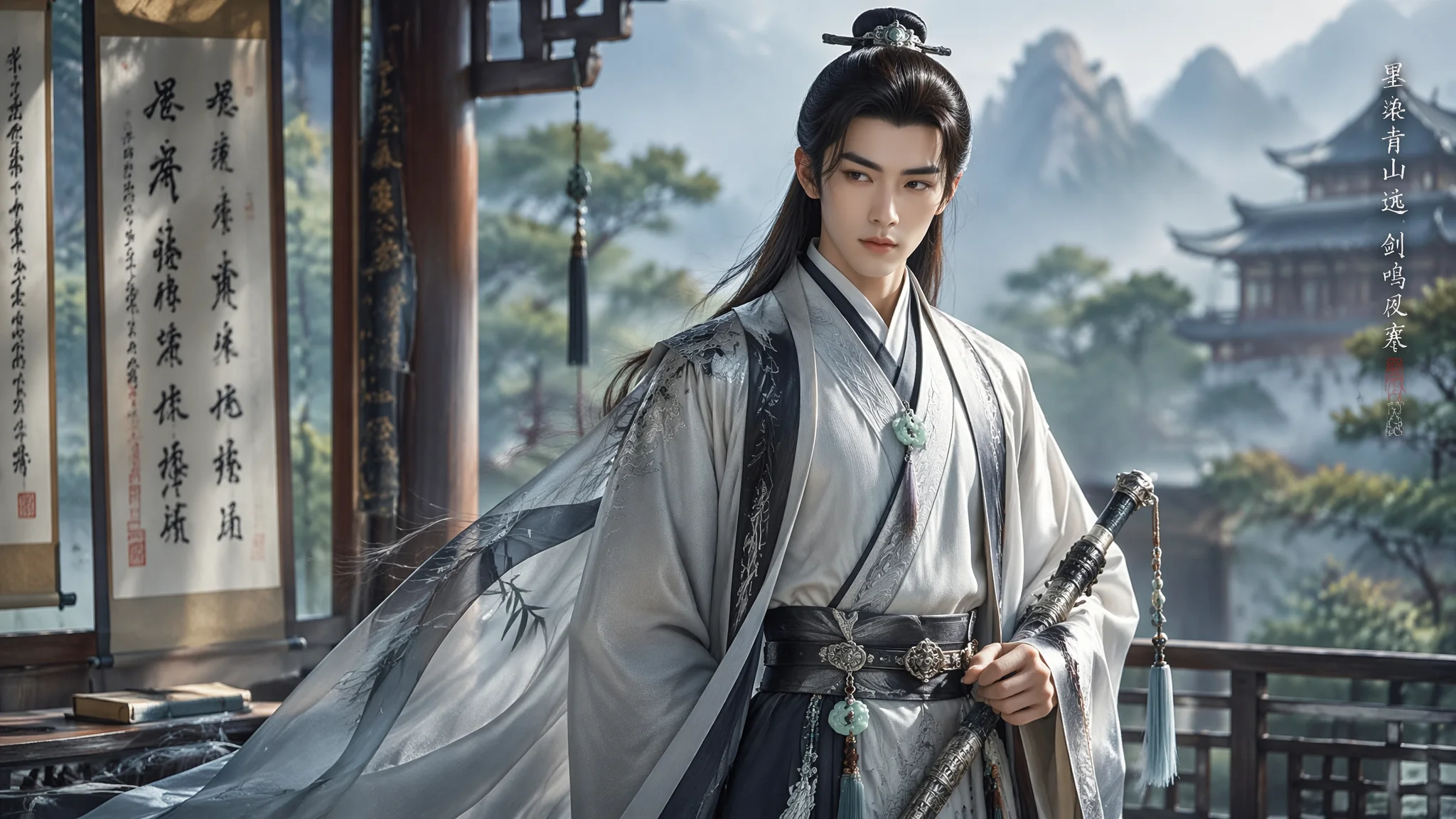
画了快一年古风角色之后我发现一个很扎心的事实——网上90%的汉服AI教程都是女装的。搜"AI古风男"出来的图,要么是"柔美到雌雄莫辨的花美男",要么是"满脸横肉的土匪"。中间地带——那种"面如冠玉但不娘、英气勃勃但不糙"的男性古风形象——几乎一片空白。这篇把我给汉服品牌工作室做了半年男性AI模特积累下来的全部经验写出来,从魏晋到明代每一款主流男装形制都有对应的Prompt。
男汉服AI绘画最大的坑不是技术问题,是审美惯性。大部分AI模型训练数据里的"Asian handsome man"标签对应的是韩系偶像脸——尖下巴、白皮肤、微张嘴——和传统中国审美里的"面如冠玉"(方正饱满、温润内敛)完全是两回事。我刚开始做汉服工作室项目的时候连续翻车了大概两周——客户是一家做高端定制汉服的品牌,他们要的不是流量明星脸,是"看起来像从古代画卷里走出来的男人"。我一开始用"handsome ancient Chinese man"写Prompt,出来的全是韩式花美男穿了件看起来像古装的东西。后来才发现关键不在"handsome"而在"dignified""scholarly""refined"——中国传统审美的男性魅力不是"漂亮"而是"气韵"。要画出真正的古风男性美感,必须从三个维度同时锁定:服饰形制(朝代特征)、面部气质(传统中国审美)、以及体态(不同身份站姿完全不同)。
魏晋风骨——宽袍大袖里的精神自由
魏晋男性形象的视觉灵魂是"松"——衣服松、姿态松、神情松,整个人处于一种精神上的"不在乎"状态,但这种松弛里藏着高度自信。魏晋服饰的核心单品是大袖衫和宽松长袍——衣服的剪裁不以展现身材为目的,而是以"人在衣中晃"的飘逸感来表达一种超越世俗的逍遥气质。写法:"a Wei-Jin dynasty scholar in extremely loose flowing robes of undyed natural linen and white silk, the sleeves so wide they drape like waterfalls when the arm is raised, the collar worn slightly open in the casual manner of the Seven Sages of the Bamboo Grove, the silhouette almost shapeless, the beauty of the garment lying in its disregard for structure"。竹林七贤是魏晋风骨的终极视觉参考——嗑药(五石散)之后敞怀散发、不拘礼法的名士形象。面部气质:"the face having the distinctive Wei-Jin aesthetic of sharp refined bone structure with high cheekbones and a straight nose, the expression detached and slightly aloof as if contemplating matters far beyond the mundane world, the eyes looking into the distance with philosophical disinterest"。关于古风男性格调的把控,AI男生古风绘画里有从侠客到文士的完整气质体系。
唐制圆领袍——盛世王朝的男装典范
唐代圆领袍是中国男装史上结构最干练的经典款式——圆领、窄袖、腰部束带、侧面开衩,穿在身上既有武将的利落又有文官的端正。写法:"a Tang dynasty official in a deep indigo or dark crimson round-collar robe, the collar a perfect circle framing the neck, the sleeves fitting close to the arm for practicality, a black leather belt with jade ornaments cinching the waist, the robe skirt falling to the ankles with side slits for ease of movement, black boots visible beneath the hem"。唐代圆领袍的帽子是幞头——一种用黑色纱罗包裹的发饰,顶部有两个软脚垂在脑后。写法:"the head covered with a futou cap of black gauze, the two soft tails of the cap hanging down behind the neck, the cap structured with a slight forward tilt that was fashionable in the Tang court"。唐风男性的面部特征和唐风女性一样倾向饱满——但这只适用于贵族和官员。武将和下层官吏应该写"weathered face with sharper angles, the look of a man who spends time outdoors"。关于唐朝更多服饰细节,AI汉服古风里有从平民到贵族的完整穿搭层级。
明制道袍与飞鱼服——文人雅士与天子近臣
明代男装的两大巅峰——道袍代表了文人阶层"低调但讲究"的审美天花板,飞鱼服则是锦衣卫"华丽且威慑"的权力象征。道袍写法:"a Ming dynasty scholar in a daopao robe of soft sky-blue or moon-white silk, the robe cut generously with wide swinging sleeves that almost touch the ground, the crossed collar secured with hidden inner ties, the garment devoid of ornamentation, the elegance coming from the quality of the fabric, the perfection of the cut, and the quiet confidence of the wearer"。道袍的灵魂是"以质取胜"——不需要刺绣不需要金线,面料的垂坠感和剪裁的比例本身就是地位的体现。飞鱼服写法:"a Ming dynasty imperial guard in the feiyufu ceremonial robe, the garment made of sumptuous red or deep blue silk brocade embroidered all over with the flying-fish cloud pattern in gold and silver metallic thread, the exaggerated cloud-collar design at the shoulders spreading like the wings of a mythical beast, a heavy ornate belt with a jade clasp, the overall visual impact one of intimidating magnificence"。飞鱼服上的"飞鱼"不是真的鱼——是类似龙的瑞兽——写法里写"mythical flying-fish creature that resembles a dragon with fins"能让AI产生正确的视觉联想。在汉服荟上搜"飞鱼服"可以看到现代复原的实物图——云肩和刺绣的细节对Prompt写作有直接参考价值。另一个参考源是Google Arts & Culture上的明代肖像画数据库——明朝官员的容像是写实肖像,服装细节极其精准。
男性发髻与冠帽——从束发到戴冠的身份编码
古风男性发型不仅仅是"把头发束起来"——束发的材质、冠帽的形状和佩戴方式直接表明了角色的年龄、身份和场合。书生束发:"the hair gathered into a simple topknot secured with a plain wooden or jade hairpin, a few loose strands framing the temples suggesting a mind more occupied with poetry than grooming"。官员戴冠:"wearing a formal wushamao black gauze cap with the distinctive wing-like extensions on both sides that denote official rank, the cap sitting squarely on the head, every hair neatly tucked away beneath it"。武将束冠:"the hair pulled into a tight practical topknot and covered with a simple leather or metal hair crown, the style purely functional for combat with no decorative elements, the hairline slightly weathered from sun exposure"。少年散发:"the hair of a youth not yet capped in the ceremony of adulthood, worn loose and flowing past the shoulders, a simple ribbon holding back only the front strands, the style indicating he has not yet come of age"。关于各种发型的搭配细则,AI古风绘画里的发型系统覆盖了从平民到皇室的全部层级。发型这件事容易被忽视但其实是一个角色的"年龄身份证"——古代男性十五到二十岁行冠礼之后才开始束发戴冠,所以一个束发戴冠的男人和一个散发的少年在年龄上至少差了五到十岁。
常见问题
AI画男性汉服总是偏"娘"——怎么增加男性气质?
从四个维度加男性化约束:下颌线(defined jawline with masculine angles)、肩膀宽度(broad shoulders tapering to a narrow waist)、眉形(thick straight eyebrows not arched)、以及避免任何与女性妆容相关的描述(no rouge, no lip color, no eye makeup)。男性古风角色不需要"美丽"——需要的是"英挺"和"清俊"。
不同朝代的男装混在一起分不清怎么办?
每个朝代锁定一个核心单品:魏晋=大袖衫的宽松度、唐=圆领袍+幞头、宋=直裰的简洁直线条、明=道袍的垂坠感或飞鱼服的华丽刺绣。先练好一个朝代再扩展——试图同时掌握四个朝代的细节只会全部混淆。
古风男性角色的手总是画得很奇怪怎么处理?
古人男性的手势有特定的文化语义——拱手(双手抱拳作揖)、背手(双手交握在背后)、抚剑(单手自然搭在剑柄上)。在Prompt里写清楚具体手势("hands clasped in a respectful formal greeting gesture")比让AI自己决定手势要稳妥得多。
男汉服AI绘画不是一个"技术活"——它是一个"审美活"。你要先知道什么样的男人穿什么样的汉服是好看且成立的,然后才知道怎么写Prompt。建议先花一个下午翻一遍沈从文的《中国古代服饰研究》里的男装章节——不用读完,看图就行。当你脑子里有了二十种不同朝代、不同身份、不同气质的男性古风形象之后,Prompt怎么写就不是问题了。做汉服AI绘画这半年我最大的体会是:女装汉服AI拼的是"丰富度"——款式多、配色多、发饰多,你有无数种组合可以玩;男装汉服AI拼的是"精准度"——款式少但每一种都有严格的形制规范,一个细节错了整个角色的朝代感就崩了。所以男装比女装更需要历史知识的支撑。