AI男军人绘画:军装制服与铁血气质的男性战士角色视觉设计
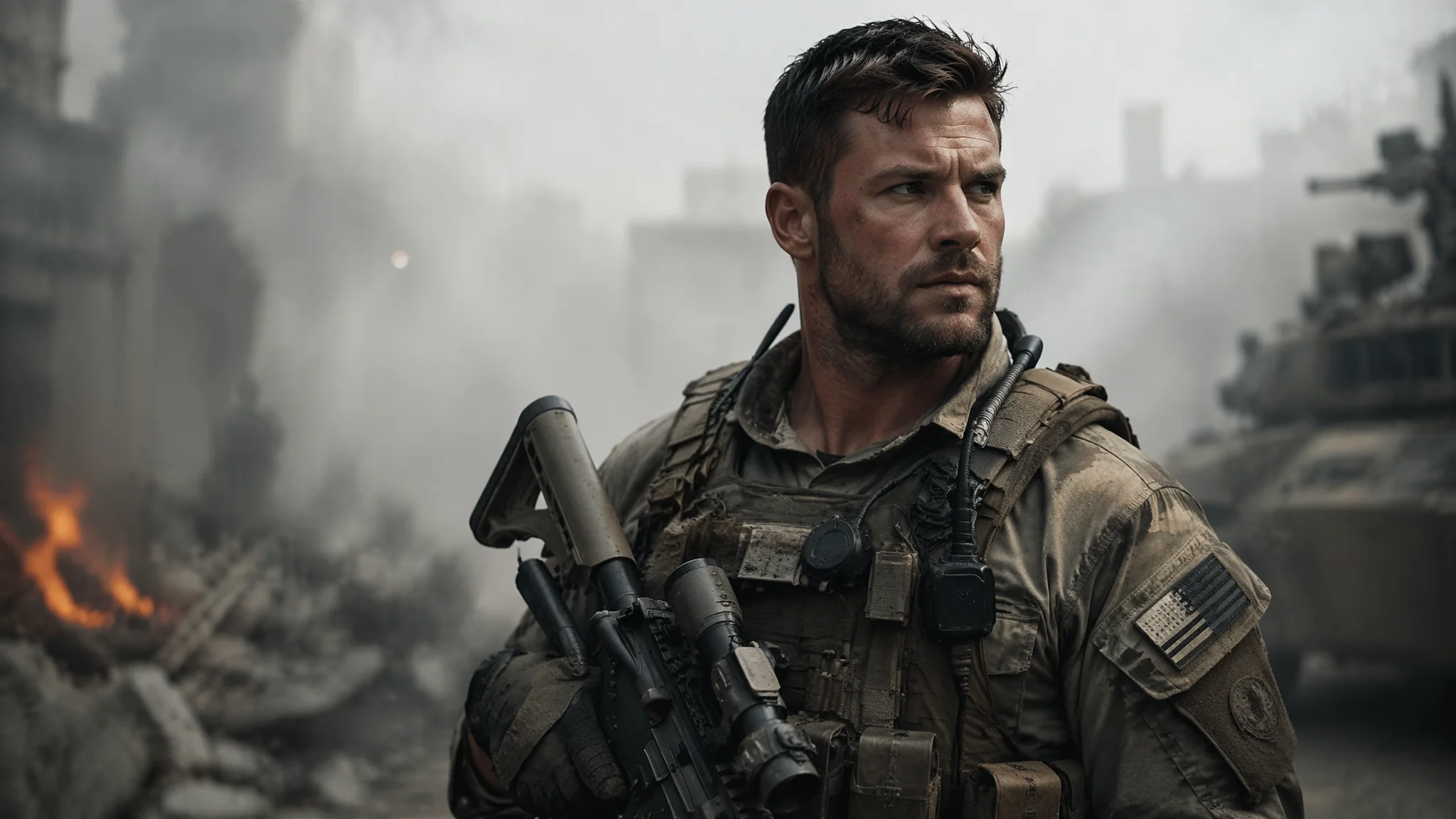
我爸当过兵。我小时候翻他老相册,看到一张他穿军装站在训练场上的照片——那时候他才二十出头,脸上的表情我到现在都忘不了:不是"严肃",是"刚硬中带着一点微妙的尴尬"——因为他还太年轻,还不太习惯军装赋予他的那种威严。后来我自己用AI画军人角色的时候,想起那张照片发现了一个问题:AI画的军人总是缺少那种"真实的兵味"。AI理解的军人=帅气的制服+锐利的眼神+完美的发型——但真实的军人气质藏在更细微的地方:领口微微磨损的褶痕、虎口上常年握枪磨出的茧、鞋带上沾着的灰。这篇就是把我理解的"兵味"拆开来讲——从各国军装的制式细节到不同军种之间的气质差异,帮你画出不只是"穿军装的帅哥",而是真正有军人灵魂的男性角色。
军装的制式细节——不是"绿色夹克",是"有军规编号的精确服装体系"
军装和普通服装的本质区别:军装的每一个细节都有条例规定——口袋的位置、纽扣的数量、徽章的佩戴角度,全都有《着装条例》严格规定。如果AI画错了这些细节——懂行的人一眼看穿这是"戏服"不是"军装"。
军装细节Prompt:"the uniform is rendered with military precision——every detail is regulation-correct: the ribbons on the left chest are arranged in order of precedence from top to bottom and left to right, the name tape is positioned precisely above the right breast pocket, the unit patch on the left shoulder is a specific identifiable design (a stylized eagle on a dark blue shield), the belt buckle is polished to a mirror shine but the leather of the belt shows subtle creases from years of use, the trousers have a sharp military crease down the front of each leg ironed to a knife-edge, the boots are combat boots——functional and well-maintained but not parade-ground shiny——the leather is scuffed at the toes and the laces are replaced with paracord"。参考美国陆军官网的着装条例手册和英国国家陆军博物馆的军装演变展览。
军装的"磨损感"是区分"新兵"和"老兵"的关键视觉线索。新兵的军装——完美无瑕,一切按条例。老兵的军装——"the uniform shows personal adaptations born of experience: the collar is slightly softened from repeated washing, the sleeves are rolled with a specific technique that allows quick deployment——not the regulation cuff but the field-practical roll, a small personal item is attached to the webbing——a lucky charm a family photo in a waterproof sleeve"。这些"违规但合理"的个人化改造——是老兵身份的视觉签名。军装的功能美学和AI女骑士绘画中铠甲的功能设计有共通之处——制服和盔甲都是"职业身份的视觉化"。
军人的体态语言——纪律如何重塑人体
军人的体态和普通健身爱好者的体态完全不同。健身者练肌肉是为了"看起来大",军人练身体是为了"用起来高效"。这种区别在站姿、走路方式、甚至呼吸方式上都能看出来——需要在Prompt里编码这些"训练痕迹"。
站立姿态Prompt:"he stands at parade rest——feet shoulder-width apart, hands clasped behind his back with the right hand folded over the left, his weight is evenly distributed, his shoulders are back but not artificially puffed——the posture is natural to him now after years of correction, his head is level with his chin parallel to the ground, his eyes focus on a point in the middle distance——this is not a man who daydreams, he is present and aware"。行走姿态Prompt:"when he moves it is with economy——no wasted motion, his gait is measured and deliberate, his arms swing in a controlled arc, he does not saunter or shuffle, each step is placed with intention, he moves like someone who has learned to walk silently through hostile terrain"。
这种"训练改造过的身体"在AI肌肉型男绘画中也有相关的讨论——功能性肌肉和展示性肌肉的解剖学区别。军人的肌肉不是为了拍照好看——是为了负重行军20公里之后还能精准射击。
战斗痕迹与伤痕叙事——每道疤都是简历上的一个项目
军人角色身上的伤疤不是随机添加的"装饰"——每一道疤都有来源、有年龄、有故事。新伤是红色的,旧伤是银白色的。擦伤来自训练,弹片伤来自战场,烫伤来自装备——这些痕迹是角色"简历"的视觉版本。
伤痕叙事Prompt:"his body carries a map of his service history——a thin silver scar runs along his left forearm: a knife training injury from his first year, the scar is old and well-healed。a patch of slightly different skin texture on his right shoulder: a burn from a spent shell casing that ejected down his collar during a firefight, the skin is smoother and shinier than the surrounding area。a small round scar on his right calf with a matching scar on the opposite side: the entry and exit wound of a through-and-through bullet wound, the surrounding muscle is slightly asymmetrical——it healed well but never perfectly"。the calluses on his hands are specific to his role: the web between thumb and index finger is heavily callused from thousands of pistol draws, the pad of his trigger finger has a distinct hardened patch"。
伤痕的"年代分层"是让角色有厚度的重要技巧——新伤和旧伤共存说了一个"这个人经历过不止一次生死时刻"的故事。更多角色"过去的故事"如何通过视觉线索来暗示——AI魔鬼恋人主题绘画中吸血鬼的古老年岁也有类似的"时间痕迹"表现手法。
常见问题
AI画的军人总是"太干净"——怎么加上战场的尘土和疲惫感而不显得邋遢?
"干净"和"邋遢"之间有一条精确的线:可控的脏=战斗后的荣誉,失控的脏=纪律涣散。Prompt控制:"he has just returned from a patrol——his uniform shows the controlled dishevelment of recent activity: a fine layer of dust settles on the shoulders and the tops of his boots, a smear of dirt on his cheek where he wiped sweat with a dirty hand, his sleeves are pushed up to the elbows exposing forearms streaked with grime, but his weapon is clean——the rifle slung across his chest has been wiped down, the optics are protected, his equipment is squared away even when he is not"。核心逻辑:武器比人干净,装备比衣服整洁——这是真正的纪律,不是外表的整洁。
现代军人和历史军人的Prompt区别在哪里——画古代士兵有什么特殊技巧?
现代军人的视觉语言=功能性+模块化+装备挂载系统。历史军人的视觉语言=仪式性+统一性+身份标识。古罗马军团士兵Prompt:"a Roman legionary circa 100 AD——he wears a lorica segmentata(banded iron armor)over a red wool tunic, his helmet is an Imperial Gallic type with cheek guards and a transverse crest indicating his rank as optio, he carries a rectangular scutum shield painted with his legion's emblem (a winged thunderbolt), his gladius hangs on the right side (Roman soldiers drew from the right), his calves are protected by greaves, his feet in hobnail-soled caligae sandals"。历史军人的Prompt比现代军人更需要精确的"制式装备名称"——因为AI对古代军装的训练数据更少,你必须用准确的术语引导它。
军人角色的"柔软面"怎么画——如何在铁血形象中融入人性和脆弱?
真正的铁血不是"从不软弱"——是"克服了软弱之后的选择"。军人角色的温柔时刻是最打动人的:Prompt:"a rare unguarded moment——he holds a worn photograph, his thumb resting on the image with an unconscious gentleness that contrasts with his calloused hands, his expression has softened, for this moment he is not a soldier——he is a son, a brother, a father, the war exists elsewhere, this moment is a small pocket of peace stolen from duty"。这种"坚硬外壳下的柔软"是军人角色最有深度的部分——对比越强烈,情感越动人。