AI武功武术绘画:中国功夫动态招式与武侠意境的视觉呈现
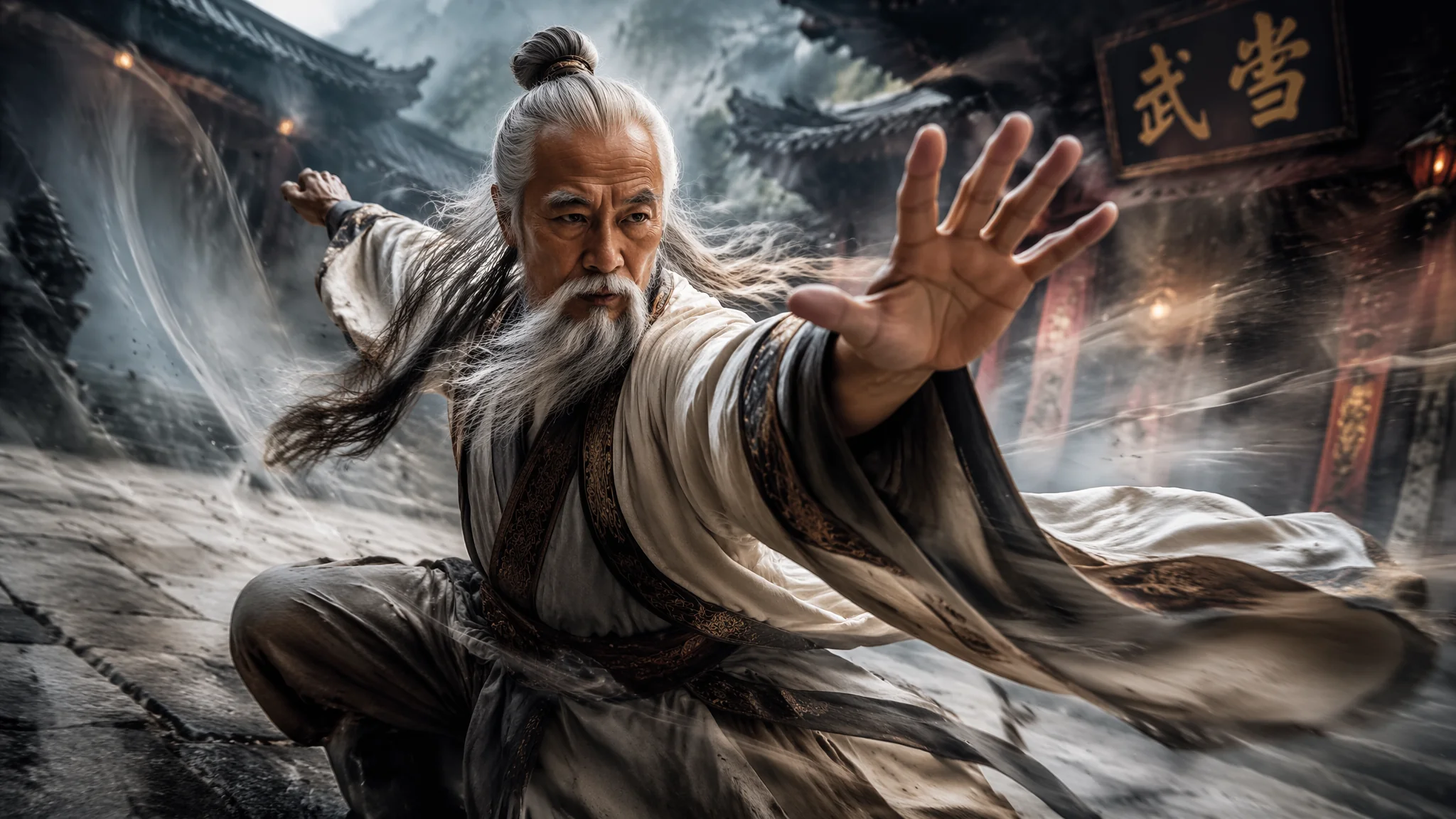
武术是AI绘画里最难的主题之一——它不像花、不像房子、不像月亮,武术的核心是"动",而AI生成的是静止画面。用静帧捕捉动态之美,这才是武功绘画的真正挑战。
我小时候在少年宫学过两年武术。说实话基本功到现在早忘光了,但那些招式名字我一直记得——白鹤亮翅、野马分鬃、青龙出水——光看名字就是一幅画。去年我开始尝试用AI来"翻译"这些招式名,发现了一个很有意思的现象:AI对武术动作的理解完全是"画面导向"的——它不在乎这个动作在实战中有没有用,只在乎这个姿势在画面里好不好看。所以你写"实战格斗姿势"它给你一个平庸的拳击手站架,你写"白鹤亮翅"它反而给你一个舒展优美到令人窒息的动态造型。诗意的描述比技术性的描述更出片。
武术门派的视觉特征——不同拳种有不同的"气质关键词"
太极拳、少林拳、咏春拳、八卦掌——不同武术门派的视觉气质天差地别,一种门派一套关键词系统。太极拳用"Tai Chi practitioner in flowing white robes, slow graceful circular movements, meditation in motion, mountain peak at dawn with misty clouds, yin-yang balance, calm focused expression"。少林拳用"Shaolin kung fu monk, powerful explosive stance, orange robes, ancient temple courtyard, strong rooted posture, intense focused energy, dramatic dynamic lighting"。咏春拳用"Wing Chun close-range combat stance, centerline theory, compact efficient movements, wooden dummy training, Ip Man era Hong Kong atmosphere, practical and precise"。八卦掌用"Bagua Zhang circle walking, flowing palm changes, spiraling body movements, multiple afterimages suggesting constant motion, Taoist internal energy"。每种拳法的空间环境也大有讲究——太极拳适合山顶云海,少林拳适合古寺庭院,咏春拳适合室内武馆,武侠剑客适合竹林江湖。场景对了,武术的味道才对了一半。古风武打的场景搭建,AI古风国潮绘画创作里有系统的方法。
动态招式的AI翻译术——怎样让静止的画面"动"起来
武术的灵魂是动态——AI画不出来动作本身,但能画出"动作即将发生"或"动作刚刚完成"的那一瞬间,这个临界瞬间比动作中间状态更有张力。起势瞬间用"the moment just before striking, coiled energy ready to release, muscles tensed, focused gaze, dust particles suspended in the air around the feet"。发力瞬间用"explosive release of power, fabric of the sleeve rippling from the speed of the punch, hair flying upward, impact visible through distorted air"。收势瞬间用"just landed after a flying kick, cloak still billowing from the descent, calm expression contrasting with the dramatic motion just completed"。多人对决用"two martial artists exchanging blows, one attacking with a high kick, the other deflecting with a forearm block, the exact moment of contact, balanced composition showing both fighters"。动态感的另一大法宝是"环境互动"——飘起的落叶、飞溅的水花、扬起的沙尘、被劲风折断的树枝——环境因为人物动作而产生反应,观众的大脑就会自动补完运动轨迹。AI动态动作绘画技法对这个话题有更细致的展开。
武侠意境——功夫画的高级阶段
画一个做武术动作的人只是入门,画出武侠意境才是高阶——意境不是画出来的,是"氛围提示词"营造出来的。竹林对决用"two swordsmen dueling in a bamboo forest, bamboo leaves falling like green snow around them, shafts of sunlight piercing through the dense canopy, blades glinting, classical Chinese ink painting style, wuxia film aesthetic by Zhang Yimou"。月下独练用"a lone martial artist practicing sword forms under the full moon, silhouette against the bright lunar disk, rooftop of an ancient temple, night mist swirling around the ankles, sense of solitude and dedication"。雨中搏杀用"brutal fight in torrential rain, water streaming down faces, clothes soaked and heavy, each punch sending a spray of water droplets into the air, dark and gritty atmosphere, Korean action cinema style"。雾中轻功用"a martial artist seemingly walking on mist, light as a feather, leaping between mountain peaks, flowing robes trailing behind, ethereal and otherworldly, traditional Chinese painting on silk"。武侠意境的核心是"留白"——不要把所有东西都画出来,留给观众想象的余地才是武侠美学的精髓。关于东方美学的AI表现,中国武侠电影经典中张艺谋、王家卫、徐克等导演的作品是最佳视觉参考库。
兵器与武术——十八般武器的AI呈现
兵器是武术绘画里最容易出彩也最容易出错的元素——AI对刀剑的形状把握还行,但对使用姿态和力学关系经常离谱。长剑用"Chinese straight sword Jian, slender double-edged blade, scholar-warrior wielding it with elegant precision, sword dancing form, cold gleam on the polished steel, swirling silk ribbon attached to the hilt"。大刀用"Guan Dao heavy blade, long pole weapon, powerful sweeping strike, the wielder using the weapon's momentum to create large circular movements, dramatic sense of weight and power"。折扇用"warrior using an iron fan as a weapon, fan blades spread in a defensive stance, sharpened edges glinting, elegant and deadly, flowing scholar robes contradicting the lethal intent"。暗器用"throwing needles frozen mid-flight, multiple silver streaks cutting through the air, the martial artist's hand still in the release position, rain of hidden weapons"。兵器描写的关键是把武器和人放在同一句描述里——单独写武器是静物,武器+人+动作才是武术。兵器质感参考可以去大都会博物馆武器与盔甲馆,丰富的亚洲冷兵器馆藏图片是兵器细节的顶级参考。
功夫绘画的风格光谱——从写实格斗到诗意水墨
功夫绘画至少跨越六种截然不同的视觉风格——选哪种风格取决于你要什么"味道"。写实格斗用"photorealistic action shot, MMA-inspired dynamic pose, sweat and intensity, dramatic sports arena lighting, freeze-frame moment of impact"。港漫武侠用"Hong Kong manhua martial arts style, exaggerated muscular definition, dynamic speed lines, vibrant color palette, larger-than-life heroic poses, ink splash effects"。电影质感用"wuxia cinema cinematography, sweeping camera movement implied, rich color grading, shallow depth of field, epic scale, costume and set design by a master art director"。日系功夫用"anime-style martial arts, dynamic manga action lines, exaggerated perspective, dramatic wind effects on clothing and hair, intense facial expressions"。水墨意境用"traditional Chinese ink wash painting, martial artist rendered in a few bold brush strokes, negative space suggesting motion, minimalist yet powerful, qi energy visualized as flowing ink"。3D游戏风用"martial arts video game character art, highly detailed 3D render, fighting game character select screen pose, dramatic rim lighting, particle effects swirling around hands and feet"。六种风格六种味道,不同项目选不同风格——做游戏原画选3D游戏风,做书籍封面选水墨意境,做格斗海报选写实格斗。关于AI绘画的风格矩阵,AI绘画风格大全指南里有上百种风格的系统整理。
常见问题
AI武功武术绘画的常见问题集中在动作准确性、风格表现和文化真实性上。AI画的武术动作为什么经常违反人体工学?
因为AI没有"关节活动范围"的概念。它看到一个武术动作的数据就拼出一个"看起来像"的姿态,但它不理解人的膝盖不能向后弯、胳膊不能拧270度。加"anatomically correct""natural human pose""realistic body mechanics"可以改善,但最管用的还是多跑几张然后手动筛选。
如何让AI画出"气"或者"内力"的视觉效果?
用可视化描述——"visible qi energy as swirling translucent light around the body""internal power manifesting as glowing meridians""impact wave radiating outward as a visible shockwave ring"。AI能理解这些超自然视觉效果,甚至比真实物理效果画得更好。
中国功夫和日本武道在AI绘画中如何区分?
服装最关键——中式用"tang suit, changshan robe, Mandarin collar";日式用"karate gi, hakama pants, obi belt, samurai topknot"。建筑和环境也区分——中式用"Chinese temple courtyard, bamboo forest, misty mountain";日式用"Japanese dojo with tatami, cherry blossoms, torii gate"。把这些文化锚定词写清楚,AI很少搞混。
武术绘画适合做哪些商业用途?
武术馆宣传海报、武侠游戏角色概念设计、功夫电影同人画、武术类书籍封面插图、中国风文创产品。武术主题在海外市场尤其受欢迎——老外对中国功夫有天然的好奇和尊重,AI功夫画在英文社媒上的传播数据通常比同类中文内容好。
觉得有用的话分享给朋友吧。