AI自然风景绘画:从山川湖海到四季变换的景观生成指南
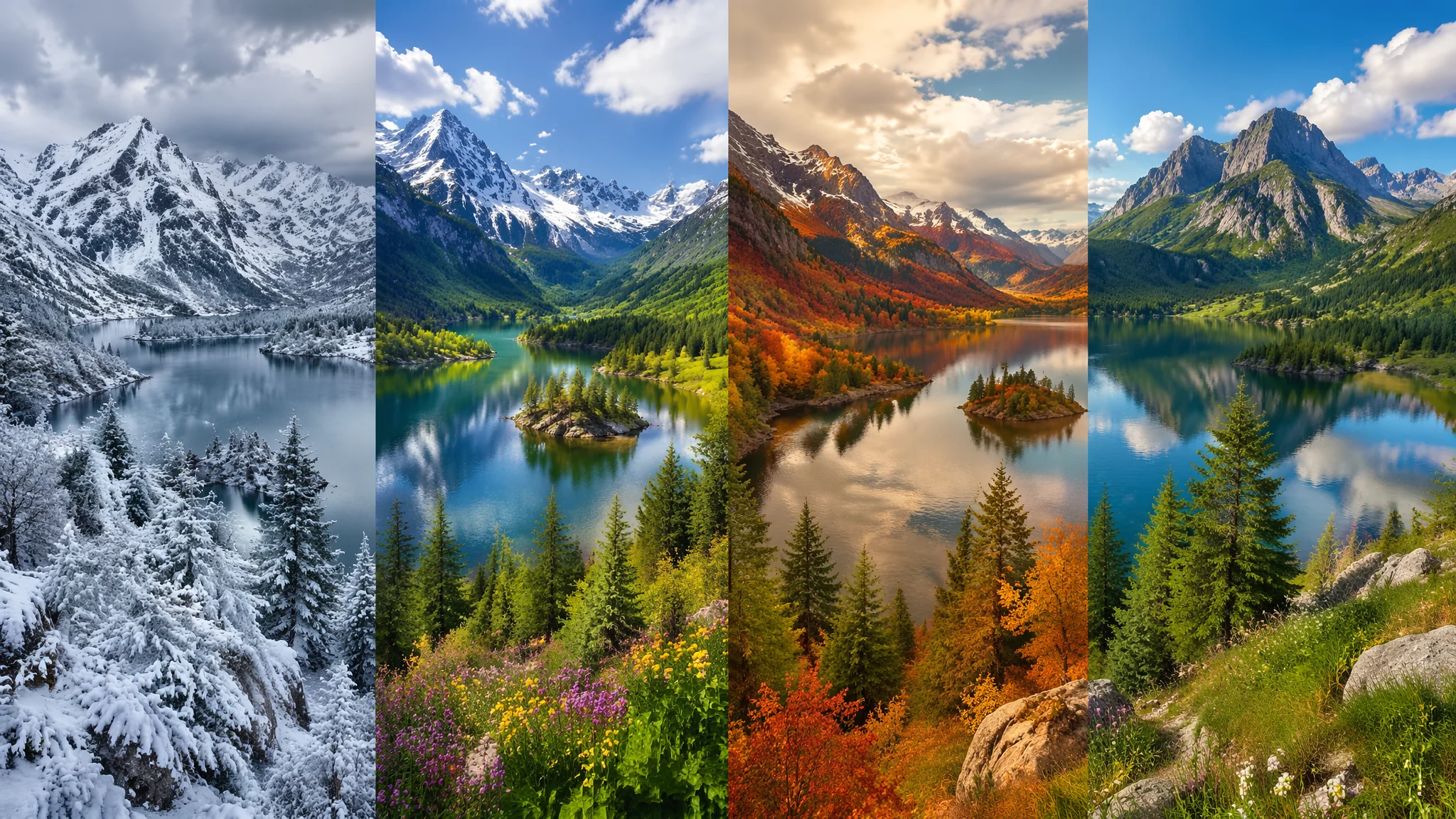
简单说:AI自然风景绘画最核心的能力是"地貌理解"——山有山的纹理、水有水的动态、树有树的形态。AI并不真正理解自然,但只要你把每种地貌的特征写清楚,它就能组合出令人信服的壮丽景观。
我用AI画风景快两年了,从最初的"一座山一片天"到现在能精准控制从针叶林到沙漠峡谷的各种地貌。AI自然风景绘画看起来门槛最低——毕竟谁不会写"mountain and lake"呢?但画出真正有空间深度、地貌准确、季节特征鲜明的作品,需要一套系统化的描述方法。风景不是背景板,它有自己的地质逻辑和生态规律。比如说"mountain"这个词,地球上至少有五种完全不同的山体形态——褶皱山、断块山、火山、侵蚀残丘和穹隆山——每一种的视觉特征完全不同。如果你不告诉AI你要的是哪种山,它会随机从训练数据里抽取一种,结果就是你的"瑞士阿尔卑斯"可能画成了"桂林喀斯特"。风景绘画的系统性远超大多数人的想象,但一旦你掌握了地貌分类和生态描述这两把钥匙,整个自然世界就是你的画布。
山体塑造:不同山型有不同描述方式
花岗岩尖峰、沉积岩层叠、火山锥形——山长得不一样,提示词就得不一样。花岗岩山峰写:"jagged granite peaks with sharp ridges, rocky alpine terrain, snow-dusted summits, dramatic vertical rock faces"。沉积岩层叠山写:"layered sedimentary rock formations with visible strata bands, eroded sandstone cliffs, mesa and butte landscape"。火山写:"volcanic mountain with symmetrical cone shape, dark basalt rock, sparse vegetation on lava slopes"。地质特征描述得越准,AI画的山越不像"通用山"。USGS地质学资源对不同地貌类型有权威分类,做自然场景之前值得翻阅。还有一个山体细节:山的"年龄"会影响形态——年轻山脉尖峭陡峻,古老山脉圆润平缓。加"young jagged mountains with sharp ridges"或"ancient eroded mountains with rounded summits"能准确传达山的年代感。
水体表达:静态湖和动态河是两套写法
湖泊靠倒影和宁静感,河流靠流速和白水花。湖的提示词:"serene alpine lake with mirror-like surface, perfect reflection of surrounding mountains, crystal clear turquoise water, gentle ripples near the shore"。河的提示词:"fast-flowing mountain stream with white water rapids, water crashing over mossy boulders, dynamic water motion with spray and foam, motion blur on fast water"。水体动态在海洋绘画教程里也有涉及,但淡水体系有自己的一套视觉语言。瀑布是山水画里最容易出彩也最容易翻车的元素——AI倾向于把瀑布画成垂直的白线。正确写法:"multi-tiered waterfall cascading over rocky ledges, mist rising from the base, water splitting into multiple streams around boulders, long exposure silky water effect"。
植被层次:从前景草地到远景森林
自然风景的真实感来自植被的空间层次——近景细草、中景灌木、远景林冠。提示词示范:"foreground wildflowers and tall grasses in sharp detail, middle ground scattered pine trees on rolling hills, background dense forest canopy fading into atmospheric haze"。三个层次都要写,AI才能理解景深。如果只写"forest",AI通常会给一片糊在一起的绿色。空间层次控制技巧跟高级编辑里的景深设计如出一辙。不同树种的形态差异也非常大——针叶树是圆锥形轮廓,阔叶树是圆球形树冠,棕榈树是伞状顶部。写"towering pine trees with conical silhouettes"比笼统的"trees"精确一百倍。
四季切换:同一个场景四个季节四套提示词
春天靠花和嫩绿、夏天靠浓荫和强光、秋天靠红叶和暖金、冬天靠白雪和枯枝。春季:"spring landscape with blooming cherry blossoms, fresh bright green new leaves, soft pastel color palette, tender season atmosphere"。夏季:"lush summer landscape with deep rich greens, strong sunlight creating dappled shade, vibrant full foliage, warm humid atmosphere"。秋季:"autumn landscape with brilliant red orange and gold foliage, crisp clear light, fallen leaves carpeting the ground, harvest season colors"。冬季:"winter wonderland with pristine snow covering everything, bare tree branches with frost, soft diffused light, quiet frozen atmosphere"。四季色彩理论在夕阳场景的色彩渐变里也有类似应用。一个进阶玩法:画"季节交界"——比如初冬的第一场雪盖在秋叶上、或者早春的雪刚化露出底下的枯草——这种过渡季画面比纯粹的四季更有故事感。
天气与大气:雾、雨、雪是氛围神器
晴天风景看腻了?加点天气效果立马不一样。晨雾:"morning mist rolling through a valley, layers of fog creating depth, soft atmospheric perspective, ethereal landscape veiled in fog"。雨景:"rain falling over a lush green landscape, wet leaves glistening, moody overcast sky, raindrops creating ripples on a lake surface"。暴风雪:"snowstorm sweeping across a mountain pass, wind-blown snow reducing visibility, dramatic weather in wild landscape"。这些大气效果本质上是情绪绘画中的氛围营造在风景场景中的延伸应用。雾的厚度控制很关键——轻雾用"thin morning mist",浓雾用"dense fog with low visibility, mysterious atmosphere"——精确的厚度描述能避免AI画出一团白茫茫。
尺度感:超大场景要有人或建筑做参照
没有参照物的壮丽风景是失真的——观众无从感知"壮丽"到底有多大。我的做法是放一个微小的人物或小木屋:"a tiny hiker standing on a cliff edge overlooking the vast valley below, giving scale to the monumental landscape, human element for size reference"。这个技巧在安塞尔·亚当斯的摄影作品里被用得炉火纯青——他的每一张壮阔风景几乎都有人或人造物的尺度锚点。AI画风景同样需要这个设计。尺度的极限对比也能创造视觉奇观——比如"一棵巨型红杉树旁边站着一个像蚂蚁一样小的护林员",这种刻意夸张的尺度对比本身就是画面的叙事核心。另外有一个风景构图的黄金法则值得记住:前景、中景、远景各占画面约三分之一的高度。写"foreground meadow occupying lower third, middle distance lake in the center third, distant mountains in the upper third, balanced landscape composition"——这个三层结构几乎所有经典风景画和风光摄影都在用,屡试不爽。还有一个小技巧:在风景中加入"视觉引导线"——一条蜿蜒的小路、一段溪流、一排向远方延伸的树木——引导观众的视线从前景穿过中景到达远景,创造一种"可以走进去"的空间感。提示词里加"leading lines drawing the eye from foreground to distant horizon""a winding path inviting the viewer into the landscape"能让平面画面产生强烈的纵深感,这是专业风光摄影师最常用的构图手法之一。不同的引导线形状也传递不同情绪——直线路径给人秩序感和速度感,S形曲线则更优雅和放松,根据你想表达的风景气质来选择合适的引导线类型。
常见问题
山形重复、像复制粘贴的怎么破?
加多样性地貌描述:"varied mountain shapes with different peaks and ridges, organic natural terrain with irregular formations, asymmetrical landscape"。关键词"organic""irregular""asymmetrical"能有效打破AI的对称倾向。
植被颜色过于人工化像塑料?
加"natural organic vegetation colors, muted earthy greens, realistic botanical hues, no neon or artificial colors"。SD里负面加"neon green, artificial turf, plastic texture"。
画全景风景时前景模糊?
明确写"sharp focus throughout, deep depth of field, foreground details in crisp focus, everything from near to far in sharp clarity"。AI默认学的是大光圈浅景深人像风格,风景需要反过来。
觉得有用的话分享给朋友吧。