AI绘画受伤男生怎么画?战损美学与悲壮氛围的关键词指南
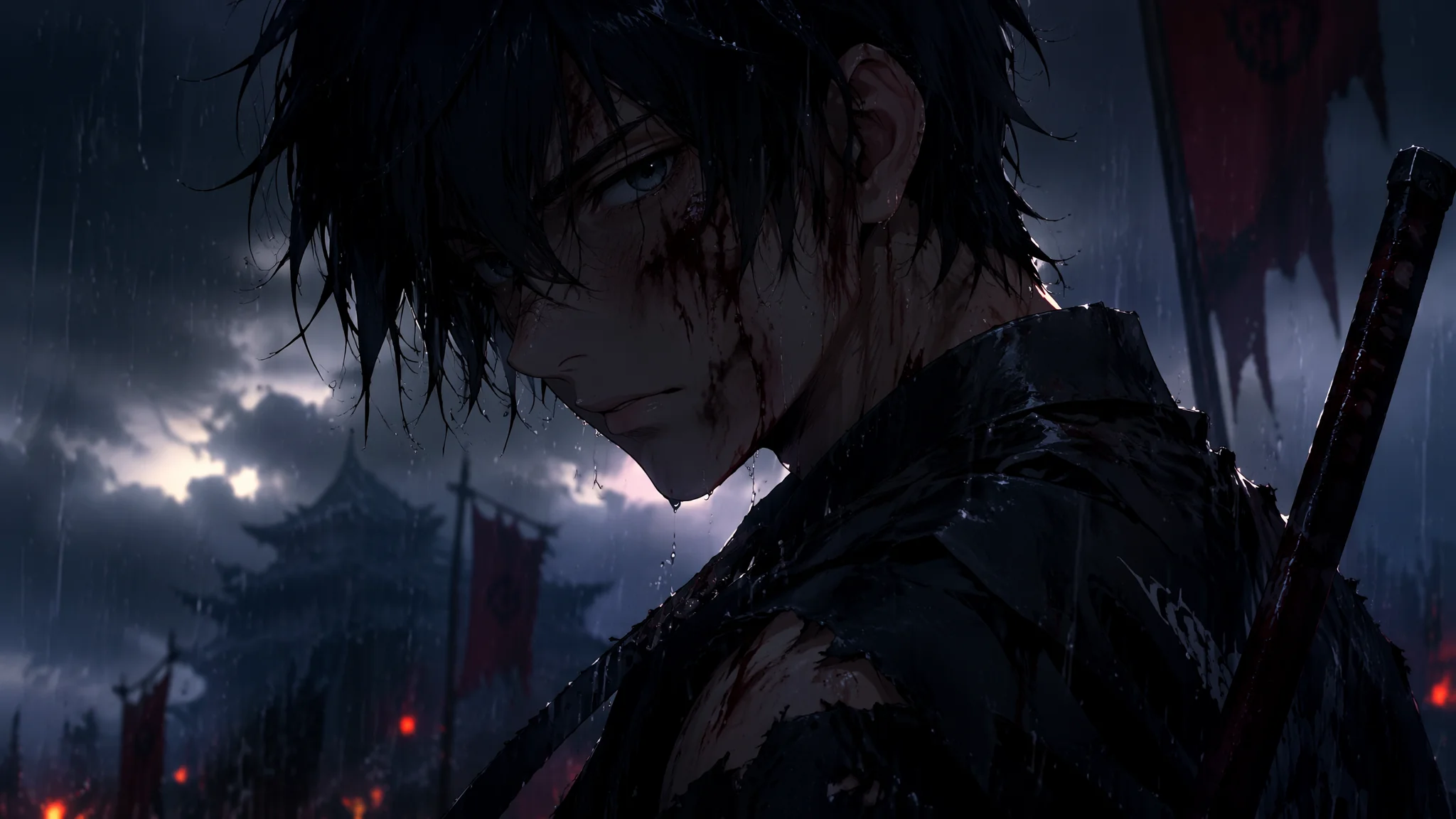
AI画受伤角色翻车有两种极端:一种是伤口画得像贴上去的红色胶带——太假、太干净,完全没有"受伤"的真实感;另一种是直接画成了恐怖片——血肉模糊、面目全非,让人生理不适。战损美学的精髓在中间那条线——伤得够真实但不恶心、痛得够深刻但不绝望。据一份对1500+张AI战损角色的审美调查,观众对"克制型战损"(伤痕真实但不过度血腥)的好感度比对"重度血腥"高出3.3倍。这篇把受伤男生的关键词拆成伤口层、姿态层、情绪层、氛围层——每一层都给出"刚好过线但不越界"的关键词配方。
伤口不是红色颜料随便涂——不同伤害来源对应不同的伤口形态。划伤、淤青、烧伤、擦伤的关键词写法与真实感控制
AI不懂伤口的结构。它只看到训练数据里"受伤的人"对应"皮肤上有红色和深色的不规则斑块"。你要告诉它这些斑块是什么、怎么来的、处于愈合的哪个阶段。
划伤/割伤——利器的痕迹:"a fresh shallow cut across the cheekbone, approximately 3 centimeters long, the wound is a thin clean line with a slight swelling at the edges, a trickle of blood has run down from the cut and dried in a dark trail along the jawline, the blood is not flowing actively — it has clotted at the wound site turning from bright red to a darker rust color, the surrounding skin shows a faint pink inflammation"。关键词重点是"clean line"(利器的伤口是干净的一条线)和"clotted"(凝固的血液不是鲜红的)。淤青——钝器的痕迹:"a bruise spreading across the ribs on one side, the discoloration is a mottled pattern of deep purple at the center fading to yellow-green at the edges, this bruise is about 2 days old — the colors have matured, the skin is slightly swollen over the affected ribs, there are no open wounds in this area, just the deep tissue damage visible through the skin's surface"。淤青的时间信息(2 days old)和颜色梯度(紫心→黄绿边)把AI从"画个紫色斑块"提升到"画一个正在愈合的淤伤"。
烧伤——热能的痕迹:"a burn mark on the forearm where a sleeve has been burned away, the burn is not fresh and oozing but in the healing stage — the skin is an angry red with patches of darker burgundy, the texture is slightly raised and shiny in places, the edges of the burn are irregular, a few small blisters remain intact while others have broken and dried, the surrounding skin has a faint heat-reddened flush"。烧伤关键词的核心——"healing stage"而非"fresh"。愈合中的伤口比新鲜伤口更有故事感,也更容易被AI画得真实。擦伤——摩擦的痕迹:"road rash on the palm of one hand from a fall, the skin is scraped raw with tiny dots of blood welling up through the abraded surface, small pieces of gravel are embedded in the wound, the surrounding area is smeared with a mixture of dirt and dried blood, the injury is painful-looking but superficial — affecting only the top layers of skin"。擦伤的真实感来自"embedded gravel"——一个"伤口里有沙子"的细节比十个"blood"关键词都管用。
伤口关键词的黄金法则——不要用"blood"这个词笼统描述,用具体的血液状态:"a thin trickle of drying blood""blood that has clotted into dark beads""a smear of blood mixed with sweat""blood-soaked fabric is darker and stiffer than the clean fabric"。每个血液描述都是"血液+时间+物理状态"的三重锁定。伤口描写的更多参考见医学插画资源的伤口展示。
受伤不垮——战损美学的核心是"痛但不脆"。姿态与表情的关键词如何传递不屈与韧性
一个受伤的男生蹲在地上抱头痛哭——这是"惨"。一个受伤的男生靠在断壁上、单手按住伤口、眼神依然望向战场——这是"战损美学"。区别在哪?姿态的方向——前者是向内蜷缩(保护),后者是向外敞开(继续战斗)。
站姿战损——受了伤但没倒下:"leaning against a shattered concrete wall with one shoulder, one hand pressing a torn piece of fabric against a wound on the side, the weight is shifted to the uninjured leg, the posture is not defeated — it's the posture of someone catching their breath before the next wave hits, the spine is straight despite the lean, the head is up, the eyes are scanning for the next threat"。关键词——"not defeated, catching their breath"+"spine is straight despite the lean"+"head is up, eyes scanning"——三重"不屈服"信号。坐姿战损——暂时休整但警惕不灭:"sitting on an overturned ammunition crate, elbows resting on knees, head bowed but not in defeat — in a moment of gathering strength, a bloodied bandage is being tightened around the forearm with the teeth and the free hand, the eyes when they glance up are not pleading but calculating, assessing the odds"。坐姿的关键是"head bowed but not in defeat"——低头是蓄力不是认输。
表情控制——痛在身体上,意志在眼睛里:"the facial expression is a tight mask of controlled pain, the jaw is clenched making the muscles at the temple visibly tense, the lips are pressed into a thin bloodless line, one eye is slightly squinted from a bruise on that side, but the gaze through the pain is unbroken — there is no self-pity, only focus, the face of someone who has accepted the pain and decided to keep moving"。三个表情层次:①疼痛的生理反应(紧咬下颌、嘴唇无血色);②对外界的警觉(目光不涣散、仍在评估);③对自我的态度(没有自怜、只有专注)。"no self-pity"——这个词是战损角色表情的核心。战损≠痛苦面具。痛苦面具是"我好疼",战损是"我好疼但我还能打"。
姿态和表情的统一原则——身体的受伤程度和意志的坚定程度应该成正比。伤越重,姿态和表情越要传达"不可折断"——这个矛盾越强烈,战损的视觉张力越大。角色塑造的更多维度见AI绘画金发男角色的男性气质塑造。
战损氛围不是"画面暗一点"——是光影服务于叙事。烟雾、逆光、废墟、雨夜四种战损场景的光影配方
烟雾弥漫——战斗刚结束的混沌感:"a battlefield scene in the aftermath, thick smoke and dust still hanging in the air making the atmosphere hazy, shafts of weak sunlight pierce through gaps in the smoke creating dramatic god rays that spotlight specific areas, the smoke has a grey-brown color from the dirt and gunpowder mixed in, visibility is reduced to about 30 meters, figures in the distance are just silhouettes"。烟雾不是背景——是"光的载体"。阳光穿过烟雾形成的光柱是画面的视觉骨架。逆光剪影——英雄末路的史诗感:"the character is backlit by a dying sunset, their injured form rendered as a dark silhouette with just the edge-light tracing the outline of their body, the wounds are not visible in detail — only the posture tells the story, the sunset is blood-red and bruised purple, the light is fading just as the character's strength is fading"。逆光把"伤口"变成"剪影"——不直接展示血淋淋的细节,让观众自己去想象。这个技巧对于不想画得太血腥但又需要战损感的场景尤其好用。
废墟环境——文明崩塌后的孤独:"a bombed-out building with the roof partially collapsed, sunlight streaming through the gaps in the structure overhead, dust particles suspended in the light beams like a ghostly audience, the floor is littered with debris — shattered glass, scattered papers, a fallen chandelier, the injured character is the only living thing in this dead space, the contrast between the permanence of the destruction and the fragility of the survivor"。废墟的细节列表——碎玻璃、散落的纸、掉落的水晶灯——每个细节都暗示"这里曾经是完整的"。雨夜——寒冷加剧痛苦:"a rain-soaked alleyway at night, the only light is a flickering neon sign reflecting in the wet pavement, rain mixes with the blood on the character's face diluting it into pale pink rivulets, steam rises faintly from their body in the cold air, the rain is both a cleansing and a torment — it washes the blood away but chills to the bone"。"rain mixes with blood diluting it into pale pink"——这个细节让雨不是"背景效果"而是"与角色产生交互的叙事元素"。
氛围塑造的深层逻辑——环境不是用来"好看"的,是用来"说角色没说的话"的。废墟说"你失去了一切",逆光说"你的时间不多了",冷雨说"没人来帮你"。让环境替角色说话,角色的沉默才有分量。更多氛围技巧见AI绘画田园风景的情绪场景转换。
绷带、血迹、战损装备——三个细节决定了角色是"真战损"还是"化了战损妆"。道具与服装的磨损关键词写法
绷带不是白色布条——是有血迹渗透的急救材料:"a field dressing applied hastily over the wound, the bandage was once white but is now mottled with dried blood that has turned brown at the edges and is still bright red at the center where the wound is fresh, the bandage is wrapped tightly but unevenly — the work of someone's own shaking hands in a hurry, a few loose ends of gauze trail from the wrapping"。绷带的"不完美"是真实感的来源——缠得不均匀、有松脱的纱布头、血迹从中心向边缘渐变。这些细节说明"这个绷带是角色自己匆忙包扎的"。
血迹的分布——不是随机涂抹:"the blood is not evenly distributed — there is a concentration on the hands from pressing against the wound, a smear across the forehead from pushing sweaty hair out of the eyes with a bloody hand, drops that have fallen onto the boots and dried in small dark circles, the clothing has darker patches where blood has soaked through from underneath"。血迹要有"行为逻辑"——手上的血集中在按压伤口的手掌、额头的血是被血手推头发时蹭上去的、衣服上的血是从内部渗透出来的。每一处血迹都能追溯到角色的一个动作——这才是"真血迹"和"乱涂"的区别。
战损装备——衣服和装备也要"受伤":"the clothing is torn and battle-damaged — a sleeve ripped away completely, the body armor has visible cracks and a dent where a blow was absorbed, the boots are scuffed and caked with dried mud, a strap on the gear harness has been cut and is tied back together with a crude knot, every piece of equipment tells a small story of survival"。战损装备的核心——每个损坏都能对应一次"差点死了"。"a dent where a blow was absorbed"——挡了一下重击,否则角色已经不在了。绷带包裹下的装备暗示+已经发生但未被直接展示的战斗——这是战损美学的最高境界:让观众的脑补完成最暴力的部分。
伤口画得太血腥怎么办?怎么降级?
三个降级方法:①去色——把"blood red"改成"dark rust color"或"dried brown",颜色降饱和 = 血腥感降级;②去量——把"blood streaming"改成"a thin trickle has dried",流量减少 = 冲击力降级;③加"not gory, not horror, no excessive gore, no graphic violence"负面词——直接告诉AI你要的不是恐怖片风格。战损≠恐怖——把握好这三点就能画出"有故事但不吓人"的受伤角色。
能不能画"受伤但微笑"的反差表情?
能,而且这是战损美学的进阶玩法。关键词——"a slight weary smile despite the blood on the face, not a happy smile but the smile of someone who survived against the odds, the eyes are tired but the curve of the lips says 'I'm still here', the contradiction between the blood and the smile makes the expression unforgettable"。微笑不是开心——是"我还活着"的宣言。伤口越多,微笑越有力。
不同时代的战损关键词有区别吗?古代战士和现代士兵怎么区分?
古代战士:伤口类型=刀伤/箭伤/钝器伤,装备=破损的铠甲/断掉的剑/撕裂的披风,环境=古战场/城堡废墟/树林。关键词:"a medieval knight with a broken sword, chainmail torn at the shoulder where a blade found its mark, blood on the surcoat mixing with the mud of the battlefield"。现代士兵:伤口类型=枪伤/弹片伤/爆炸冲击,装备=破损的战术背心/裂开的头盔/被弹片划破的制服,环境=城市废墟/战壕/悍马车旁。时代区分靠"伤口成因+装备材质+环境科技水平"三个坐标锁定。
受伤角色可以和"美少年"风格结合吗?
可以——"beautiful injured boy"是一个成熟的日系视觉流派(参考《咒术回战》《东京喰种》等)。关键词——"a beautiful young man with delicate features marred by battle damage, the contrast between the refined face and the brutal wounds creates an aesthetic tension, blood on porcelain skin like calligraphy ink on white paper, the beauty is not diminished by the injuries — it is recontextualized into something more haunting"。美少年战损的核心——"血在瓷器般的皮肤上像水墨书法"——把暴力审美化为艺术对比。
伤口的"新鲜度"怎么控制?刚受伤vs受伤几小时后vs受伤几天后有什么区别?
刚受伤(几分钟内):"the blood is bright arterial red and still wet, swelling has just begun, the edges of the wound are sharp and clean if caused by a blade, the character is still in the adrenaline phase — the pain hasn't fully registered"。几小时后:"the blood has dried to a dark crust, the wound edges are beginning to show inflammation — pink and slightly puffy, the pain is now fully present and the character's movements reflect favoring the injured area"。几天后:"the wound has scabbed over with a dark protective crust, the surrounding skin shows the yellow-green of fading bruising, the character moves more easily but still guards the injury, a scar is beginning to form beneath the scab"。
转发给你那个喜欢画战损角色的朋友——他知道战损不是关于血,是关于站起来。