AI绘画荷花少女:古风仙子与夏日荷塘的诗意关键词
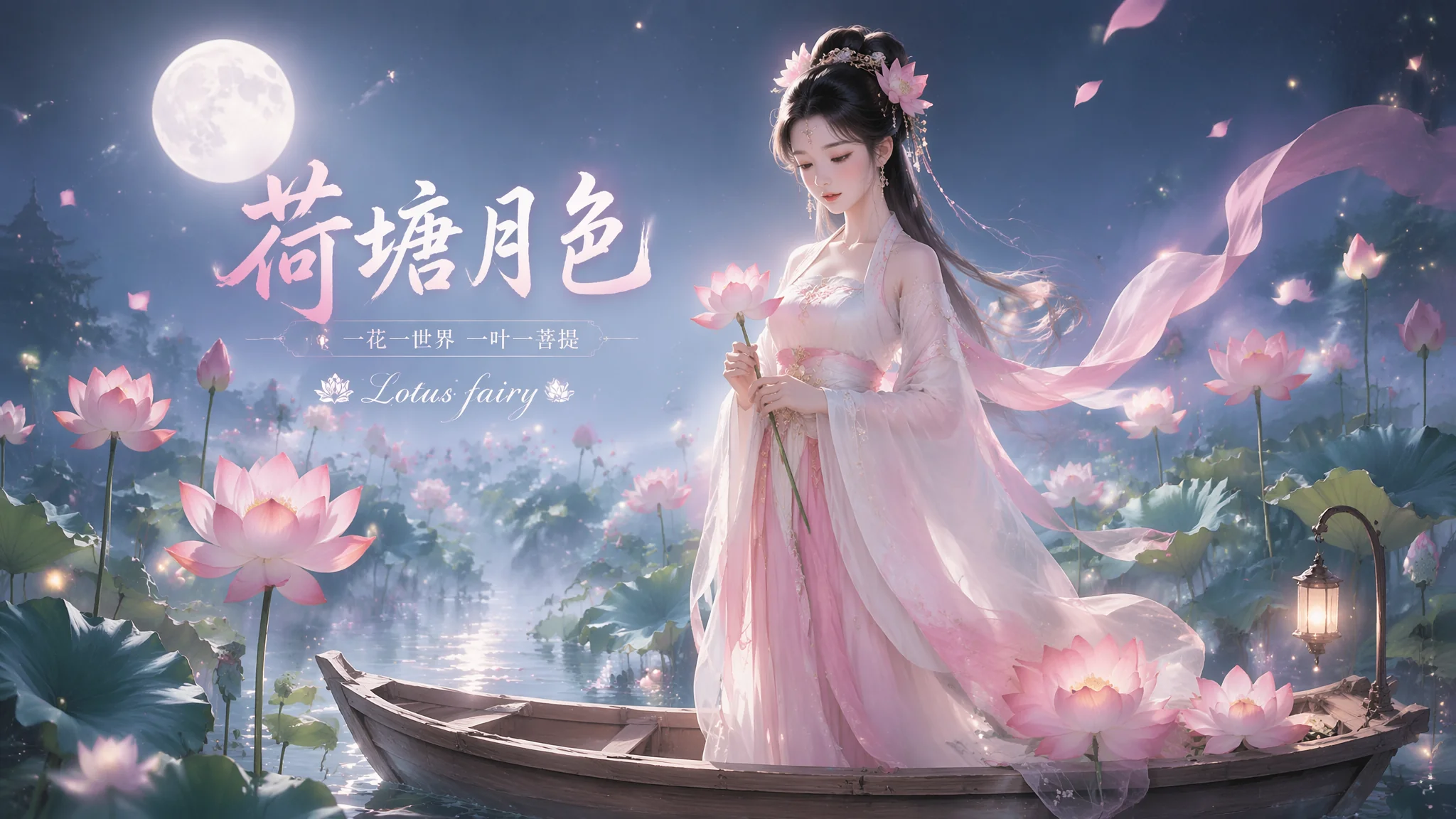 TL;DR:荷花少女=古风美女+荷花元素+水乡意境。三层关键词结构:角色层(汉服/仙裙/盘发)、场景层(荷塘/木船/月光)、氛围层(水雾/花瓣飘落/萤火虫)。三层叠加就能画出诗意满满的古风佳作。
角色设计第一层:汉服还是仙裙?不同朝代风格的服装关键词决定角色的气质走向
荷花少女的服装有三个主流方向。唐风华丽型:"Tang dynasty style, flowing red and gold silk hanfu, wide sleeves, elaborate hair ornaments, peony embroidery"。宋风清雅型:"Song dynasty elegant simplicity, light green ruqun, delicate lotus embroidery on silk, simple jade hairpin, refined literati aesthetic"。仙侠玄幻型:"ethereal fairy dress, translucent silk layers floating in wind, lotus petal inspired design, glowing magical accessories, celestial aura"。
不管你选哪种,核心配色是粉+绿+白——荷花本色。"soft pink and white gradient dress with jade green accents"这组颜色怎么写都不会错。有个小细节很多人漏掉:头饰。荷花少女的发饰不能随便放几朵花就完事,得写"fresh lotus flower tucked in hair, dewdrops on petals, delicate golden hairpin with lotus motif"——这些细节是区分"路人汉服女"和"荷花仙子"的关键。古风角色玩得深了,建议看看古风仙女教程和国风旗袍教程,不同风格的服饰词汇可以混搭出各种效果。
场景氛围第二层:荷塘的5种经典构图——从特写到全景怎么安排画面元素
荷塘场景至少有5种拍法。人物特写(面部+荷花前景):"close-up portrait, face framed by lotus leaves, soft focus on eyes, shallow depth of field, morning dew on petals"。半身泛舟:"half-body shot, sitting gracefully on a wooden boat, surrounded by blooming lotus, calm water reflections"。全身立荷中:"full body standing among lotus leaves, dress hem touching water surface, gentle ripples"。月下独坐:"moonlit scene, sitting on a lotus leaf like a throne, silver moonlight on water, fireflies glowing around"。雨中撑伞:"rainy atmosphere, holding an oil-paper umbrella, raindrops on lotus leaves, misty lake surface"。
氛围词是三层的灵魂。水雾必加:"morning mist over lotus pond, ethereal fog, dreamy atmosphere"。光线用柔和的:"soft diffused light, golden sunrise glow, hazy summer afternoon"。动态元素来点点缀:"lotus petals floating on water, dragonfly landing on a bud, koi fish swimming beneath surface"——这些词能让画面从静态风景变成有生命力的诗意空间。相关灵感可以看水墨画生成教程,水墨风格和荷花主题是天作之合。
高级玩法第三层:加入诗词意象——中国古典美学怎么用英文关键词表达
想让荷花少女真正有"中国味",得引入诗词级的意象。几个百试不爽的关键词组合:"matching the poetic line 'lotus blooms emerge from clear water yet remain unstained'"描述出淤泥不染的意境;"Zen Buddhist tranquility, meditative stillness, harmony between human and nature"表达天人合一的哲学感;"like a classical Chinese ink painting come to life, negative space composition, minimalist yet profound"——画面留白但意境深远。
颜色控制上别太浓,"muted elegant tones, desaturated pastels, traditional Chinese color palette"保持克制。太鲜艳的配色会破坏古风的含蓄美。有个我个人很爱的组合:"cinnabar red accents on predominantly celadon green and porcelain white, like Song dynasty ceramics"。这种以瓷器配色为灵感的描述,AI理解得出奇地好。不过话说回来,AI对中国传统意象的理解毕竟有限,有些特别"中式"的意境还是得靠多次抽卡来碰运气。CivitAI中国传统标签页有不少汉服和古风LoRA,配合使用效果提升明显。
常见问题 FAQ
Q1:为什么我的荷花少女看起来像日本和风而不是中国风?
因为AI训练数据里日本和风的占比远高于中国古风。解法:prompt里显式加"Chinese traditional hanfu, Chinese aesthetic, Chinese ink wash influence",负面词排除"kimono, Japanese style"。
Q2:荷花和人物的比例怎么控制?
近景(荷花比脸大)用"foreground lotus leaves framing the face"。中景(荷花和人物同框)用"standing waist-deep in lotus pond"。远景(人物在花海中)用"small figure in vast lotus field"。
Q3:雨天荷塘效果好还是晴天好?
雨天更诗意(raindrops on lotus leaves, misty atmosphere),晴天更明朗(golden sunlight, vibrant pink blooms)。看你要什么情绪基调。
Q4:荷花少女可以画成Q版吗?
可以,"chibi lotus fairy, cute proportions, big sparkling eyes, sitting inside a giant lotus flower"——可爱度直接拉满。
📤 分享这篇文章
觉得有用?分享给你的画师朋友吧!
🐦 Twitter |
📱 微博 |
📘 Facebook