AI旗袍女孩绘画进阶:民国风情与东方韵味的美人角色视觉设计
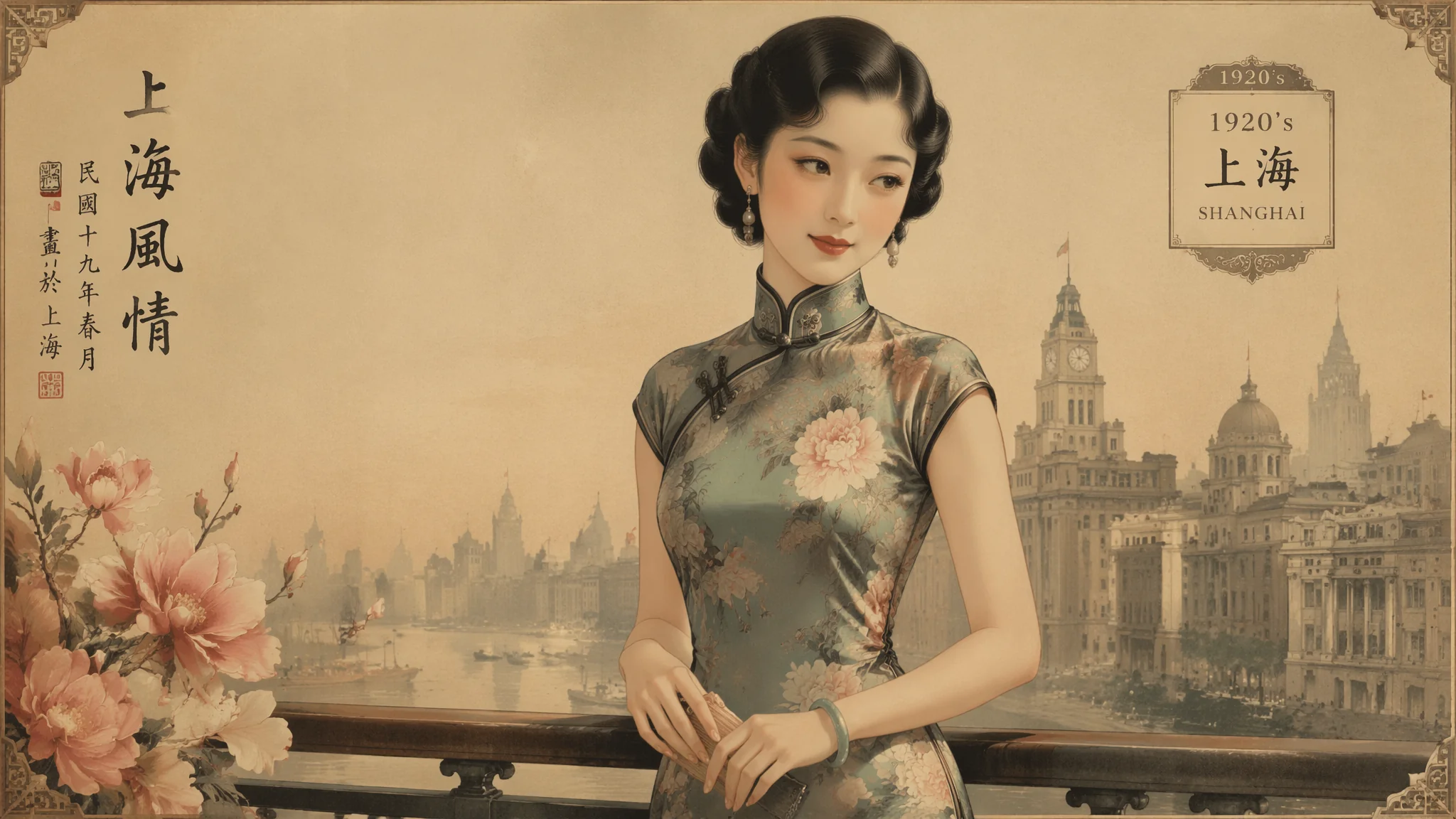
旗袍是AI绘画里最能检验"文化理解力"的题材——画错不是技术问题,是训练数据里的文化偏差问题。去年接了一个民国背景游戏的角色设计外包,需要画十套不同风格的旗袍。初稿发过去甲方回了八个字:"这是影楼风,不是旗袍。"当时我盯着屏幕看了很久终于明白问题在哪——我写的Prompt是"qipao",而这个词在英文训练数据里的视觉呈现被严重扭曲了:开衩开到腰、面料反光像塑料、剪裁紧得像绷带。真正的民国旗袍是一种"克制的优雅"——立领的高度、盘扣的密度、滚边的宽度、开衩的位置——每个细节都有规矩。为了校准这些细节,我翻了两周的民国老照片、去了上海纺织博物馆拍了上百张实物参考、对照张爱玲小说里的旗袍描写一条一条调Prompt。这篇进阶教程,不是教你"画一个穿旗袍的美女"——是教你"画一个活在民国老照片里的旗袍美人"。
旗袍的"正统性"——五个必须写对的细节关键词
AI对"qipao"的默认理解和真正的民国旗袍之间至少隔着五个细节的差距。立领——不是所有立领都一样高。传统旗袍的立领高度约2-3厘米,紧贴颈根但不勒。Prompt写"traditional mandarin collar, approximately 2cm height, snug but not tight, elegant neck line"。盘扣——旗袍的灵魂五金件。Prompt写"handmade pankou knotted buttons, intricate flower-shaped knots, running diagonally from collar to underarm, about 4-5 pairs of buttons"。
滚边——旗袍边缘的包边工艺。Prompt写"contrast color bias binding trim along collar, sleeve openings, side slits, and hem, approximately 5mm width, fine piping detail"。开衩——这是最容易"跑偏"的细节。1930年代日常旗袍的开衩通常在膝盖以下,不是高到大腿根。Prompt写"modest side slits ending just above the knee, elegant and not revealing"。面料——丝绸是主角但不是唯一选择。1930年代的旗袍面料包括真丝、棉布、纱罗、丝绒。Prompt写"authentic 1930s silk fabric with subtle sheen, not shiny satin, natural matte luster"。这些基础细节在前一篇AI旗袍绘画基础教程里有更详尽的款式图谱。传统服饰的研究可以参考AI古风国潮绘画创作中的服饰关键词库。
复古色调——让画面有"老照片"的温度
旗袍的画面感很大程度上取决于色调处理——太鲜艳像影楼,太暗淡没有层次。我摸索出了三套稳定的复古色调配方:旧上海暖调——暖黄基底+低对比+"sepia-toned with subtle warm amber cast, faded photograph from the 1930s, soft vignette around edges, slight film grain"。江南水墨调——冷灰基底+柔光+"muted ink-wash color palette, cool misty atmosphere, desaturated jade greens and soft ochres, subtle cyan shadows"。夜上海暗调——深色背景+点光源+"dark moody atmosphere with warm tungsten spotlights, chiaroscuro lighting reminiscent of 1930s cinema, deep burgundy and gold accents"。
色调控制的关键不是滤镜——是在Prompt里指定整体色彩倾向然后让AI在生成时统一色彩逻辑。如果后期还需要微调,Lightroom或VSCO的复古预设叠一层就够了。老照片风格的更多技巧在AI复古怀旧风格绘画教程里有完整的色调配方和参数。
民国场景——别让旗袍美人悬浮在真空中
一张好的旗袍画和一张"穿着旗袍的图"之间的差距在于场景的民国质感。三个经典场景方向:石库门弄堂——老上海最有辨识度的生活场景。"1930s Shanghai shikumen lane, red brick walls with green moss, bamboo laundry poles hanging overhead, narrow alley with dappled afternoon light, lived-in everyday atmosphere"。江南园林——苏州园林的漏窗和回廊是旗袍的天然画框。"classic Suzhou garden, moon gate and lattice windows, moss-covered rockery, lotus pond in background, dappled shade from ancient trees, poetic and serene"。老式电车/咖啡馆——室内和公共空间的民国氛围。"1930s Shanghai tram interior, wooden seats and brass handrails, warm afternoon light through window, nostalgic urban journey"。
场景的真实感来自"生活痕迹"——不是宏大的地标建筑,而是晾衣杆、青苔、斑驳的墙漆这些日常细节。写Prompt时加"lived-in atmosphere, signs of daily life, authentic wear and tear on surfaces"——这些小词比大场景描述更能把旗袍从"戏服"拉回"生活"。场景氛围的构建在AI场景氛围绘画教程中有更多系统方法。视觉参考方面,Old Shanghai老上海影像档案收藏了大量民国时期的真实照片,是旗袍场景最准确的历史参考。面料和工艺方面,V&A博物馆的亚洲服饰藏品在线目录有高清的旗袍实物照片。
现代旗袍——传统元素在当代视觉中的转化
非遗复刻之外,旗袍的现代演绎同样是高需求题材。新中式日常:旗袍元素融入当代生活场景——"modern cheongsam-inspired dress, shorter length above knee, paired with white sneakers, young woman in a contemporary coffee shop, natural casual elegance"。高定时装:旗袍作为红毯礼服的艺术化改造——"avant-garde qipao gown with architectural silhouette, dramatic train, gold embroidery on black silk, high fashion runway, theatrical lighting, Alexander McQueen inspired"。
赛博旗袍:一个我个人很喜欢的实验方向——传统旗袍结构+未来感材质。"cyberpunk qipao, clear PVC panels replacing silk sections, neon piping along collar and seams, holographic fabric inserts, futuristic Shanghai night cityscape, Blade Runner aesthetic meets 1930s elegance"。这个方向的商业潜力在AI时尚设计趋势教程中有更多案例分析。旗袍的未来感改造需要小心平衡——保留60%以上的传统元素(立领/盘扣/斜襟)作为锚点,剩下的40%做现代化改造,否则会失去辨识度。
从单人肖像到群像叙事——旗袍角色的故事性
单人的旗袍美女画是基本功——往上走一层是"旗袍群像",用多个人物的互动来讲述一个民国小故事。姐妹双人像:"two young women in contrasting qipao, one in pale blue the other in dusty rose, walking arm in arm through a magnolia garden, intimate friendship, soft afternoon light, sisterly bond"。母女双人:"elderly woman in traditional dark silk qipao with jade jewelry, young woman in modern lighter qipao, generational contrast, sitting together at a wooden tea table, quiet moment of connection"。
舞厅群像:"1930s Shanghai ballroom scene, multiple dancing couples, women in elegant qipao of various colors swirling on the dance floor, live jazz band in background, warm chandelier light, sense of movement and music"。群像的难度在于多角色一致性——每增加一个人物AI出错概率就翻倍。建议先用单人出图确定每个角色的外貌和旗袍款式,再用inpainting或局部重绘的方式逐步组合进群像场景。
常见问题
旗袍上的花纹总是糊成一片怎么办?
旗袍花纹(如暗纹提花、刺绣图案)是AI最容易"糊弄"的细节。解法:明确花纹类型和分布——"delicate peony embroidery concentrated on the chest and hem area, fine detailed stitches, clear individual petals"。负面Prompt加"blurry pattern, messy print, random texture"。如果花纹仍然模糊,出图后用img2img局部重绘(inpainting)只针对花纹区域做增强。
如何避免旗袍女孩全部画成"网红脸"?
"网红脸"的根源在训练数据偏差——AI的默认"东方美女"偏向现代网红审美。解法:加"natural Chinese facial features, classic 1930s Shanghai beauty, authentic period look, not contemporary social media face, subtle unique characteristics"。再加"Liu Wen inspired natural beauty, high cheekbones, elegant simplicity"引入超模的面部特征对冲网红感。
旗袍的颜色怎么选才能不显老气?
很多人对旗袍的刻板印象就是大红大绿、老气横秋。实际上1930年代上海的时髦旗袍颜色非常摩登:月白、藕荷、香槟、烟灰、湖绿——都是低调雅致的中间色。Prompt里用"elegant muted color palette, sophisticated pastels and earth tones, not bright or gaudy colors"引导AI走雅致路线。
画旗袍这件事,画到后面你会发现——最难的不是旗袍本身,是穿着它的那个人的"时代感"。一个民国女人站在弄堂口的姿态、持扇的手指弧度、垂眼看人时的神情——这些才是让旗袍从"好看的衣服"变成"一个时代的故事"的密码。如果你今天想画第一张旗袍进阶作品,建议先去Old Shanghai网站逛十五分钟——不是看旗袍,是看那些照片里的人的站姿和眼神。把那种感觉带到Prompt里,比你加十个细节关键词都管用。