AI仆人角色绘画:从女仆到管家的人物设计与服饰细节
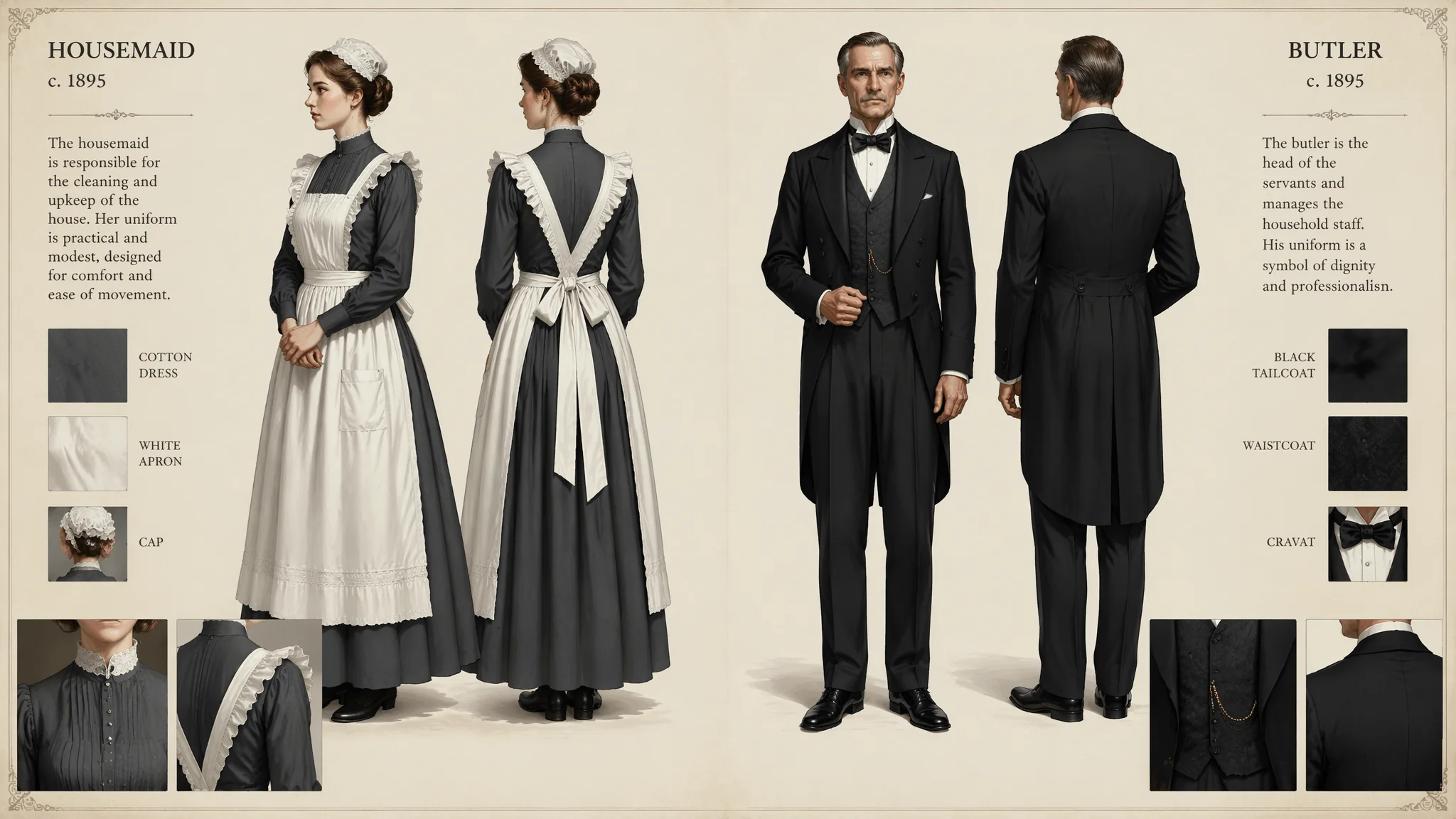
简单说:AI画仆人角色最大的坑是"阶级感"不对——女仆画成富家千金、管家画成霸道总裁。阶级感的控制来自三个维度:服饰材质(棉麻不是丝绸)、姿态语言(微微低头不是昂首挺胸)、道具细节(托盘抹布不是香槟杯)。三个维度都写对,角色才像"仆人"而不是"穿了制服的主人"。
去年帮一个轻小说作者做人设,她要一个"忠心但有点腹黑的女仆长"。我第一版提示词写了"beautiful maid in elegant uniform",出来的图怎么说呢——模特在拍写真,不像女仆。问题出在哪儿?我复盘了三轮才想明白:AI对"maid"这个词的训练数据被日本动漫污染得太厉害了——它脑海里的女仆是秋叶原那种泡泡袖+超短裙的cosplay版本,不是真正干活的女仆。从那之后我学乖了:画任何服务型角色,先把"阶级信号"写清楚。
仆人角色的阶级信号系统
阶级信号三要素:服饰材质向下走(cotton/linen/wool而不是silk/satin/velvet)、姿态重心向下走(slightly bowed head/humble posture/attentive stance)、眼神方向向服务对象走(looking attentively at the person being served/demure gaze)。一旦这三个信号里有两个写错,角色就从"仆人"滑向"主人"。材质方面:女仆围裙写"sturdy cotton apron with practical pockets""crisp linen apron showing signs of careful ironing""plain white apron without frills or lace"——注意"without frills or lace"这个否定句式非常重要,它直接对抗了AI对"apron = cute frilly thing"的默认联想。管家西装写"wool tailcoat in dark charcoal not luxurious black""well-worn but immaculately maintained butler suit""white gloves with subtle signs of daily use not pristine"——"well-worn but maintained"这个描述比"elegant suit"准确十倍。姿态方面:女仆的双手位置是关键——"hands clasped neatly in front""holding a silver tray with practiced poise""discreetly wiping hands on apron"——双手总是处于"随时准备服务"的位置。管家的姿态更微妙——"standing at quiet attention by the door""leaning slightly forward to hear instructions""discreet presence rather than commanding stance"。关于人物姿态的系统设计,AI角色设计全流程教程里有全面的方法论。
四种仆人角色的风格体系
维多利亚女仆、日系动漫女仆、皇家管家、东方古风侍从——四种风格的关键词完全不互通,但阶级信号的底层逻辑是一样的。维多利亚女仆(Victorian Maid):时代定调"Victorian era downstairs""Edwardian domestic service""Downton Abbey inspired";服饰细节"high-necked long-sleeved cotton dress with starched white apron and cap""no makeup, practical and modest appearance""sensible black lace-up boots";场景"below stairs kitchen""servants' hall""dimly lit corridor with cleaning supplies"。日系动漫女仆(Anime Maid):这是最容易"画歪"的类型——不加约束AI直接画成秋叶原女仆咖啡厅的版本。如果你要的是"正经干活的女仆"而非"萌系女仆",必须加"traditional European maid uniform not cosplay style""modest ankle-length skirt not mini skirt""realistic domestic worker not anime fantasy"。如果你确实要萌系女仆,那就放开写"Japanese maid cafe style with frilly headdress""kawaii maid with lace-trimmed apron and knee-high socks"。皇家管家(Royal Butler):核心是"不怒自威的低调专业感"——"elderly butler with decades of quiet dignity""silver hair perfectly groomed""white gloves holding a silver tray with effortless grace""Anthony Hopkins as butler energy"。注意写年龄词(elderly/silver hair/weathered face)可以让管家的"服务感"而非"掌控感"增加很多。东方古风侍从:写"ancient Chinese palace maid in traditional hanfu servant attire""plain cotton robe in muted earth tones, not the colorful silk of nobility""holding a wooden tray with tea set, head slightly bowed"。关键区别是"plain cotton robe"和"not the colorful silk of nobility"——古风AI绘画里,衣服的材质和颜色直接等于阶级。古风方向更多技巧可参考AI古风绘画风格大全。
道具是仆人角色身份的延伸
仆人角色的道具不是装饰——是身份说明书。女仆的道具是扫帚/抹布/托盘/茶壶;管家的道具是银盘/怀表/钥匙串/书信。道具选错了,角色身份就垮了。女仆道具重点:银托盘(silver serving tray)——写"polished silver tray reflecting candlelight""silver tray held with both hands at chest level";清洁工具(cleaning tools)——写"feather duster made of real ostrich feathers""wooden broom with natural bristles showing wear""copper polish and cleaning cloth on a side table";茶具(tea service)——写"fine bone china teapot on a silver tray""pouring tea with practiced elegance while maintaining proper distance"。管家道具重点:怀表(pocket watch)——写"retrieving a gold pocket watch from waistcoat with white-gloved hand""checking pocket watch with quiet precision";书信(letter on tray)——写"carrying a letter on a silver salver with white gloves""discreetly presenting a sealed envelope";钥匙(keys)——写"large iron key ring at the waist""unlocking a heavy oak door with practiced formality"。道具描写的颗粒度决定了角色的可信度——你写"holding a tray"和"holding a polished silver tray reflecting the candlelight, white-gloved hands steady and practiced"出图差别不是一个量级的。道具细节的深度处理在AI实物道具绘画技巧里有更多参考。
多人仆人场景的层次构建
仆人多人场景的核心是"等级差异"——管家、女仆长、低级女仆、厨房帮工,各自站位和姿态不同。AI不会自动分层,你得在提示词里把等级写分明。一个典型的英式庄园仆人集体场景提示词:拍摄参考"Below stairs group portrait, Downton Abbey style";角色分层"head butler standing centered and composed, housekeeper to his right with keys at her waist, senior footman slightly behind, three junior maids arranged at the edges with hands clasped, kitchen boy kneeling at the front polishing silverware";服饰等级差异"butler and housekeeper in formal black, senior footman in dark livery with subtle trim, junior maids in simple cotton morning dresses with plain aprons, kitchen boy in practical working clothes";场景"servants' hall with long wooden table, copper pots on the wall, bell board indicating which room is calling"——这个提示词的关键在于每个角色都有独立的"等级和动作",AI才能画出有层次感的群像。关于多人场景的更多技巧,StudioBinder的群像构图教程虽然是电影向的,但角色站位和层次的理论直接适用于AI绘画的提示词设计。对维多利亚时期仆人文化感兴趣的读者,英国国家信托National Trust的庄园史料中关于"downstairs life"的记载为仆人角色提供了非常真实的历史视觉参考。
常见问题
为什么我的女仆总是画得像大小姐?
因为AI把"maid"默认理解成了日系萌女仆(本质上是一种"可爱角色"而非"服务者")。加以下关键词立刻拉回来:"working class aesthetic""practical uniform not decorative costume""modest and hardworking appearance""no makeup, slightly tired eyes from early morning duties"。
管家画得太年轻怎么办?
AI默认把所有人画得年轻漂亮。对抗方法是写具体年龄描述:"man in his sixties""silver hair and dignified wrinkles""decades of service etched into his face""weathered but distinguished appearance"。
多人场景里角色之间没有互动感怎么解决?
给每个角色分配一个"指向性动作"——不是"standing there",而是"looking toward the butler for instruction""handing a tray to another maid""the housekeeper is quietly instructing a junior maid in the corner"。方向性的互动动作让角色之间产生叙事连接。
觉得有用的话分享给朋友吧。