AI持剑人物绘画:刀剑握持姿态与武侠战斗气场的视觉表现技法
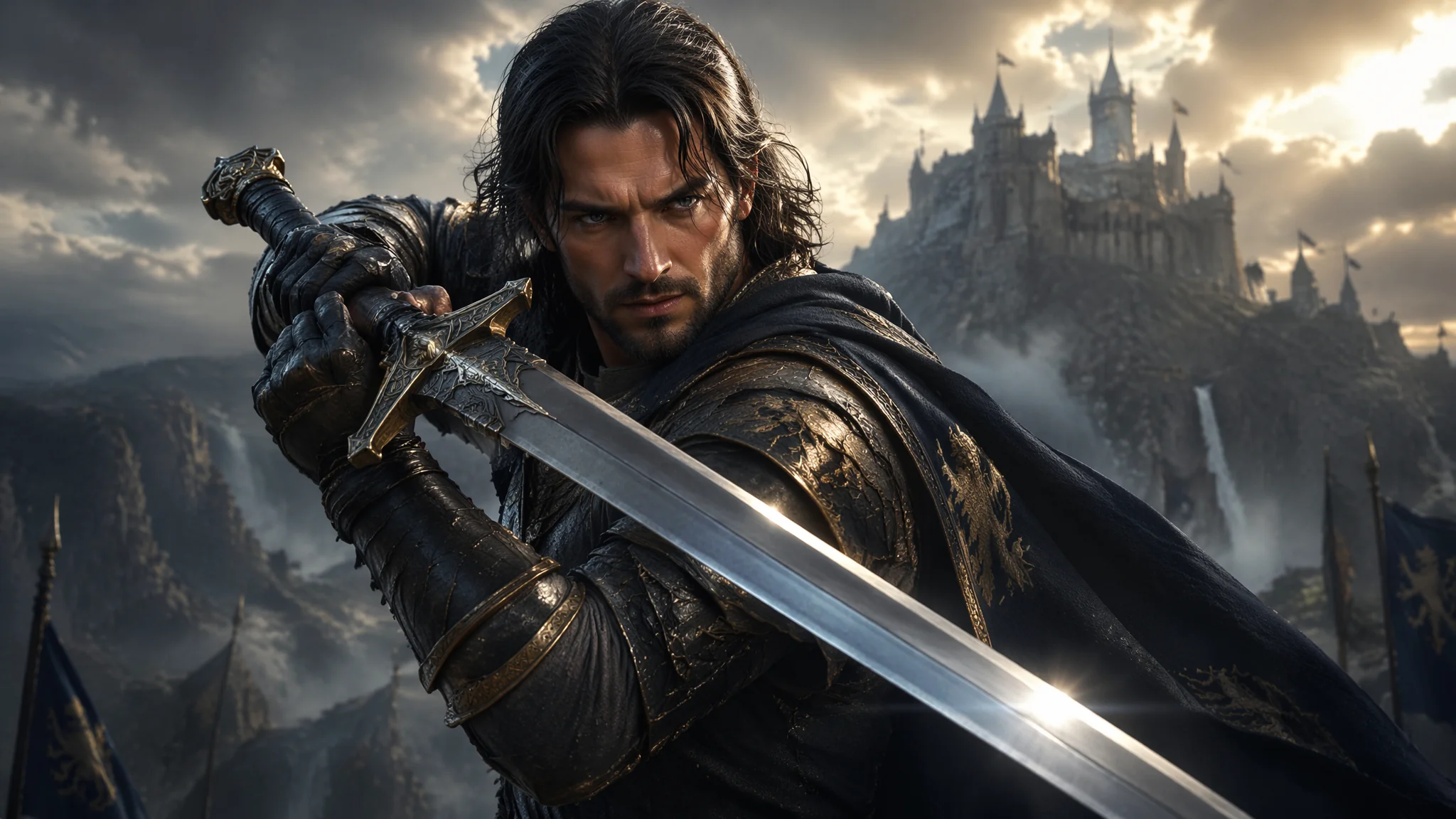
我第一次用AI画持剑人物的时候出了个让我哭笑不得的图——一个古装剑客,剑刃从手腕穿出来,手指数量目测是六根半,手腕的弯曲角度人类骨骼学上不存在。我盯着那张图看了三十秒,脑子里只有一个想法:AI对手+剑这个组合的理解,大概约等于我对量子力学的理解——知道概念但一上手就乱套。后来我花了大量时间专门研究持剑姿态的Prompt写法,发现AI画不好持剑不是因为"不会画剑"——单独画一把剑AI画得比大部分插画师都好。问题出在"人剑交互"——身体和武器之间的空间关系、手的握力如何传导到剑柄、衣服和头发如何被剑的动作带动。这篇就是专门解决这些交互问题的。
五种握剑姿态——Prompt里的动作语义学
握剑不是"手+剑=握剑"这么简单。不同的握剑姿态传达完全不同的情绪和战斗阶段。我拆解了五种最常用的持剑姿态及对应的Prompt写法:第一,垂剑而立——"holding the sword point-down with both hands resting on the pommel, the blade vertical in front of the body, a stance of calm authority and waiting"。这是"大战前的宁静"——剑不是武器,是权杖。第二,横剑于前——"holding the sword horizontally at chest level with both hands, the flat of the blade facing outward in a defensive guard position, eyes focused over the blade edge at the opponent"。这是防御姿态——剑成为身体和敌人之间的最后一道屏障。第三,拔剑出鞘——"caught mid-draw, the blade is half out of its sheath, the right hand gripping the hilt with tendons visible from tension, the left hand holding the scabbard, the body leaning slightly forward, the moment before action"。这是动态张力最大的瞬间——观众知道下一秒剑就要砍出去。第四,剑指前方——"the sword extended forward in a one-handed thrust, the arm fully extended creating a line from shoulder to blade tip, the body in a deep forward lunge"。这是攻击姿态——全身的力量沿手臂传递到剑尖。第五,负剑而行——"the sword resting casually over one shoulder, held loosely by the blade or hilt, a posture of confidence and ease, walking away from or toward the viewer"。这是"强者姿态"——剑不再是紧张的战斗工具,而是像背包一样随身携带。
写握剑Prompt的核心技巧:不要只说"holding a sword"——描述力的传递路径。"the grip is firm enough that the knuckles are white, the weight of the blade pulls the wrist into a slight angle, the forearm muscles are engaged to counterbalance the sword's mass"——这些生理力学描述比"holding a sword correctly"有效一百倍。AI理解"力的传递"比理解"正确的握姿"更准确。想看更多动态姿势分析,AI角色设计绘画里有完整的角色动态设计方法论。Posemaniacs有免费的3D人体姿态参考,Line of Action提供了大量持武器的动态素描参考——用这些参考图配合AI出图效率翻倍。
剑气与气场——用环境叙事代替特效贴图
很多人画持剑人物的思路是:画好人 → 画好剑 → 在剑周围加发光特效。但这个逻辑是"先有人再有气场"。更好的逻辑是"气场先于人而存在"——环境因为剑的气场而改变:落叶在剑周围三米处就被弹开,雨水在剑锋上方自动分流,地面以持剑者为圆心有一圈看不见的"压迫圈"。写Prompt时不写"sword energy effect",写环境如何对剑做出反应:"fallen leaves swirl in a spiral around the blade without touching it, raindrops split and curve away from the sword's edge, a faint pressure wave disturbs the dust on the ground in a perfect circle around the swordsman"。环境反应比剑上的光效更有说服力。
我画过一张最满意的持剑图——一个老剑客在雨中收剑入鞘。剑上没有发光,没有能量线。但剑入鞘的瞬间,剑身上残留的雨水被震成了一圈水雾——像一个小小的爆炸环扩散开来。那张图的Prompt关键句是"the sword slides into its sheath and the remaining rainwater on the blade explodes into a fine mist ring, capturing the exact moment of closure"。一个物理细节——水雾环——比任何特效都更有"内力"的感觉。关于环境氛围渲染的更多技巧,AI极光绘画里的光线散射原理可以直接套用在"剑气扰动空气"的视觉效果上。
东方武侠 vs 日系剑客——两套视觉体系的不同逻辑
东方武侠剑客和日系剑客在AI绘画里的表现逻辑完全不同——不光是服装和武器形制不同,是整个运动方式和空间关系不同。东方武侠的关键词是"轻"和"意"——动作飘逸、衣带当风、剑比人轻、人在空中。Prompt写法:"a Chinese swordsman in flowing white robes, the sword moves like an extension of the arm flowing seamlessly from one form to the next, the silk sleeves and ribbons trail behind capturing the energy flow, painted in Chinese ink wash style with bold calligraphic brushstrokes for the sword path"。东方武侠的剑是"笔"——剑的轨迹是书法。
日系剑客的关键词是"斩"和"静"——动作极少、一击必杀、剑比人重、脚不离地。Prompt写法:"a Japanese swordsman in a silent kendo stance, both hands on the katana raised above the head, the blade perfectly still but the air around it vibrates with potential energy, the kimono is heavy and grounded, all tension concentrated in the split second before the downward cut, minimalist composition with strong negative space"。日系剑客的剑是"铡刀"——动作只有一刀,但这一刀之前是无穷的静默。两种风格的详细对比也可以参考修仙剑客AI绘画里的东方奇幻兵器设计。
常见问题
AI画的剑比例总是离谱——剑太长或太短,和人物比例不匹配怎么办?
在Prompt里明确写剑的长度参照:"the sword blade is approximately three feet long——roughly the length from the wielder's shoulder to fingertips"。给AI一个人体参照物比写具体数字更有效——因为AI的空间理解以人体比例为基准。如果还不行,加"realistic sword proportions, the blade length is appropriate for a one-handed/two-handed grip"——明确是单手剑还是双手剑,AI会自动匹配对应的长度数据。
持剑人物的服装和剑的风格怎么统一?古装+科幻剑会不会太跳?
风格统一的核心不是"年代一致"——是"世界观自洽"。古装+光剑可以很好看——只要你的Prompt建立了一套"这个世界里光剑存在的合理性":比如"an ancient warrior in Song dynasty armor wielding a blade made of captured starlight, the juxtaposition of ancient craftsmanship and cosmic energy creates a unique visual tension"。混搭风格的关键词是"juxtaposition"——不要偷偷混搭,大方声明"我就是在混搭",AI反而能更好地处理这种对比。
想让持剑人物站在特定构图位置(左侧/右侧)怎么控制?
用镜头语言而非坐标描述:"the swordsman is positioned on the left third of the frame facing right, the sword extends diagonally into the empty right space, the composition follows the rule of thirds with the blade creating a strong leading line"。AI对"rule of thirds""leading line""negative space on the right"这类摄影构图术语的理解非常准确——比你说"人物靠左一点"强得多。
那把从手腕穿出来的剑的图我没删——放在一个叫"AI翻车集锦"的文件夹里。每次有新朋友说"AI绘画不就是一句话出图吗"——我就把那张图翻出来给他看。然后我们一起笑。然后他理解了:AI绘画的"一句话"背后,是你对这个画面中每一个物理交互的理解程度。你对握剑的理解有多深,AI帮你画出来的剑就有多稳。