旅行AI绘画教程:旅途风景和度假场景的创意画法 - FlowPix
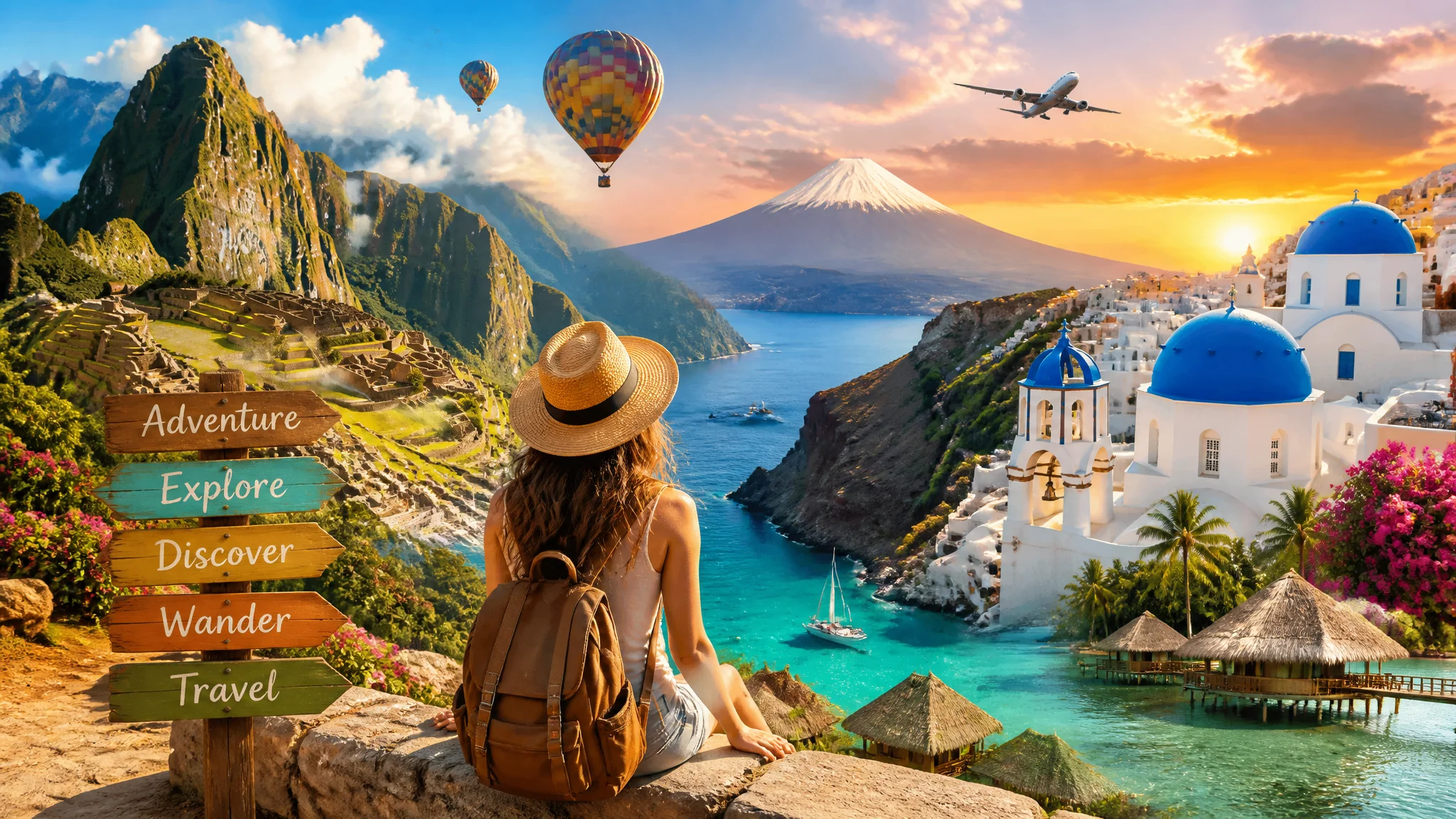
简单说:AI旅行绘画核心是主观视角介入+四种经典场景+人物叙事角色+天气时间控制+地域特色文化锚定——四种场景海滩a tropical beach at golden hour+turquoise water+figure walking barefoot along the shoreline+footprints in wet sand / 雪山a lone hiker on a snow-covered mountain ridge+vast glacier peaks+the figure tiny against the monumental scale of nature / 古城narrow cobblestone alley in an old European town+ivy-covered stone walls+a local on a vintage bicycle+laundry hanging from upper windows / 雨林dense tropical rainforest+multi-layered vegetation from forest floor to canopy+visible humidity as subtle mist、人物叙事背影面对风景a person seen from behind sitting on the edge of a cliff / 阅读/休息中的旅人a traveler reading a book on a hotel balcony+slow travel aesthetic / 运动中的旅人a backpacker hiking through a mountain meadow in full bloom+mid-stride、天气时间清晨early morning mist+cool blue hour tones / 正午harsh midday Mediterranean sun / 黄金时刻golden hour magic light+warm amber and honey tones / 阴雨雾misty rainy day in a mountain village+Wong Kar-wai film aesthetic / 夜晚星空Milky Way stretching across the night sky、地域特色防止文化符号张冠李戴日本京都Japanese machiya townhouse vs 中国江南Chinese Jiangnan water town / 摩洛哥Moroccan medina+zellige tilework vs 印度Indian bazaar+marigold flower garlands / 瑞士Swiss Alps+wooden chalet vs 新西兰New Zealand Southern Alps+fjord landscape。旅行参考可以看 500px 的 travel photography 分类,Lonely Planet 也有大量灵感。
旅行AI绘画教程:旅途风景和度假场景的创意画法
我有一个习惯——每次想去一个地方旅行之前,先用AI把那个地方画二十遍。不是画旅游攻略上的标准景点照,而是画我自己想看到的画面:巷子里的猫、清晨没人的海滩、日落时山顶上那个只有我一个人知道的观景点。画完之后我把这些图发给去过当地的朋友看,他们经常说:"你比我去过的还知道那里长什么样。"
AI旅行绘画有一个独特的优势:它不受季节、天气、人流、预算的限制。你想看冰岛极光但买不起机票?AI给你画。你想去非洲草原看动物大迁徙但没有假期?AI给你画。你想去京都看樱花但抢不到酒店——AI不但给你画樱花,还帮你把游客全部P掉。
但这不意味着AI旅行绘画没有技巧门槛。事实上,高度依赖AI去画的旅行场景更容易暴露AI的局限——文化符号混淆(把印度神庙画成泰国佛寺)、地理特征失准(把撒哈拉画成戈壁滩)、天气氛围失真(热带雨林的空气湿度和北欧森林完全不是一回事)。这篇教程逐个拆解这些坑,同时给出不同目的地的完整Prompt方案。搭配AI乡村绘画教程中的自然风景描写技巧一起看,效果更好。
四种经典旅行场景的Prompt体系
以下四种场景覆盖了90%的旅行类AI绘画需求,每个场景的Prompt策略各有不同。
场景一:海滩度假——光与水的互动。海滩图的灵魂在"水面反光"和"人物姿态"的关系上。不是画一片海,而是画人在海边的状态。Prompt:"a tropical beach at golden hour, turquoise water with gentle waves, a figure walking barefoot along the shoreline, footprints in wet sand, a straw hat and sarong on a beach towel in the foreground, palm trees silhouetted against orange sky, relaxed and carefree, travel magazine editorial, shot on Leica Q3"。
场景二:雪山徒步——体量感和孤独感。雪山的核心在"体量对比"——把人物画得很小放在画面下方,上方是巨大的雪峰,这种尺度对比自带"人类的渺小与自然的壮丽"的叙事。Prompt:"a lone hiker on a snow-covered mountain ridge, vast glacier peaks in the background under clear blue sky, the figure tiny against the monumental scale of nature, crisp alpine air visible in the sharpness of distant peaks, crampons and ice axe details, adventure photography, National Geographic style, extreme wide shot"。
场景三:古城街巷——文化纵深与氛围。古城题材容易画成"空荡荡的布景",解决方法是加入"正在发生的生活场景"——晾在巷子里的衣服、骑着自行车经过的本地人、飘出蒸汽的早餐摊。Prompt:"narrow cobblestone alley in an old European town, ivy-covered stone walls, a local on a vintage bicycle passing by, warm light reflecting off ancient walls, a small cafe with outdoor tables and a red umbrella, laundry hanging from upper windows, lived-in and authentic, candid street photography"。
场景四:热带雨林——密度感和湿度感。雨林图的挑战在于"层次密度"——如果AI只画一两层植物,就会看起来像植物园而不是原始雨林。解决:在Prompt中明确要求多层植被。Prompt:"dense tropical rainforest, multi-layered vegetation from forest floor to canopy, giant ferns and broad-leaved plants in the foreground, tall tree trunks with hanging vines in the middle ground, sunlight piercing through the thick canopy in dramatic rays, visible humidity as subtle mist in the air, a small winding path disappearing into the green, wildlife documentary still"。
人物在旅行场景中的叙事角色
旅行图里的人物不是"摆拍的模特",而是"观众的代入点"。观众通过画面中的人物去想象"如果我在这里"。所以人物的姿态和状态,直接决定了观众对这张旅行图的向往程度。
背影面对风景——最经典的代入姿态:人物背对镜头、面对风景。这种构图让观众"站在人物身后",和他一起看同一个方向。适用于所有宏大风景场景。Prompt:"a person seen from behind, sitting on the edge of a cliff, facing the vast ocean and setting sun, silhouette with wind in their hair, contemplative mood"。
阅读/休息中的旅人——慢旅行的叙事:人物在做一件悠闲的事——在阳台上看书、在吊床上打盹、在咖啡馆里写日记。这种状态传递的是"旅行不是为了打卡,是为了放松"。Prompt:"a traveler reading a book on a hotel balcony, bougainvillea flowers framing the view, a cup of espresso on the side table, the blue Aegean Sea in the distance, whitewashed Greek island architecture, slow travel aesthetic, afternoon light"。
运动中的旅人——冒险和探索的叙事:人物在徒步、划船、骑行、攀岩。动态姿态要求AI画出有张力的身体姿态。建议用侧面角度而非正面——侧面能展示身体的动作线,AI在这方面的训练数据更充分。Prompt:"a backpacker hiking through a mountain meadow in full bloom, mid-stride captured with motion, hiking poles in hands, looking ahead at the trail, golden late afternoon light, Patagonia catalog aesthetic, dynamic composition"。
如果需要对人物做更精确的控制(面部表情、服装款式、体型特征),建议配合AI卡通绘画教程中的角色一致性技术来保证同一个人物在多张旅行图中长得一样。
旅行氛围的天气与时间控制
同样的地点,不同天气下的画面氛围完全不同。掌握天气和时间的Prompt控制,一张旅行图就有了不可替代的"瞬间感"。
清晨(5:30-7:00):色温偏蓝紫、光线柔和、地面可能有晨雾、空气看起来"清新"。适用于:古镇老街、茶园、湖泊。Prompt:"early morning mist over the landscape, cool blue hour tones, dew on grass, soft diffused light before sunrise, no people around, serene and untouched"。
正午(11:00-14:00):光线最硬、阴影最短、色彩最饱和。一般来说这不是旅行摄影的好时段——但如果你故意利用"硬光"来做风格化表达(比如地中海小镇白墙上的强烈光影对比),正午反而有独特魅力。Prompt:"harsh midday Mediterranean sun, strong geometric shadows of window frames on whitewashed walls, deep blue sky, heat shimmer visible in the distance, high contrast"。
黄金时刻(日出/日落前后一小时):这是所有旅行摄影师的"魔力时刻"。光线色温极暖(金黄色到橙红色)、影子拉得很长、所有东西都带着一层暖色的轮廓光。Prompt:"golden hour magic light, warm amber and honey tones, long dramatic shadows stretching across the ground, rim light outlining every surface, the world bathed in golden glow, cinematic beauty"。
阴雨/雾:最被低估的旅行氛围。雨后的石板路反光、雾中的远山若隐若现、打伞的人走在空荡荡的巷子里——这些画面的情绪密度远高于晴天的"美但空洞"。Prompt:"misty rainy day in a mountain village, wet cobblestones reflecting warm street lights, fog partially obscuring distant hills, a person with a transparent umbrella walking alone, melancholic and poetic, Wong Kar-wai film aesthetic"。
夜晚与星空:城市夜景和自然星空要用不同的策略。城市夜景看重灯光层次和玻璃幕墙的反光。自然星空看重银河的可见度、前景的剪影。Prompt:"Milky Way stretching across the night sky above a silhouetted mountain range, a warm tent glowing in the foreground, no light pollution, astrophotography, long exposure capturing star trails"。这方面国际暗天协会的数据对找到光污染少的目的地有帮助。
地域特色:防止文化符号张冠李戴
AI最常犯的旅行题材错误是把不同地域的文化符号混在一起。下面是一些高频翻车和文化锚定方案。
日本京都 vs 中国江南:AI常在这两者之间搞混——因为都有"传统木建筑+水景+灯笼"的元素。区分锚定:京都用"Japanese machiya townhouse with dark wooden lattice facade, stone lantern, zen garden with raked gravel"。江南用"Chinese Jiangnan water town, white walls and black tiled roofs, stone arch bridge over canal, red lanterns hung under eaves, willow trees along the water"。
摩洛哥 vs 印度:两者的市集在AI眼中经常混淆——多彩的织物、香料堆、窄巷。区分锚定:摩洛哥用"Moroccan medina, intricate zellige tilework, horseshoe arches, mint tea on brass tray, leather babouche slippers"。印度用"Indian bazaar, marigold flower garlands, piles of colorful spices in cone shapes, brass bells and statues, chai stall with clay cups"。
瑞士 vs 新西兰:两者的山地风景在"绿草+雪山+湖泊"的组合上高度相似。区分锚定:瑞士用"Swiss Alps with traditional wooden chalet, cowbells heard in the distance, alpine meadow with wildflowers, Matterhorn peak silhouette"。新西兰用"New Zealand Southern Alps, dramatic fjord landscape, lupin flowers along the lake shore, Lord of the Rings epic scale"。
常见问题
AI画的旅行图里的文字(路牌、店招)总是乱码怎么办?
这是目前所有AI绘画工具的通病——它们不真正理解文字,只是模拟文字的"视觉形状"。如果路牌上的文字不重要,在Negative Prompt里加"text, letters, signage with text"来避免出现文字。如果必须出现真实文字,唯一的方法是后期在PS里用文字工具替换。不要指望Prompt里写"a street sign that says Welcome to Paris"能画出正确的字。
AI旅行图适合用做小红书和朋友圈的旅行内容吗?
适合,但有两点建议:一是坦诚标注"AI生成"——现在平台的用户越来越能识别AI图,被发现造假比一开始就标注诚实更伤害信任。二是混合使用——三张AI氛围图+一张真实旅行照片的编排方式,比全AI或者全真实的互动率都高。旅行内容的本质是"传递对远方的向往",AI图做这个比真实照片更高效——因为AI可以生成"现实中几乎不可能出现的完美的光"。
如何让多次生成的旅行图保持统一的视觉风格?
如果是做一个"虚拟旅行系列"(比如"AI画遍日本47个县"),需要统一的视觉调性。方法:锁定摄影风格+"shot on Kodak Portra 400 film, warm nostalgic tones, 35mm focal length, documentary travel style"——这个固定后缀加到所有Prompt末尾,不分目的地。锁定色彩:"consistent color grading with warm highlights and slightly teal shadows, analog film look"。这样100张不同地方的旅行图会有统一的"系列感"。
旅行这件事,最美好的部分其实不是"到了那个地方"——而是在去之前对着地图幻想、看别人游记时脑子里自己构建的画面。AI旅行绘画把这个幻想的环节视觉化了。你不需要真的去冰岛看极光,你的卧室就是观景台。你不需要拿到新西兰的签证,AI已经帮你站在了那片指环王的山谷里。
有人会说"AI旅行图不是真的旅行"。但"想去远方"这种心情本身,难道不就已经是旅行的一部分了吗。分享给那些心里装着远方但暂时走不开的朋友——先让AI带你去看看,总有一天身子会跟上的。