AI武汉美食绘画:热干面与江城特色小吃的烟火气视觉创作
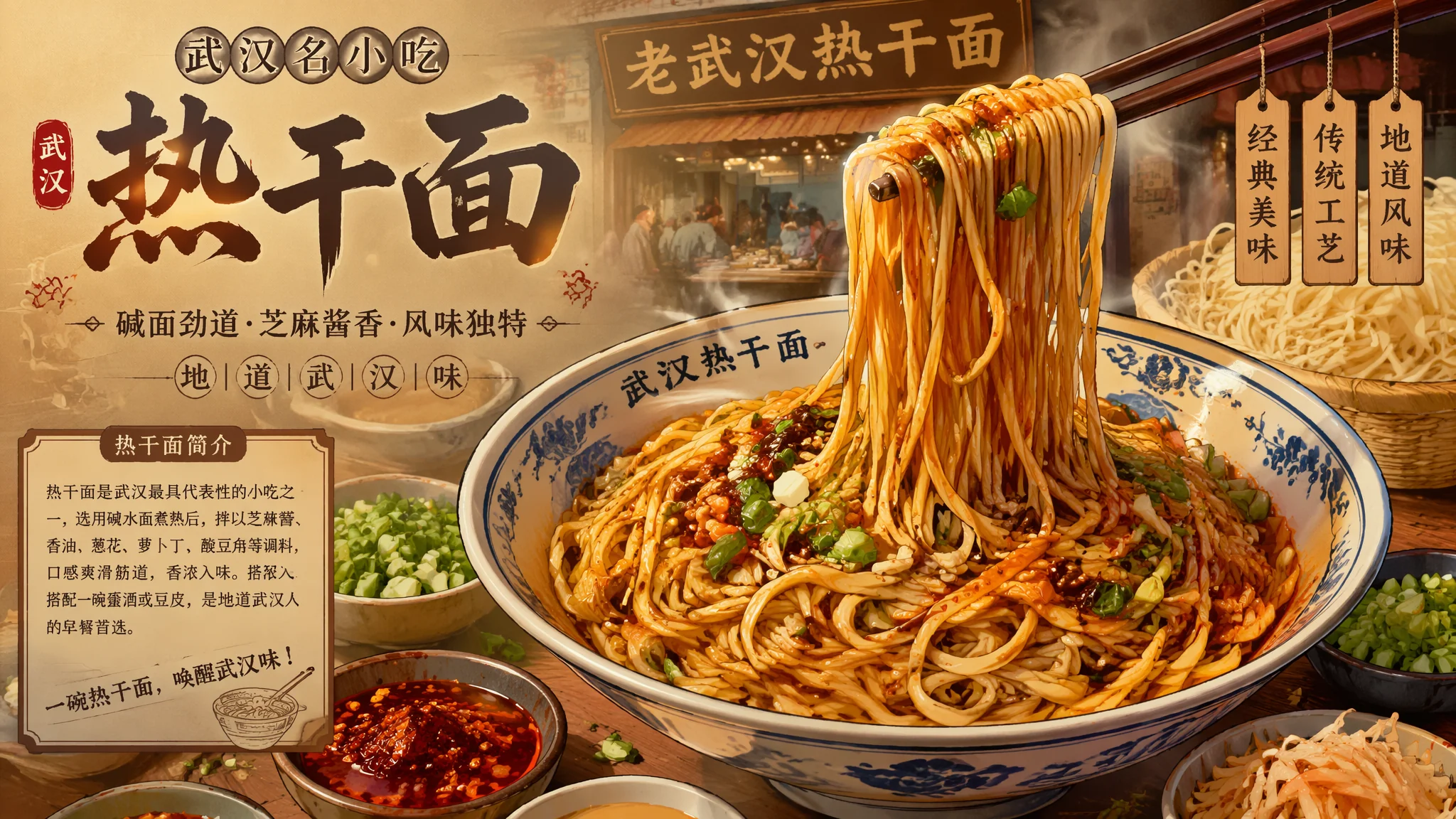
我是在武汉读的大学——四年里吃过的热干面加起来能绕珞珈山一圈。毕业之后每次想家了,不是打电话回去,而是打开外卖软件找"武汉热干面"——然后吃了一口觉得不对味,更想家了。去年我自己试着用AI画一碗热干面,输入"Wuhan hot dry noodles, sesame paste, bowl of noodles"——出来的图让我这个在武汉待了四年的人差点哭出来。面条是一整坨白色圆柱体,像超市冷藏柜里的凉面;"芝麻酱"是AI脑补的一滩深棕色液体,看着像巧克力酱;萝卜丁和葱花完全没画。这不是武汉热干面——这是某个从来没去过武汉的AI对着维基百科词条想象出来的产物。后来我花了一个多月研究AI画美食的方法论——不只是热干面,还有豆皮、小龙虾、面窝、糊汤粉——发现AI画食物的核心难点不是"画得像",而是"画出那个味道的视觉版本"。今天把我积攒的武汉美食AI绘画经验全部写出来。
热干面的AI视觉密码——碱面条、芝麻酱、配料层的三层结构
热干面之所以难画,是因为它不是"一碗面+一勺酱"的简单叠加——它是碱水面的黄色、芝麻酱的棕褐色光泽、萝卜丁的橙红、葱花的翠绿、辣椒油的红亮在同一碗里的五色交响。翻车现场最常见的是三个问题:面条结成一块(没有松散感)、芝麻酱没有光泽(像泥巴)、配料消失。正确Prompt必须逐层描述——从碗开始:"a classic blue-and-white porcelain bowl or a disposable paper bowl with the Wuhan-style red logo"。面的质感:"the noodles are round alkaline wheat noodles with a distinctive yellow hue——they are loosely arranged with visible individual strands, the texture is chewy and firm not mushy, there are air gaps between the noodle strands showing the bowl beneath"。芝麻酱:"a generous coating of rich dark brown sesame paste that glistens with a natural oily sheen on the surface of the noodles——the paste is thick but not clumpy, it evenly coats each strand and pools slightly at the bottom of the bowl"。配料:"bright orange diced pickled radish scattered across the top for color contrast and crunch, a sprinkle of finely chopped fresh green scallions, optional drizzle of red chili oil with visible chili flakes, a few drops of dark vinegar glistening at the edge"。热干面的关键是"拌匀前"还是"拌匀后"——"before mixing: the ingredients are layered visibly on top; after mixing: every strand is evenly coated with a uniform brown sheen"。两者在视觉上完全不同,需要在Prompt中明确指定。美食绘画的质感体系我在AI食物插画绘画里有更系统的讲解。
武汉四大名小吃的Prompt配方——豆皮、面窝、糊汤粉、烧麦
热干面之外,武汉还有一整套"过早"小吃体系——每种都有自己的视觉特征和Prompt写法。三鲜豆皮:"a traditional Wuhan-style three-delicacy tofu skin (doupi)——a golden-brown crispy rice-flour pancake with a thin layer of egg wash on top creating a glossy yellow surface, the pancake is cut into square pieces revealing the layered filling inside: sticky glutinous rice mixed with diced pork, shiitake mushrooms, and dried tofu, the cross-section shows distinct layers of crispy skin, egg, and rice filling, served on a simple white plate at a street stall"。面窝:"a freshly fried Wuhan-style savory donut (mianwo)——a ring-shaped fritter with a thin crispy center and a thicker puffy outer ring, golden brown with visible air bubbles on the surface, the texture is crispy on the outside and soft inside, stacked on a wire rack with oil-absorbing paper underneath, a vendor's hand holding a long chopstick is in frame about to pick one up"。糊汤粉:"a bowl of Wuhan-style thick fish soup with rice noodles (hutangfen)——a creamy white fish-based broth thickened to a porridge-like consistency, fine white rice noodles submerged in the soup, topped with shredded pickled vegetables, chopped scallions, and a sprinkle of white pepper, a side of crispy youtiao (fried dough stick) for dipping"。重油烧麦:"a steamer basket of Wuhan-style siu mai——the wrappers are thin and translucent, the filling is sticky glutinous rice with diced pork and mushrooms peeking through the top, each siu mai is plump and glistening with oil, steam rises from the basket, a dab of dark soy sauce on the dipping plate beside"。每种小吃的Prompt结构都是"容器+主体食物(外观、颜色、质感)+配料+热气+环境"。食物和环境的搭配参考AI背景场景绘画的场景氛围控制。
小龙虾的食欲感渲染——从"红壳食材"到"让人流口水"的视觉转化
AI画小龙虾有一个致命问题:它画的是"小龙虾的生物学标本"而不是"让人想戴上手套开吃的小龙虾大餐"。从标本到美食的转变只需要三个关键词——光泽、调料、场景。生物学标本版(避雷):"a red crayfish on a white background"。食欲版:光泽——"the shells are coated in a glistening layer of chili oil that reflects warm light in bright specular highlights, the red color is intensified by the oil making it look impossibly appetizing"。调料附着——"bits of minced garlic, chopped dried chili peppers, Sichuan peppercorns, and sesame seeds stick to the shells creating a textured coating, the seasoning is visibly clinging to every crevice——this is not a clean crayfish, this is a heavily seasoned one"。场景构成——"a large metal platter piled high with crayfish, a small bowl of dipping sauce on the side, a pair of disposable plastic gloves and a cold bottle of beer with condensation droplets, the table is covered with newspaper or a disposable tablecloth, the background suggests a lively Wuhan night market with string lights and blurred figures"。堆叠感也很重要——"the crayfish are piled into a small mountain on the platter, some are nestled against each other, the pile has height and abundance"。欲望感来自"丰富"——一盘平铺的小龙虾和一座小山的小龙虾,食欲感差了三倍。更多食物摄影技巧可以参考Food & Wine杂志的美食摄影——把专业美食摄影的构图思路翻译成Prompt语言。
武汉"过早"的街头烟火气——从食物的特写到城市的人文场景
武汉的美食不能脱离街头场景单独存在——热干面装在纸碗里、端着走在上班路上边走边拌——这是武汉过早的灵魂画面。街头摊位全景:"a typical Wuhan morning street food scene——a row of breakfast stalls lining a narrow street, steam billows from multiple carts into the cool morning air, the early sunlight filters through the steam creating golden god rays, people in casual clothes and office wear queue up or stand around eating from paper bowls, the wet pavement reflects the warm lights from the stalls, the atmosphere is chaotic but cheerful, the scene captures the energy of Wuhan's famous 'guozao' culture"。边走边吃特写:"a close-up of hands holding a paper bowl of hot dry noodles while walking——one hand holds the bowl, the other holds disposable chopsticks mid-stir, the noodles are partially mixed with sesame paste, the background is a blurred city street with morning commuters, the person is wearing a coat suggesting cool morning weather"。店内场景:"inside a traditional Wuhan noodle shop——simple plastic tables and stools, a wall menu with red characters on yellow background, a middle-aged lady behind the counter in an apron, customers of all ages slurping noodles, the window is fogged up from the steam inside"。烟火气的核心是"人"——没有人只有食物的武汉过早AI图,就像没有观众的舞台。场景人文感更多技巧参考AI电影风格绘画的叙事性构图。
常见问题
AI不懂"三鲜豆皮"是什么——怎么向一个没吃过豆皮的AI描述这个食物?
AI对区域性食物完全没有概念——你得把食物拆解成它理解的基础元素。豆皮拆解:"a layered savory pancake——bottom layer is a crispy pan-fried rice and mung bean batter pancake, middle layer is sticky glutinous rice mixed with diced braised pork, mushrooms, and dried tofu, top layer is a thin sheet of pan-fried egg wash that forms a glossy golden skin, the whole thing is cut into palm-sized squares"。用"pancake"、"rice"、"egg"、"pork"这些AI有大量训练数据的词来拼凑一个它不认识的食物——这是画地方美食的核心策略。
怎么在AI绘画中同时表现多种武汉小吃——不被画成一团"大杂烩"?
多食物构图需要给每个食物独立的视觉空间。Prompt框架:"a breakfast table spread with multiple Wuhan dishes presented in separate containers——a bowl of hot dry noodles on the left (blue and white bowl, sesame-coated noodles), a plate of tofu skin squares in the center (golden brown with visible layered filling), a steamer basket of siu mai on the right, each dish is clearly separated and individually recognizable, shallow depth of field keeps the focus on the food"。每个食物独立容器+独立空间描述=不串味。
AI画的食物看起来"不烫"——怎么表现热气和"刚出锅"的温度感?
温度感=蒸汽。但AI画的蒸汽经常像烟雾或PS贴图。正确蒸汽Prompt:"thin delicate wisps of steam rising naturally from the hot food——the steam is translucent and soft, it curls and dissipates upward, visible against a slightly darker background, the steam closest to the food is denser and becomes more transparent as it rises, the presence of steam immediately signals that the food is freshly cooked and piping hot"。关键:"thin delicate wisps"而非"thick smoke"。