AI禅意绘画:枯山水和侘寂美学的东方极简心灵Prompt全攻略
禅是AI绘画里最"反AI"的题材——AI的本能是"加东西",禅的本性是"减东西"。让一个加东西上瘾的机器去画"空"——等于让一个话痨闭嘴。所以禅意AI绘画的核心不是Prompt——是"否定Prompt"——把所有不必要的、AI想往里塞的——全部删掉。
禅意是 AI 绘画里最“反 AI”的题材。AI 的本能是加东西,禅的本质是减东西。让一个上瘾加细节的机器画“空”,等于让话痨闭嘴。所以禅意 AI 绘画最重要的技巧不是写更多 Prompt,而是写“否定 Prompt”,把 AI 想往里塞的一切多余元素全部删掉。
四条主要方向:枯山水庭院、侘寂物件、禅修者剪影、茶室极简空间。每种都有很强的“留白 + 一物一世界”逻辑。视觉思路可以叠着AI国画入门指南里的“留白即水”一节看,禅意和水墨共享同一套“少即是多”的美学骨架。
四类禅意Prompt模板
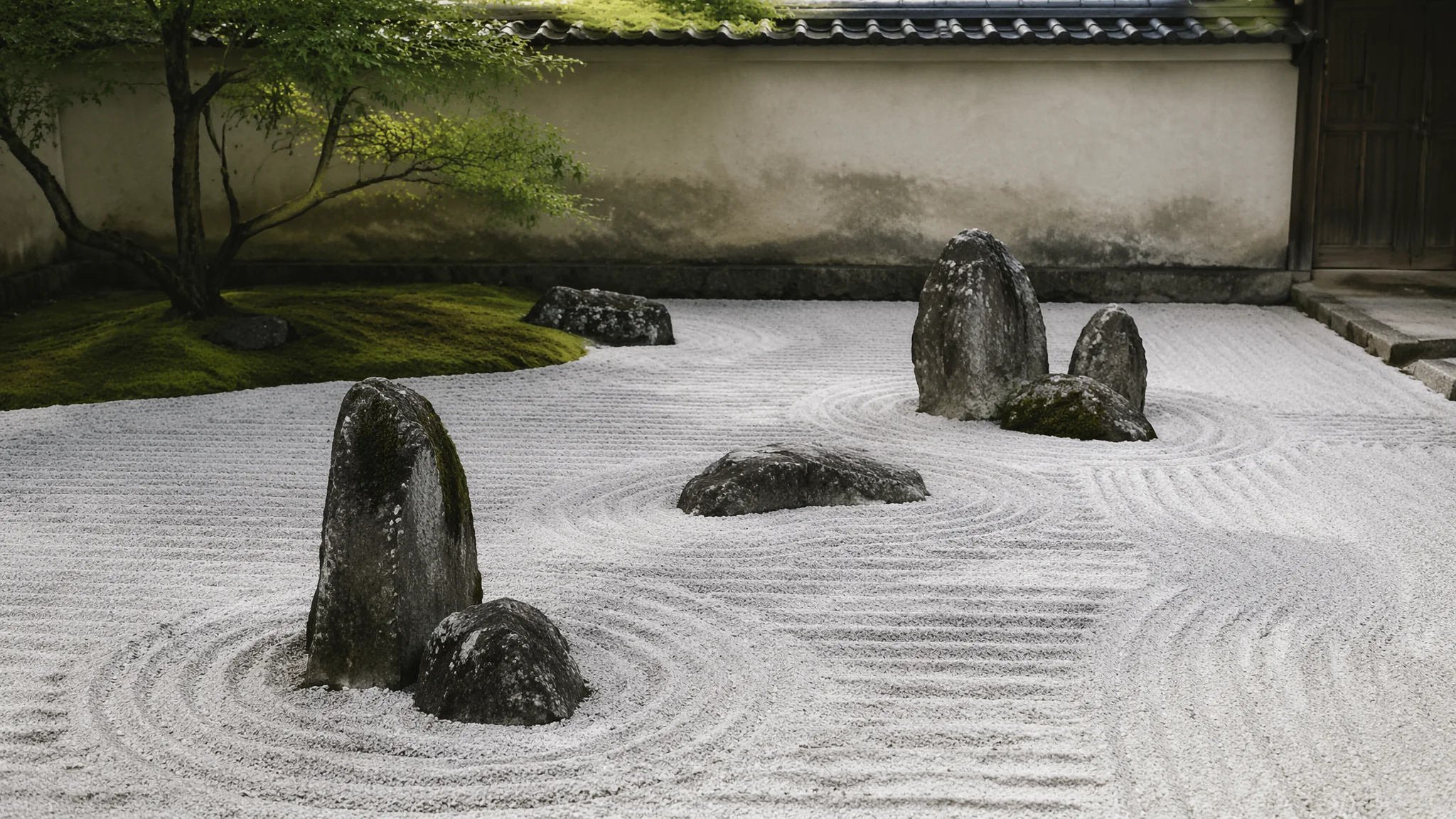
枯山水庭院。“a zen rock garden, raked white gravel in concentric ripple patterns around three weathered stones, nothing else—no plants, no water, no buildings, no people, the beauty is in what is NOT there, overhead soft daylight, minimalist composition”。最关键的一句是 “the beauty is in what is NOT there”,明确告诉 AI “少了才是美”。
侘寂物件。“wabi-sabi aesthetics, a cracked ceramic tea bowl repaired with gold lacquer kintsugi, the repair is more beautiful than the original perfection, rustic and weathered surface, plain wooden shelf, single soft window light, dark negative space around”。“repair more beautiful than original perfection” 是侘寂的哲学核心。
禅修者剪影。“a lone monk in simple grey robes sitting in seiza meditation on a tatami mat, backlit by soft dawn light from a paper screen window, most of the frame is negative space, only silhouette and gentle contours visible, no facial detail, quiet and still”。用剪影和大量留白,避免 AI 强行加装饰。
茶室极简。“a Japanese tea room interior, single tatami mat, one hanging scroll on the wall with a minimal ink stroke, a bamboo flower vase with a single seasonal branch, soft indirect light from a paper shoji, over 70% of the frame is empty space, wabi-sabi aesthetic”。写 “over 70% of the frame is empty space”,AI 会认真去空掉画面。
让 AI 停止加东西的三条法则
明确“不要什么”。把否定 Prompt 拉长:“no additional plants, no water pond, no lantern, no people, no clouds, no writing, no decoration”。禅意题材的否定词组往往比正面 Prompt 更重要。限定元素数量。用具体数字:“only 3 stones”“a single branch with 5 leaves”“one hanging scroll, nothing else on walls”。AI 对具体数字比“few / minimal”敏感得多。放大留白。“70%-80% negative space, subject positioned in lower left corner”。让画面出现明确的“空”。
光线与构图
禅意光线只走两条:一是柔和自然漫射光——纸窗透光、云层散射;Prompt 用 “soft diffused daylight through paper screen, no direct sunlight, no harsh shadows”。二是侧逆低角度晨光——刚亮起来的天,只勾一层轮廓;Prompt 用 “low sidelight at dawn, long soft shadows, warm-cool contrast subtle”。避免任何“cinematic dramatic lighting”词。
构图上禅意最忌居中放主体,一定要放边角,加“subject positioned in lower third, large empty upper space, off-center composition”,让视线自然“往上看空”。
常见问题
AI画禅意场景,怎么让画面真的“空”起来?
三步:一,用具体数字限制元素(“only 3 rocks, no plants”);二,加大量否定 Prompt(“no water, no lantern, no fence, no path”);三,写画面比例(“over 70% of the frame is empty space”)。这三步走完,AI 才会真的放手不加装饰。
禅意和极简(minimalism)在Prompt上主要差别?
极简是几何、干净、现代感,禅是有生活痕迹、有时间感、有自然元素。极简用 “clean geometric minimalism, modern flat, pure white background”;禅意用 “wabi-sabi, weathered natural, subtle imperfections, aged patina”。别混,一混就变成 IKEA 广告。
侘寂(wabi-sabi)到底怎么画才对?
三条:物体要有“时间感”(磨损、锈迹、裂纹、金缮修复),材质要“自然朴素”(陶土、老木、粗麻),光线要“柔淡”(漫射窗光、无强对比)。核心心法是“接受不完美并觉得它更美”。Prompt 里加 “kintsugi repair, aged patina, imperfect handmade, embrace of impermanence”。
禅意题材做品牌视觉/瑜伽工作室海报,有版权风险吗?
元素本身是通用文化,商用没问题。避坑点:不使用具体寺庙名字或名画 Prompt(避免复刻),不使用具体宗教符号可能引发争议。用通用“zen / wabi-sabi / meditation”描述,商用最安全。
禅不是什么都没有,是只有必要的东西,且每一个都必要。让 AI 在“不加东西”这件事上帮你把持住,你就画出了这个题材里最难的“空”。
觉得有用的话分享给也在修心的朋友吧。