AI古装美女绘画进阶:汉服仙女与古风美人的精致角色视觉创作
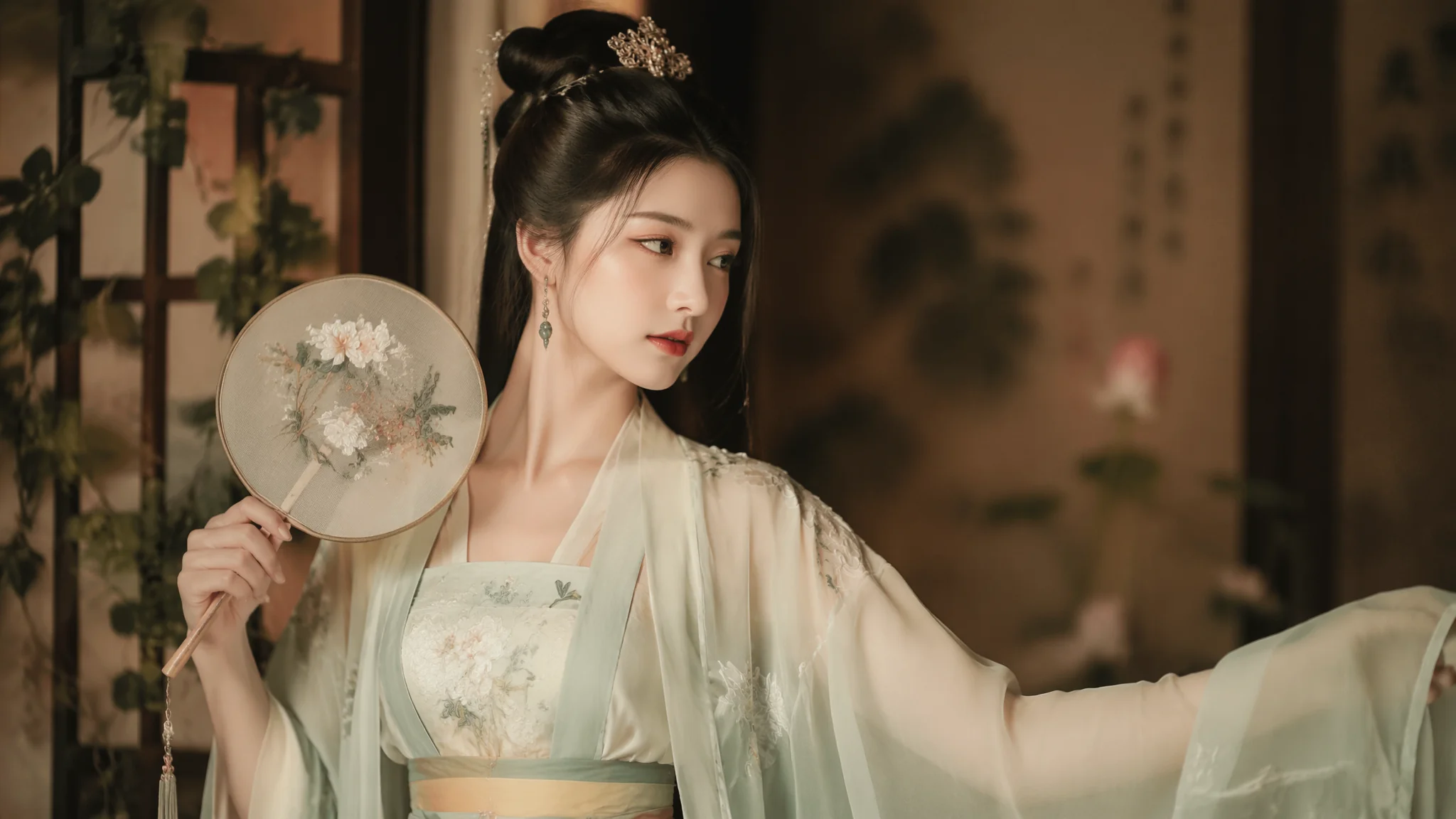
去年朋友开了一个汉服写真工作室,找我帮他先用AI出几组样片测试市场反应。我心想这不简单吗——"Chinese ancient costume beauty, hanfu, traditional"一套Prompt丢进去,出来的结果让我笑了半天:衣服是紧身的(真正的汉服是平面剪裁完全不修身),头上顶着个像甜甜圈一样完美的圆形发髻(真实的古典发髻是盘拧出来的、有不对称和碎发),背景是饱和度拉到极限的假桃花和假月亮。我朋友看了之后说了一句话我印象很深:"这不像汉服写真,这像一个没摸过汉服的人想象出来的汉服。"后来我花了一个多月——去博物馆看实物、跟着汉服博主学形制、甚至自己买了一套宋制汉服回来研究面料垂坠——才逐渐搞清楚AI古装绘画的真正难点在哪。这篇就是那段折腾的完整复盘。
形制是灵魂——不是"古代衣服"是"特定朝代的特定裁法"
AI绘画中古装最大的问题:它把所有"中国古代衣服"混为一谈——唐的齐胸襦裙、宋的褙子、明的袄裙、清的旗装——在AI眼里都是"Chinese traditional dress"。而事实上这些形制之间的差异,比西装的单排扣和双排扣之间的差异大得多——是完全不同的服装结构体系。如果你不明确告诉AI是哪个朝代的哪种形制,AI就会从训练数据中随机采样——结果通常是一件"唐宋明清四不像"的影楼服。
几种常见形制的Prompt写法。唐制齐胸襦裙——"Tang dynasty high-waisted ruqun, the skirt is tied above the bust with a wide ribbon, creating a high waistline that sits just under the arms, the upper garment is a short narrow-sleeved jacket, the skirt falls from the high waist in abundant pleats that create volume and movement, the overall silhouette is elongated and statuesque with the legs appearing long because of the raised waistline"。宋制褙子——"Song dynasty beizi, a long straight open-front outer jacket worn over a matching inner set, the beizi hangs straight from the shoulders to below the knees with parallel sides——no waist definition, the sleeves are wide and straight, the silhouette is slender and vertical, the aesthetic is understated elegance——the beauty is in the proportion and the fabric not the decoration"。
明制袄裙——"Ming dynasty aoqun, a knee-length cross-collar jacket (ao) paired with a pleated skirt (qun), the jacket has a structured silhouette with a visible waist seam, the sleeves are wide——often called pipa sleeves for their shape like a Chinese lute, the collar crosses right-over-left and is secured with a decorative clasp or ribbon, the skirt is full with fine accordion pleats"。形制写对了,衣服才会有"立得住"的结构感——而不是软塌塌地贴在身体上。对服装结构的更多分析可以参考AI调整精修绘画中关于布料物理属性的讨论。
面料与垂坠——古装的"分量感"从哪来
AI画古装最常见的廉价感来源:面料。影楼汉服用的是化纤仿真丝——轻薄、反光、飘、没有重量。真正的传统汉服面料——桑蚕丝、苎麻、棉布——有重量、有肌理、垂坠的方式和化纤完全不同。你在Prompt里必须把面料质感写清楚,否则AI默认给你"高反光薄纱"——因为训练数据里最多的就是这种。
真丝(桑蚕丝)——"real silk with a subtle luster not a metallic shine, the fabric catches light softly——a gentle gleam that moves across the surface as the fabric shifts, the drape is fluid and heavy——silk has weight, it falls in deep folds not fluttery ripples, the texture is smooth but not slick——you can almost feel the coolness of silk through the image"。麻——"handwoven hemp or ramie fabric, the texture is slightly coarse with visible fiber irregularities——tiny slubs and variations in thread thickness, the fabric is matte with zero shine, the drape is stiff——it holds its shape and creases sharply rather than flowing, the fabric has an organic natural quality that contrasts beautifully with skin"。宋锦/云锦——"figured silk brocade with woven patterns, the pattern is integral to the fabric——not printed or embroidered, the brocade has a heavier body than plain silk, the woven motifs catch the light differently than the background fabric creating subtle dimensionality, the fabric is luxurious but in a restrained historical way not a costume way"。
还有一个容易被忽略的细节:面料的"穿着痕迹"——新衣服和穿过的衣服在AI画面里看起来完全不同。新衣——"freshly pressed, the fabric lies flat and crisp, the folds are sharp"。旧衣——"the fabric shows gentle wear——subtle creases at the elbows from repeated bending, the hem is slightly softened from brushing against the ground, the collar has molded slightly to the shape of the wearer's neck"。这些"使用痕迹"是区分"活人穿的衣服"和"展柜里的衣服"的关键。大都会博物馆的亚洲艺术展厅和维多利亚与阿尔伯特博物馆的中国服饰馆藏都是研究面料质感的绝佳参考。
发髻与头饰——"不完美"才像真人
AI的古装发髻问题比衣服更严重——因为它训练的时候看到的"古代发型"几乎全部来自游戏原画和古风插画——那些发髻的共同特征:几何完美的圆形、发量均匀分布、没有任何碎发、发饰像粘在头发上的。而真实的古典发髻:形状不规则、发量不均匀、有碎发飞丝——因为那是人的一双手拧出来的,不是3D建模的。
发髻的Prompt——"real traditional Chinese updo——the hair is twisted and coiled by hand, the bun has an organic asymmetrical shape because human hands cannot create perfect geometry, the tension of the twisting creates subtle ridges and grooves visible on the surface of the bun, the hair has texture——not a smooth polished helmet, small wispy strands have escaped around the temples and at the nape of the neck"。发饰不要"堆"——选择一两件有辨识度的——"a single elegant hairpin (zan) in silver or jade, its position in the bun is functional——it's holding the style together not just sitting on top as decoration, the hairpin has a simple design with a small ornament at the end——a pearl or a carved flower, the aesthetic is restrained"。具体的簪花细节可以参考AI虞美人花卉绘画中对花卉形态的精确控制——簪花和绢花的视觉逻辑是一致的。
关于妆容——古典美人妆和现代妆容的关键区别:眉形——"eyebrows shaped like distant mountains——long, slightly curved, painted in a muted dark gray rather than black, the inner end of the brow is slightly thicker and gradually tapers, the shape references Tang dynasty eyebrow aesthetics"。唇——"lips with a small defined shape, the color is concentrated in the center of the lips and fades toward the edges——like the traditional 'cherry mouth' aesthetic, not a full modern lip coverage"。面妆——"a subtle application of rouge high on the cheekbones blending outward into the temple, a small decorative huadian (forehead ornament) in vermillion or gold placed precisely between the brows"。这些妆容细节在AI成熟男性绘画的古风男性版本中也有对应的审美体系。
场景与氛围——拒绝"假桃花假月亮"
AI古风场景有三个"审美重灾区":饱和度拉到极限的桃花树、大到不真实的月亮、以及在画面中莫名其妙飘满的发光粒子。这些元素组合在一起就像古风歌曲的MV截图——好看但空洞。古典场景的构建应该从"空间的真实性"出发——不是堆元素,是建立一个有逻辑的物理空间。
庭院场景——"a scholar's garden in Suzhou, whitewashed walls with moss growing along the base——the white is not pure white but aged and slightly grayed, a weathered rockery with natural pitting and irregular shapes, a small pavilion with dark wood columns and curved eaves, bamboo growing in a controlled cluster against one wall, the stone path is uneven——slabs of bluestone with grass growing between the cracks, the garden looks lived in and maintained——not a pristine movie set"。室内场景——"a traditional study, wooden lattice windows filter the daylight into patterns on the wooden floor, a low table with a tea set——a simple celadon teapot and small cups, scroll paintings hang on the wall with slightly curled edges from humidity, a bronze incense burner releases a thin vertical thread of smoke that disperses near the ceiling, stacks of thread-bound books on a side shelf"。
关于场景中"人物与空间的关系"——古风美人不是"站在美景前面拍照"——她应该是空间的一部分——"she is seated at the low table with one hand resting on an open book, her posture is relaxed but refined——years of upbringing visible in the way she holds herself, she is not posing for the viewer——she was in the middle of something when the image caught her, the space and the person belong to each other——it feels like her garden, her study, her quiet afternoon"。
常见问题
AI画的汉服为什么总像"影楼写真服"而不是真正的汉服?形制哪里出了问题?
AI的训练数据中"Chinese traditional clothing"被大量影楼写真和古装剧剧照污染——它学到的"汉服"特征是:修身剪裁(真汉服是平面剪裁、宽松不修身)、闪亮缎面(真汉服多用棉麻绫罗而非反光缎)、以及各种魔改的"仙女风"飘带。修正方法——明确写形制和裁法:"traditional Han Chinese clothing in the authentic historical style——flat cutting, no darts or shoulder seams, the fabric drapes naturally from the shoulders without conforming to the body shape, the silhouette is loose and flowing, the collar crosses diagonally from right to left"。关键差异:真汉服不是"穿在身上的",是"披在身上的"——这个"非贴身"的垂坠感是影楼服永远做不出来的。
古风发髻为什么总是被AI画成"头上顶了个甜甜圈"?怎么写出真实的古典发髻?
AI理解的"古代发髻"是从动漫和游戏里学的——通常是头顶一个巨大的、几何形状完美的圆形发髻——这和历史中任何一种真实的古代发型都对不上。真实的古典发髻——"the hair is twisted and coiled into a structured updo, strands of hair are visible being gathered and wrapped, the bun is slightly asymmetrical——real hand-dressed hair doesn't form a perfect circle, wispy baby hairs escape around the hairline and at the nape of the neck"。发髻的"体量"来自于真发的分量——"the weight of real hair is visible——the bun sits naturally on the crown of the head with a sense of mass, the hairpins and ornaments are functional——they hold the style in place"。
怎么在AI绘画中区分"仙气"和"风尘气"——古风美人的气质控制?
这是古装AI绘画中"一毫米决定成败"的问题。"仙气"的关键词组合:清冷感——"her expression is serene without being blank——there is intelligence behind the stillness, she is not smiling but there is no coldness either, her gaze is directed slightly downward or toward the middle distance, she inhabits the space without performing for the camera"。体态——"her posture is naturally upright without stiffness——years of training visible in the way she holds her shoulders and head"。服饰状态——"her clothing moves gently in the breeze, the fabric is substantial——silk with weight, linen with texture——not the weightless chiffon of fantasy"。避免写"seductive""alluring""looking at viewer with parted lips"。
古典场景的光影——用AI画"月下""烛光""晨雾"等氛围的Prompt关键点?
月下——"illuminated only by moonlight, the light is cool and silvery with a slight blue cast, the shadows are soft-edged and deep blue-black"。烛光——"lit by a single candle, the light source is small warm-toned and close to the subject——creating strong falloff, the face is illuminated from below or from the side with warm orange-amber light, the background fades quickly into darkness"。晨雾——"early morning mist in a traditional garden, the light is diffuse and directionless——the fog scatters the sunlight creating a soft pearlescent quality, the figure is slightly hazy at the edges blending into the mist"。每种光都有自己的情绪温度——月=冷寂,烛=温暖私密,雾=朦胧静谧。