AI建筑绘画技法进阶:结构透视与材质光影的综合应用指南
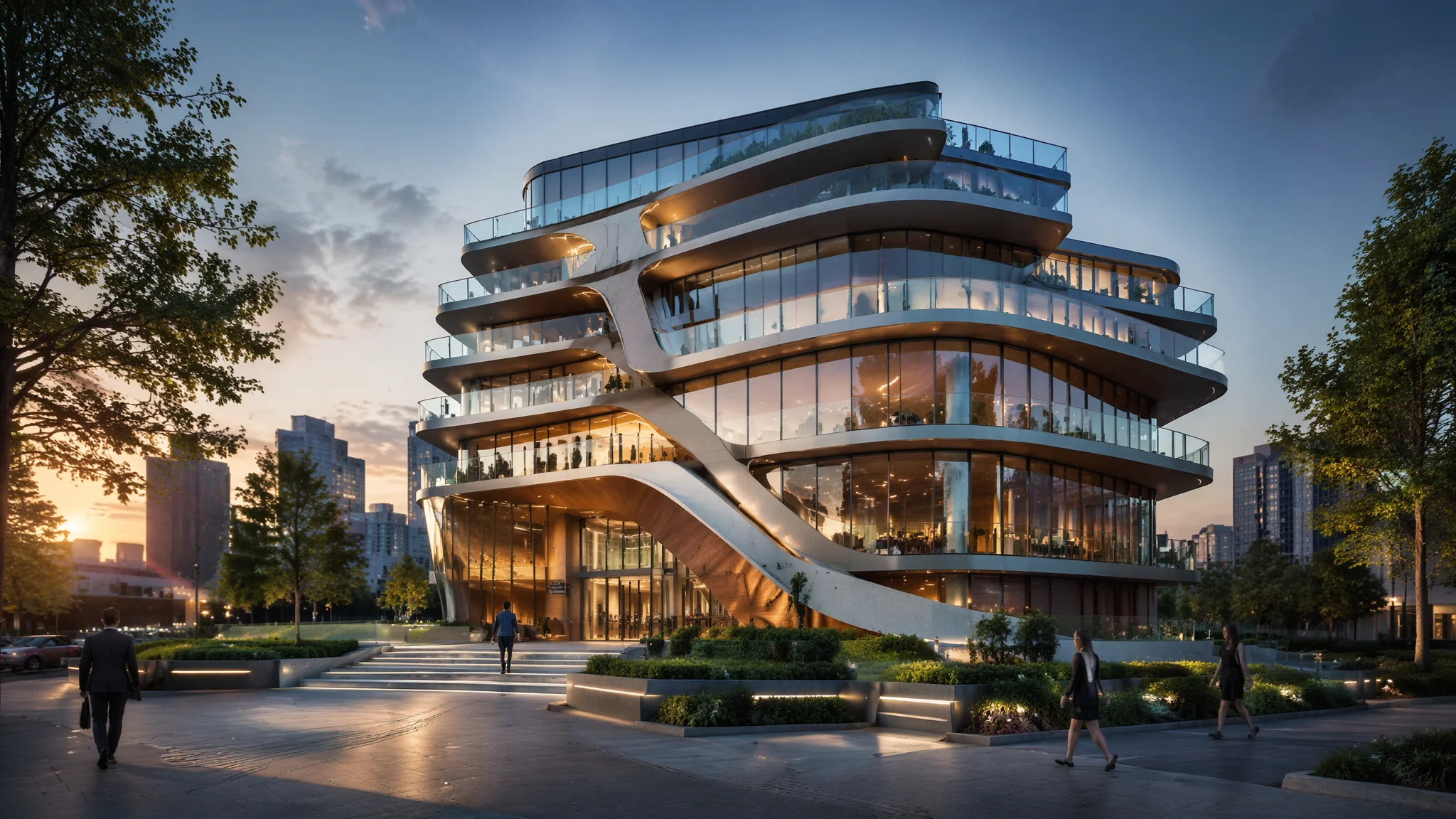
我本科学的是建筑设计,用AI画建筑的时候最大的感受是:AI像一个完全不懂结构但画技超群的学生——它能画出令人惊艳的视觉效果,但如果你不把受力关系、透视规则和材料逻辑讲清楚,它画出来的建筑在工程上根本站不住。
建筑类AI绘画和其他题材有一个本质区别:建筑是真的需要"站得住"的。风景画得虚一点叫"氛围感",人物画得夸张一点叫"风格化",但建筑如果透视错了、比例失调了、结构不合理了,观众一眼就能看出来——因为人类每天生活在建筑里,对建筑结构的直觉判断是刻在基因里的。这一篇是进阶内容,假设你已经掌握了基础操作,我们直接进入高难度的透视、材质和光影综合应用。
多点透视的精确控制:从一点到三点透视的AI提示词策略
AI默认倾向用一点或两点透视,看起来"稳"但缺乏视觉张力——想要建筑画面有冲击力,三点透视(仰视或俯视)是最有效的构图武器。一点透视:"one-point perspective architecture, central vanishing point, symmetrical composition, grand corridor or nave, classical perspective drawing, depth converging to a single point"。适合表现纵深感强的室内空间和对称建筑立面。两点透视:"two-point perspective building, corner view of architecture, both facades visible, vanishing points at left and right edges, dynamic angle showing depth of structure"。这是建筑表现中最常用的视角,适合展示建筑的体积感。三点透视(仰视):"worm's-eye view three-point perspective, looking up at towering skyscraper, dramatic vertical convergence, building tapering toward top, heroic scale, monumental architecture"。适合表现高层建筑的压迫感和崇高感。三点透视(俯视):"bird's-eye view three-point perspective, looking down at city from above, rooftops spreading outward, vertigo-inducing height, urban fabric pattern, aerial architectural photography"。适合表现城市肌理和建筑群关系。关键技巧:在提示词中必须同时指定透视类型和观看角度——"worm's-eye view"比"looking up"准确,"bird's-eye view"比"from above"准确。基础构图知识可以在AI建筑绘画技法:结构透视与材质表现完全指南里找到更系统的讲解。
玻璃幕墙与反射:建筑AI绘画中最复杂的材质挑战
玻璃幕墙难画在三个层面:反射要真实、透明度要有层次、框架结构要可见——三个层面缺任何一个,玻璃建筑要么像水晶要么像空气。反射控制:"glass curtain wall reflecting sky and clouds, mirror-like reflection of surrounding cityscape, subtle environmental reflections on glass panels, not transparent but reflective"。透明度层次:"semi-reflective glass facade, visible interior structure behind glass, layered transparency showing depth of interior spaces, glass that reveals and conceals simultaneously"。框架结构:"visible mullions and transoms dividing glass panels, steel frame structure behind glass skin, architectural grid pattern on facade, tectonic expression of building skeleton"。综合模板:"modern glass skyscraper, curtain wall facade reflecting golden hour sky, visible steel mullion grid structure, semi-transparent glass revealing interior lighting, architectural photography by Iwan Baan style, crisp detail in both reflection and structure"。这个模板是我踩了无数坑后提炼的——早期我经常写出"全是反射没有结构"或"全是透明没有反射"的极端效果。关于材质表现的底层逻辑,AI水元素绘画:液体流动与透明折射的视觉表现里关于透明材质和折射的讨论对理解玻璃也有很大启发。
砖石混凝土:粗粝材质的AI还原技巧
与玻璃相反,砖石混凝土这些粗粝材质的关键词核心是"不完美"——太干净太平滑的砖墙像塑料道具,真实的砖石必须有岁月痕迹。砖墙:"weathered red brick wall, irregular mortar joints, slight color variation between individual bricks, patches of efflorescence, tactile rough surface, afternoon sunlight raking across brick texture highlighting every imperfection"。混凝土:"board-formed concrete surface, visible wood grain imprint from formwork, subtle pour lines, tie-hole marks, brutalist architecture texture, raw unfinished concrete with natural patina"。石材:"rusticated stone masonry, irregular stone blocks with deep shadow gaps, lichen and weathering on surface, hand-chiseled texture, historic stone architecture, warm ochre limestone"。共同原则:加入"imperfection""weathering""patina""irregular""hand-crafted"这类词,AI才会画出真实的材质感。还有一个实用技巧:在提示词里加"macro texture detail""extreme close-up of surface""tactile materiality"可以拉近材质表现的精度。研究真实建筑材质的话,ArchDaily上有海量的高清建筑摄影,按材质分类浏览是学习材质关键词的最佳方式。
夜景建筑灯光:人工光源与建筑形态的对话
夜景建筑是AI绘画里最容易出"大片感"但也最容易翻车的方向——光源太多会乱,光源太少会暗,找到光影对话的平衡点是关键。室内灯光透过玻璃:"warm interior lighting glowing through glass facade at night, each window a different shade of warm yellow, building as a lantern in the dark city, contrast between cool blue twilight sky and warm tungsten windows"。建筑外立面照明:"architectural facade lighting at blue hour, uplighting emphasizing vertical columns, dramatic shadow patterns created by strategic lighting, building as sculpture illuminated in darkness, golden ratio of lit and unlit surfaces"。城市夜景天际线:"city skyline at blue hour, mix of lit and dark windows creating visual rhythm, street light trails at ground level, reflection of city lights on river surface, hazy atmosphere with slight light pollution glow"。夜景区分于白天最大的不同是"光源在画面内部"——你不是在画一个被外部光照亮的物体,而是在画一个自身发光的系统。这种光源逻辑一旦搞混,夜景就画不好。在AI日落场景绘画:黄金时刻光影与色彩氛围创作指南里对黄昏和蓝调时刻的光影原理有详细分析,那些原理同样适用于建筑夜景。
建筑与自然的融合:生态建筑与景观一体化
绿色建筑、垂直绿化、建筑与地形融合——这些"建筑+自然"的交叉题材是AI绘画中的蓝海,出来的视觉效果天然具有传播力。垂直绿化:"building facade covered in cascading greenery, vertical garden architecture, plants growing on every balcony and terrace, biophilic design integrating nature into urban structure, lush vegetation softening the hard edges of concrete"。建筑融入地形:"architecture merging with landscape, building growing out of hillside, green roof blending into surrounding meadow, organic architecture following natural topography, earth-sheltered design"。水体与建筑:"building reflection in still water, architecture at water's edge, floating pavilion on calm lake, water as architectural element, seamless transition between built and natural"。在做这类题材时有一个心得:不要把建筑和自然写成"对抗"关系,要写成"共生"关系——"harmonious integration""organic flow between built and natural""architecture embracing nature"——这些措辞会让AI更倾向于创造融合而非冲突的画面。另外,Dezeen作为全球领先的建筑设计媒体,每天更新的前沿项目是获取建筑AI绘画灵感的一流素材库。
常见问题
AI建筑绘画进阶创作中最常见的三个技术难题。建筑AI绘画里透视歪了怎么修?
透视歪了基本没法修——AI生成的结构性错误很难通过后期PS拉回来。最好的办法是降低Guidance Scale(CFG值),过高的CFG会放大AI的"幻觉"导致结构错误。另外用ControlNet的Depth或MLSD(直线检测)模块可以锁定透视网格,从根源上避免透视错误。
怎么让建筑看起来"巨大"而不是像个模型?
尺度感的来源是参照物。在画面中加入人物、车辆、树木等已知尺度的元素,建筑的大小就有了参照。提示词里写"tiny human figures at base of building showing monumental scale""cars like small dots on street below""birds flying at mid-height of skyscraper"——没有参照物的建筑无论多大都像微缩模型。
AI画的建筑细节太多太乱怎么办?
建筑绘画最忌讳"细节均匀"——每个窗户都一样细、每块砖都一样清楚。在提示词里加"selective focus""depth of field blur in distance""atmospheric perspective softening far details"可以营造虚实层次,让画面有主次。也可以在负面提示词里加"too many details""overly complex""cluttered facade""visual noise"来抑制AI的细节强迫症。
觉得有用的话分享给朋友吧。