AI竹子植物绘画:东方气节与清雅意境的自然美学表达
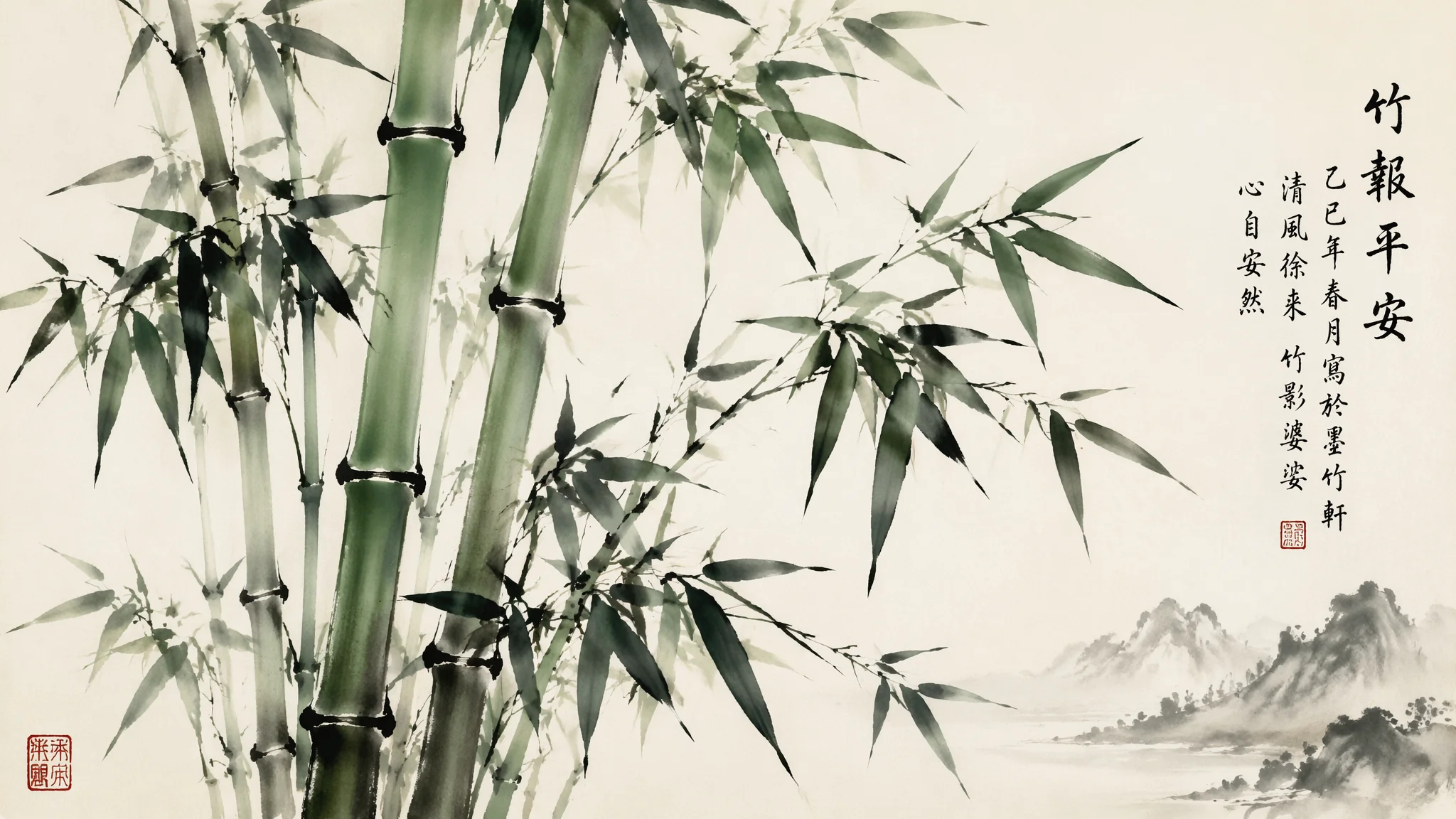
我在成都长大,望江楼公园那片竹林是我小时候每个周末的去处。竹竿在风中互相敲打发出空洞的"嗒嗒"声,阳光从竹叶间漏下来碎了一地。后来学AI绘画,竹子是我练手最多的植物题材——因为它结构太特殊了:节状茎秆、平行叶脉、丛生习性,跟任何其他植物都不共用同一套视觉规律。
AI画竹有一个让人哭笑不得的问题:它经常给竹子画上树枝和树皮。因为在英文训练数据里"bamboo"出现的频率远低于"tree",AI会不自知地把"树的特征"嫁接到竹子上。解决方法是加否定词:--no branches, no bark, no wood texture, no tree rings。简单粗暴但有效。
竹竿的节理结构:AI最容易翻车的地方
竹竿不是一根光滑的管子——它有节(node)和节间(internode),节处微微隆起、上面有芽痕,节间表面有纵向的细纹。AI经常把竹节画成"竹竿上套了几个环",完全不对。竹竿结构关键词:"bamboo culm with distinct nodes and internodes, raised ring at each node with subtle swelling, longitudinal striations running along internode surface, slight waxy coating creating soft sheen, hollow stem cross-section visible at cut end"。竹节细节:"close-up of bamboo node, two parallel raised rings with slight depression between them, dormant bud visible at node, root primordia at basal nodes, subtle color shift from green to yellowish at node line"。不同竹种的茎秆粗细差异很大——毛竹(Moso bamboo)的茎秆可以粗到二十厘米,而箭竹(arrow bamboo)只有一到两厘米。提示词里标注竹种名称,"Moso bamboo grove with thick towering culms"和"delicate arrow bamboo slender stems",效果天差地别。AI植物绘画与自然科普插图里有更多植物结构的知识体系。
竹叶的排列规律:从单叶形态到整体叶簇的视觉逻辑
竹叶是平行叶脉的披针形——窄长、先端尖锐、基部楔形。单片叶子的描述要准,但更重要的是叶簇的整体排布关系。单片竹叶:"lanceolate bamboo leaf with parallel venation, pointed tip with slight downward curve, smooth margin without serration, leaf blade 10-15cm in length proportional to stem"。叶簇排布:"bamboo leaves arranged in fan-shaped clusters at branch tips, leaves emerging from single point and radiating outward, some leaves overlapping creating depth layers, underside of some leaves visible showing lighter green tone"。风中的竹叶:"bamboo leaves caught in gentle breeze, directional movement with leaves streaming to one side, some leaves flipping to show pale underside, dynamic natural movement without blur"。有一招我用了很久才摸索出来的技巧:在提示词里加上"each leaf individually rendered"——这个表述会触发AI对每片叶子做独立绘制,而不是复制粘贴一堆"叶子纹理"。虽然计算量会增加,但画面质感的提升是肉眼可见的。英国皇家植物园邱园的在线植物数据库里有精确到物种的植物形态学描述,对写植物提示词非常有帮助。
墨竹写意:东方水墨风格在AI绘画中的实现路径
墨竹讲究"胸有成竹"——画家心里有竹子的完整结构,下笔时一笔到位、不作修改。AI没有"心中有竹",你需要用关键词把"胸中丘壑"翻译给它。水墨技法提示词:"Chinese ink wash painting style, bamboo executed in spontaneous xieyi manner, varied ink tones from dark to light, dry brush strokes for stem with flying white effects, wet ink for leaves with bleeding edges, xuan paper texture visible"。墨分五色:"gradation of ink values from jet black to pale gray, single bamboo stalk showing full range of ink tones, ink density varying with brush pressure, unintentional beauty of ink spreading on rice paper"。构图留白:"traditional Chinese composition with generous negative space, bamboo entering frame from side rather than centered, poetic simplicity following principle of less is more, red seal stamp in corner as finishing accent"。一个重要的文化还原点:传统墨竹画里竹子从不用绿色——全靠墨色浓淡表现。你用AI画水墨竹子的时候如果加"green"这个词,出来的效果就不对了。AI水墨画风格创作指南里对中国传统水墨技法有更系统的拆解。
竹林场景:从幽篁小径到竹林七贤的意境营造
竹林场景的灵魂不在竹子本身——在于光。阳光穿过竹叶层后在地面上投下的斑驳光影,才是竹林的"氛围引擎"。竹林小径:"winding path through dense bamboo forest, towering culms forming natural cathedral ceiling, dappled sunlight filtering through canopy creating mosaic patterns on ground, fallen bamboo leaves carpeting path in warm brown tones, depth created by atmospheric perspective between near and far stalks"。晨雾竹林:"bamboo grove in morning mist, ethereal fog hanging between stalks, backlit bamboo silhouettes fading into white haze, dewdrops catching early sunlight on leaf tips, tranquil and meditative atmosphere"。雪中竹林:"bamboo under snow, heavy snow weighing down leafy branches creating arched forms, contrast between white snow and green bamboo, single bamboo stalk bent but not broken under snow load, resilience symbolism"。雪竹那个画面我跑了很多次才跑对——AI经常把雪画得像棉花糖一样黏在叶子上。关键是要加"wet heavy snow naturally accumulating on leaves"和"bamboo bending realistically under snow weight",AI才会理解雪的物理重量。AI森林自然场景绘画教程里有更多户外场景的光影技巧。
竹文化符号:文人气节与禅意美学的AI视觉翻译
竹子在中国文化里不只是植物——它是"君子"的人格象征:虚心(中空有节)、坚韧(弯而不折)、清高(四季常青)。这些抽象品质怎么翻译成AI能理解的视觉语言?文房场景:"scholar's studio with bamboo motif, ink stone and brushes arranged on wooden desk, window opening to bamboo grove view, cultural artifacts suggesting refined taste, Song dynasty aesthetic with restrained elegance"。禅意竹境:"zen bamboo garden, raked gravel surrounding bamboo cluster, moss-covered stone lantern, single bamboo leaf floating on still water surface, minimalist Japanese garden aesthetic, meditation bench暗示静谧氛围"。竹工艺:"handwoven bamboo basket with visible craftsmanship, bamboo strips showing natural color variation, traditional bamboo weaving pattern, artisanal quality highlighting material beauty"。一个小心得:写"elegant restraint"而不是"beautiful"——竹子审美的核心是"克制",绚丽多彩是反竹文化的。词选对了,AI生成的画面气质完全不一样。佳士得拍卖行的中国书画板块经常有墨竹题材的拍品高清图和专家解读,对理解竹文化的视觉传统非常有启发。
常见问题
AI竹子绘画常见问题集中在结构准确性、水墨风格还原和竹林空间感方面。AI生成的竹子为什么看起来像"绿色的甘蔗"?
因为AI没有区分竹子和甘蔗的形态差异。加上"bamboo-specific morphology""distinct raised nodes""hollow stem with cavity""no solid core like sugarcane"这些区分性关键词。最好再加否定词"--no sugarcane, no corn stalk"。
水墨竹子画出来总是太"真实",没有写意的感觉怎么办?
水墨写意的核心是"不完整的完整"——几笔就够了,不需要画满。加"spontaneous brushwork""economy of strokes""unfinished beauty""suggestion rather than description",减少细节密度,增加留白比例。
怎么表现竹林的空间纵深感?
近景—中景—远景分三层写提示词:近景用"close-up detailed bamboo stalks with sharp focus",中景用"slightly blurred mid-ground bamboo",远景用"distant bamboo fading into atmospheric haze"。三层叠加,空间感就出来了。
觉得有用的话分享给朋友吧。