AI鸟类素材绘画:飞禽羽毛与自然姿态的视觉资源创作指南
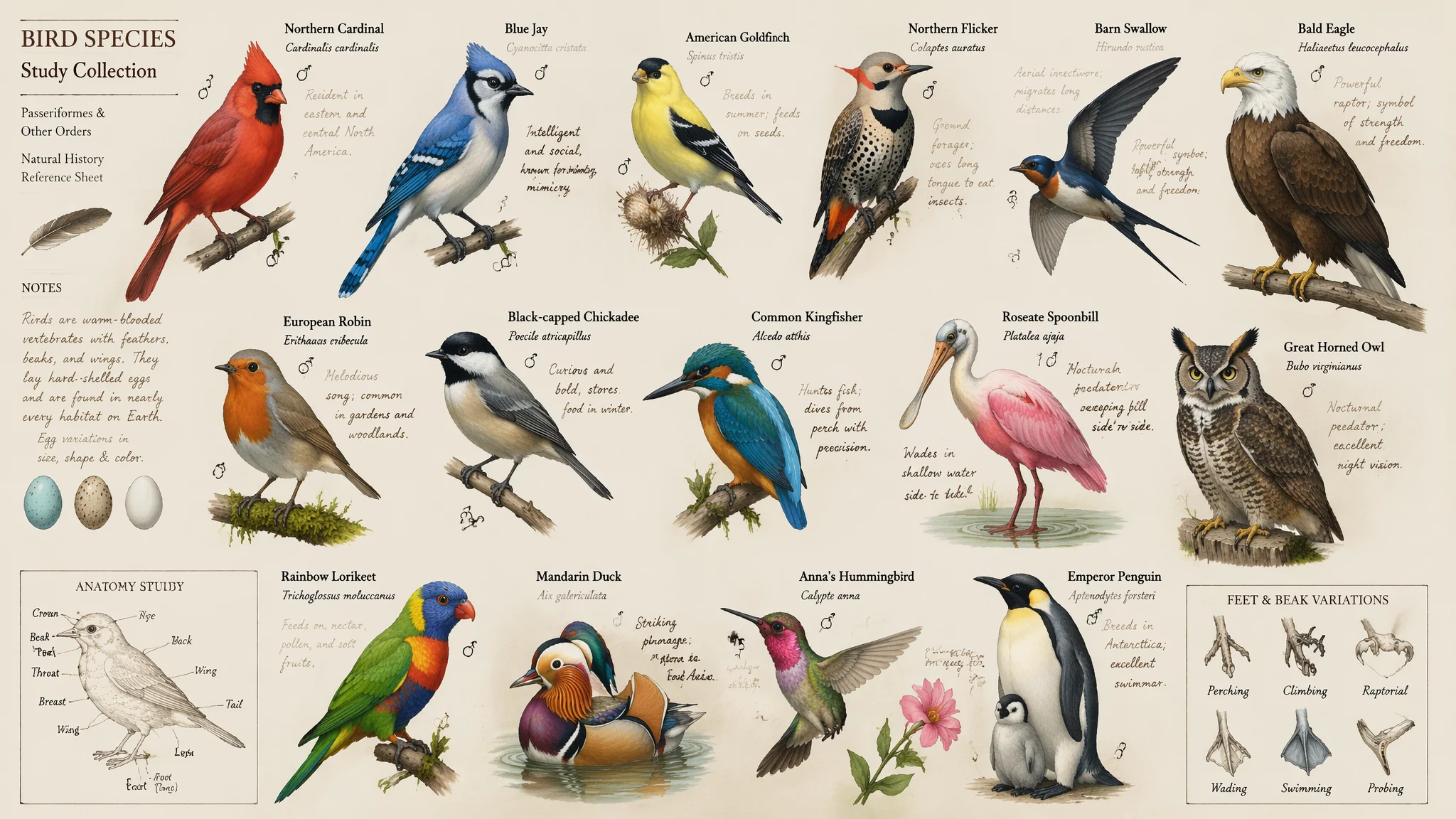
去年给一个做文创的朋友帮忙——他需要一批鸟类素材做丝巾图案,找了三个插画师报价都在五位数以上。我跟他说让我用AI试试,他半信半疑。结果我用Midjourney跑了大概两百多张,最后筛选出三十几张能用的——省了至少两万块。但这个过程让我踩了无数坑:AI画的鸟经常翅膀长反、羽毛像塑料片、爪子数量不对。后来我才搞明白——鸟不是"会飞的动物"这么简单,它是一个高度特化的生物结构:每一根飞羽都有固定的排列顺序,翅膀折叠的角度由骨骼决定,不同鸟种的喙型对应不同的食性。这篇把我折腾了大半年积累的鸟类Prompt经验全倒出来,从解剖结构到不同风格的素材生成策略,想做鸟类素材的朋友少走点弯路。
羽毛的层级结构——不是"身上长毛"那么简单
AI对羽毛最大的误解是:它以为羽毛就是"鸟身上覆盖的一层毛茸茸的东西"。但真正懂鸟的人知道,羽毛分为覆羽、飞羽、尾羽三大类,每一类都有固定的排列逻辑和形态特征。初级飞羽——长在"手指"位置,是最长最不对称的羽毛,外翈窄内翈宽,飞行时提供主要推力。次级飞羽——长在前臂上,比初级飞羽短且更对称,提供升力。三级飞羽——最靠近身体,过渡性的羽毛。
覆羽覆盖在飞羽的基部,像瓦片一样层层叠加——上覆羽和下覆羽分别在翅膀的上面和下面。尾羽(rectrices)通常12根,对称排列,负责飞行中的转向和刹车。如果你在Prompt里只写"feathers"或"wings"——AI会随机生成一堆像羽毛的东西,但没有任何结构逻辑。正确写法:"the wing shows distinct feather tracts——primary remiges are long and asymmetrical, the outer vane is narrower than the inner vane, secondary remiges are shorter and more symmetrical, the coverts overlap like roof tiles covering the bases of the flight feathers, each feather has a visible rachis and barbs that interlock"。把"羽毛"替换为具体的羽毛类型和排列规律——这是产出可用的鸟类素材的第一步。
鸟类的骨骼框架——姿态正确的底层逻辑
很多人以为鸟腿是"向后弯"的——实际上鸟的膝关节藏在羽毛里面,我们看到的那个"向后弯"的关节是踝关节。鸟是用脚趾走路的——跗跖骨(tarsometatarsus)相当于人类的脚背。这个解剖事实直接影响AI画鸟腿的正确性。站立时——"the bird stands on its toes——the visible leg segment is the tarsometatarsus which angles forward slightly, the ankle joint (what appears to be a backward-bending knee) is actually the bird's heel raised off the ground, the femur and tibiotarsus are hidden within the body feathers"。
翅膀折叠的骨骼逻辑:鸟翅膀折叠时不是"随便折一下"——肱骨贴近身体向后收,桡骨和尺骨平行折叠,腕部和手指向后弯曲。展开时:"the wing extends with the humerus angling outward and slightly backward, the radius and ulna continue the line, the manus (hand) extends the primary feathers outward like fingers spreading"。这些骨骼细节可能不需要在每张图里完全展示——但理解之后你写Prompt时知道哪些地方容易出错、哪些关键词能纠正AI的错误姿态。
不同鸟种的骨骼比例差异也很大:鹤的脖子有17-19节颈椎(长而灵活),猫头鹰只有14节颈椎但每节都很粗(可以转头270度),蜂鸟的胸骨有巨大的龙骨突(附着飞行肌)。这些差异在鸟类素材中决定了"这只鸟看起来对不对"。更多自然生物构造知识可以参考Cornell Lab of Ornithology的鸟类解剖图解和Bird Academy的在线解剖课程。
不同鸟种视觉特征的Prompt拆解
猛禽——鹰/隼/雕:"a bird of prey——hooked beak with a sharp downward curve, the cere at the base of the beak is yellow and fleshy, forward-facing eyes with a prominent brow ridge giving a fierce expression, broad wings with deeply slotted primary feathers at the wingtips like fingers, powerful talons with three toes forward and one backward, the plumage is dense and layered"。猛禽的瞳色、蜡膜颜色、趾爪比例是区分鹰/隼/雕的关键。
水鸟——鹤/鹭/鹳:"a wading bird——long slender neck held in an S-curve at rest, long thin legs with elongated toes for walking on soft mud, a straight dagger-like bill for spearing fish, plumage is white with black flight feathers visible only in flight, the bird stands motionless in shallow water with one leg slightly raised"。鹤与鹭的区别:鹤飞行时脖子伸直,鹭飞行时脖子缩成S形。
小型鸣禽——麻雀/山雀/莺:"a small perching bird——short conical beak for cracking seeds, rounded body with soft fluffy plumage, the feet are anisodactyl with three toes forward and one backward adapted for gripping branches, perched on a slender twig with the feet gripping naturally, alert posture with the head turned slightly to one side"。小型鸟的素材最常用于商业设计——因为体量小、色彩丰富、适合做重复图案。关于AI自然场景中的生态搭配方法,见AI花卉素材绘画中关于植物与动物搭配的逻辑。
鸟类素材的商业应用场景
丝巾/纺织品图案——重复与对称:"a seamless repeating pattern of songbirds and botanical elements, the birds are arranged in a balanced composition alternating between perching and in-flight poses, vintage botanical illustration style with muted earthy colors——olive green, rust, ochre, cream background, fine linework with delicate hatching, suitable for silk scarf design"。纺织图案的关键:鸟的密度和方向要均匀分布,不能堆在一起也不能太稀疏。
Logo/品牌标识——极简与辨识度:"a minimalist geometric bird silhouette——reduced to essential shapes, the form is recognizable as a swift or swallow with long pointed wings and a forked tail, solid black on white background, clean sharp lines, suitable for a brand logo, vector art style"。鸟类Logo最容易翻车的地方:简化过度失去辨识度 vs 细节太多不能用。平衡点在"保留最具辨识度的特征"——燕子保留叉尾,鹰保留钩喙,蜂鸟保留长嘴和悬停姿态。
插画素材——故事感与氛围:"a children's book illustration style——a robin perched on a mossy branch in a sun-dappled forest, the bird looks curious and friendly with a slight head tilt, soft watercolor texture, warm morning light filtering through leaves creating dappled spots on the bird's back, whimsical and gentle atmosphere"。更多商业插画风格的AI生成技巧在AI商业插画绘画中有深入分析。
常见问题
AI画的鸟翅膀张开的羽毛数量总是不对——怎么让羽毛看起来"够数"?
大多数鸟每侧翅膀有9-11根初级飞羽和8-14根次级飞羽(因种而异)。AI不会数数,你写"many feathers"它可能在翅膀上画30根一模一样的。解决方法:不写数量写排列——"the primary feathers fan out from the wing tip like spread fingers——each feather is distinct and tapers to a rounded point, they overlap in a regular pattern with the outermost primary being the shortest and the innermost being the longest, the gaps between feather tips create a natural serrated edge along the wing's trailing margin"。描述排列逻辑比描述数量有效得多。
想要鸟类素材"看起来像科学插画但又有设计感"——怎么平衡写实和风格化?
科学插画的核心是"可辨识到物种级别"——每根羽毛的位置、喙的形状、脚趾的排列必须准确。设计感的核心是"色彩、构图、留白有设计意图"。平衡点在细节密度:科学插画要求全身细节均匀——设计感允许身体核心区域细节丰富、边缘逐渐简化。"scientific illustration accuracy for beak shape and wing structure combined with artistic composition——the plumage detail is most precise around the head and breast then gradually becomes looser and more gestural toward the tail and wingtips, limited color palette of 3-4 colors, generous negative space, the style bridges natural history illustration and modern graphic design"。在AI水彩鸟类绘画中有更多风格化处理的讨论。
用AI生成鸟类素材后怎么去底——白色背景的鸟怎么抠出来用?
最省事的方法:在Prompt里直接要求纯色背景。"the bird isolated on a pure white background——no shadow cast on the background, the edges of the feathers are clean and well-defined against the white, the lighting is even and diffused to avoid harsh shadows, the bird fills most of the frame with a small margin around it"。生成后如果有白底但羽毛边缘模糊——用Photoshop的"选择并遮住"工具处理羽毛边缘,或者用Remove.bg做初步去底再精修。如果羽毛边缘有白边——在图层样式里加一个微小的内阴影(颜色取羽毛深色区域的颜色,距离1px,大小2px)来消除白边。