AI大脑神经系统绘画:神经元网络与思维可视化艺术创作
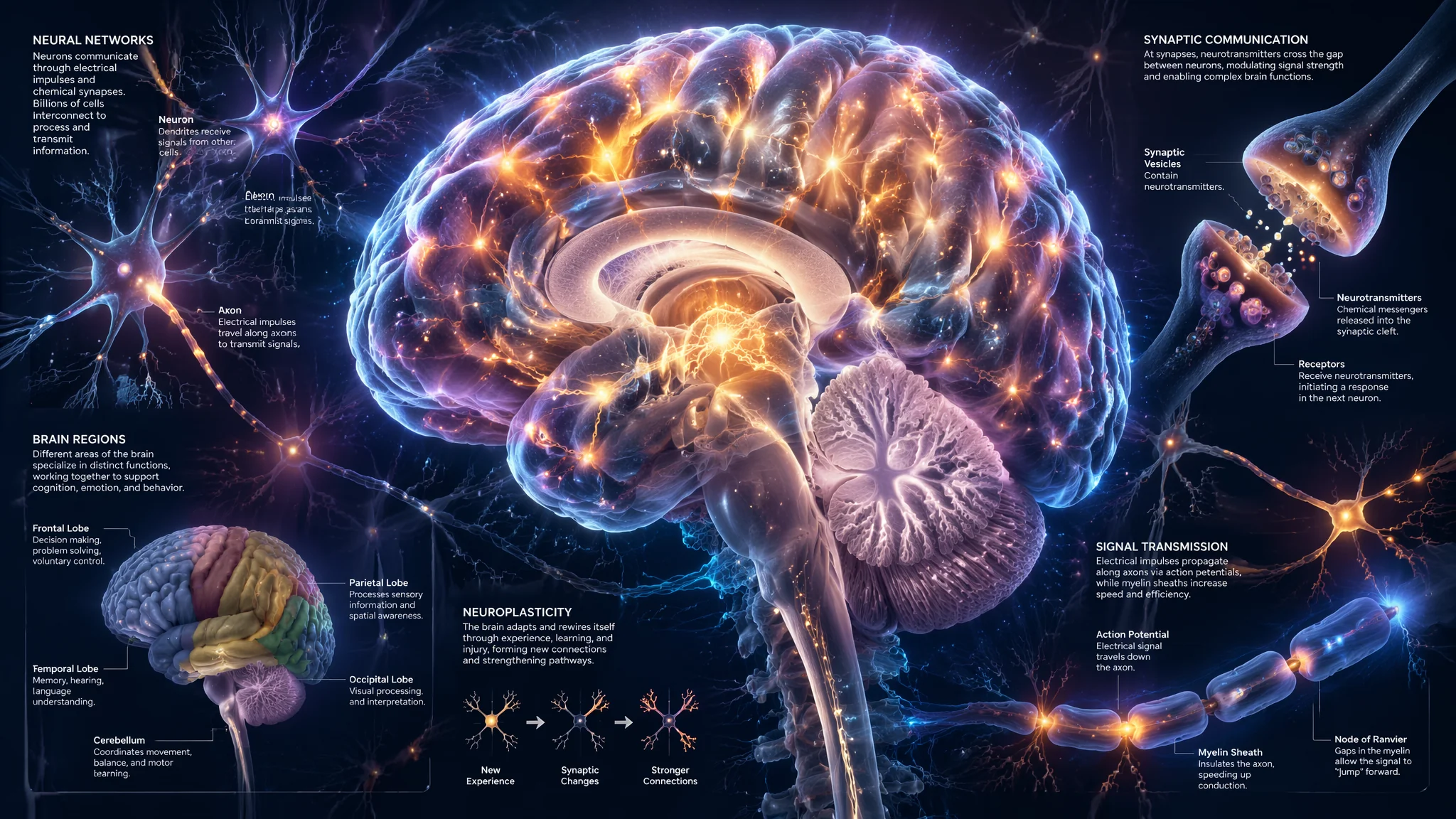
简单说:AI画大脑,默认输出有两种——一种是医学院教科书上的解剖图(灰白、枯燥),一种是科幻电影里的「发光脑子」(好看但完全不对)。真正的脑科学AI绘画要在「科学准确」和「视觉震撼」之间找一个交叉点——这篇文章教你找到那个点。
帮一个神经科学科普账号做封面图,需求是「画大脑里的思维火花」。AI第一版画了个粉红色的大脑飘在黑色背景上,周围有几道闪电——活像80年代科幻片的片头。我不死心,找了几篇神经科学论文里的荧光显微镜图像做参考,重新写了提示词。第十版出来的画面——神经元像一棵发光的树在黑暗里生长——作者说「就是这个感觉」。
神经元——大脑里的「发光树」
「a single neuron magnified to reveal its intricate structure, the cell body glows softly at the center, dendrites branch outward like the limbs of a luminous tree, the axon extends into the distance with myelin sheath segments visible as subtle bands, the synaptic terminals at the end of each branch glow with tiny bursts of electric blue light, scientific accuracy meets artistic beauty」。
神经元的核心视觉特征:树突(dendrites)像树枝一样分叉、轴突(axon)是一条长线通向远处、突触末梢(synaptic terminals)在末端发出微小的光点。这三个结构写清楚了,AI就不会画出「一团乱麻」。脑科学基础参考NIH美国国立卫生研究院的公开神经科学图像资料。
神经网络——从微观到宏观
「a vast neural network with thousands of interconnected neurons, the connections glow with transmitted signals like data flowing through a cosmic internet, some pathways light up brightly while others remain dormant in the background, the network forms recognizable brain-shaped patterns at the macro scale, reminiscent of both biological tissue and technological circuitry」。
宏观神经网络要表现出「信息流动」的感觉——某些通路亮着,某些暗着,信号在神经元之间跳跃。加「synaptic transmission visualized as pulses of bioluminescent blue light traveling along neural pathways」来表现突触传递。视觉流动感的更多技巧见AI色调绘画的色彩流动章节。
脑区功能可视化——不是涂色块
「a translucent human brain with different functional regions glowing in distinct colors, the frontal lobe pulses with golden light representing consciousness and decision-making, the visual cortex at the back shimmers with electric purple, the limbic system deep within glows with warm amber representing emotion, each region connected by illuminated neural pathways, floating in a dark scientific visualization space」。
不同脑区用不同颜色——前额叶(决策/意识)=金色,视觉皮层=紫色,边缘系统(情绪)=琥珀色。颜色不是乱选的——暖色代表「活跃功能」,冷色代表「基础功能」。脑区配色的心理学依据见AI色彩绘画。
思维可视化——把「想法」画出来
「abstract visualization of human thought, a silhouette of a head filled with a cosmos of ideas, thoughts represented as constellations of light connecting and reconnecting, the birth of an idea visualized as a supernova of golden sparks in the prefrontal cortex area, the style blends scientific illustration with cosmic photography」。
思维可视化是脑科学AI绘画里最「自由」的类型——不需要严格的解剖准确,只需要用视觉隐喻来传达「思考」的感觉。个人最爱的一种构图:「a brain floating in space with its neural pathways extending outward like tree roots into the surrounding darkness, the roots reach toward distant stars and connect with them, suggesting that thought reaches beyond the physical brain into the universe itself」。
科技风格调色板
脑科学AI绘画的色盘:深空背景(#0a0a1a)为主色、神经元蓝(#00ccff)为信号色、突触金(#ffaa00)为高亮色、胶质细胞紫(#7b2fbe)为辅色。「bioluminescent blue and gold color scheme, the background is a deep cosmic void that makes the neural structures appear to float, rim lighting on the brain structures creates a 3D volumetric effect, the overall palette is cool scientific blue with warm golden accents at the points of synaptic activity」。
渲染提示:在Midjourney里加「octane render, 3D scientific visualization, sub-surface scattering on translucent brain tissue, cinematic volumetric lighting」——商业3D渲染引擎的关键词能大幅提升科技感画面的质感。类似的科技渲染技巧参考AI 3D模型生成。
从显微镜到宇宙——脑科学的视觉尺度跨越
脑科学AI绘画最迷人的地方在于尺度——你可以画纳米级的突触间隙,也可以画宇宙级的全脑神经网络,甚至可以在同一张图里做出从微观到宏观的尺度穿越。这种「尺度感」是脑科学视觉最独特的魅力。
微观尺度——"electron microscope style image of a single synaptic cleft, the presynaptic vesicles are clustered near the membrane like tiny bubbles about to burst, neurotransmitters crossing the gap are visualized as glowing particles, the level of detail is molecular and awe-inspiring"。电子显微镜风格能让神经元突触看起来像外星地貌——这种「熟悉的陌生感」是科普插画最好的视觉策略。
宏观尺度——「the entire brain visualized as a glowing neural constellation floating in a dark void, each brain region is a cluster of interconnected stars, the connectome is mapped like a cosmic web, consciousness visualized as a bright pulsing center that sends waves of light through the entire network」。把全脑神经网络画成「宇宙星图」——这个隐喻在视觉上极其有效,因为人类对星空有天然的敬畏感,把它和大脑联系起来,瞬间传达了「意识即宇宙」的概念。跨尺度视觉叙事的手法在AI宽幅风景绘画里有类似的空间层次技巧。
脑科学插画的实际应用场景
科普文章配图——"clean scientific illustration of the limbic system, labels pointing to the amygdala, hippocampus and hypothalamus, the style is textbook-quality with precise anatomical rendering, soft pastel colors for different structures"。科普配图的核心是「清晰+准确」——解剖结构标注清楚,颜色区分功能区域。发表在NIH等机构的神经科学资源可以对照参考解剖准确性。
脑机接口概念设计——「futuristic brain-computer interface visualization, a translucent human brain with micro-electrode arrays embedded in the cortex, data streams flowing from the electrodes into a holographic display, the style combines medical imaging with cyberpunk aesthetics」。脑机接口是当下最热的脑科学视觉题材——把医学影像和赛博朋克美学混在一起,产出一种「发生在未来的真实医疗场景」的视觉效果。科技感画面的更多渲染手法见AI 3D模型生成。
AI画大脑的常见翻车与抢救方案
翻车一:大脑像核桃——"human brain, anatomically correct cerebral cortex with distinct gyri and sulci, the folds are organic and varied in depth not uniform like a walnut shell"。AI画的大脑皮层沟回经常变成均匀的网格纹——像核桃或哈密瓜。抢救方案:加「the cortical folds follow no regular pattern, each gyrus is unique in shape and depth, the surface looks like a complex organic landscape seen from above」。
翻车二:左右脑完全对称——真正的人类大脑左右半球是不对称的(尤其颞平面区域)。写「subtle anatomical asymmetry between the left and right hemispheres, the left hemisphere language areas are slightly more developed, the brain looks real not a mirror image」。翻车三:颜色太卡通——脑科学AI图如果饱和度太高就像儿童科普书。抢救方案:加「scientific color palette with muted tones, the brain tissue is a subtle pinkish-grey not bright pink, the glowing neural pathways are the only saturated elements in the frame」。色彩控制参考AI色彩绘画的科学用色方法。
总结——科学之美是脑科学AI绘画的灵魂
脑科学AI绘画和普通的科幻大脑图最大的区别——在于「敬畏感」。科幻大脑图让你觉得「好酷」,好的脑科学AI图让你觉得「好神奇」——它激发的是对生命、意识、思维这些终极命题的好奇和敬畏。要做到这一点,画面必须在科学真实和艺术想象之间找到平衡——全写实就是教科书插图(无聊),全幻想就是科幻海报(空洞)。那个平衡点就是:结构是真实的(神经元的分支方式、脑区的空间位置),但呈现方式是诗意的(发光、宇宙隐喻、尺度穿越)。
做过最满意的脑科学AI图不是最复杂的那张——是一张极简的:黑色背景上,一个孤独的神经元发着微弱的蓝光,树突向四周延伸像一棵冬天的树。没有文字、没有标注、没有花哨的效果。但每个人看到那张图都沉默了几秒——他们不是在「看」一个神经元,是在「感受」自己大脑里正有860亿个这样的细胞在此时此刻发着光。这就是脑科学AI绘画的终极目标——不是展示知识,是唤起惊奇。
常见问题
AI画的脑结构总是不对,额叶跑到后面去了?
AI对人脑解剖结构的空间理解很弱。加「anatomically correct human brain, frontal lobe at the front, cerebellum at the lower back, brain stem descending from the base, accurate neuroanatomy reference」。写清楚脑区的前后上下位置关系。
怎么让神经元网络看起来不杂乱?
用「organized neural network with clear hierarchical branching structure, primary dendrites thick and distinct, secondary branches finer and more delicate, the pattern follows a fractal-like logic」。分形结构(fractal-like)会让AI按「树枝逻辑」来组织神经元,而非随机乱画。
脑科学AI绘画能用在学术论文里吗?
不能作为科学数据图使用——AI生成的脑结构不是真实扫描数据。可以作为论文的概念插图或封面图,但必须标注「AI生成/艺术渲染」以免被审稿人误认为篡改数据。
觉得有用的话分享给做科普创作的朋友吧。