AI分手主题绘画进阶:失恋后的孤独与重新开始的治愈视觉表达
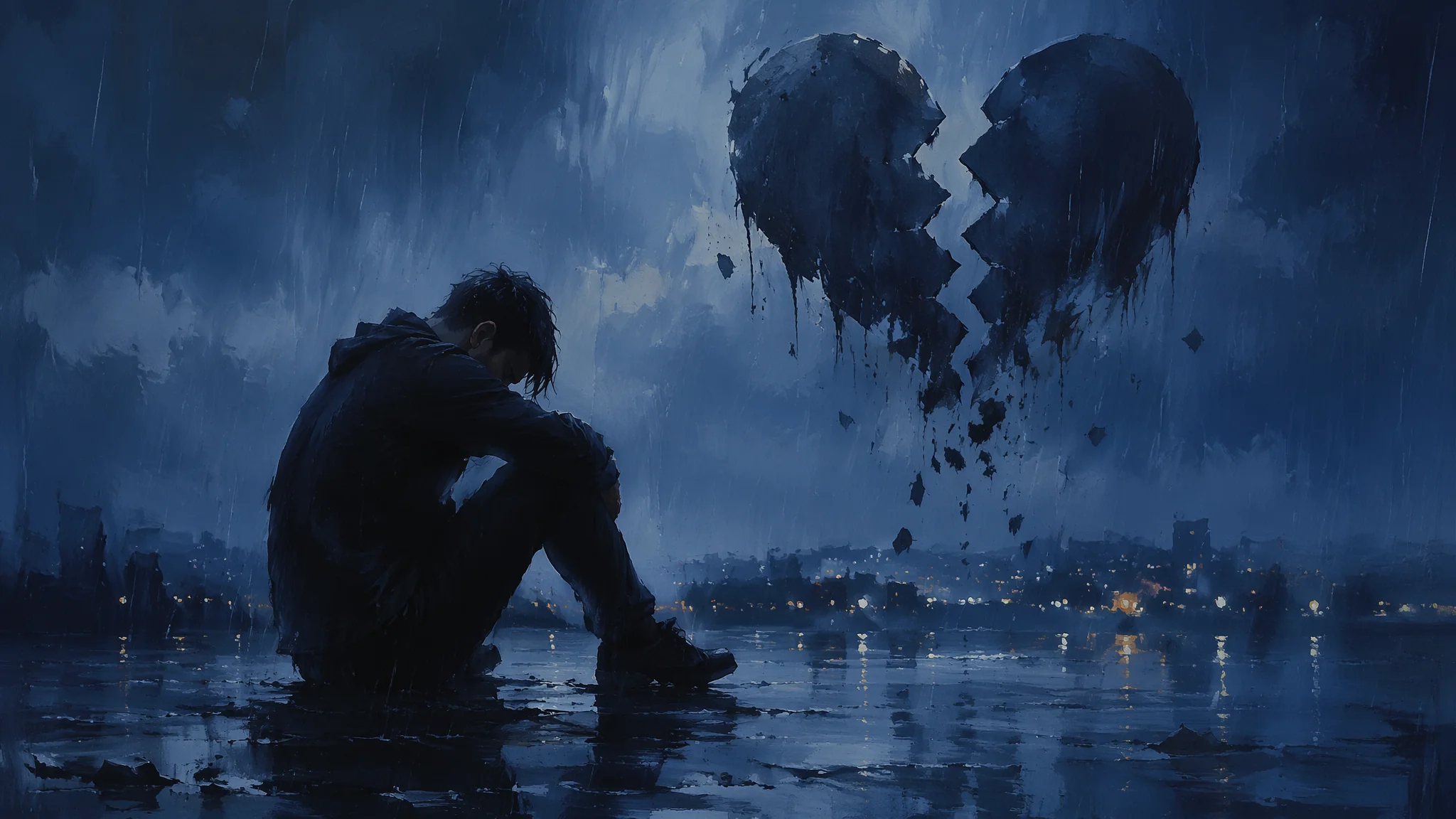
分手半年后我才开始用AI画"治愈"这个主题的东西。分手后第一个月画的全部是黑色调的——破碎的镜子、雨夜的街道、空荡荡的房间。那些图我到现在还留着,不是因为它们画得好,是因为每一张都记录了一种真实的情绪状态。三个月之后画的色调开始变了——灰蓝里开始出现暖光、空房间里开始有植物、破碎的东西旁边开始出现修补的痕迹。这些视觉上的变化不是设计出来的——是我那个阶段心里真实的感受被AI翻译成了画面。这篇写给经历过或者正在经历分手的人——如何用AI把"心痛"和"愈合"这两个完全相反的阶段都画出来。
上一篇AI分手伤感绘画讲了四种基础的情感表达策略——孤独空间、破碎意象、冷暖对比和时间距离。但那篇文章更偏技术:怎么写Prompt、怎么控制色调、怎么借大师风格。这篇想往前再走一步——不是"技术性地画悲伤",而是"真实地画自己的悲伤"。用AI画情感这件事有一个悖论:你越是冷静地分析"悲伤应该怎么画",画出来的东西越没有情感力量;你越是把自己真实的状态不加修饰地翻译成Prompt,画出来的东西反而越能打动别人。技术和感受之间的那条缝,我用半年的时间慢慢填上的。
从"碎掉"到"拼起来"——视觉符号的转变序列
分手后的视觉叙事有一个自然的演进序列:碎掉(玻璃、瓷器、水面的倒影被打碎)→空掉(房间变空、椅子对面没人、双人床只剩一个枕头)→褪色(照片褪色、记忆里的画面降低饱和度)→修补(金缮修复、裂缝里长出植物)→晨光(窗帘缝透进来的第一道光、天刚亮时的那种蓝橙色过渡)。碎掉阶段写法:"a mirror shattering in slow motion, the cracks radiating outward from a single point of impact, each shard reflecting a different fragment of a face that is no longer whole, the background pure black, the only light source the cold white of the breaking glass"。空掉阶段写法:"a small apartment at dusk with the lights off, a table set for two but only one chair occupied, the empty chair casting a long shadow across the floor, the steam from a single cup of coffee the only movement in the room"。褪色阶段写法:"a photograph slowly losing its color from the edges inward, the faces in the image becoming progressively more washed out and indistinct, the paper curling slightly as if trying to forget what was printed on it"。金缮修补——这个意象是全文最关键的一个:"a piece of broken porcelain being repaired with gold-dusted lacquer in the Japanese kintsugi technique, the golden seams tracing the path of every crack like lightning frozen in time, the vessel becoming more beautiful for having been broken"。晨光阶段写法:"the first ray of morning sunlight streaming through a gap in the curtains, the light is a warm golden-orange that gradually transitions to the cool blue of the retreating night sky, an unmade bed with rumpled sheets suggesting someone has just gotten up and started the day"。关于情感表达的更多视觉语言,AI哭泣与情感绘画表现里有系统的情绪关键词库。
色调过渡——从冷灰到暖金的情绪渐变
分手情感的色调演进不是"从黑白变成彩色"那么粗暴——而是一个色温逐渐上升的过程:纯蓝灰(悲伤峰值)→蓝紫灰(孤独缓和)→中性灰(接受平静)→暖灰米(开始重建)→暖金黄(治愈完成)。我观察了自己半年来的AI输出色调规律:第一个月所有图的色温大约在5500K以下(冷调),到第三个月开始出现6500K-7500K的中性调,到第六个月稳定在8000K左右的暖调。这种变化不是刻意设计的——是心理状态的自然投射。如果说你想主动控制这种色调过渡,用色温描述:"the color palette shifting from a cold desaturated blue-gray at the bottom of the composition to a warm hopeful golden-amber at the top, the transition gradual and almost imperceptible like the sky at dawn"。关于色彩的更多情绪映射,AI绘画色彩理论应用指南里有完整的配色心理学。
象征物的治愈渐变——同一种东西在愈合过程中的不同样子
画同一件物品的"愈合前"和"愈合后"——这个方法是自己在用的最有效的叙事策略。枯萎的植物→重新长出嫩芽。熄灭的蜡烛→重新点燃。关上的门→开了一条缝透光的门。雨→雨后初晴。枯植到新生:"a dead potted plant on a windowsill, the leaves brown and curled, the soil dry and cracked — and beside it the same plant weeks later, a tiny green shoot emerging from the seemingly dead stem, the soil now dark and moist, the window behind it letting in warm morning light"。烛灭到重燃:"a candle that has burned out, the wick black and smoking, the wax pooled and hardened in irregular rings — and beside it the same candle relit, the flame steady and bright, the melted wax now looking like a landscape shaped by time rather than destruction"。门的意象:一扇开了一条缝透进光的门——是我在画了无数张"关上的门"之后突然想画的。写法:"a door that has been closed for a long time, now slightly ajar, a narrow vertical strip of warm golden light piercing the darkness of the room beyond, dust motes dancing in that single beam of light like tiny stars, the door handle worn smooth from years of being turned, but now finally beginning to move again"。在Psychology Today上搜"visual journaling"或"art therapy grief"能找到很多关于用视觉艺术处理悲伤的心理学研究——这些研究的视角对创作真正有疗愈感的作品很有启发。另一个参考源是MoMA的在线收藏——搜"loneliness""grief""healing"等关键词能看到现当代艺术家如何处理这些主题。
"重新开始"的三种画法——不说"振作"但呈现出"振作"
治愈主题最忌讳的就是鸡汤式表达——"阳光明媚的早晨一个微笑的人张开双臂拥抱新生活"——这种图像只会让人更难受。好的治愈画面不喊口号,它用一个瞬间的细节让你感受到一个人在默默地、不声张地重新开始生活了。三种有效的"重新开始"画法。第一种——日常重建:"a person buying groceries at a small neighborhood market, examining a tomato in the afternoon light, nothing dramatic happening, just the quiet resumption of ordinary life that is itself the most profound form of healing"。第二种——自我陪伴:"a single person at a café reading a book, a half-finished cappuccino beside them, the chair opposite empty but not in a sad way — it's just a chair, the person is absorbed in the book and looks, for the first time in a long time, content to be alone"。第三种——自然融入:"a figure standing at the edge of the ocean at sunrise, barefoot in the wet sand, the waves washing over their feet, the person is small against the vastness of the sea and sky but not diminished by it — they appear to belong here now, part of something larger than their own pain"。这三种画法的共同点是——都没有"笑容",都没有"阳光灿烂",都没有"张开双臂"。治愈不是一种表情,是一种存在状态。更多情感视觉策略参考AI悲伤情绪绘画里的叙事构图方法。
常见问题
分手绘画总是画得太"直白"——一个人哭、碎掉的心——怎么表达得更高级?
高级的情感表达不是"画情绪本身"而是"画情绪留下的痕迹":不画人在哭,画哭完之后桌上那一团湿透的纸巾。不画心碎,画地上散落的拼图块其中一块的边缘刚好能对上但就是距离最远的那块。不画孤独,画一张双人餐桌被推到墙边、只有靠墙那一面的椅子有使用痕迹。
画治愈主题怎么避免变成鸡汤图?
三个原则:不画笑容、不画刻意拥抱阳光的姿势、不用"hope""happy""bright future"这类词汇。治愈是时间流过之后的平静——不是"突然开心了",是"变得不再难过了"——两者有本质区别。
分手主题的AI绘画适合公开发表吗?
看内容和你自己的舒适度。纯意象和象征的画面(破碎的镜子、雨夜街景)适合公开发。涉及具体人物或过于隐私的细节建议私下保存。另外如果作品里出现了可辨识的真人面部(哪怕是AI生成的),公开发表前考虑一下是否会被误认为某位真实人物。
分手半年后用AI画"治愈"这个主题的时候,我不再把"愈合"当成一个终点——不像感冒好了就没事了。愈合是金缮修复里那一道道金色的裂缝——你回不到破碎之前的完整状态了,但那些裂缝本身变成了一种新的、属于你的纹理。AI帮我把这个感受变成了看得见的图像——这是我学AI绘画以来做过的最有意义的一件事。如果你现在正处于分手后的任何一个阶段——还在痛的、正在愈合的、或者已经走出来的——试试用AI把你当下的感受画出来。不要想着画得好不好看,就诚实地把你心里的画面翻译成Prompt。画完之后存下来,过几个月再回来看——你会惊讶于这些图在你人生中留下的痕迹。