AI哭泣情绪绘画:泪水与脆弱感的深度情感视觉表达技巧
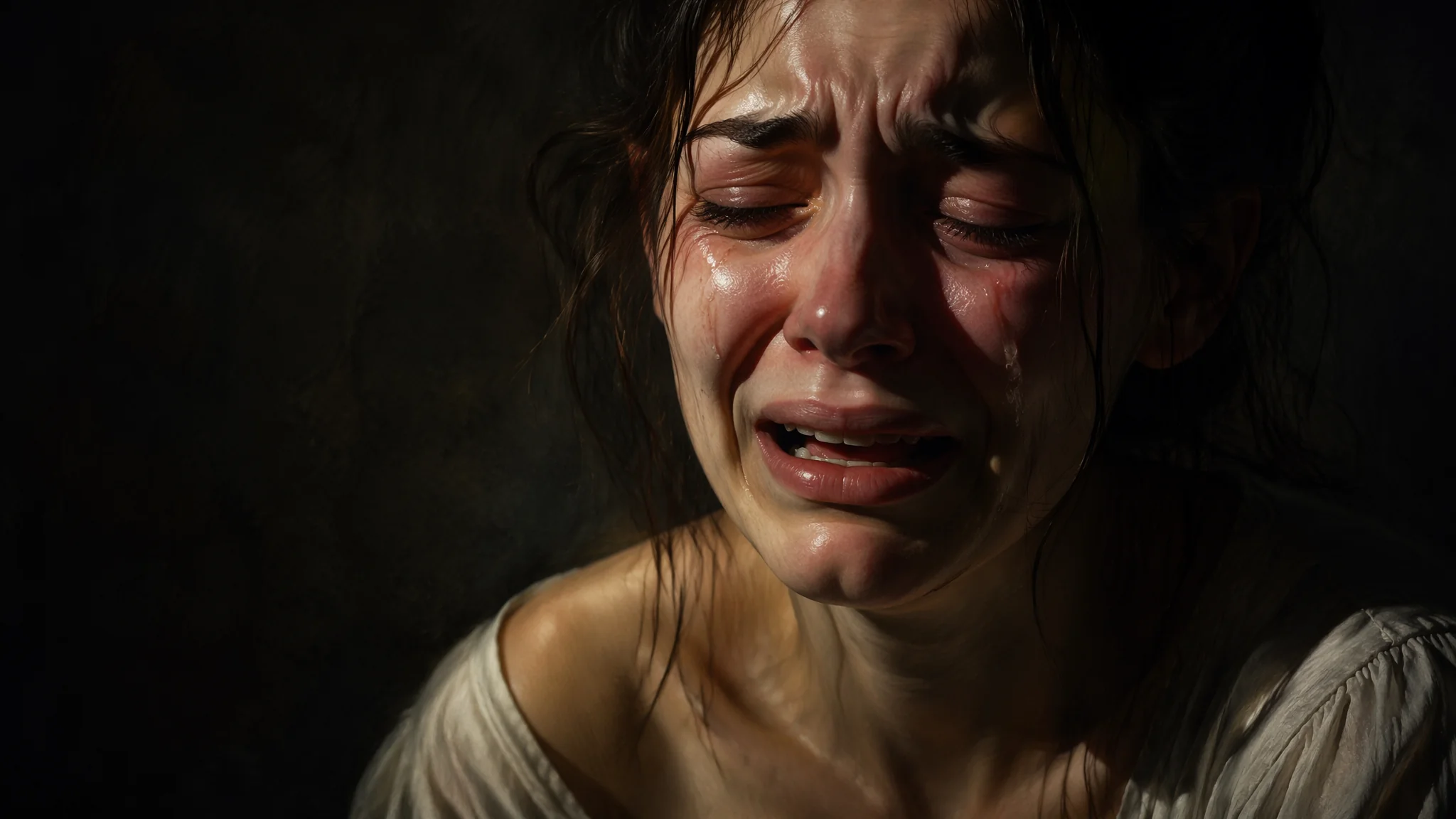
简单说:AI画哭泣最大的坑——它分不清「真哭」和「偶像剧哭」。真哭的人眼睛是肿的、鼻头是红的、嘴唇是干裂的、表情是扭曲的;AI默认的哭泣=两行清泪从完美的脸上滑下来,妆容完好,眼神含情——那是拍MV不是真哭。
做过一个项目:给一部短篇小说配图,主角在雨夜里得知亲人去世。AI第一次出图——一个美女脸上挂着两滴完美的泪珠,打光像拍杂志封面。我当时就火了——这不是悲伤,这是拍广告。后来花了整整两天研究「真实的哭泣在视觉上到底什么样」,才把AI调教到能画出让人沉默的画面。
泪水的物理特性——不是「两滴水」
「a single tear rolling down the cheek, catching light with a tiny specular highlight, the tear has weight and volume, it leaves a visible wet trail on the skin, the trail catches ambient light differently than dry skin」。泪水的关键物理特征:有体积感(不是平面的水滴)、有湿痕(眼泪流过的地方皮肤反光不同)、有重力(在下巴尖汇集成水珠)。
多泪状态:「multiple tear streaks running down the face, some fresh and glistening, some already drying and leaving faint salt traces on the skin, the tears have smeared any makeup that was there」。哭过一阵的人脸上应该有新旧泪痕的层次——这是区分「刚开始哭」和「哭了很久」的视觉锚点。
眼眶和鼻头——「红肿」是哭过的证据
「eyes red-rimmed and slightly swollen from crying, the lower eyelids puffy with a pinkish undertone, the nose tip is red and irritated from wiping, the skin around the nostrils is chapped and raw」。真哭的人眼眶周围是红肿的——微血管破裂造成的红晕。这个细节AI默认不会画,必须手动写进去。眼眶红肿教程在AI面部肖像绘画里有更详细的肌理控制技巧。
鼻子的变化也关键——哭的时候鼻黏膜充血,鼻头变红变大。加「slightly swollen nose tip, raw and red from repeated wiping with tissue」能让AI理解这不是「美丽的忧伤」而是「真实的情绪崩溃」。
嘴型和面部肌肉——「哭相」的解剖学
「mouth slightly open with the corners pulled downward, the lower lip trembling and quivering, the chin muscles are tensed and dimpled, the jaw is clenched between sobs, not a serene expression but a genuine moment of grief」。真哭时的嘴型是「向下拉的倒U型」——嘴角下坠、下颌肌肉紧绷、下唇微微颤抖。这和AI默认的微笑嘴角(向上)完全相反。
面部肌肉联动:「the furrow between the eyebrows deepened, the forehead is creased with emotional tension, the cheeks are flushed with blotchy red patches, the whole face shows the physical strain of crying」。悲伤不是只发生在眼睛上——整张脸的肌肉都在参与。表情解剖逻辑参考AI人体绘画速写里的面部肌肉章节。情绪表达的完整体系也推荐看AI委屈情绪绘画里对微表情的拆解。
场景氛围——让「悲伤」被看见
「dim ambient lighting, the subject is partially in shadow, rain on a window casting tear-like streaks of light across the face, cool blue-grey color palette with muted tones, the atmosphere feels heavy and quiet」。哭泣场景的光线应该是「暗而柔」的——hard light(硬光)会把眼泪打得像钻石,soft diffused light(柔光)才能让泪痕安静地闪烁。
色调控制:「desaturated color grading, muted blue and grey tones dominant, the only warmth comes from the reddened skin around the eyes and nose——a small beacon of human vulnerability in a cold frame」。冷色调包围中那一点眼周的暖红色——是整张图的情感重心。情绪渲染的更多参考在Midjourney社区有大量情绪肖像摄影的提示词案例,Civitai上也有专门的情绪表情LoRA模型可以下载使用。
不同哭泣类型——从默默流泪到嚎啕大哭
哭泣不是单一表情——从安静的流泪到崩溃大哭,中间有七八个不同的情感强度等级。AI默认只会画一种——「两行清泪」。要画出不同哭法得用不同的提示词策略。
默默流泪——"silent tears streaming down a still face, the expression is numb and hollow more than actively sad, the tears fall without any facial contortion, the eyes stare into the distance unfocused, this is the cry of someone who has no energy left to sob"。默默流泪的关键是「面部静止」——没有皱眉、没有张嘴,只是眼泪无声地流。这种哭法比嚎啕大哭更让人心碎。
压抑啜泣——"trying to hold back tears, one hand pressed against the mouth to stifle a sob, the eyes are squeezed shut in an effort to stop the tears, the shoulders are shaking slightly from the effort of suppression, tears are leaking through closed eyelids"。压抑啜泣的身体语言是「对抗」——手捂嘴、眼睛紧闭、肩膀在颤抖——整个身体在和眼泪做斗争。内心挣扎的动态在AI委屈情绪绘画里有相近的表达逻辑。
崩溃大哭——"uncontrollable sobbing, face contorted with grief, mouth wide open in a wail, tears and mucus mixed together on the face, the neck muscles are strained, the whole body is curled inward in a fetal position of emotional collapse"。崩溃大哭要画「失控感」——面部扭曲、涕泪横流、身体蜷缩。不雅,但真实。
性别与年龄——哭的不同表达方式
成年男性的哭泣在视觉上和女性完全不同——男性更倾向于「忍住但没忍住」。提示词:「a grown man crying, jaw clenched tight in an effort to maintain composure, tears escape despite his resistance, the face shows anger mixed with grief, the crying is silent but intense, the tears are a betrayal of the stoic faade he is trying to maintain」。
老年人哭泣——「elderly person with tears rolling down wrinkled cheeks, the tears follow the deep creases of age like rivers following ancient channels, the grief carries the weight of a lifetime」。老年人和年轻人在哭泣上的最大区别——眼泪沿皱纹的沟壑流淌,每一条泪痕都是一条「岁月的河道」。老年人哭的画面自带叙事重量。不同年龄段的表达差异在AI面部肖像绘画里有更系统的年龄控制技巧。
哭泣场景中的「见证者」——第二人称叙事的力量
哭泣的画面里如果有第二个角色——一个旁观者、安慰者或冷漠的路人——情感冲击力会翻倍。因为「被看到的悲伤」比「一个人的悲伤」更有叙事层次。
安慰场景——「one person crying with their head bowed, another person sitting beside them with a hand gently resting on their back, the comforter does not speak and does not look at the camera, their presence is quiet and steady, the focus is on the silent support not dramatic consolation」。好的安慰不是「抱着大哭」——是安静地坐在旁边、手放在背上、不说话。这种克制的安慰比拥抱更动人。
冷漠路人——「a person crying on a busy subway platform, the crowd walks past without stopping, the crying person is a still point in a blur of motion, the contrast between personal grief and public indifference creates a profound loneliness」。周围人来人往但没有人停下来——这种「人群中的孤独」是哭泣叙事里最锋利的表达方式。使用「motion blur on the passing crowd, the crying person in sharp focus」来制造动静对比。多人物的场景情感控制需要AI坐姿人物绘画进阶里的互动构图技巧。
总结——眼泪不是装饰品
画哭泣这件事,我在AI绘画里摸索了快一年才搞明白最核心的一条:眼泪不是脸上的装饰品——它是整个面部肌肉系统、光线系统、氛围系统同时作用的结果。只看眼泪本身,那只是两滴水。但把眼眶的红肿、鼻头的充血、嘴角的下坠、光线的冷暗、场景的压抑全部写进提示词——眼泪就变成了「悲伤的结晶」而不仅仅是「水」。
用AI画哭泣,最怕的就是「画得太美」。真哭的人不美——脸是肿的、妆是花的、表情是扭曲的。如果你画的哭泣让人想截屏做壁纸——那这张图就失败了。好的哭泣AI绘画应该让人看到后沉默三秒——不是觉得「好美」,是觉得「好难过」。如果你做到了这一点——那不管AI出了多少根手指、眼睛对不对称——这张图在情感传递上已经成功了。因为这个品类的终极目标不是技术完美,是情感真实。
常见问题
AI画的哭泣为什么总是「梨花带雨」而不是真的悲伤?
因为训练数据里大量「哭泣」标签的图片是影视剧截图(美化版哭泣)。加上「raw documentary photography, unflinching grief, not glamorous, genuine emotional breakdown」来引导AI调用纪实摄影的训练数据。
怎么让眼泪看起来有重量感而不是像贴上去的水珠?
写「tear has weight, surface tension visible at the edge where it meets the skin, the tear distorts the skin texture beneath it like a tiny lens」。强调表面张力和透镜效应,AI会参考微观摄影中的水滴物理。
儿童的哭泣和成年人的哭泣在AI绘画中怎么区分?
儿童哭泣:「child crying with face scrunched up, eyes squeezed shut, mouth wide open in a wail, tears and snot mixed together, unselfconscious raw emotion」。成年人哭泣更多是「压抑」——嘴巴紧闭、眼泪无声地流。年龄段不同,哭的「收放程度」完全不同。
觉得有用的话分享给做人物情感创作的朋友吧。