AI绘画固定镜头技巧:电影级静止机位与稳定构图的视觉表现
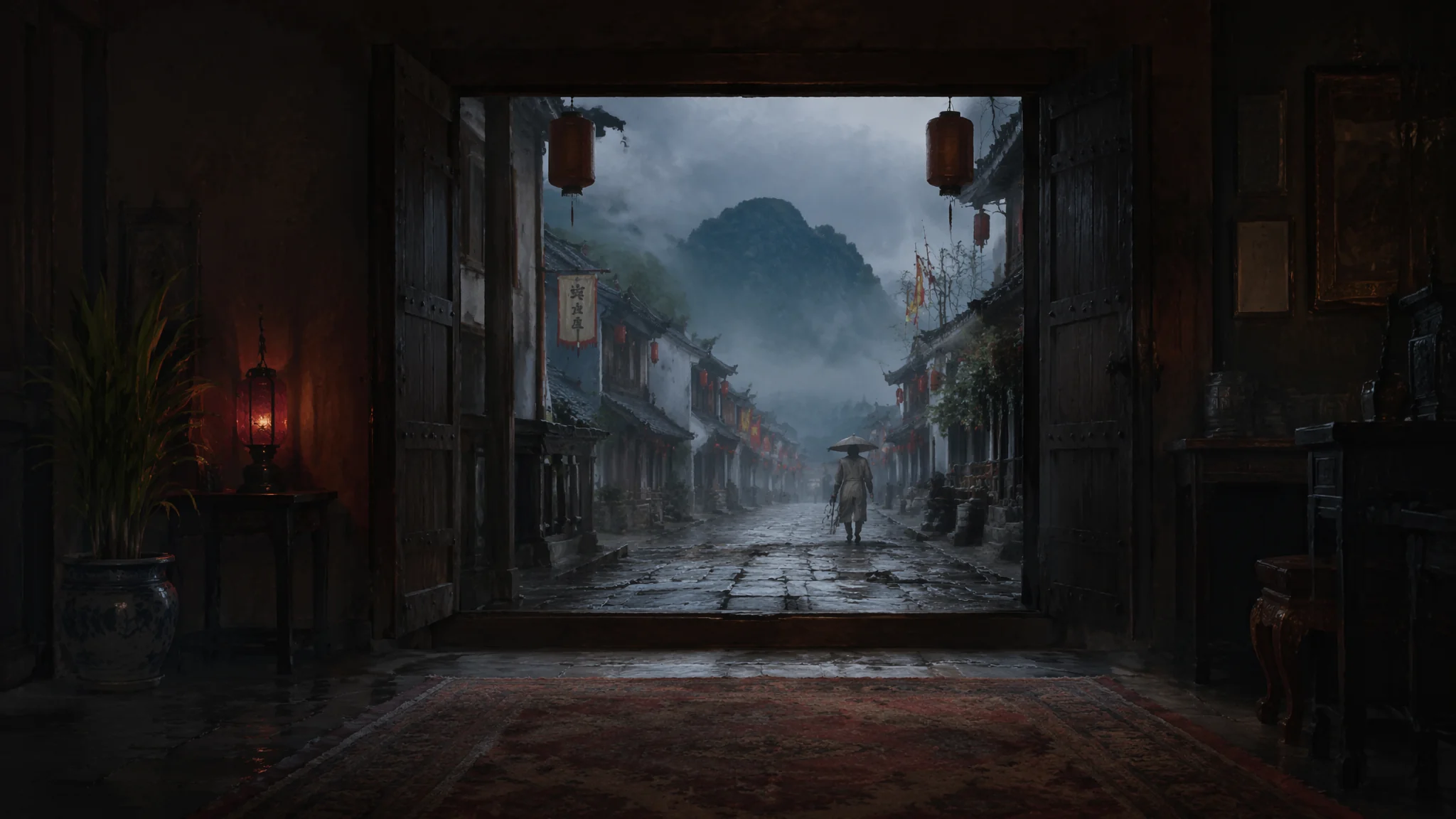
我大学的时候辅修过一学期电影摄影——那门课的老师是一个拍了二十年纪录片的摄影师,第一堂课他在黑板上写了句话:"Zoom with your feet, not your lens."意思是:想改变构图?用脚走过去,别拧变焦环。那个学期我们前八周只拍固定镜头——三脚架锁死,不允许任何机位移动。那段时间很折磨人,但也让我学会了一件事:固定镜头不是"不能动的镜头",是"你必须用构图、光线和画面内的动态来制造视觉张力——因为机位不帮你作弊了"。后来我做AI绘画的时候发现,电影摄影里关于固定镜头的那些原理——机位高度、镜头焦距、画幅比例——几乎可以一对一的映射到AI Prompt里。这篇把那段"被锁在三脚架上"学到的审美直觉,翻译成AI能理解的Prompt逻辑。
机位高度——眼睛的位置决定人物的"分量"
AI绘画中最被滥用的机位是"默认眼平高度"——画面中的相机好像永远悬浮在人物正前方1.6米的高度,不偏不倚。这个机位在电影语言里叫做"中性高度"——它不表达任何立场,不赋予角色任何权力或脆弱感,但也因此最无聊。机位高度往下移30公分(胸高微仰)→人物看起来更有力量——"the camera is at chest height angled slightly upward, the subject fills the upper portion of the frame, their chin is lifted and their jawline is prominent, the perspective makes the subject appear confident and self-possessed"。
机位高度往上移30公分(头顶微俯)→人物看起来更脆弱或更"被观察"——"the camera is positioned slightly above the subject's eye level looking down at a shallow angle, the subject's eyes are looking up toward the lens creating a dynamic of vulnerability, the top of the head is visible, the shoulders appear narrower"。注意我说的是"微仰""微俯"——大概10-15度的偏离。极端角度(>30度仰角或俯角)会进入"表现主义"区域——画面变得像漫画或恐怖片——在大多数情况下不是你要的效果。
还有一个经常被忽略的机位:台面高度——大约80-90cm,相当于把相机放在桌子上。这个高度在电影里大量使用(特别是餐厅对话场景),但在AI绘画里很少见——"the camera sits at table height approximately 85cm from the floor, the composition includes the surface of a wooden table in the foreground, the subject is seated across the table, the low angle captures the space between people——the cups, the hands, the eye contact across the tabletop"。台面高度机位的魅力在于"前景的桌子"——它不是空白的空间,而是一个有纹理、有物品、有生活痕迹的平面——这为画面增加了丰富的视觉层次。AI美学未来感摄影中对空间层次的构建也有类似的分析框架。
焦距与空间感——不是"广角=宽、长焦=近"这么简单
焦距最根本的影响不是"画面多宽"——是"空间关系的压缩程度"。广角镜头(24mm以下)拉伸空间——前景和背景之间的距离感被放大,近处的物体显得更大、远处的物体显得更小。这种"空间夸张"让人感觉画面有侵入感和临场感——就像你站在离拍摄对象很近的地方。长焦镜头(85mm以上)压缩空间——前景和背景之间的距离感被缩小,远处的物体看起来像贴在近处物体的后面。这种"空间压缩"让人感觉画面有亲密感和抽离感——就像你在远处默默观察。
AI Prompt里写广角镜头的正确方式:不写"wide angle lens 24mm"——而是描述广角产生的视觉结果——"the perspective is expansive——objects in the foreground appear larger than life with exaggerated depth, the background stretches far into the distance creating a strong sense of three-dimensional space, the edges of the frame show subtle barrel distortion that curves straight lines outward, the viewer feels physically close to the subject——within arm's reach"。长焦的正确写法——"a compressed perspective——the background appears flattened and pulled closer to the subject, distant elements that are actually far apart look stacked together, the depth of field is shallow——only the subject's face is in sharp focus while the foreground and background dissolve into soft blur, the viewer feels like a distant observer watching from across the street"。
一个常被问到的具体场景:如何用AI画"两个人在走廊两端对话"——你需要广角的"空间拉伸感"让走廊显得很长,同时也需要两个人的距离感。Prompt——"a wide-angle perspective looking down a long corridor, one figure in the foreground close to the camera appears large and slightly distorted by the wide lens, another figure at the far end of the corridor is tiny in the distance, the convergence of the corridor's parallel lines emphasizes the distance between them, the composition visually represents emotional distance"。这种"用空间关系表达人物关系"的手法,在AI角色概念设计的场景叙事部分有更深入的展开。想了解不同焦距的实际视觉效果,可以参考Cinematography.com上的镜头对比数据库和ShotDeck的电影画面搜索引擎。
画幅比例——不只是"裁成多宽"是情绪的选择
很多人认为画幅比例只是一个"后期裁图"的问题——但在AI绘画中,画幅比例应该从Prompt阶段就确定,因为它从根本上决定了构图的逻辑。2.35:1的宽银幕比例本质上是一个"排斥纵向信息"的画幅——它鼓励你把人物放在画面的左三分之一或右三分之一,用大量的横向负空间来制造视觉张力。而1.33:1的学院比例(接近正方形)本质上是一个"集中注意力"的画幅——它鼓励居中式构图和对称性,因为画面没有多余的横向空间可以浪费。
具体Prompt写法——宽银幕:"Cinemascope 2.35:1 ultra-widescreen composition, the subject is positioned at the left third of the frame looking toward the right——the empty two-thirds of the frame on the right side creates a sense of anticipation and openness, the horizontal expanse allows the environment to become a character in the composition, the shot feels cinematic and contemplative——the kind of frame that holds a pause before something happens"。学院比例:"Academy ratio 1.33:1, the nearly square frame forces a centered or slightly off-center composition, the subject occupies most of the vertical space——from the top of their head to their chest filling the frame, there is no room for distraction, the intimacy is intense and almost uncomfortable——like being trapped in a conversation you can't escape"。关于不同画幅比例在角色视觉中的实际应用,AI身材背影绘画中对画幅与人物比例的关系有实用分析。
画面内动态——固定镜头不意味着"静止"
固定镜头最容易被误解的概念:机位不动≠画面内什么都没发生。电影史上最经典的固定镜头几乎都包含了丰富的画面内动态——风中的窗帘、远处走过的路人、杯子里升起的水蒸气——这些微小的运动让"不动"的机位产生了一种"观察者的耐心"。这种审美在AI绘画中同样可以模拟——你在Prompt里描述的不是"一张静态照片",而是"一个被固定镜头捕捉到的有时间的瞬间"。
画面内动态的三个层次。第一层:环境动态——"a still camera captures the subtle movements of the environment——curtains breathing gently at an open window, dust motes suspended and slowly drifting in the shaft of afternoon light, a ceiling fan casting a moving shadow that cycles across the wall, these tiny environmental movements make the stillness of the scene feel alive rather than frozen"。第二层:人物微动——"the subject is mostly still but there is life in the details——fingers absently turning a ring on the other hand, a strand of hair lifted by an unfelt breeze, the subtle rise and fall of breathing visible in the collar, the eyes are not locked on the camera but looking at something just outside the frame"。第三层:光的变化——"the static frame observes the transformation of light——a cloud passing in front of the sun dims the room then brightens it again, the quality of light shifting from harsh to soft and back, the shadows on the wall elongating as the sun sinks lower"。
常见问题
AI绘画中怎么写出"24mm广角"和"85mm长焦"的视觉差异?Prompt怎么区分?
焦距的本质是"视角宽度"和"空间压缩感"——AI虽然不懂光学,但它能理解这两个概念在画面中的表现。24mm广角——"shot with a 24mm wide-angle lens, the field of view is wide——the background recedes dramatically creating a strong sense of depth and space, objects close to the lens appear larger than normal while distant objects shrink, straight lines near the edges of the frame bend slightly with barrel distortion"。85mm中长焦——"shot with an 85mm portrait lens, the background is compressed——distant elements appear closer to the subject than they actually are, the depth of field is shallow with the background dissolving into soft bokeh, facial features are flattened slightly which is flattering for portrait"。不要在Prompt里写"focal length: 85mm"期望AI理解——要描述这个焦距产生的视觉结果。
仰拍、俯拍和平视在AI里怎么控制——写"low angle"为什么经常变形?
因为AI理解的"low angle"经常变成"从人物脚底往上拍"的极端仰角——画面中人物的下巴巨大、鼻孔朝天、额头消失——这其实是"虫视"而非正常仰拍。你需要控制仰拍的程度:"a slight low-angle shot, the camera is positioned approximately at chest height angled upward about 15 degrees——the subject appears slightly taller and more commanding, the jawline is visible and strong, the ceiling or sky is visible above the subject"。同理,俯拍不能写"high angle"(AI会给你鸟瞰)——要写"slight high-angle shot, camera at about eye-level plus 30 cm angled downward maybe 10 degrees——the subject looks slightly up toward the lens, the top of the head is visible"。
电影画幅比例在AI绘画里怎么体现——2.35:1和1.85:1的区别不只是"更宽"?
宽银幕2.35:1(Cinemascope)和学院宽银幕1.85:1的差异不仅是宽窄——它们在画面叙事上有不同的"重量感"。2.35:1——"ultra-widescreen Cinemascope aspect ratio 2.35:1, the extra width creates a panoramic field of view, the composition emphasizes horizontal relationships——characters are often positioned at the left or right third with the negative space on the opposite side creating visual tension"。1.33:1学院比例——"Academy ratio 1.33:1, the nearly square frame creates a sense of confinement and intimacy, the vertical space allows for strong compositional symmetry, the aesthetic is vintage and deliberate"。选哪个比例取决于你想传达的情绪:2.35:1=史诗感,1.33:1=亲密感,1.85:1=自然感。
固定镜头的"不动的美感"和"死板"之间怎么把握?
固定镜头不意味着"画面里什么都没有发生"——真正好的固定镜头是"机位不动但画面内有流动"。三个技巧制造"不动中的动":第一,画面内元素的运动——"a static camera captures a scene where the only movement is the wind rustling through hair and fabric, subtle motion within a frozen frame"。第二,前景遮挡——"the static camera peers through a foreground element——tree branches, a window frame——the foreground frames the subject and adds depth"。第三,光线变化——"the fixed camera observes a scene as the light changes——clouds passing over the sun causing the illumination to shift, the shadows moving slowly across a face"。固定镜头的美来自"观察者的耐心"——不是"拍了一张静态照片",是"镜头在那里停留了很久看到了细微的变化"。