AI游戏人物绘画进阶:从概念设定到游戏内立绘的完整创作流程
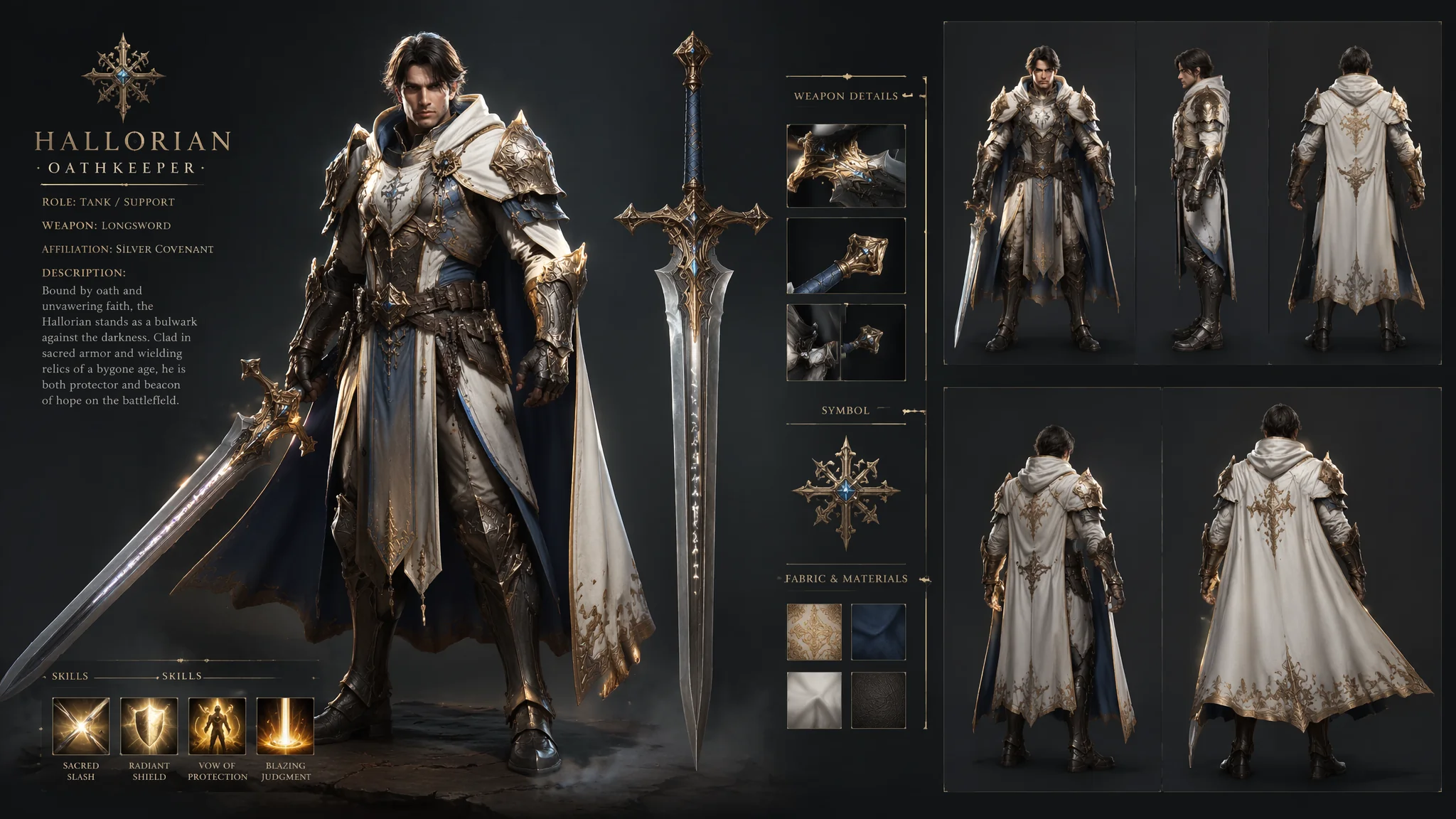
去年帮朋友的独立游戏项目做角色美术,一个RPG里有十二个主要角色,传统外包报价一套角色全套立绘加表情集——两万起步。预算砍半再砍半。我说:"要不试试AI先出概念稿,效果好再精修?"结果三个周末,十二个角色的概念设定、表情集、装备拆解图全搞定了——虽然中间踩了无数坑。最大的教训是:AI不是替你画角色,是给你当"概念速写师"——你负责"想要一个什么样的人",AI负责把这个人在五分钟内变成一张能拿给团队讨论的图。这篇就是那次项目里的实战流程复盘。
第一阶段:角色概念设定——从八个词到第一张概念图
游戏角色设计的第一步不是画,是写——在Prompt里把一个角色的"人设"压缩到八个关键词。这些词决定了AI对这个角色的全部理解。我用的角色关键词模板是:身份+年龄+性格+核心视觉特征+着装风格+武器/道具+色彩方案+世界观。举个例子——一个流浪剑客角色:身份(wandering swordsman)、年龄(mid-thirties weathered)、性格(stoic but secretly caring)、核心视觉特征(a long scar from forehead across left eye)、着装风格(worn leather armor with a faded blue cloak)、武器(a plain but well-maintained longsword)、色彩方案(muted earth tones and faded blue)、世界观(dark medieval fantasy)。八组词丢进Midjourney,出来的第一版概念图通常能捕捉到七成。剩下三成偏差是正常的——角色概念设计本来就是"先有感觉再校准"的过程。角色设定的底层框架在AI游戏人物绘画基础篇里有更详细的种族、职业、等级划分体系。视觉参考可以上ArtStation搜"character concept sheet"——看看职业概念设计师怎么在一张图里展示角色的多个方面。
第二阶段:装备与服饰拆解——把角色的"外在"写进Prompt
游戏角色和插画角色最大的不同在于——游戏角色的每一件装备都可能是一个可更换的槽位。画概念图的时候你不需要把每一件都拆成独立图层,但在Prompt里你必须意识到"这个角色身上有几件东西"。按装备槽位逐件写Prompt。头部:"a weathered leather headband with a single small iron plate at the forehead, the leather is darkened by sweat and sun"。躯干:"a layered leather chest piece with visible stitch marks and one broken buckle replaced by a knotted cord, over it a faded cobalt blue cloak with frayed edges and three visible repairs"。手部:"fingerless leather gloves with iron knuckle plates on the right hand, the left glove is missing——replaced by a wrapped cloth bandage"。腿部:"worn leather breeches reinforced with chainmail patches at the thighs, the knees show heavy scuffing"。足部:"ancient traveler's boots with metal toe caps, the left boot has a different shade of leather suggesting it was replaced at some point"。这些磨损细节不只是装饰——在Prompt里写"broken buckle replaced by knotted cord"这类小故事,AI会自动给角色加上"经历感"。装备材质的具体画法在AI盔甲装备绘画教程里有皮革、金属、布料的材质分级体系。
第三阶段:表情集——同一个角色的五个情绪快照
游戏立绘需要的不只是一个表情——对话系统里至少需要:默认、微笑、愤怒、悲伤、惊讶五个基本表情。AI画同一个角色不同表情时最大的坑是——表情变了,脸也变了。保持角色脸部参数不变的关键是用固定的角色外貌描述做底,然后叠加表情层。底层面貌描述:"a male warrior with a strong jawline, deep-set hazel eyes, a nose that has clearly been broken once, shoulder-length dark brown hair tied back loosely, a thin scar cutting diagonally across the left eyebrow"——这串描述在每个表情里都要保留。表情层覆在上面。默认:"neutral expression, eyes alert but unreadable, mouth closed in a firm line"。微笑:"a rare warm smile that crinkles the corners of the eyes but barely moves the mouth, the smile looks unpracticed as if the character doesn't smile often"。愤怒:"brows drawn down sharply, the scar above the eye becomes more pronounced, jaw clenched with visible tension in the neck tendons, eyes narrowed to slits"。悲伤:"the eyes lose focus and look downward, the strong jaw softens slightly, the scar seems less harsh——emotion has made the warrior look young and vulnerable"。惊讶:"eyes wide open, eyebrows raised high, mouth slightly parted, the scar is stretched into a diagonal line"。如果在Stable Diffusion里做表情集,用CivitAI下载专门的角色一致性LoRA——训练一个角色的五张表情图约需二十张同一角色的基础图。表情细节的控制在AI表情绘画教程里有从微表情到大情绪的完整分级。
第四阶段:立绘背景与游戏内头像——从全身到图标的尺寸适配
概念图通常是横构图全身,但游戏内实际用到的是三个尺寸:对话立绘(竖半身)、队伍头像(方形近景)、迷你图标(圆形脸部特写)。同一张AI图裁剪会丢信息——每个尺寸最好独立生成。对话立绘(竖版3:4):"vertical composition showing the character from the upper thighs upward, facing slightly toward the viewer's left where dialogue text would appear, the character is standing against a simple gradient background that matches their character theme color, one hand resting naturally on the sword hilt"。队伍头像(方形1:1):"square portrait composition from mid-chest upward, the character's face is the clear focal point, lighting is soft and even for readability at small sizes, the background is a simple defocused version of their associated environment"。迷你图标(圆形裁切):"extreme close-up on the character's face from the bridge of the nose to the forehead, the eyes are the most prominent feature as they will be visible at very small icon size, high contrast lighting to maintain readability when reduced"。多尺寸适配的策略在AI四视图绘画教程里有角色设计多角度转向的系统方法。
常见问题
同一个角色生成多张图,怎么保持长相一致?
这是AI游戏角色生产里最大的痛点。三个办法:第一,固定种子值(seed)——Midjourney用--seed参数,SD用固定seed。第二,固定外貌Prompt块——把这串描述复制粘贴到每一次生成:"same character appearance:hazel eyes, strong jawline, broken nose, thin scar across left brow, dark brown hair tied back"。第三,用角色一致性LoRA(Stable Diffusion)或--cref参数(Midjourney V6+)——上传一张参考图锁定角色长相。三者叠加的效果最稳。
AI画的装备细节很炫但在游戏里实现不了怎么办?
概念图阶段无所谓——AI生成的概念设计本来就是"提案",不是"施工图"。但如果是直接出立绘:必须限制复杂度。加"the armor design is practical and buildable in a game engine, no impossibly thin floating parts, no excessive ornamentation that would clip during animation, the silhouette reads clearly as a game character not a concept art piece"。给AI一把"游戏引擎合理性"的尺子。
角色和背景画在一起没法拆开做分层怎么办?
AI默认生成的是合并图层,要做拆层:分开生成。先生成角色(纯色或简单渐变背景),再单独生成场景背景,在PS里合成。或者第一次生成后把角色抠出来,用AI的outpainting功能在角色周围补全背景——这样角色和背景虽然是AI画的但是分离的。
独立游戏用AI生成的美术上架Steam有没有问题?
目前Steam允许AI生成内容上架,但需要在商店页面公开声明使用了AI生成资产。建议:AI出概念稿和初版立绘,最终版交给美术做手工精修——既省成本又过审。Midjourney付费用户拥有完全商用权,但建议保留生成记录以备审核。
那次项目做完之后,团队的策划跟我说了一句话我印象很深:"以前我们想一个角色,要等美术两周才能看到样子。现在你开个会,我在旁边说角色设定,你那边五分钟就出图——讨论的效率翻了十倍。"AI在游戏角色美术里的价值,不是"取代画师",是"把'想法到画面'的反馈循环从两周压缩到五分钟"。概念可以快速试错——不行就换,换了再试——这才是真正解放创造力的地方。
转发给你那个正在吭哧做独立游戏的朋友——他的角色们等不及了。