AI国风古韵绘画:中华传统文化元素与东方古典美学的视觉表达
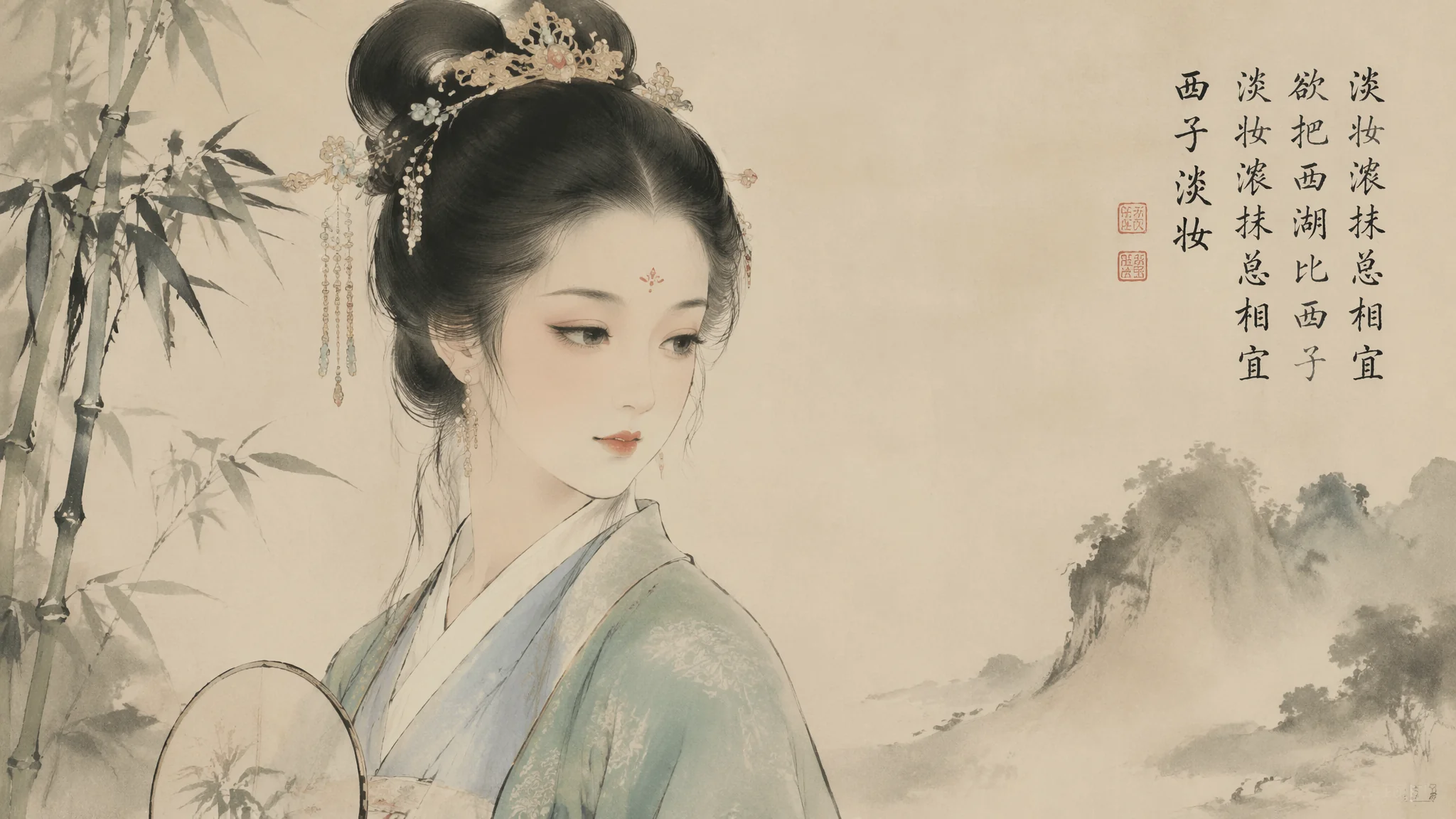
2025年春天我在敦煌莫高窟待了三天——站在第45窟的唐代彩塑面前仰头看了将近一个小时。那种感受不是在屏幕上看高清扫描图能替代的:颜料在千年氧化后的微妙色变、窟内自然光线下壁画忽明忽暗的呼吸感、以及那些被不知名的画师留在墙壁上的个人风格(某个菩萨的手指画得尤其修长,和其他窟都不一样)。回到北京后我试着用AI复刻那种"敦煌感"——第一版出来的东西让我差点把电脑关了:AI理解的"Dunhuang style"是一群穿着不中不西的"异域"舞娘在金色背景前扭动。那次翻车让我意识到:如果想让AI画出真正的"国风古韵",你必须比AI更懂中国美学——然后精确地告诉它每个细节。这篇从敦煌到宋韵,从汉服形制到工笔技法,是一份"用AI画中国风"的完整避坑指南。
朝代锚定法——用"时间坐标"取代"风格标签"
AI对"Chinese style"的理解混乱的根本原因是训练数据中的"中式"图像跨越了三千年且被大量非中国视角的"东方风"图像污染。解决这个问题的核心方法是用"朝代"作为时间坐标来锁定视觉参照系——因为AI的训练数据中,每个朝代(尤其在博物馆数字化的藏品中)有相对清晰和一致的视觉特征。"Tang Dynasty"在AI的"视觉记忆"中关联的是:丰满圆润的人物造型、高腰裙装、宽大的披帛、繁盛的花卉纹样、胡人商旅的异域元素、以及自信张扬的整体气质。"Song Dynasty"关联的是:纤细修长的人物、窄袖对襟褙子、清淡雅致的单色釉色彩体系、大面积的留白、以及内敛含蓄的文人气息。
"Ming Dynasty"关联的是:端庄规整的服饰(立领、对襟、马面裙)、繁复的织金刺绣、深沉的朱红与靛蓝配色、以及正式严谨的礼仪感。用朝代Prompt的具体示例——唐代仕女图:"a court lady of the Tang Dynasty in Chang'an——she wears a high-waisted ruqun (blouse and skirt) in vibrant red and green silk, the skirt is tied above the bust with a wide sash, a long flowing pibo (shawl) drapes over her arms and trails behind, her hair is styled in a tall elaborate updo (gaoji) adorned with gold hairpins and fresh peonies, her face has the distinctive Tang Dynasty makeup——white foundation, rouge on the cheeks, a small red flower petal shape painted between the brows (meihuazhuang), her figure is plump and rounded per Tang beauty ideals, she stands in a palace garden with peonies in bloom, Tang Dynasty tricolor-glazed pottery ornaments in the scene"。关于各朝代更详细的服饰和美学特征可以参考故宫博物院官网和上海博物馆的在线藏品数据库。
汉服形制的结构级描述——从"影楼古装"到真正的汉服
AI画出"影楼古装"而非真正汉服的症结在于:AI只学了汉服的"外观"(飘逸的布料、宽大的袖子),但没学汉服的"结构"(交领右衽、系带闭合、平面剪裁)。要让AI画出正确的汉服,需要从结构层面描述三样东西:闭合方式、剪裁逻辑和层次关系。闭合方式——汉服不使用纽扣或拉链,用系带闭合。"the garment closes with fabric ties——a pair of ribbons sewn to the inside and outside of the collar that are tied together at the side, there are no buttons no zippers no hooks, the closure is entirely soft and adjustable"。剪裁逻辑——汉服是平面剪裁(整块布料不破肩线),不是西式的立体剪裁(按人体曲线裁剪)。"the garment is cut from flat panels of fabric with straight lines——the shoulder line is continuous with no shoulder seam, the sleeves are attached with a straight seam at the shoulder, the construction follows traditional Chinese flat tailoring rather than Western darts and curves"。
层次关系——汉服是多层穿着体系,每层都有自己的名称和功能:"the figure wears three visible layers——the innermost layer is a white cross-collar undergarment (zhongyi) with narrow sleeves and a tie closure, the middle layer is the main garment (ao or shan) in colored silk, the outermost layer is a long vest or coat (beizi or dachang) worn open at the front, each layer is visible at the collar and cuffs creating a stepped effect of colors and fabrics"。具体到各朝代经典单品——唐齐胸襦裙:"Tang Dynasty high-waisted ruqun——the skirt is tied above the bust creating a high empire waistline, the blouse is tucked into the skirt, a silk pibo shawl is draped over the shoulders"。宋褙子+百迭裙:"Song Dynasty beizi (long vest worn open at front) over a matching top and a pleated skirt (baidie qun), the overall silhouette is slender and vertical, the color palette is light and elegant——celadon green, moon white, pale lavender"。明袄裙+马面裙:"Ming Dynasty aoqun with a cross-collar top and a mamian qun (horse-face skirt) featuring flat front and back panels with sharp knife pleats at the sides, the skirt has a woven or embroidered horizontal band near the hem (lan), the color combination is rich and formal——deep red and navy blue"。更多汉服各朝代形制细节见AI汉服风格指南。
四种国风美学的Prompt深度拆解
敦煌壁画风——"大漠中的神圣与华美":"in the style of Dunhuang Mogao Caves mural art, a celestial being (feitian/apsara) floating in the sky, the figure wears flowing scarves and ribbons that defy gravity——the ribbons twist and spiral in the air as if moved by an unseen divine wind, the color palette is the signature Dunhuang combination——mineral azurite blue, malachite green, cinnabar red, and gold leaf accents, the colors have a matte fresco-like quality with the texture of aged plaster visible, the figure's body is curved in a graceful 'S' shape, the hands hold a pipa (Chinese lute) behind the back in the iconic 'reverse pipa' pose, the background features stylized clouds and lotus petals in repetitive patterns, the overall feel is sacred opulent and timeless——a glimpse of paradise as imagined by Silk Road civilizations"。敦煌艺术的权威参考资料见敦煌研究院数字敦煌项目。
宋韵文人画风——"少即是多的美学巅峰":"in the style of Song Dynasty literati painting (wenrenhua)——a scholar sitting alone in a small pavilion by a misty lake, the composition follows the 'one corner' principle——the pavilion and the figure occupy only the lower right corner, the rest of the scroll is mist and empty space suggesting endless water and sky, the brushwork is loose and expressive——trees are suggested with a few dark ink dots, mountains are pale silhouettes fading into the mist, the coloring is near-monochrome with subtle warm grays and soft ink washes, a single bare willow branch enters the frame from the upper left, the mood is solitude and harmony with nature——the figure is tiny against the vastness, a red seal stamp and a few lines of calligraphy balance the lower left corner, the silk or paper support shows subtle signs of age——a warm ivory tone, faint water stains"。宋韵美学可以参考台北故宫博物院和北京故宫的宋代绘画馆藏——台北故宫官网有大量高清宋画资源。
水墨写意风——"用AI模拟笔墨纸砚的意外之美":"ink wash painting (shuimo) of a lotus pond——the lotus leaves are painted with broad wet brushstrokes that bleed into the absorbent xuan paper, the lotus flowers are outlined with a few swift dry-brush strokes——the line breaks and skips where the brush ran out of ink, the water is suggested by the negative space with a few horizontal ink lines for ripples, a dragonfly hovers above the scene painted with impossibly fine detail that contrasts with the bold loose brushwork of the leaves, the ink ranges from the deepest concentrated black to the palest ghost-gray, splashes and accidental ink drops are preserved as part of the aesthetic, the paper has a warm aged tone, a red artist's seal and a poetic inscription in running script (xingshu) balance the composition"。水墨风的更多技法见AI水墨绘画。
工笔重彩风——"精细入微的极致之美":"gongbi fine brushwork painting of a peony and a butterfly——the peony petals are rendered with meticulous detail——each petal is outlined with an even controlled line and filled with color that transitions smoothly from deep pink at the base to pale pink at the edge, the color is applied in the traditional 'three whites' technique——white powder is added to the tips of the petals, the veins of the leaves are painted with hair-thin gold lines, the butterfly's wing scales are individually suggested with tiny dots of color, there is no visible brushstroke——the surface is smooth and flawless like silk embroidery, the silk ground has a warm luster, the overall effect is one of exquisite craftsmanship and patience"。工笔画的特点在AI工笔画指南中有专门分析。
古典元素的"意"与"形"——用AI传达东方美学的精神内核
画国风最容易犯的错误是堆砌元素——把梅花、竹子、月亮、亭子、汉服、灯笼全部塞进一张图,结果像古风素材网站的目录页。真正的东方古典美学讲究的是"少胜多"、"意在笔先"、"计白当黑"——用最少的元素传递最丰富的意境。这个精神内核在Prompt中如何体现?"梅"——不是"there is a plum tree",而是:"a single branch of winter plum blossoms enters the frame from the upper right corner——only 7 or 8 blossoms are painted, some fully open and some still in bud, the branch is gnarled and ancient with rough bark suggesting decades of harsh winters, the blossoms are the only warm element in an otherwise monochrome winter scene, the meaning is resilience and hope——beauty that blooms in adversity"。
"竹"——不是"a bamboo grove",而是:"three stalks of bamboo growing from behind a rock——the bamboo is painted in monochrome ink without green color, the joints are indicated by a slight thickening of the line, the leaves are painted with swift precise strokes——each leaf is a single brush movement, the bamboo bends slightly in an unseen wind, the meaning is integrity and flexibility——a person of character bends but does not break"。"月"——不是"full moon in the sky",而是:"the moon is a pale silver disc behind a thin veil of clouds——it is not the subject of the painting but a quiet presence, its light softens the edges of the landscape below, the moon's reflection in the water is a broken shimmering line, the moon in Chinese art represents longing and the passage of time——it is rarely just a celestial body"。每个古典元素都应该承载"意"而不仅是"形"——这是区分"有灵魂的国风"和"元素的堆砌"的关键。更多关于东方美学的精神内核见AI东方美学指南。
常见问题
AI画的古风脸总是"现代人穿古装"——怎么画出古代人的气质?
古代人的"气质"来自三个现代人没有的特征。一,面部骨骼——古代人(在营养不如现代的年代)面部骨骼通常更纤细、咬肌不发达(没有现代人嚼硬食物和磨牙的习惯)、下颌更窄——"a refined delicate facial bone structure with a narrow jaw and less developed masseter muscles, the face has the slender proportions seen in classical Chinese portrait paintings"。二,表情——古代社会对情感表达的规范更严格,表情更内敛——"the expression is composed and restrained——emotions are suggested rather than displayed, the face is a mask of calm with the subtlest hint of inner feeling, this is the 'face culture' of classical Chinese society where self-control is a virtue"。三,眼神——没有现代人看屏幕的"近距离聚焦"习惯,古代人的眼神更远、更散——"the eyes have a distant unfocused quality——this is the gaze of someone who spends their time looking at mountains and horizons not screens and walls, the eyes are calm with no urgency"。这三层修改叠加后,"现代感"会明显消退。
国风画面中的书法/题字——AI能写中文吗?怎么处理?
AI目前写中文的能力仍然很差——大概率会生成"像汉字但不是字"的符号。处理建议:不要把书法放在画面中——用ControlNet或img2img inpaint保留画面其余部分,然后用手写在PS里添加题字(如果你自己不会写书法,可以在书法字体生成工具中输入你的诗词文字,调整成合适的手写书法风格)。如果你一定要让AI尝试写中文——在Prompt中加入"a few characters of Chinese calligraphy in xingshu (running script) style in the corner"——降低对"文字正确"的期望,享受它的"抽象线条感"。事实上,很多古代画作上的题字对于非中文读者来说也首先是"视觉元素"而不是"阅读内容"。
国风角色的"仙气"怎么通过Prompt表现——那种不食人间烟火的感觉?
仙气的核心是"摆脱重力的视觉暗示"。三个关键Prompt元素:一,衣物的反重力飘动——"the robes and ribbons float and drift as if underwater or in zero gravity——the fabric is moved by a breeze that does not exist in the mortal world, the movement is slow and ethereal not sharp and wind-driven"。二,身体与地面的关系——"the figure barely touches the ground——the feet hover a few inches above the surface, or only the tip of one toe makes contact with a leaf or a petal, the body has no weight"。三,光的来源——"the figure seems to emit its own soft inner light——a subtle pearlescent glow radiates from the skin, as if the person is illuminated from within rather than by an external source, the light is cool and silvery"。加上环境——"the air around the figure is slightly misty or hazy, as if the atmosphere itself is thinner and purer than normal air"。这四种元素叠加就构成了"仙气"的视觉定义:没有重力、自带光源、呼吸不同的空气。