AI古风女孩绘画进阶:汉服仕女与古典美女的唯美角色视觉设计
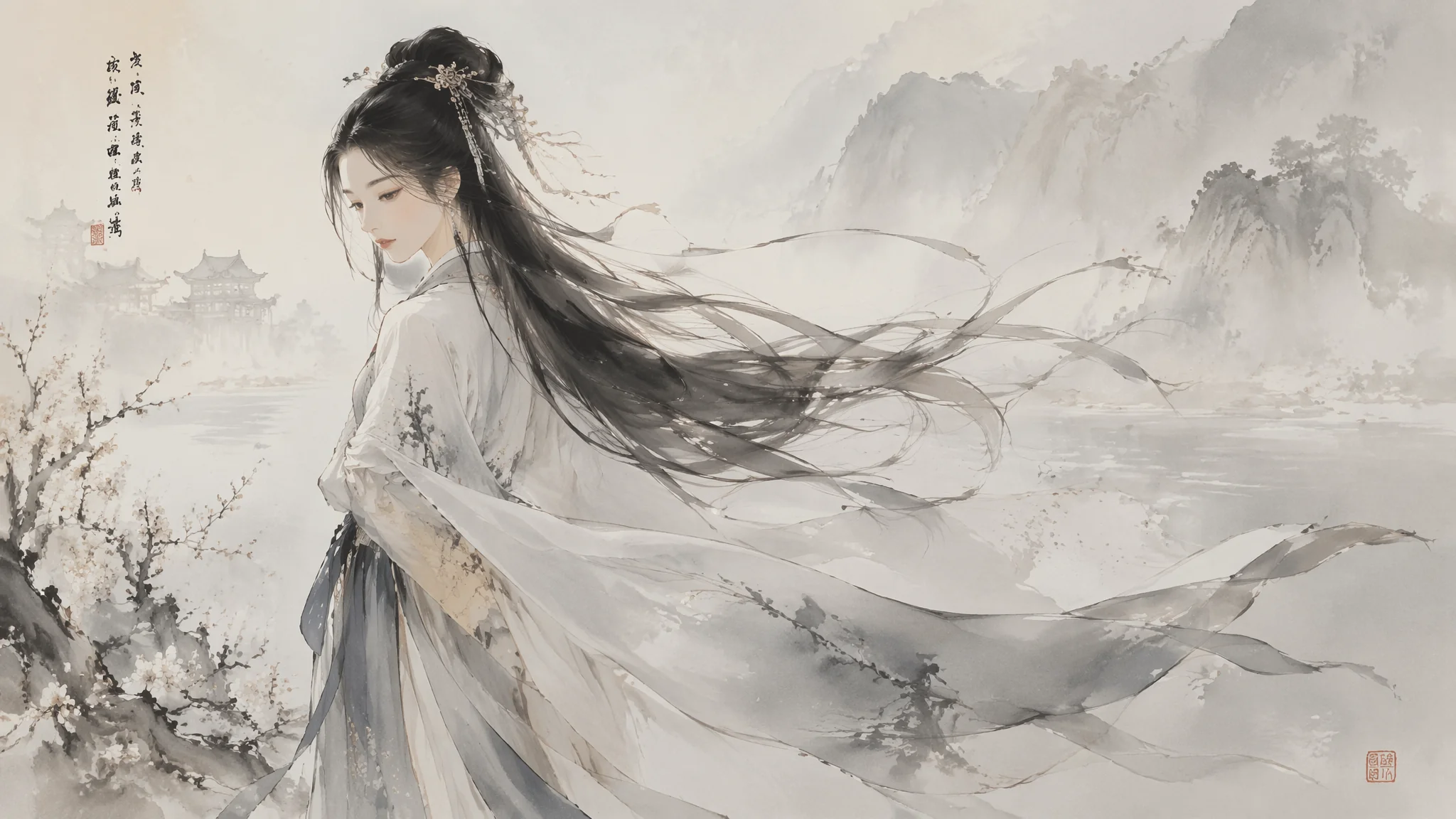
画了一年古风女孩,最深的感受是——古风AI绘画有两个世界:一个是小红书和抖音上铺天盖地的"桃花妆+飞天髻+粉色纱裙"的流量公式组合,好看但不经看;另一个是博物馆里那些真正让你停下来的古代女性形象——她们的美不依赖磨皮滤镜,不靠花瓣飘落特效,光是一个侧脸、一个手势,就能让你脑补出一整段故事。这篇文章写给已经把"基础古风"跑腻了、想在历史质感和人物深度上再往前走一步的人。
古风女性AI绘画有一个很隐蔽的陷阱:越往"唯美"方向写Prompt,画面反而越廉价。因为AI训练数据里"Chinese ancient beauty"标签下最密集的图片就是各种廉价古风手游的立绘和影楼写真——大眼尖脸、过度磨皮、衣袂飘飘但毫无质感。去年有一次我花了一整个下午用AI生成古风仕女图,prompt里写了七八个"beautiful""elegant""ethereal"之类的美化词,出来的五十张图没有一张能用的——全部是那种"一眼AI"的塑料古风味。后来我换了个思路:把所有的美化词全删掉,只写具体的朝代、服饰、发型和场景,prompt从八十个词精简到三十个词,出来的第一张图就让我愣了半天——那个女孩看起来像一个真实存在过的古人。要跳出这个陷阱只有一个办法:把自己的视觉参考从"网络古风图"切换到"古画、博物馆实物和考据资料"。不需要具备专业的历史学知识,但你需要至少知道哪个朝代的女装长什么样、什么发髻对应什么身份、以及古人拿扇子的手势和现代人完全不一样。
唐风仕女——丰腴之美与盛唐气象的视觉密码
唐风女性角色的三个核心视觉锚点:丰腴圆润的面部和体态(不是肥胖是"面如满月"的饱满感)、高腰齐胸的裙装把视觉重心提到胸线以上、以及花钿+面靥+斜红的完整妆容体系。写唐风仕女的第一个关键点是体态——必须明确写"full-figured Tang dynasty aesthetic"而不是通用的"slim beautiful woman"。体态写法:"a Tang dynasty noblewoman with the celebrated full figure of the era, round face with soft full cheeks like the full moon, a soft double chin considered the height of beauty, the body plump and voluptuous beneath the robes, the overall impression one of abundance and prosperity rather than delicacy"。妆容写法:"the complete Tang dynasty makeup, a red flower-petal huadian ornament painted on the forehead between the brows, small decorative mianye dimple dots painted at the corners of the mouth, the xiehong rouge swept diagonally upward from the cheek toward the temple like a pink wing, the lips painted in a small cherry-red bow shape, the eyebrows thick and sweeping like distant mountains"。服饰写法加腰线约束:"high-waisted qixiong ruqun skirt with the waistline tied above the bust, the bodice of the skirt wrapping high on the chest, a wide-sleeved sheer daxiushan robe worn open over the ensemble"。唐风女性最难掌握的是"丰满但不沉重"的平衡——在AI古风绘画里有更多体态气质的控制技巧。
宋韵才女——清冷书卷气与克制美学
宋代女性的美和唐代完全相反——纤细清瘦的体态、简洁素雅的服饰、内敛含蓄的表情,整个人的视觉气质像一首淡墨写意的词。宋制服饰写法:"a Song dynasty scholarly woman in a simple beizi open-front long jacket of muted celadon or moon-white, the fabric lightweight ramie or fine silk with a matte texture and no embroidery, the silhouette slender and elongated, the overall effect one of refined modesty"。妆容写法:"the minimal makeup of Song dynasty aesthetics, the face nearly bare with only a light dusting of rice powder, the natural lip color showing through faintly, the eyebrows painted in a distant-mountain style that is soft and slightly downturned at the ends, the beauty is in the restraint, not the decoration"。场景是宋韵的灵魂——要让角色融入一个"有文化的环境"而不是"一张漂亮的背景":"seated at a weathered wooden desk by a latticed window, an open poetry book before her, a simple celadon-glazed cup of tea growing cold beside the scroll, outside the window the silhouette of bamboo in light rain"。关于宋代服饰形制更详细的拆解,AI汉服古风里有从褙子到百迭裙的完整穿搭体系。
明制闺秀——端庄华贵中的内敛力量
明代女性角色的视觉特质可以概括为三个词:端庄(不怒自威的气场)、精致(服饰上繁而不乱的刺绣和织金工艺)、沉稳(色彩华贵但不轻浮)。明制核心单品是立领对襟袄和马面裙——这两件单品的组合是明代女性最经典的视觉符号。写法:"a Ming dynasty young noblewoman in a standing-collar duijin ao jacket of deep sapphire blue with subtle gold-thread embroidery along the collar and sleeve edges, the jacket fitted and structured, beneath it a mamian pleated skirt of dark red brocade with the characteristic flat front panel and deep side pleats"。比服装更重要的是气质——明代大家闺秀的"端庄"不是面无表情而是"有威仪但不凌厉":"the bearing is dignified and composed, the gaze level and direct but not challenging, the posture perfectly upright with shoulders back and chin level, a young woman who has been raised to command respect through presence rather than words"。更多明制服饰的细节,AI男汉服绘画里的明代男装形制可作为对比参考,理解明代整体服饰美学。
手姿与道具——被忽略的古风叙事工具
古风女性角色最容易出戏的地方是手——AI默认的"优雅女性手势"通常是现代礼仪训练出来的兰花指或摆拍手势,和古代中国女性的手部动作不是一个体系。执扇:"the hand holding a round silk tuanfan fan with a delicate grip, fingers relaxed and slightly curved around the handle, the fan partially obscuring the lower face in the traditional gesture of modesty, the wrist bent at a natural angle"。抚琴:"both hands poised over a guqin zither, the left hand pressing a string at a harmonic node, the right hand plucking with the nail, the fingers positioned precisely as a trained musician would place them"。研墨:"one hand holding an inkstick upright grinding in slow circular motions on an inkstone, the other sleeve held back with the opposite hand in the classic gesture of scholar's concentration, a few drops of water catching the light on the dark inkstone surface"。这三个手势每一个都是一个小叙事——执扇是社交中的含蓄、抚琴是独处时的表达、研墨是创作前的准备。关于古风道具的更多用法,在China Daily文化频道可以搜到大量中国传统手工艺的英文描述。另一个很好的古风参考来源是大都会博物馆亚洲艺术部——高清扫描的《捣练图》《簪花仕女图》等唐代仕女画对理解古代女性的姿态和服饰有不可替代的参考价值。
常见问题
古风女孩总是画成"同一个模子"——换朝代换不了气质怎么办?
在朝代特征的Prompt里加入体态和比例的明确约束。唐风加"full figure with soft rounded contours",宋风加"slender elongated silhouette with quiet grace",明风加"dignified upright posture with structured garments"。不同朝代对女性体态的审美完全不同,只换衣服不换体态气质等于没换朝代。
AI画古风手总是畸形的——手指多一根或者扭曲怎么办?
手是AI的经典弱项。避开正面手势特写,用道具(扇子、书卷、琴)让手处于半遮挡状态,把手的面积控制在画面的5%以下。如果非要画手,加"elegant refined hands with five clearly defined fingers, anatomically natural hand proportions"并在负面填"extra fingers, fused fingers, distorted hands"。
古风背景太单调——不是飘花瓣就是假山水怎么办?
用古画的具体画种和构图来替代通用描述——"landscape in the style of Wang Ximeng's Thousand Li of Rivers and Mountains, blue-green shanshui painting technique, layered mountain ranges receding into mist"比"Chinese landscape background"强一百倍。
古风女孩画到后面你会发现——真正动人的不是衣服多华丽、妆容多精致,而是画面里那个女孩看起来像一个"曾经活过的人"。唐女的张扬自信、宋女的清冷才情、明女的端庄力量——每一种都是真实历史上存在过的女性气质。把这种"人味儿"画出来,比把裙子画得更飘、花瓣加得更多重要一百倍。我做了大半年古风AI绘画之后回头看最早期的作品,最大的差距就是"人味儿"——早期作品一看就是AI生成的精美插图,后期作品有时候自己看了也会愣一下,觉得画里的人好像认识。这个质变不是技术提升带来的,是看了足够多的古画和文物之后,对"古人长什么样"有了一种直觉。这种直觉没办法速成,但它会慢慢长出来。如果你刚开始画古风女孩,建议先去博物馆的线上数字展厅逛一圈——故宫博物院和台北故宫的网站上有大量高清古画可以免费浏览,不用出门就能建立最基本的朝代审美直觉。