AI古风男性绘画进阶:汉服侠客与古装美男的精致角色视觉设计
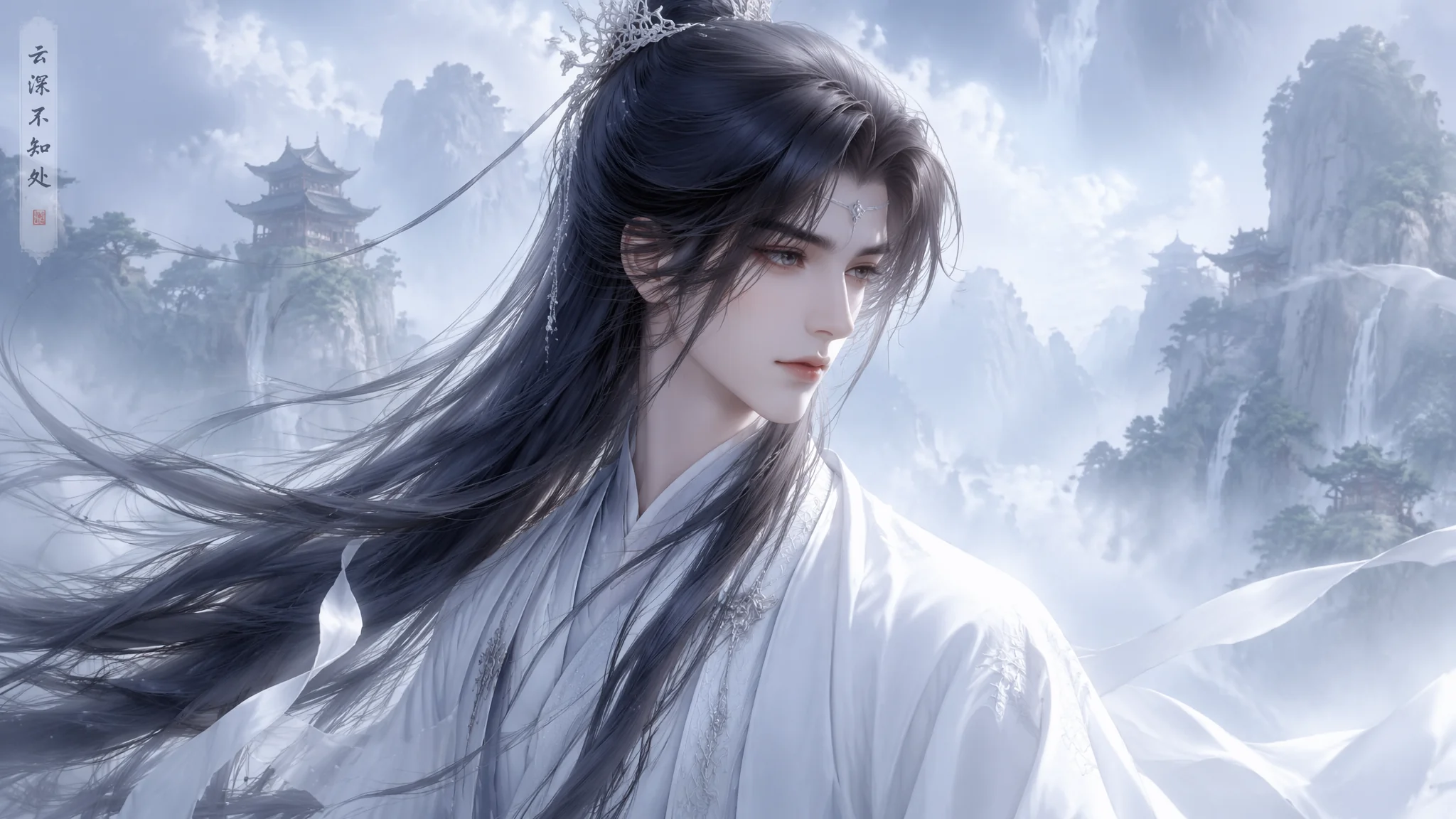
画古风男角色这件事,我在过去半年里踩的坑比画女角色多十倍。原因很简单:AI训练数据里古风女性素材铺天盖地,古风男性却少得可怜——这就导致你写"古风美男"它给你一张带着女相的脸,写"侠客"它给你一个穿着影楼装的现代人,写"将军"出来的铠甲像纸板做的。三个月前接了一个古风乙女游戏的角色设计需求,十二个男性角色——从白衣谋士到黑甲将军到红衣魔尊——每个都要穿不同朝代的汉服、拿不同类型的武器、表达完全不同的气质。那段时间我每天凌晨两点还在改Prompt,最大的收获是摸索出了一套专门针对AI"男性古风化"的纠偏技巧。这篇就是那十二个角色的经验总汇——从"怎么让它画出男人"到"怎么让它画出对的那个朝代的男人"。
男性面部骨骼——用解剖学词打败AI的"古风女相化"
AI画古风男性最顽固的毛病就是把男性画成"女扮男装"。根源不是Prompt写得不够美,是你没告诉AI男性颅骨的物理结构。我试过所有气质词——"heroic""masculine""handsome""cold and elegant"——都没有解剖学术语好用。
必须放在Prompt里的男性骨骼特征词:"prominent brow ridge casting subtle shadow over eyes, defined jawline with visible angularity at the gonial angle, broader and flatter nose bridge compared to feminine nose, slightly squared chin with a subtle cleft, visible Adam's apple on the neck, broader shoulders creating a clear V-shaped torso silhouette"。如果你走的是"俊美型"古风男(比如白衣公子型)——保留眉骨和下颌角的描述但降低强度:"refined brow ridge still distinctly masculine, elegant but angular jaw, slender but not delicate facial structure, the beauty is of a sharp and cool kind not soft and warm"。关键区别:sharp vs soft——古风美男的"美"是锋利的、冷冽的,不是柔和的、温暖的。负面Prompt必须有:"feminine facial structure, soft rounded jaw, narrow shoulders, delicate neck, smooth brow without definition, androgynous features, girly face on male body"。基础古风角色知识在AI古风男性绘画基础教程里有完整覆盖,这篇侧重进阶精修。
汉服男装材质——从布料到金属的跨材质Prompt体系
古风男装的层次感来自材质对比:棉麻内衬的粗糙、丝绸外袍的光泽、皮革护腕的哑光、金属护甲的冷硬——如果一个Prompt里只有"red robe"两个字,AI给出的就是一块红色平面,没有褶皱、没有厚度、没有材质。
布衣侠客(行走江湖的实用派):"worn cotton inner garment with visible weave texture, hemp outer robe with slightly rough surface and natural undyed beige color, leather bracers with visible grain and stitch marks, straw sandals with braided texture, the clothing is practical and weathered not decorative"。锦袍公子(世家贵族的精致感):"silk damask outer robe with subtle woven cloud patterns visible only when light hits the surface, jade-green inner lining peeking at collar and cuffs, silver-thread embroidery along hem catching light, the fabric drapes heavily suggesting quality and weight, a jade pendant tied to the waist belt with intricate knot work"。铠甲将军(战场的金属感):"lamellar armor made of overlapping iron plates laced with darkened leather cords, each plate showing subtle hammer marks and edge wear, shoulder guards with beast-head ornamentation in bronze, crimson fabric visible at joints where armor plates separate, the armor is battle-worn with scratches but meticulously maintained"。材质对比是男装古风Prompt里最重要的技巧——软硬、粗细、光泽哑光——对比越多画面越"贵"。丝绸材质的参考可以在大都会博物馆的亚洲纺织品数据库里找到高清纹理图,对写Prompt的材质词极有帮助。
发型与发冠——古风男性的"身份标识"
如果说女性古风的身份标识是发髻和发饰,男性古风的标识就是发冠和束发方式。一个玉冠加簪的造型和一个布带束发的造型放到同一个角色身上——前者是王公贵族,后者是江湖浪子。发冠的形状、材质、高度直接决定了角色的社会阶层。
玉冠(贵族/官员):"jade hair crown with subtle carving of cloud motifs, hair pulled up neatly into a topknot secured by a horizontal jade hairpin, not a single hair out of place suggesting strict discipline and high status, the crown has a slight translucent quality when backlit"。银冠(少侠/青年将领):"silver hair crown with clean geometric lines and minimal ornamentation, high ponytail flowing from the crown, a few loose strands framing the face to suggest youth and energy, the silver has a matte brushed finish not high polish"。布带束发(平民/隐士):"simple dark blue cloth strip tying hair into a casual high ponytail, some hair escaping the tie and falling across the shoulders, the cloth is slightly frayed at the edges, this is the hairstyle of someone who doesn't spend time in front of a mirror"。散发(魔尊/狂士/战后):"long black hair completely loose and flowing wildly, partially obscuring the face, hair moves as if caught in an unseen wind, a few strands stick to the forehead with sweat or blood, this is not styled beauty but raw uncontrolled energy"。发型的文化内涵在AI古风美男绘画教程里有更详细的朝代发型对照。
武器作为角色锚点——让兵器成为角色的"第二张脸"
古风男角色手里的兵器不是道具——它是性格的外化。长剑修长优雅配君子,重刀厚重粗犷配猛将,折扇轻巧写意配谋士。武器的形态和角色的体型、气质必须呼应,否则强行让一个清瘦书生扛着门板大的巨剑——AI不会觉得违和,但观众会。
长剑(君子/剑客):"jian sword with slender double-edged blade, the blade has a subtle frost-like hamon pattern, hilt wrapped in dark blue silk cord with a white jade pommel, the sword is held with relaxed confidence, the hand knows this weapon intimately"。重刀(猛将/悍匪):"dadao heavy saber with broad curved single-edged blade, the spine of the blade is thick and unpolished, a red sash tied to the ring pommel, the weapon rests across the shoulder suggesting its weight, the wielder's forearm shows the muscle definition of someone who swings this daily"。折扇(谋士/雅士):"folding fan with bamboo ribs and rice paper surface, ink calligraphy partially visible on the fan face, held open at chest level with elegant finger positioning, the fan is both an accessory and a subtle weapon——the ribs are reinforced with thin steel"。更多武器绘画细节参考ArtStation上搜"chinese sword concept art",能看到专业概念设计师如何把中国兵器做出真实质感和文化韵味。
不同朝代风格的系统化Prompt模板
每个朝代的古风男性有自己的"视觉关键词组合"——汉代是古朴厚重、唐代是雄健华美、宋代是清雅克制、明代是端庄精致。你用唐风Prompt去画一个"清冷禁欲"的角色——出来的效果天然对不上。
汉风男:"Western Han dynasty style male, deep cross-collar robe in dark earthy tones, wide sleeves draping heavily, plain fabric without patterns, a sword worn at the waist with a simple bronze guard, hair in a simple bun with a plain wooden hairpin, the overall feeling is restrained power and ancient solemnity"。唐风男:"Tang dynasty style male, round-collar robe in vibrant vermillion with floral pattern woven into silk, leather belt with ornate gold plaques, boots with upturned toes, hair in a high topknot with a golden crown, confident open posture, the Tang aesthetic is bold and expansive"。宋风男:"Song dynasty style male, straight-collar long robe in soft celadon green or muted indigo, narrow sleeves for practicality, scholar's cap with horizontal brim, holding a scroll or book, standing near a window with bamboo outside, the aesthetic is intellectual and introverted"。明风男:"Ming dynasty style male, round-collar official robe with mandarin square badge, wide腰带 with jade buckle, black gauze cap with wing-like extensions, upright posture with hands clasped behind back, the aesthetic is formal and dignified"。选择朝代风格的依据不是"哪个朝代好看"而是"角色性格匹配哪个朝代的美学气质"。更多朝代视觉区分在AI古风插画绘画教程里有朝代视觉元素对照表。
常见问题
古风男角色的手画出来总是畸形怎么办?
AI画手是通病,古风男装大袖子还多了一层困难——袖子飘动和手部动作经常被AI混成一个东西。解法:把手的动作和袖子的动作在Prompt里物理隔离——"hand holding sword hilt is outside the sleeve, sleeve fabric falls back to reveal forearm, the hand must be clearly visible and separate from any fabric"。手和袖子之间的空间关系必须用"outside""separate""reveal"这种空间词明确标注。
怎么画出"战损"状态又不变成血腥恐怖?
战损的精髓不是血多,是"精致的东西被破坏了"。白衣上三道整齐的剑痕、发冠歪了但没掉、嘴角一丝血迹已经干涸——这些比浑身是血的画面更有叙事力量。Prompt控制:"battle-worn but not gory, three clean sword cuts across the robe revealing inner layer, a thin dried trail of blood from the corner of the mouth, disheveled hair but eyes still sharp and alert, the damage suggests a hard fight but the will is unbroken"。
多个古风男角色同框怎么避免"复制人"问题?
用对比法而非逐个描述。先定义差异维度——身高差、体型差、色系差、武器差——然后在Prompt里用对比句式:"three male figures, left: tall and broad with heavy armor and battle axe, center: lean and elegant with white robes and jian sword, right: short and wiry with dark assassin garb and twin daggers, each has distinctly different silhouette, height, and color scheme"。对比法比逐个描述效率高——AI理解"对比"比理解"各自长什么样"更容易。
画了大半年古风男角色,最大的心得是一个反常识的结论:古风男性的"好看"不在五官有多精致——而在骨骼结构和材质对比。眉骨、下颌角、肩宽——这三个解剖学指标达标了,脸稍微模糊一点观众都觉得"这是个帅的"。丝绸和皮革、玉和铁、血和雪——材质之间的张力才是古风男性视觉的底层密码。去试试,先把"handsome ancient Chinese man"从你的Prompt里删掉,换成"prominent brow ridge and layered contrasting fabrics",看看差异有多大。