AI港口码头绘画:水岸船舶与工业场景的壮阔视觉效果
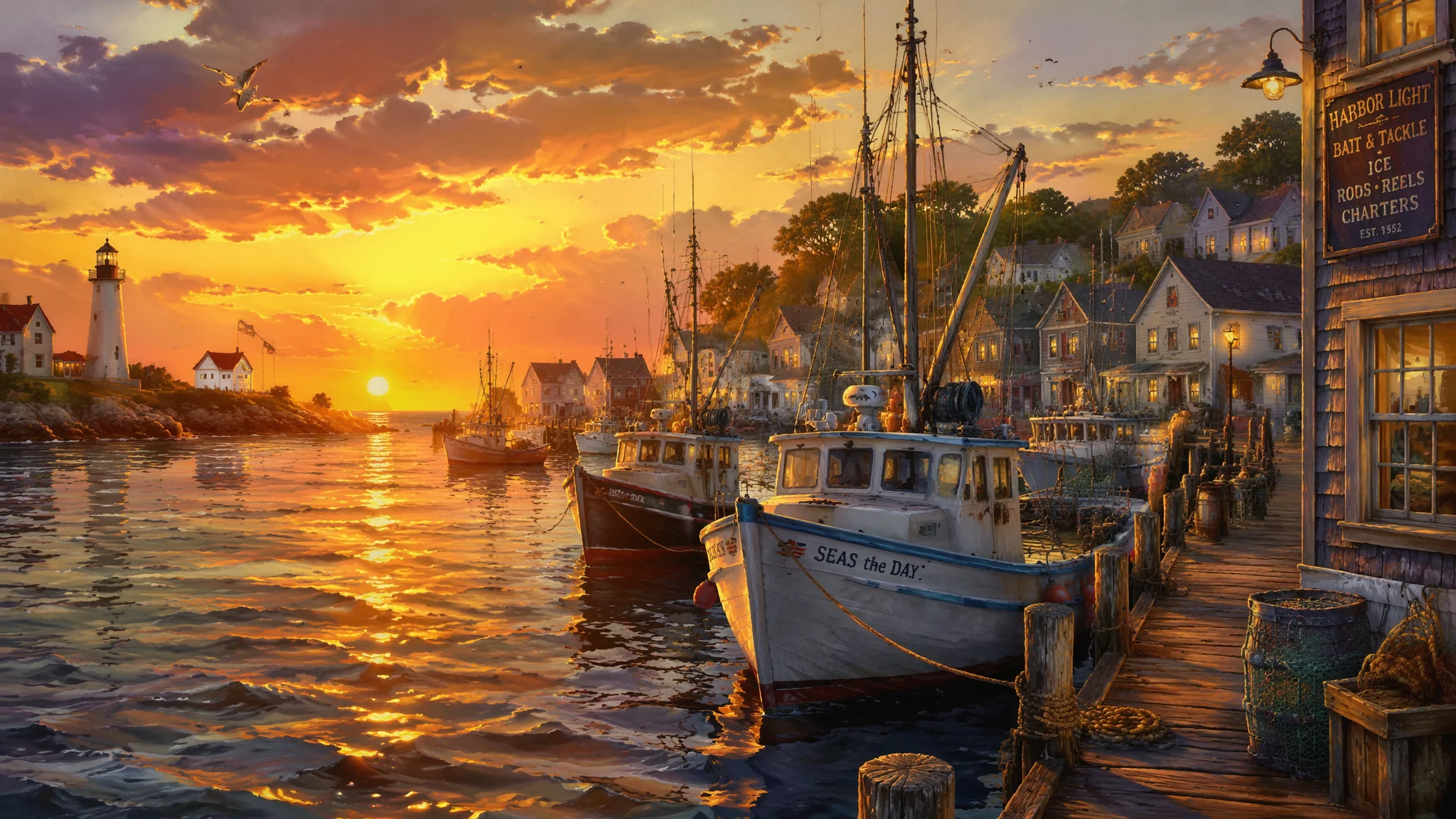
简单说:AI画港口码头的核心逻辑就两条——"秩序感"和"材质对比"。工业港靠集装箱排列、起重机轮廓和几何码头线来建立秩序,渔港靠木质渔船、绳网和斑驳水面的材质对比来营造烟火气。两条路线提示词完全不同,但都有一个共同的坑:水面的倒影处理。
我爸做了三十年港口调度,小时候我经常跟着他去码头。那些巨大的集装箱吊机、密密麻麻的货柜堆场、黄昏时分水面上的柴油光泽——这些画面刻在了我脑子里。后来学AI绘画,我第一个尝试的"记忆复刻"就是这些港口场景。结果AI给了我一个主题公园码头——全是彩色小帆船和木栈道,跟我记忆里那个充满钢铁和铁锈的工业码头完全是两个世界。试了差不多三十组提示词才摸清门道。
工业港口的钢铁质感:集装箱、吊机与几何秩序
工业港口的核心美感在于"秩序化的庞然大物"——成千上万的集装箱按颜色和方向排列,巨型桥吊像钢铁恐龙一样站在水边,这种尺度感和秩序感是工业港最独特的视觉语言。集装箱场景的关键词:"aerial view of container terminal, thousands of colorful shipping containers stacked in perfect geometric rows, massive gantry cranes towering over the yard, industrial scale and precision, overcast sky with soft diffused light reducing harsh shadows"。注意我用了"overcast sky"——阴天柔光能避免集装箱彩色表面产生过强的反光和阴影,让整体画面更干净。桥吊特写的关键词:"low angle shot looking up at massive red container crane against grey sky, industrial machinery detail, steel cables and pulley systems visible, monumental scale, dramatic perspective emphasizing height"。关于工业风的更多表现手法,AI建筑与工业场景绘画指南里有非常系统的介绍。
渔港码头的烟火气:木船、绳网与斑驳水面
渔港和工业港是两种完全不同的审美——渔港的美在于"旧的质感"和"人的痕迹",木质渔船的磨损、渔网的编织纹理、漂浮的泡沫和水面的油彩反光。渔船关键词:"traditional wooden fishing boats with peeling paint and weathered hull texture, colorful buoys and tangled fishing nets on deck, early morning light reflecting off calm harbor water"。水面关键词:"harbor water with subtle oil slick rainbow reflections, floating debris and foam near dock edges, lapping waves against weathered wooden piers, dark teal water with murky depth"。码头细节关键词:"old fishing dock with worn wooden planks and coiled ropes, rusty cleats and mooring posts, seagulls perched on weathered pilings, fish market atmosphere in background"。材质做旧技巧在AI绘画材质纹理渲染进阶指南里有全面的拆解,渔港场景特别依赖这些做旧手法。
水面倒影:港口绘画的"第一坑"
港口场景里水面占画面面积通常超过30%,倒影处理不好整个画面就废了。平静水面倒影:"calm harbor water with mirror-like reflections of docked ships and cranes, glassy surface with subtle ripples breaking the reflections, early morning stillness"。波动水面倒影:"choppy water surface with fragmented light reflections, broken ship reflections scattered by small waves, wind creating texture on dark harbor water"。夜景水面倒影:"night harbor with long exposure effect on water, blurred light trails from ship lights reflecting on dark water surface, industrial lights creating warm orange reflections against cool blue water"。关键技巧:永远不要只写"reflection"——你必须告诉AI水面是平静还是波动、反射是完整还是破碎。不加这些限定词AI默认给一面完美的镜子,看着假得不行。水面渲染的更多技巧可以看AI绘画水面与水滴渲染完全指南。
港口天气系统:雾、雨、夕阳与夜景
同一个港口在不同天气和时段下是四个完全不同的画面——天气是港口绘画的情绪开关。晨雾港:"misty morning at industrial port, fog rolling between container stacks and cranes, muted colors and reduced visibility, mysterious calm atmosphere, soft grey and pale blue palette"。暴雨港:"heavy rain lashing against docked cargo ships, stormy dark sky with lightning in distance, wet reflective surfaces everywhere, dramatic contrast between warm interior ship lights and cold exterior storm"。夕阳港:"spectacular sunset behind port skyline, silhouettes of cranes and ships against blazing orange and purple sky, golden light path across water, end of work day atmosphere"。夜景港:"night view of illuminated container port, thousands of industrial lights creating a futuristic cityscape of cargo operations, yellow sodium vapor lamp glow, long exposure light streaks from moving vehicles"。我在做港口系列时发现了一个规律:把天气词和时段词叠加使用效果最好,比如"foggy dawn port"比单独的"fog"或"dawn"画面质量高一个档次。关于AI绘画中环境氛围的塑造,NOAA气象网站的云层分类图对我理解不同云型的外观特征帮助很大。
船舶结构:避免"四不像"船只的提示词策略
AI画船最大的问题是它会把各种船的零件混合在一起——集装箱船的头、帆船的桅杆、渔船的船体拼成一个怪物。解决方案是写清楚船型和关键识别特征。集装箱船:"large modern container ship, flat wide deck stacked with colorful shipping containers, tall bridge structure at stern, bulbous bow visible below waterline"。散货船:"bulk carrier ship with open cargo holds filled with coal or grain, large derricks and conveyor equipment on deck, utilitarian industrial design"。传统帆船(历史港口):"tall ship with three masts and full square rigged sails, wooden hull with copper sheathing, historical 19th century sailing vessel, intricate rigging lines against sky"。拖船:"sturdy harbor tugboat with oversized engine and thick rubber fenders, pushing against a much larger vessel, churning water with powerful propeller"。船型越具体,AI翻车的概率越低。我最早做港口系列的时候犯过一个低级错误——把"cargo ship"和"fishing boat"写在同一句提示词里,结果AI给了我一艘集装箱船上面挂着渔网、甲板上还晒着鱼干的怪物。后来学乖了,每次只写一种船型,画完再换。这个教训适用于所有AI绘画题材:一个画面里主体类型只能有一个,多了AI就开始乱炖。可以去MarineTraffic看看不同船型的真实外观和比例关系,对写提示词非常有帮助。
常见问题
AI港口绘画的常见问题集中在船型准确性、水面质感和商业应用方面。AI画的船为什么经常多一根桅杆或者少一个烟囱?
这是AI对船舶结构缺乏精确理解的典型表现。最有效的应对策略是在negative prompt里直接写"extra masts, missing funnels, distorted ship proportions, asymmetrical vessel structure"。另外用ControlNet(SD)或region-based提示(MJ的Vary Region功能)对船体部分做局部重绘也能修正结构错误。
港口场景适合用哪种画幅比例?
宽画幅(16:9或21:9)在港口场景里优势巨大——港口本身就是横向展开的空间,宽画幅能把码头岸线的延伸感和船舶的水平线条充分展现。竖幅(3:4或9:16)适合表现单艘巨轮的纵深感,从船头到船尾的透视压缩非常震撼。
AI港口图可以做物流公司的宣传素材吗?
可以,但需要注意地标和标识问题。AI生成的港口不是真实存在的港口,这是优势(没有版权问题)也是劣势(不能用来展示真实的设施)。建议作为概念氛围图使用,搭配实拍照片。商业授权方面SD本地部署最自由,MJ付费版也允许商业使用。
觉得有用的话分享给朋友吧。