AI非遗文化绘画:中国非物质文化遗产的AI数字化保护与视觉传播
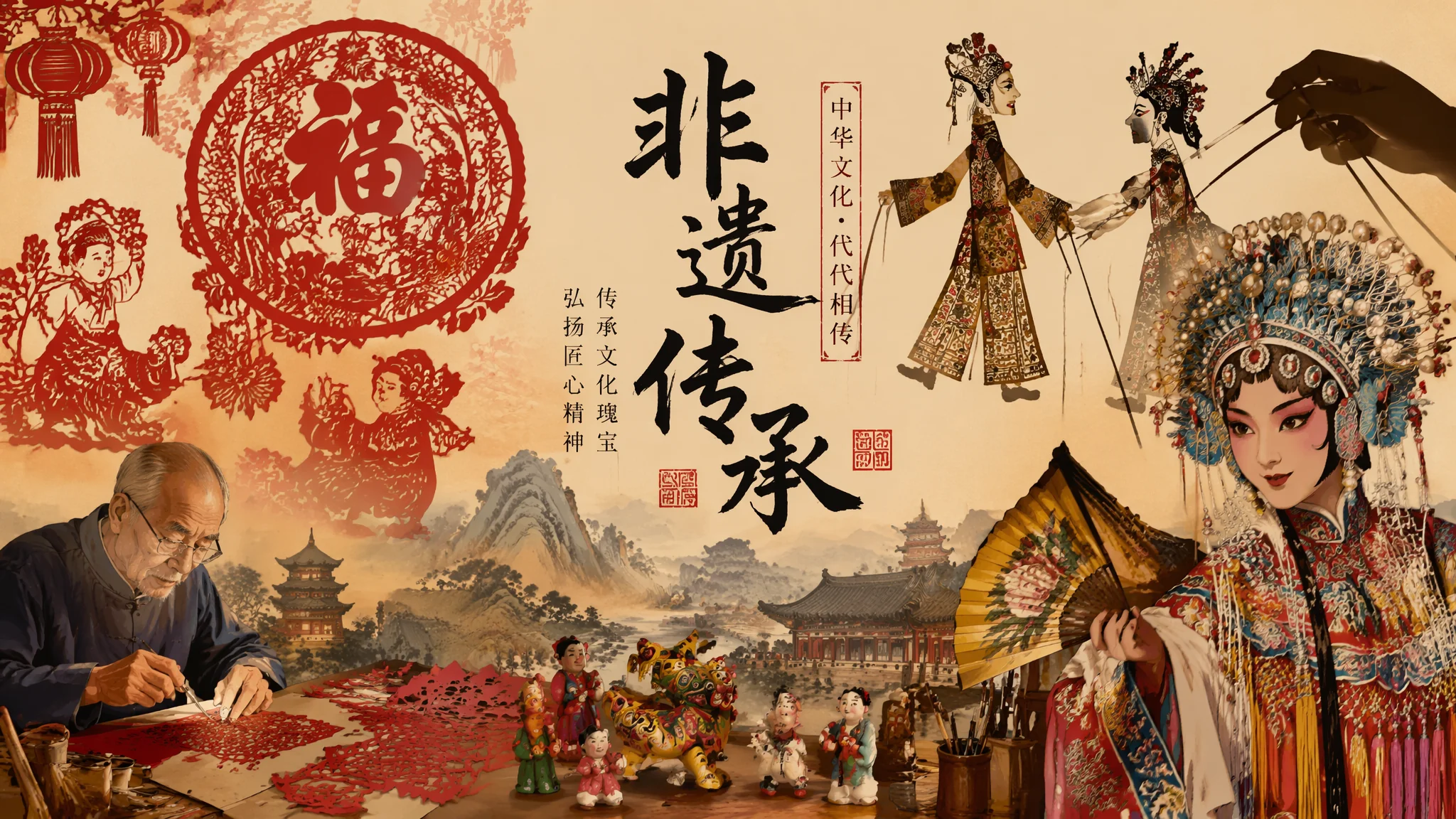
前年去贵州出差,在丹寨看了苗族蜡染——一位六十多岁的老人在棉布上用蜡刀一笔一笔地画图案,手稳得不像这个年纪。我问她这个图案画了多少年了,她说"从小跟着妈妈画,画了五十年"。我问她这些图案有没有画册或者电子版,她摇摇头,说"都在脑子里"。当时我就想:如果有一天她画不动了,这些图案去哪?AI能不能帮上忙?但这个念头同时也让我警觉:如果AI"复制"了这些图案,算不算另一种形式的文化盗窃?一年后我开始系统研究AI与非遗的结合——不是"用AI取代手艺人",而是"用AI作为非遗的数字化记录工具和传播放大器"。这篇是我在这个方向上做的所有尝试、踩过的所有坑、以及思考过的所有伦理问题的总结。
非遗视觉元素的提取——不是"画得像"而是"提取可迁移的视觉基因"
AI画非遗,最低级的做法是"把非遗项目的成品图直接喂给AI做img2img"——出来的图是原图的模糊变体,没有任何创造力,而且常常丢失了原工艺最精髓的细节。正确的方法分三步:一,从非遗项目中提取"视觉构成规则"——不是"这个图案长什么样",而是"这个图案是怎么被构造出来的"。比如苗族蜡染——构图规则是:中心一个大圆(代表太阳或铜鼓),周围环绕对称的螺旋纹(代表藤蔓或河流),四个角填以鸟纹或鱼纹(代表自然生灵),边框是几何线条重复。把这个规则写进Prompt:"a pattern composition following Miao batik design principles——a central circular motif representing the sun or bronze drum, surrounded by symmetrical spiral patterns radiating outward, bird and fish motifs placed in the four corners, the border is a repeating geometric line pattern, the entire composition is bilaterally symmetrical"。
二,提取"工艺质感"——不是"这个图案用了什么颜色"——而是"这个工艺的物理痕迹在视觉上是什么样的"。蜡染的物理痕迹——"the image emulates the physical qualities of batik wax-resist dyeing——there are subtle crackle lines (crazing) throughout the dyed areas where the wax cracked during the dyeing process allowing tiny amounts of dye to seep through, the edges of the colored areas are slightly irregular——not the sharp perfect edges of digital design but the organic edges of wax applied by hand, the texture of the cotton fabric base is visible beneath the dye"。三,提取"文化语义"——图案中每个符号在源文化中的含义。比如苗族蝴蝶纹——蝴蝶在苗族古歌中是"蝴蝶妈妈"——创世母祖。"the butterfly motif is not merely decorative——in Miao origin mythology, the Butterfly Mother (Mais Bangx Mais Lief) gave birth to all living things, the butterfly pattern carries this profound cultural meaning and should be treated with the dignity of a sacred symbol, not as a cute decorative element"。文化语义是防止"文化挪用"的最后一道保险——如果你不理解一个符号的含义,你就不应该用它。参考中国非物质文化遗产网和大英博物馆的非遗馆藏——学术机构有最准确的文化背景资料。
非遗的"现代化视觉传播"——怎么让年轻人愿意看非遗
非遗传播最大的困境:年轻人觉得"非遗=老、土、跟我的生活没关系"。AI在其中有独特的切入点——因为AI天然适合做"风格融合"。三个已验证有效的传播策略:一,非遗×现代生活场景——把非遗视觉放在年轻人熟悉的场景里。不是画"一个穿苗服的女孩在寨子里"——而是画"一个在东京地铁里戴着苗族银饰风格设计的现代女孩"。银饰的传统造型保留不变——但佩戴场景变了——让观众意识到"非遗美学可以和现代生活兼容"。
二,非遗×流行视觉风格——用当代年轻人喜欢的视觉语言重新演绎非遗。"a fashion editorial photo featuring traditional Chinese paper-cutting patterns reimagined as a contemporary haute couture dress——the dress is constructed entirely from layered paper-cut patterns that cast intricate shadows on the model's skin, the styling is high fashion but the pattern language is authentically derived from Chinese folk paper-cutting tradition"。三,非遗×互动体验——AI让非遗变成了"你也能参与"的东西。"用AI把你的照片变成非遗风格的肖像——'Portrait in the style of traditional Chinese New Year woodblock print (nianhua)——bold outlines, flat saturated colors, auspicious symbolic elements surrounding the figure, the traditional nianhua composition but with a contemporary subject'"。关于非遗视觉传播的更多策略,AI静夜思古诗绘画讲了类似的"传统内容×现代媒介"的思路——唐代的诗和苗族的蜡染在传播上面对的挑战是相通的。
四种非遗类型的AI绘画实操——刺绣、剪纸、陶瓷、皮影
刺绣(以苏绣为例):苏绣的核心在"乱针绣"的针法走向——线不是乱戳——是按照物体结构排列的。"a visual interpretation of Suzhou embroidery——the image should look as if constructed from fine silk threads, each 'thread' follows the contours of the depicted objects: threads on a bird's wing follow the curve of the feathers, threads on water follow horizontal ripples, the thread direction is not random——it is a structural element of the image, silk sheen visible where the light catches the threads at certain angles, subtle color transitions achieved through thread blending"。苏绣在AI中的核心表现是"线的方向感+丝绸的光泽"。
剪纸(以蔚县剪纸为例):"inspired by Yuxian paper-cutting art——the image has the visual language of Chinese paper-cutting: all elements are connected (no isolated floating pieces), the negative space is as important as the positive shapes, the cutting lines are bold and continuous, the color palette uses the traditional Yuxian scheme of bright red as dominant with accents of green yellow and blue, the paper texture is visible with slight variations in the cut edges"。更多关于剪纸和扁平风格的内容见AI扁平化插画绘画——剪纸的视觉逻辑和现代扁平设计有着深层联系。
陶瓷(以青花瓷为例):"inspired by traditional Chinese blue-and-white porcelain (qinghua)——the entire image is rendered in shades of cobalt blue on a white ground, the design language follows porcelain decoration conventions: a central narrative scene surrounded by decorative border bands, the blue pigment has the characteristic 'heaping and piling' effect where thicker applications of cobalt create darker almost black spots in the blue"。青花在AI中的关键是"钴蓝在高温下堆积产生的黑点"(堆垛效果)——这是AI常常忽略但却是识别青花的重要特征。
皮影戏:"inspired by Chinese shadow puppet theater——the image is composed as if viewed through the backlit screen: all objects are rendered as translucent colored silhouettes with intricate internal cut-out patterns, the colors are jewel-toned and glow with warm backlight, the figures have the characteristic jointed construction of shadow puppets with visible connecting pins at the articulation points, the puppeteer's manipulating rods are visible extending from the figures"。皮影最重要的是"透光感"和"关节处的连接结构"——不是画一个彩色的平面人物。
非遗数字化中的"人"——没有传承人的AI非遗是没有灵魂的
AI画非遗最容易缺失的是"人的手"。不是画面中缺少人物——是缺少"人的手工痕迹"。一篇AI生成的非遗主题图像如果看不出"有人曾经用双手制作过这个东西"——那它就只是漂亮的图片而已。如何加入"人的痕迹":画非遗工艺品的局部特写时——"a close-up of the embroidered surface showing the individual stitches——each stitch is slightly different in length and tension, the human hand that made this is visible in the subtle imperfections of the stitch work"。画非遗工具时——"a worn wooden wax knife for batik, its handle darkened and polished by decades of grip, the blade has a slight curve from years of use against the fabric"。
画非遗传承人时——不要画"穿盛装微笑展示成品"的刻板形象。画"工作中的手"——"the hands of an elderly paper-cutting artist at work——the fingers are slightly gnarled from years of holding the scissors, the nails are short and practical, the scissors move through the red paper with the confidence of sixty years of practice, a half-finished paper-cutting is visible"。非遗的数字化保护的终极目标不是"存下一堆图片"——是"让下一代人通过图像感受到'这个文化是活着的——有人在传承、有人在创新'"。关于AI与人文的更多探讨,AI真人孕妇摄影绘画从不同的生命主题出发讲了类似的"技术+人文"的融合思路。
常见问题
AI生成的非遗图像会被误认为是"真实的传统工艺品"吗——需要加标注吗?
需要——而且应该。建议做法:在图像的元数据或说明中明确标注"此图像由AI生成,灵感来源于XX非遗项目"。这不是"自降身价"——而是建立信任。当观众知道"这是AI生成的"之后,他们的审美期待会改变——不再以"像不像真品"来评判,而是以"作为对传统的现代诠释好不好"来评判。标注本身就是一种传播策略——它引发观众对"AI与传统"关系的好奇。
想让AI画"濒临失传的非遗"——但网上几乎没有这个项目的视觉资料,怎么办?
这是非遗数字化的核心矛盾:越濒危的非遗,视觉资料越少;视觉资料越少,AI越画不好。解决路径:不依赖AI的"知识"——依赖你的"描述"。在Prompt中尽可能地描述该非遗的物理特征、工艺原理、视觉风格。"a traditional craft from [region] called [name] that is almost extinct——only three practitioners remain: [详细描述你从田野调查或文献中获得的所有视觉信息]"。AI在这种情况下从"搜索引擎"变成了"翻译器"——把你的文字翻译成图像。翻译的质量取决于你的文字有多精确。关于资源匮乏文化的AI绘画策略,UNESCO非遗数据库有大量可免费查阅的文字和图片档案——虽然数量有限,但作为Prompt的参考源足够了。
AI非遗绘画的版权归谁——如果AI生成了和某位传承人作品极其相似的图像?
这是法律和伦理都还没有明确答案的灰色地带。目前的实践共识:如果AI生成的图像与某位在世传承人的具体作品高度相似——该图像不应被商业化使用——而是应该被视为"衍生作品"需要原作者的许可。如果AI学习的是一种通用风格(比如"苗族蜡染风格"而不是"张XX的蜡染作品")——目前的法律框架下版权边界模糊。个人建议:涉及非遗的AI创作,尽量往"创新融合"方向走而不是"模仿复制"方向——前者创造新价值,后者制造版权纠纷。