AI静夜思古诗绘画:李白经典诗词意境的月光乡愁视觉再现
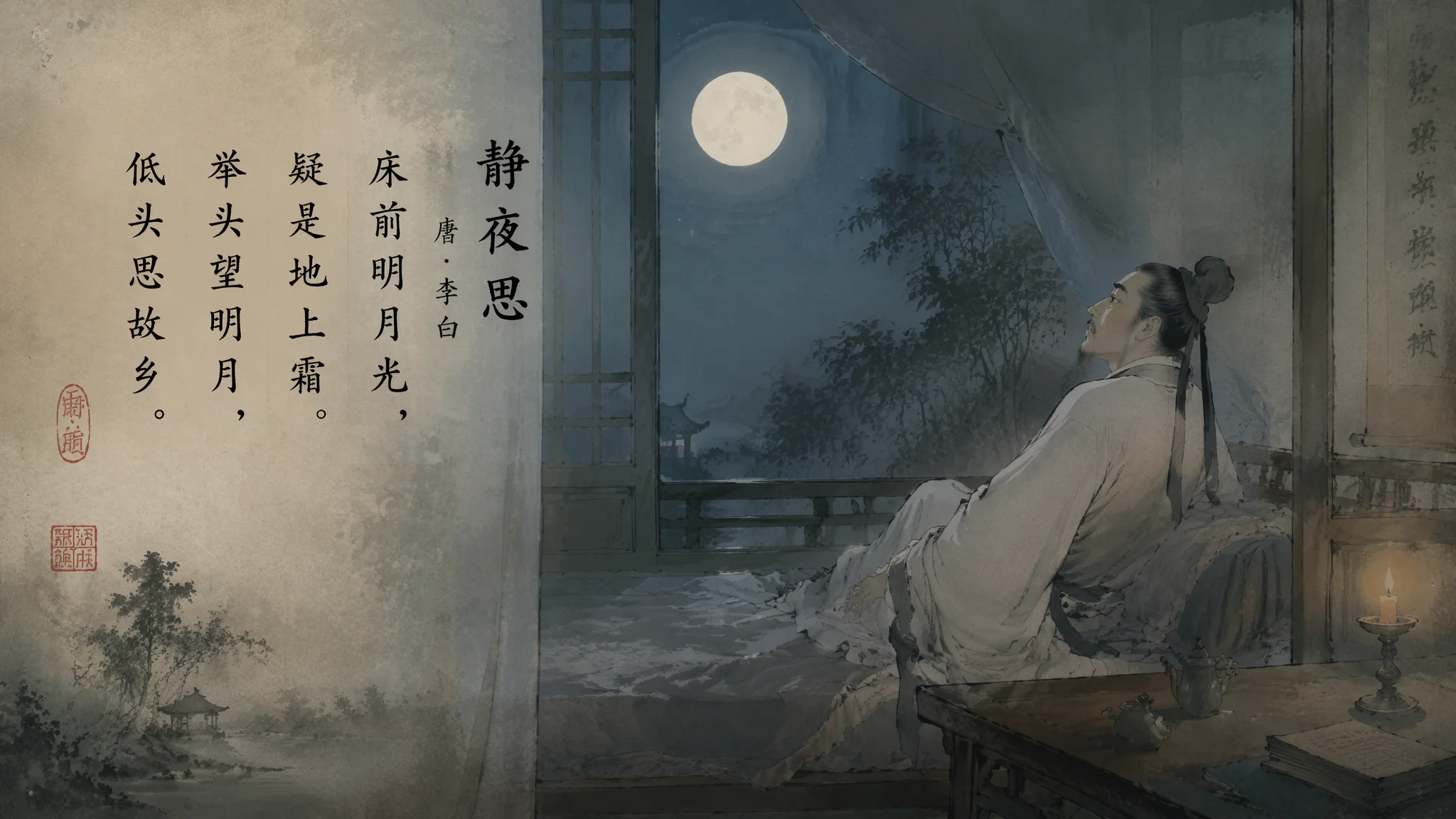
小学三年级第一次背《静夜思》——"床前明月光,疑是地上霜。举头望明月,低头思故乡。"老师问"谁能说说这首诗在讲什么",我举手说"有个人晚上睡不着,看到月光照在地上像结冰了,抬头看看月亮,低头想家了"。老师说"是像霜不是像结冰"。我当时觉得霜和冰不都一样吗——反正就是冷冷的白色的东西。后来长大了离开家乡去外地上大学,有一天晚上在出租屋里——没有开灯,月光透过没关严的窗帘缝隙洒在地板砖上——白白的、薄薄的、冷冷的一长条——我盯着那道光看了很久,突然脑子里蹦出一句"疑是地上霜"。那一刻我才理解了李白不是"看到月光像霜"——是"在半夜里一个人盯着月光看到出神——看到产生幻觉——月光冷得像固体"。AI画古诗最大的挑战不是"把诗的内容画出来"——是"把诗让人出神的那个瞬间画出来"。这篇就是以《静夜思》为切口,讲古诗意境如何翻译成AI看得懂的画面。
诗的四个视觉层次——不是画"诗的内容"而是画"诗的体验"
一首唐诗通常有四个可以被翻译成视觉的层次——大多数人只翻译了第一层。以《静夜思》为例:第一层——字面场景:一个人、一张床、月光从窗户照进来、窗外有月亮。这是最浅的翻译,生成出来的就是"一个中国古人站在窗户旁边看月亮"——像教科书插图。第二层——物理感知:"疑是地上霜"的核心是"温度幻觉"——月光看起来像霜,不是因为形状像——是因为颜色和质感让人产生了"冷"的联觉。视觉翻译:月光在地面上的色温必须是"冷到让人起鸡皮疙瘩"的蓝白色——"the moonlight on the floor has a frost-like quality——it is not just white light, it has a crystalline coldness, the edges of the light patch on the floor are sharp and defined like a layer of ice, the color temperature is around 8000K——much colder than normal moonlight which is around 4000K"。
第三层——心理状态:"举头望明月,低头思故乡"的核心心理状态不是"想家"——是"一个人在深夜的静默中,身体自动执行了'抬头→低头'这个动作序列,这个动作本身就暴露了他内心的不安定"。视觉翻译:不画人脸表情——画身体动态的停顿。"the figure is captured in the transitional moment between looking up and looking down——the head is neither fully raised nor fully lowered, the neck is in a state of motion-blur tension, the hands that were perhaps resting on the knees are now slightly lifted as if the thought of home has disturbed the stillness of the body"。第四层——宇宙意识:李白诗里有一个潜台词——"我一个人在这,月亮在天上,故乡在远方,这三者之间的空间被月光填满了"。视觉翻译:构图中人是小的、月亮是大的、两者之间的距离(物理距离和心理距离)是构图的核心张力。"a vertical composition with a small human figure in the lower third and a disproportionately large moon filling the upper half——the vast empty space between them is traversed by the moonlight itself, which becomes a visual bridge connecting the solitary figure to the distant homeland"。
中国画的"留白"在AI绘画中的翻译——怎么让AI"不画满"
中国画的核心审美之一是"留白"——画面中大面积的不被描绘的空间不是"没东西"——是"有内容的空白"。但AI的默认行为是填满画布的每一个像素——因为训练数据中绝大多数是西方油画和照片,都是满构图。让AI"留白"的方法:不能写"leave empty space"(AI不知道什么是"empty")——要写"the empty areas have substance"。
具体Prompt技巧:"the composition follows the aesthetic principle of Chinese ink painting——large areas of the image are left as unpainted void (liubai), these empty areas are not blank but are filled with the suggestion of space: mist, distance, the vastness of night, the empty areas occupy at least 60% of the canvas and are positioned in the upper half and right side of the image, the visual weight of the painting is concentrated in the lower left third, the rest is a meditation on emptiness"。把"留白"和"冥想"挂钩——"a meditation on emptiness"——能引导AI把空白理解为一个主动的审美选择而不是被动的"没画"。另一个技巧——引用具体的中国画术语:"the image emulates the composition of Southern Song dynasty landscape painting——the pictorial elements are pushed to one corner or the bottom edge, the remaining space is infused with atmosphere and suggestion"。
关于留白和东方美学在AI绘画中的更多探讨,AI禅意绘画和AI非遗文化绘画从不同题材做了系统分析。留白不只是构图技法——是东方艺术哲学在视觉上的表达。参考大都会博物馆的中国绘画馆藏——特别是南宋马远、夏圭的"一角半边"构图——是留白审美的巅峰。
从一首诗到一套图——古诗AI绘画的系列创作思路
《静夜思》只有20个字——你要只画一张图,其实也就是"一个人看月亮"。但如果你把这首诗当成一个"视觉叙事框架",可以衍生出一个完整的图像系列。系列一:时间切片——同一场景在不同时间点的状态。入夜——"the room at dusk, the last amber light fading from the window, the figure has just lit a small lamp, the moonlight has not yet entered the room"。深夜——"the lamp has burned low, the room is now dominated by cold moonlight, the figure is still awake"。黎明前——"the moonlight has shifted across the floor, the sky outside the window is beginning to lighten to a deep indigo, the figure has fallen asleep in the sitting position"。
系列二:空间尺度——从微观到宏观的不同观看距离。地面特写——"a close-up of the floor where the moonlight falls——the texture of the woven straw mat is visible, the moonlight creates a sharp geometric edge where it meets the shadow, a single fallen leaf or chrysanthemum petal lies in the lit area"。室内全景——"a wide view of the entire room——the space is sparse, a low table with a tea set and an unrolled scroll of paper, a wooden clothes rack with a robe hanging from it, the figure is small in the corner"。屋顶外景——"an exterior view looking down from above the roof——the moonlight illuminates the roof tiles and the courtyard, a single lit window is visible among dark buildings, the human presence is implied by that one window"。
系列三:情感色彩——同一构图用不同的色调表达不同的情感层次。冷调寂寥版——"monochromatic blue and silver palette, the emotional temperature is cold solitude"。暖调回忆版——"the moonlight remains cold but the lamp is warmer and larger, the shadows have softer edges, the atmosphere suggests the comfort of memories rather than the ache of longing"。破晓希望版——"the first warm light of dawn begins to mix with the retreating moonlight, warm gold at the bottom of the window frame grading into cool blue at the top, the figure's posture has shifted from hunched to more open"。
关于系列创作的更多思路在Poetry Foundation的诗歌视觉化项目和AI绘画研学的教学框架中都有涉及——文学和视觉的跨媒介翻译本身就是一个很好的研究课题。
常见问题
古诗AI绘画里的人物到底要不要画脸——表情重要还是姿态重要?
姿态远大于表情。古诗的情感是"弥漫性的"——不是一个人脸上写着"我很忧伤"——而是整个场景的氛围渗透着某种情绪。强烈建议:不画正脸、不画清晰表情。"the figure's face is not shown or is in deep shadow——the emotion is conveyed through body language: the slight forward lean of the shoulders, the hand resting motionless on the knee, the angle of the head tilted toward the window"。面部越模糊——观者的代入感越强——因为观者把自己的脸和情绪"投射"进了那个阴影中。
AI画的"古代中国"总混进日本元素——怎么彻底清理?
最有效的方法是反向排除。"NOT Japanese architecture, NOT tatami flooring, NOT shoji screens, NOT kimono, NOT katana, NOT torii gates"。把"不是日本"直接写进negative prompt。同时在positive prompt里锚定唐代:不止写"Tang Dynasty"——还要写唐代特有的物品名称。"low Tang-style wooden bed (chuang) with simple carved legs, Chinese round-framed window (yuemen), celadon tea bowl, guqin leaning against the wall"。物品名称是最强的时代锚点。
用AI画古诗——应该用水墨风格还是写实风格还是别的风格?
没有唯一正确答案——每种风格讲的是不同的故事。水墨风格——讲的是"这首诗在中国艺术史传统中的位置"。写实风格——讲的是"如果这首诗描述的场景真的发生在历史上的某个夜晚"。概念艺术风格——讲的是"这首诗的意境如果放在一个架空世界里会是什么样"。关键在于:选定风格之后在整个Prompt中保持风格的一致性。"ink wash painting in the style of Chinese literati painting, monochrome with subtle ink gradations, xuan paper texture, the brushwork is expressive and loose"——这是一整套包装。不要写"水墨风格但是加上照片级的写实月光"——风格冲突会毁了画面的可信度。