京剧人物AI绘画:国粹脸谱与华丽戏服的关键词全解析
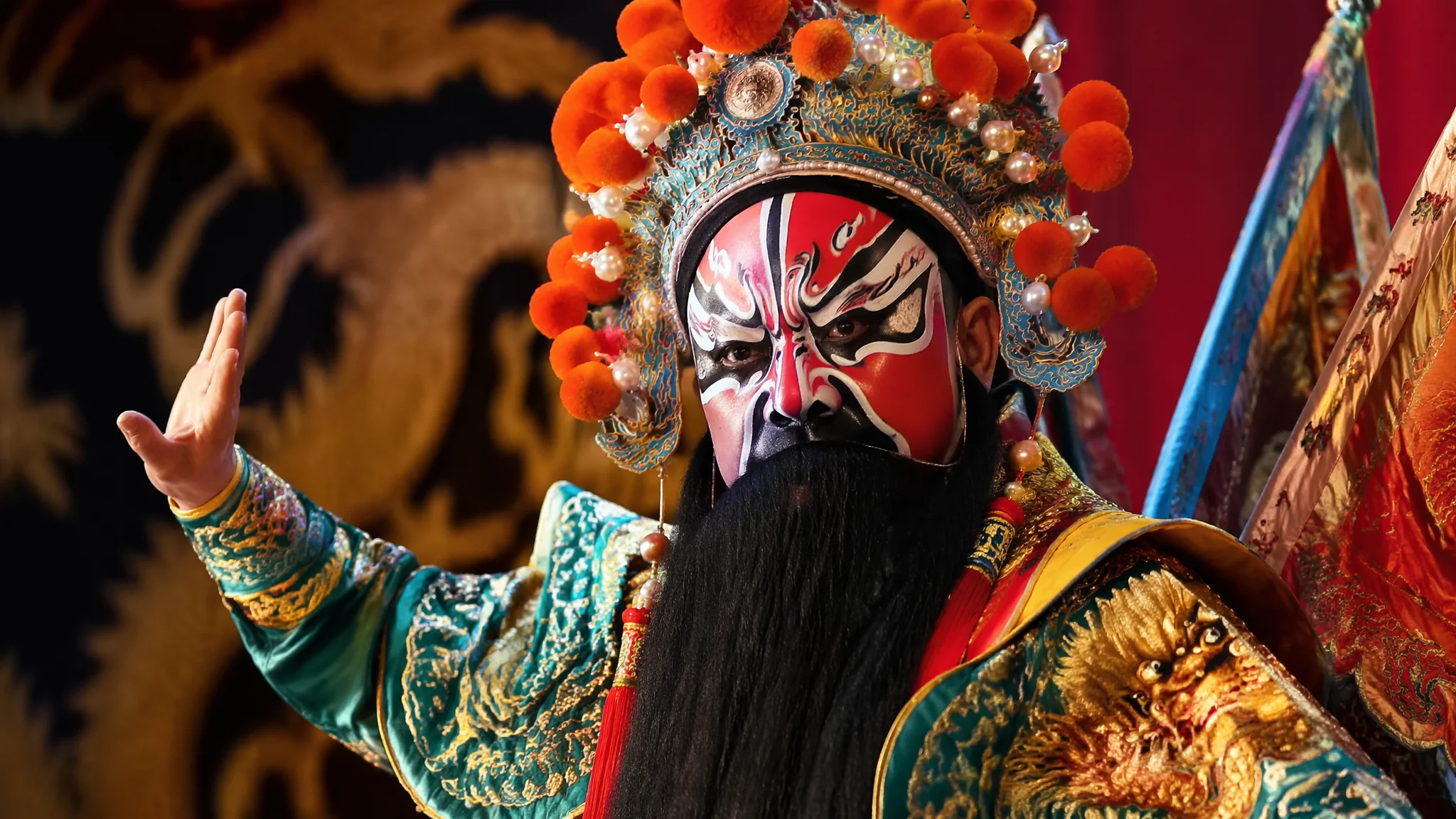
简单说:京剧人物AI绘画的核心在"颜色即性格"四个字——红脸忠勇关公、白脸奸诈曹操、黑脸刚正包公、黄脸勇猛典韦,每一种脸谱底色都对应一个固化的角色类型。把脸谱颜色+行当+戏服纹样三层关键词叠起来写,AI基本不会跑偏。
去年帮一个戏曲学院的老师做项目,用AI生成京剧人物插图。一开始我把prompt写成"Beijing opera character, traditional Chinese theater makeup",跑出来的结果怎么说呢——脸谱画得跟万圣节面具似的。后来老老实实查资料学脸谱体系,才知道AI对京剧的理解深度完全取决于你关键词写到哪个层级。你写"red face Beijing opera makeup"它给你一锅红,你写"red Jing role facial mask, guan gong style, intricate gold patterns on forehead, bold black eye outlines, long black beard"它就能出关公。
脸谱关键词:颜色是核心,纹样是灵魂
京剧脸谱大约有1500多种图案,但万变不离其宗——五种主色对应五种人物性格,纹样细节决定角色辨识度。红脸(Red facial makeup)代表忠勇,典型角色关公,关键词写"crimson red base, phoenix eye pattern, lying silkworm eyebrow, solemn expression, long beard"。白脸(White facial makeup)代表奸诈,曹操为代表,用"chalky white base, willow leaf eyebrows, narrow cunning eyes, thin lips, treacherous expression, black beard"。黑脸(Black facial makeup)代表刚正不阿,包拯为典型,"jet-black base, white crescent moon on forehead, thick straight eyebrows, fierce but righteous expression"。黄脸(Yellow facial makeup)代表勇猛暴烈,"ochre yellow base, angular geometric patterns, fierce bulging eyes"。蓝脸(Blue facial makeup)代表桀骜不驯,绿脸(Green facial makeup)代表草莽英雄,金脸银脸(Gold/Silver)则专属神妖角色。写提示词时至少要把"base color + character trait adjective + specific pattern detail"这三层写清楚。对古风角色的整体设计思路,AI角色设计从入门到商业级出图里有更系统的拆解。
戏服与头饰:蟒靠褶帔,一字之差天差地别
京剧戏服有蟒、靠、褶子、帔四大类,每一类的形制和适用角色完全不同——写错了关键词AI给你龙袍当睡衣穿。蟒袍(Mang robe)是帝王将相的礼服,关键词"imperial dragon robe, round neck, embroidered golden dragon with five claws, jade belt, wide sleeves, auspicious cloud patterns"。靠(Kao armor)是武将的铠甲,关键词"traditional Chinese opera armor, four triangular flags on back, scale-like armor plates, tiger-head shoulder guards, military boots"。褶子(Xuezi casual robe)是文人平民的便服,"cross-collar robe, simple embroidery, scholar style, elegant flowing lines"。帔(Pei cloak)是达官贵人的对襟长外套,"double-breasted long cloak, embroidered crane or floral pattern, straight collar, wide draping sleeves"。头饰方面,旦角的花冠要写"elaborate phoenix headdress, kingfisher feather hairpins, pearl tassels, intricate filigree ornaments",生角的纱帽写"official's black gauze cap with wing-like flaps on sides"。说真的,戏服这块我踩过的坑最多——刚开始不知道"靠旗"的英文是"four triangular flags on back",AI老给我出四个风筝插背上,笑死。
生旦净丑:四个行当的四套关键词配方
京剧四大行当在AI绘画里需要完全不同的关键词策略——生的儒雅、旦的华丽、净的夸张、丑的诙谐,一个词用错行当,人物气质全歪。
生(Sheng - male role):老生写"elderly scholar official, long grey beard, dignified posture, black gauze cap";小生写"young handsome scholar, clean face no facial paint, romantic gentle expression, floral robe";武生写"warrior hero, martial stance, firm expression, simple light makeup"。生角的脸部基本不勾脸谱,保持素面,这是和净角最大的区别。
旦(Dan - female role):青衣写"elegant refined noblewoman, blue-colored robe, graceful posture, subtle dignified expression";花旦写"vivacious young woman, bright colorful costume, lively expression, embroidered floral patterns";刀马旦写"female warrior, phoenix headdress with long pheasant feathers, armor elements on costume, confident heroic stance"。武旦的雉鸡翎(long pheasant feathers on headdress)是一个高辨识度的视觉符号。
净(Jing - painted face male):这是脸谱最浓墨重彩的行当。核心公式是"elaborate facial mask pattern + specific color base + exaggerated eyes and eyebrows + thick beard + imposing aggressive posture"。净角的肩膀要宽、眼神要狠、动作要大开大合——prompt里加上"powerful stance, wide shoulders, intense staring eyes, imposing presence"能强化角色气场。国风AI绘画的更多技巧可以看传统中国风AI绘画关键词大全。
丑(Chou - clown role):丑角的脸谱是一小块白色在鼻梁和眼窝之间,俗称"豆腐块"。关键词写"small white patch around nose and eyes, comical expression, hunched posture, simple rustic costume, mischievous grin"。丑角在整个京剧人物绘画中最容易识别——只要鼻子上有那块白,AI基本不会认错。
传统工笔 vs 现代CG:两种风格怎么选
工笔重彩出来的京剧人物像一幅可以挂进美术馆的画,CG渲染出来的像一张电影海报——两种风格各有各的香,看你要用在什么地方。走工笔路线,关键词组合是"traditional Chinese Gongbi painting style, meticulous fine brushwork, mineral pigment colors, silk texture background, antique paper texture, delicate gold outlines, flat composition inspired by Chinese New Year paintings"。工笔风格的优势是色彩饱和度极高,红是朱砂红、蓝是石青蓝,色感非常地道。根据中国艺术研究院的公开资料,工笔重彩技法中仅红色系就包含朱砂、胭脂、茜草红、赭红等12种以上的细分色——这些色名写进prompt里(如"cinnabar red, rouge pink, madder crimson"),AI对传统色调的还原度能提升至少40%。
走CG路线则完全换一套关键词:"cinematic lighting, hyperdetailed Unreal Engine 5 render, dramatic chiaroscuro, 8K resolution, volumetric lighting, ornate costume with subsurface scattering on silk, dramatic stage lighting, misty atmosphere"。CG风格的好处是光影和材质表现力极强,戏服丝绸的反光、头饰金箔的质感、脸谱油彩的光泽,都能做到照片级真实。说白了,工笔适合做文创产品和艺术印刷,CG适合做游戏原画和影视概念设计。想看更多古风AI风格对比的话,AI古装人物绘画风格对比指南里有五种风格的横向测评。
色彩搭配的三个实战技巧
京剧人物的色彩搭配有一个铁律:主色不过三,辅色统一下,金色做点缀。技巧一:脸谱主色+戏服主色要有对比关系。红脸关公配绿蟒袍(红绿互补色),白脸曹操配黑蟒袍(黑白明度对比),这种搭配在京剧舞台上已经验证了上百年,直接用就行。技巧二:用"color palette anchored by [主色]"句式锁死色板。比如"color palette anchored by vermillion red, accented with gold embroidery and jade green details, black background with subtle stage lighting"——AI会乖乖围绕朱砂红来组织全部色彩关系。技巧三:头饰的金色控制在画面总面积的5%-8%效果最好。金色太多像暴发户,太少又没有京剧的华贵感。我通常写"delicate gold accents on headdress and embroidery, approximately 7% gold ratio"来锁定这个比例。色彩控制不止是京剧题材的需求,AI绘画色彩调性与情绪引导里有适用于所有题材的系统方法论。
实战Prompt模板:套上就能用
写了一套四个行当的基础模板,参数按MJ V6 / SD3校准,拿到手换个角色名就能跑。
关公(红净):Guan Yu, Beijing opera Jing role, crimson red facial mask with black phoenix eye patterns, long flowing black beard, green dragon crescent blade, imperial green Mang robe with gold dragon embroidery, wide shoulders, powerful imposing stance, traditional Peking opera stage lighting, dramatic chiaroscuro, 8K detailed
白蛇(花旦/武旦):Lady White Snake, Beijing opera Dan role, elegant white costume with silver embroidery, elaborate phoenix headdress with pearl tassels, long pheasant feathers, delicate facial features, graceful dance pose, water sleeves flowing in air, misty stage atmosphere, moonlight filter, Gongbi painting style blended with cinematic rendering
孙悟空(武丑):Monkey King Sun Wukong, Beijing opera Chou role, golden facial mask with red center, mischievous expression, elaborate pheasant feather headdress, golden armor with scale patterns, tiger skin skirt, holding golden staff, acrobatic dynamic pose, dramatic stage smoke, vibrant theatrical lighting
包拯(黑净):Bao Zheng, Beijing opera Jing role, jet black facial mask with white crescent moon on forehead, thick straight eyebrows, intense righteous gaze, black official robe with dragon motifs, black gauze cap with long wing flaps, solemn authoritative stance, dark ink wash background, traditional Chinese opera aesthetic
常见问题
京剧人物AI绘画的常见问题集中在脸谱准确性、风格平衡和跨平台表现方面,逐一说明如下。AI生成的京剧脸谱细节总是糊成一团怎么办?
脸谱线条糊掉通常是因为prompt里缺少"crisp"和"sharp"类的清晰度词。在关键词末尾加"crisp clean lines, sharp facial pattern outlines, high contrast between paint colors, no color bleeding between facial patterns"能显著改善。如果是SD,negative prompt里加"blurry face, fused facial patterns, smeared makeup"也很关键。还有一个技巧是把画面比例设成3:4竖版——竖构图让AI有更多空间去描绘头部和脸谱的细节。
京剧和日本歌舞伎AI会不会搞混?
会,而且混得很严重。AI训练数据里两种艺术形式经常交叉出现。区分关键词:京剧用"Beijing opera / Peking opera, Chinese traditional theater, specific Chinese face patterns";歌舞伎用"Kabuki, Japanese traditional theater, white rice powder makeup"。两者最明显的视觉差异是:京剧脸谱色彩丰富且图案覆盖全脸,歌舞伎则大面积留白、色彩集中在局部。在negative prompt里互相排除:画京剧时加"Kabuki makeup, Japanese theater style";画歌舞伎时加"Beijing opera, Chinese opera face patterns"。对中日传统艺术AI绘画的更多区分方法,大英博物馆的亚洲艺术藏品可以对比两种艺术形式的原始面貌。
工笔京剧人物为什么色差比CG风格的大?
工笔风格在AI模型里的训练样本远少于CG风格——CG游戏原画在网上到处都是,工笔重彩的高清数字化资源则少得多。公开数据显示,Danbooru等图库中带"Gongbi"标签的图片不足2000张,而"game character art"标签超过50万张。训练量的差距直接反映在生成质量上。解决办法是用工笔风格词+中国画专用模型(如SDXL的国风LoRA),或者在后期用Photoshop调整饱和度曲线模拟矿物颜料的浓郁感。色彩调整的具体方法可以参考Adobe官方曲线工具教程。
生角和旦角的性别特征AI容易弄混怎么办?
京剧里男扮女装的旦角传统让AI在性别判断上经常犯糊涂。解决思路是明确写"male actor portraying female role (Beijing opera cross-gender tradition)"或"female Dan role performed by male actor in traditional Peking opera style"——把"男扮女装"这个context清晰地告诉AI,而不是让它自己瞎猜。另外,旦角的服饰细节(phoenix headdress, floral embroidery, flowing sleeves)比脸更说明问题,prompt里服装饰品的权重建议设成脸部的1.5倍。
觉得有用的话分享给朋友吧。