AI绘画创意美术怎么做?打破常规的脑洞大开关键词合集
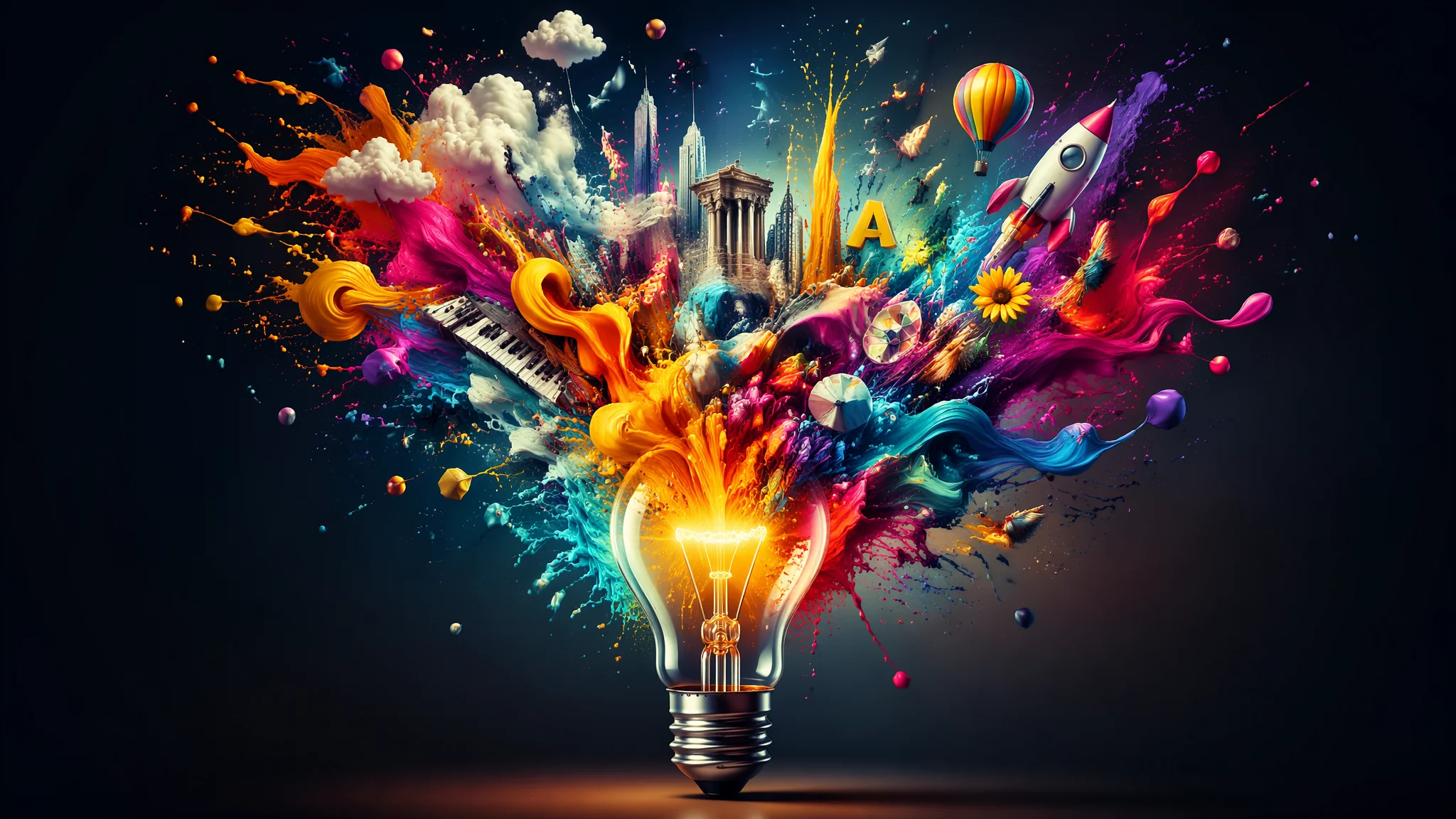
AI绘画最不缺的就是"好看"——随便写个"beautiful landscape"都能出一张能当壁纸的图。缺的是什么?是"我靠这怎么想到的"——那种让人停下来盯着看、脑子里冒出"原来还可以这样"的创意。据一份对5000+张AI艺术作品的分析,获得高互动(点赞+评论+转发)的作品中,"常规美学类"(好看但意料之中)占比仅22%,而"创意概念类"(不符合常规但令人惊叹)占比高达61%——创意分是流量密码。这篇不讲怎么画"好看",讲怎么画出"想不到"——从超现实主义到尺度游戏到材质混搭到反逻辑叙事,四套脑洞关键词体系全部拆给你。
超现实主义的精髓不是"乱画"——是"把两个不属于同一个世界的元素放进同一个空间,但让它们看起来本该如此"。浮空、置换、悖论三类超现实关键词
经典超现实案例——马格利特的"这不是一支烟斗"。AI时代你可以做得更疯狂。
浮空类——打破重力期待:"a grand piano floating in the middle of a misty lake, its keys playing themselves with invisible hands, the music visible as trails of golden light rising from the strings, water rippling outward in perfect circles beneath the floating instrument, the scene is not chaotic but serenely impossible"。浮空的核心技巧——浮起来的东西不是"轻的"(羽毛、气球),而是"重的"(钢琴、房子、鲸鱼)。重物浮空的反差感远强于轻物浮空。置换类——把A的属性和B的形态交换:"a whale swimming through a sea of clouds instead of water, its massive body weaving between skyscrapers poking through the cloud layer, the cloud-sea has waves and currents like an ocean but is made of vapor, the whale breaches the cloud surface sending up a spray not of water but of tiny glittering ice crystals"。鲸鱼在云海里游——海洋生物的形态+天空环境的介质=超现实的化学反应。不是"鱼在天上飞"(太直接),而是"云变成了海,所以鱼可以在里面游"。
悖论类——空间与逻辑的矛盾:"a doorway standing alone in an endless field of wheat, through the doorway you can see not more wheat field but the interior of a cozy library with a fireplace, the doorframe is the boundary between two realities, a cat sits on the threshold with half its body in the wheat field and half in the library, the transition is seamless"。一个门框立在麦田里,门里面是一个图书馆——两个空间通过一个门连接,猫一半在麦田一半在图书馆。悖论超现实的重点是"过渡自然"——不要让AI画出明显的拼贴痕迹,要写"seamless transition"和"half in/half out"这种中间态描述。超现实主义大师作品参考MoMA超现实主义馆藏。
尺度游戏是最容易被低估的创意手段——把日常物品放大100倍或缩小100倍,世界观就全变了。巨物、微缩、错位比例三套关键词模板
巨物类——日常物品变大到建筑级:"a single ripe strawberry the size of a house sitting in the middle of a city street, people on the sidewalk are smaller than the strawberry's seeds, the fruit's surface is seen at an impossible level of detail — each seed a small crater, the red flesh almost translucent at this scale, dawn light filters through the strawberry casting a pink glow over the street"。草莓放大到房子大小——关键不是"大",是"尺度变化后出现的微观细节"。草莓籽变成了小坑、表面纹理变成了地质结构。微缩类——人类缩小到昆虫级:"a tiny explorer standing on the edge of a water droplet on a leaf, the droplet is a perfect sphere reflecting the forest around it upside down, the explorer's reflection is visible in the droplet, a ladybug nearby appears as large as a truck, the forest floor has become an alien landscape of moss canyons and pebble mountains"。水滴变成了一个"星球"——人的尺度缩小后,一滴水就是一个世界。
错位比例类——不是所有东西都同比缩放,而是不同元素的尺度关系被故意打乱:"a giant house cat lounging across an entire neighborhood, its tail curled around a church spire, one paw gently resting on a school building, the cat is just being a cat — yawning, grooming — but its scale makes every casual movement a geological event, the residents are not panicking, they are going about their day as if a giant cat is normal"。巨型猫趴在社区里——猫的行为完全正常(打哈欠、舔毛),但尺度让正常行为变成了奇观。错位比例的核心技巧——行为不变,尺度变。如果猫因为变大了而行为异常(喷火、踩人),那就不是"尺度游戏"而是"怪兽片"了。更多尺度游戏案例见AI绘画高达模型的巨型机甲与城市尺度关系。
材质替换——把物体的材质换成一种"不该是这种材质"的东西。食物建筑、液体固体、有机机械三类材质混搭
材质替换的底层逻辑——保留物体的形状,改变物体的材质。形状提供"这是什么"的识别,材质提供"这怎么可能"的惊奇。
食物建筑——可以吃的建筑:"a Gothic cathedral made entirely of sugar, its flying buttresses are spun sugar, the rose window is a stained glass made of translucent fruit leather, the spires are rock candy crystals, rainwater has partially dissolved some of the sugar creating delicate drip formations along the edges, tiny ants are making a pilgrimage up the walls"。糖做的哥特教堂——保留了教堂的形态特征(飞扶壁、玫瑰窗、尖塔),但材质全换了。加上雨水溶解和蚂蚁的细节,画面从"甜点造型"升级为"一个正在发生的故事"。液体固体——本应是液体却呈现出固体的形态:"a waterfall that froze mid-cascade into a sculpture of solid ice, but the water at the very bottom has started to melt and flow again, creating a paradox where the top of the waterfall is frozen motion and the bottom is liquid motion, a deer drinks from the liquid part while icicles hang from the frozen part"。冰封瀑布"中间态"——不是全冻住也不是全流动,是"上面冻住下面流动"的过渡状态。
有机机械——生物和机器的材质互渗:"a tree whose trunk is made of polished chrome and brass, the bark patterns are etched circuit boards, the leaves are thin sheets of green-tinted glass that clink like wind chimes in the breeze, the roots are cables that burrow into the earth, but the tree still grows — new glass leaves bud in spring, and the tree produces metal acorns that fall with a heavy clunk"。机械树——不是"机器形状的树",而是"树的功能(生长、结果)用机器的材质(金属、玻璃、电缆)实现"。有机机械的核心——机器材质遵从生物逻辑,而不是生物被机器替代。更多材质混搭的灵感来源见AI绘画美杜莎泳装的蛇鳞质感设计和AI绘画绘本插画的材质拼贴风格。
反逻辑叙事——画面里发生的事在物理世界不可能,但在视觉上成立。时间折叠、空间套娃、因果倒置三类叙事脑洞
时间折叠——同一个画面里包含过去现在未来:"a single room shown across four seasons simultaneously — the left side is spring with cherry blossoms blooming through an open window, the center is summer with harsh sunlight and a whirring fan, the right side is autumn with leaves falling onto the floor, and the winter snow drifts in through a crack in the ceiling, the boundaries between seasons are fluid and dreamlike"。四季同框——不是四个房间,是同一个房间被四季"同时"占据。空间套娃——画中画中画:"an artist painting at an easel, the painting on the easel shows the same artist painting at an easel, and in that painting within the painting the scene repeats again smaller, each iteration slightly different — the colors shift, the artist's pose changes subtly, the recursion goes on until it fades into infinity"。画中画的无限递归——每一层嵌套都略有变化,不是简单的Ctrl+C。这个技巧的关键词是"each iteration slightly different"——这样才能避免AI机械复制。
因果倒置——结果先于原因:"a puddle of water on a sidewalk floating upward as rain — the splashes are going in reverse, droplets lifting from the puddle back into the sky, a child stands nearby watching the reverse rain with an expression of wonder, the sky is clear but the puddle is returning water to an invisible cloud"。雨的反转——水从地上回到天上。因果倒置不一定要写成"逆时针"——用具体的动作描述("droplets lifting from the puddle back into the sky")比说"time reversal"效果更直观。反逻辑叙事的核心原则——只打破一个规则。同时打破太多规则(空间+时间+因果全乱),AI会崩溃成抽象噪声。一次只玩一个脑洞,其他元素保持写实。
创意美术的更多脑洞方向参考Colossal艺术设计和AI绘画艺术装置设计。
脑洞太大AI理解不了怎么办?
把脑洞拆成两步。第一步写一个正常场景让AI建立基础框架;第二步在括号里加创意指令。例如:"a quiet suburban street at dusk (but the asphalt has the texture of ocean waves frozen mid-swell, cars are parked on gentle crests of asphalt waves, streetlights cast reflections on the glossy black peaks as if on water)"。用括号把超现实部分和现实部分分开——AI会优先构建括号外的现实场景,再把括号内的超现实材质叠上去。
创意美术和"抽象画"的区别是什么?
创意美术有明确的具象锚点——你能认出画面里是什么东西(钢琴、猫、草莓),只是因为尺度/材质/逻辑被改变了而产生惊奇。抽象画没有具象锚点——只有色彩和形状。AI在创意美术领域远强于抽象领域,因为AI的训练数据中具象素材占绝对优势。
怎么判断一个创意是"好脑洞"还是"自嗨"?
让别人看一眼能不能说出"这是什么"。能说出来("哦,云海里游的鲸鱼!")=好脑洞。说不出来("这...是一坨什么东西?")=自嗨。好的创意脑洞是"一句话能讲清楚"的——浮空钢琴、糖教堂、巨型草莓——每一个都是一句话就能描述的清晰概念。自嗨创意通常需要长篇解释才能让人勉强理解。
创意美术适合参加AI艺术比赛吗?
非常适合。AI艺术比赛的评委看多了"好看的AI图"之后,对创意的敏感度远高于对技术的敏感度。比赛提交作品时:①概念一句话讲清楚("这是一个糖做的哥特教堂正在被雨水融化");②不要提交纯粹的随机生成图——要有你明确的设计意图;③附上你的Prompt作为"创作说明"的一部分。更多参赛技巧见AI绘画艺术作品集。
脑洞关键词需要配合特殊参数吗?
Midjourney建议:--style raw(减少MJ自带的美学滤镜,让你的创意不被"美化"成常规审美)--chaos 30-50(增加变体多样性,脑洞越奇怪越需要高chaos探索可能性)。Stable Diffusion建议:CFG Scale调到7-9(给AI更多自由发挥空间),Steps 30+(复杂场景需要更充分的去噪)。参数不是关键——创意Prompt本身才是。参数只是给你的脑洞一个更合适的"画布"。
转发给同样喜欢在AI里画奇怪东西的朋友——一起脑洞大开。