AI带娃育儿绘画:亲子时光与温馨家庭场景的感人视觉创作
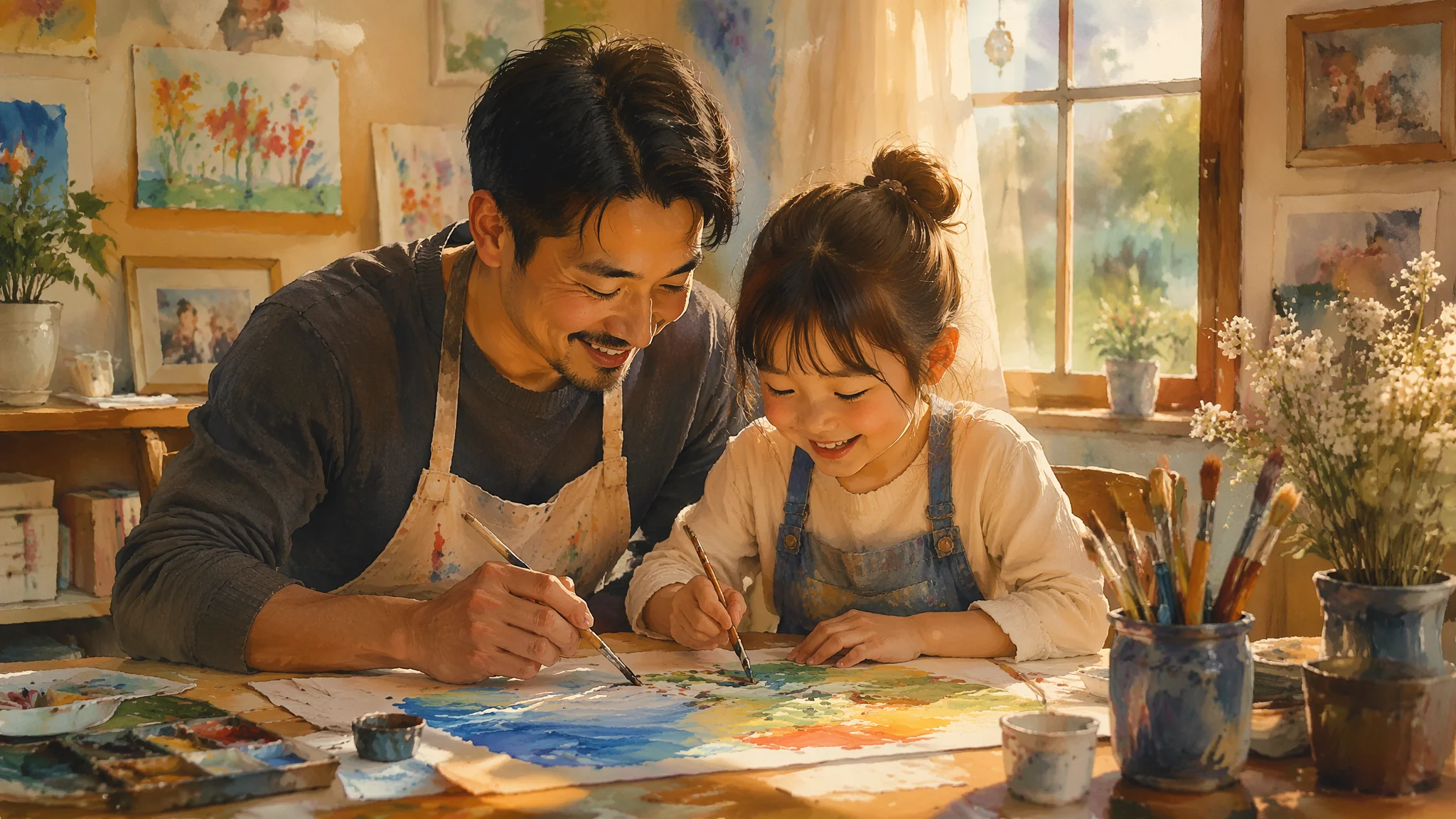
我姐去年生了宝宝,满月的时候我送了份特别的礼物——一组AI画的她和宝宝的"未来相册"。不是拍的照片,是用Prompt画的:有秋天公园里学走路的画面、有厨房里一起揉面团满手面粉的画面、有雨天的窗前读绘本的画面。我姐打开手机看到第三张就开始掉眼泪。AI画带娃场景这件事,技术门槛不算高但情感门槛极高——你画的不是"一个大人和一个小孩"的构图,而是一个母亲或父亲看到之后会觉得"这就是我和我的孩子"的那种真实感。那种真实感靠的不是像素精度——是你能不能在Prompt里捕捉到亲子之间那些不会说出来的小动作、小眼神、小默契。
儿童面部——颠覆成人绘画的逻辑
AI画儿童的第一大坑就是把小孩画成"缩小的成人"——五官结构按照成人比例缩小但逻辑不变,结果就是恐怖谷。儿童面部的核心特征:头部占身体比例约1/4(成人约1/7-1/8),前额更高更突出,眼睛在头部的中间线以下(成人眼睛大约在头高的一半处),鼻梁低、鼻头圆,嘴唇更饱满、人中更短,下颌线圆润不像成人那样分明。
Prompt里的儿童面部描述应该写成:"a child approximately 3 years old, head proportionally larger relative to body, high forehead, large expressive eyes positioned lower on face, small rounded nose with low bridge, full cheeks with baby fat, soft undefined jawline, not a miniature adult, not adult facial proportions on child body"。年龄段要精确——1岁、3岁、7岁的面部结构差异很大,不要泛泛写"child"。儿童面部的更系统分析在AI写实人像绘画教程的年龄特征章节有详细拆解。
亲子互动的七种经典场景——每个都是"记忆锚点"
亲子场景要打动人,必须击中"记忆锚点"——那些几乎所有父母都经历过、看到就会心头一软的瞬间。怀抱入睡:"mother cradling sleeping infant in her arms, soft lamp light from bedside table, quiet midnight nursery, gentle rocking chair silhouette, the exhaustion and peace of new parenthood"。学走路:"father holding toddler's tiny hands as they take wobbly first steps, sunny living room, golden morning light streaming through window, parent looking down with encouragement, milestone moment"。
厨房时光:"parent and child baking together, flour dust floating in sunbeams, messy countertop with cookie cutters, child standing on a step stool, hands covered in dough, uncontrollable giggles, messy and joyful"。雨天窗前:"child pressing hands against rain-streaked window, parent kneeling beside to share the view, cozy indoor warmth contrasting with grey wet outside, quiet bonding moment"。更多亲子场景的关键词在AI生活场景绘画教程中有完整收录。家庭摄影风格的启发可以参考Magnum Photos的家庭题材纪实摄影——大师如何捕捉家庭成员之间的情感流动,这些构图和瞬间可以直接转化为Prompt。Lifestyle摄影方面,LensCulture的家庭摄影专题也提供了丰富的视觉参考。
光线——亲子画面的"情感调色板"
亲子画面的光线选择本质上是情感选择——不同的光对应不同的"温度"。黄金时刻暖光——适合户外快乐场景。"golden hour backlight creating halo around parent and child, warm amber tones, lens flare adding dreamy quality, carefree and joyful"。清晨柔光——适合宁静日常场景。"soft early morning light filtering through sheer curtains, cool pastel tones, peaceful and intimate, the quiet before the day begins"。
台灯点光——适合睡前温馨场景。"single warm bedside lamp as only light source, deep shadows creating cozy cocoon feel, intimate night time atmosphere, the sacred hour of bedtime stories"。阴天散射光——适合沉思或安静场景。"soft diffused overcast light through large window, muted color palette, contemplative and gentle, rainy day indoor activities"。光线不只照亮画面——它定义情绪。亲子场景里我建议首选黄金时刻和台灯光——这两个光最擅长制造"温暖回忆"的质感。
风格化转换——把真实照片变成永恒的插画
把亲子照片用AI转成插画风格是带娃绘画最受欢迎的玩法。儿童绘本风:最安全的选择——"soft watercolor children's book illustration style, gentle pastel colors, delicate ink outlines, whimsical and dreamy, reminiscent of classic storybooks"。宫崎骏风:对亚洲家庭照片适配度极高——"Studio Ghibli animation style, soft painterly backgrounds, warm nostalgic feeling, attention to small everyday details, the beauty of ordinary moments"。
油画风:适合制作打印装框的纪念品——"loose impressionist oil painting style, visible brushstrokes, soft edges, emphasis on light rather than detail, Monet-inspired family scene"。黑白素描风:极简但情感浓度最高——"delicate pencil sketch, charcoal and graphite, soft shading, focus on the emotional connection rather than details, timeless and classic"。风格转换的技术细节在AI绘画风格迁移教程中有完整的img2img参数配置指南。
特殊亲子场景——从新生儿到多孩家庭
不同阶段的亲子关系需要完全不同的画面语言。新生儿期(0-1岁)——焦点在"小"和"脆弱"。"extreme close-up of newborn tiny fingers wrapped around parent's thumb, macro photography, shallow depth of field, the scale contrast between adult and baby, tender and miraculous"。学步期(1-3岁)——焦点在"探索"和"守护"。"toddler exploring a garden path, parent watching from a short distance with protective gaze, letting go while staying close, late afternoon light, bittersweet independence"。
多孩家庭——焦点在"互动"和"热闹"。"two siblings laughing together on a messy playroom floor, toys scattered everywhere, parent in background watching with tired but happy expression, the beautiful chaos of family life"。隔代亲子——祖孙间的情感连接同样动人。"elderly grandfather teaching young child to paint traditional calligraphy, wrinkled hand guiding small hand, afternoon light through paper windows, transmission of culture across generations"。亲子关系在AI中的表现需要特别注意年龄差异——老中小三代人的皮肤质感和身体比例完全不同,Prompt里必须分别描述。
常见问题
AI画出来的小孩看起来像"假人娃娃"怎么破?
塑料感来自三个方向:皮肤太光滑(加subtle baby skin texture, tiny peach fuzz, not airbrushed perfection)、表情太僵硬(加genuine spontaneous child expression, caught mid-laugh, not posed smile)、眼睛没有光(加catchlights in eyes, lively sparkle of curiosity)。三个方向同时改,娃娃感就能消除大半。
画亲子场景时小孩的身体比例总是崩怎么办?
AI对"大人抱着小孩"的空间理解经常出错——小孩的四肢会以奇怪的方式穿插进大人的身体。解法:在Prompt里明确写"child being held securely with clearly separated limbs, correct anatomical proportions for both figures, child's head approximately at parent's shoulder height"。负面Prompt:"merged bodies, fused limbs, incorrect proportions, distorted anatomy"。
亲子画适合做什么商业用途?
亲子AI画在母婴社区、育儿自媒体、亲子写真馆、儿童绘本、家庭教育APP和母婴产品包装上都有大量商业需求。目前最直接的变现方式是定制化亲子插画——客户提供生活照参考,你用AI生成后微调交付。客单价200-500元,复购率高(因为孩子一直在长大)。
带娃绘画这件事做久了,你会发现最打动人的永远不是"多好看"的画面——是"多像我们"的瞬间。那个凌晨三点抱着孩子在房间里踱步的疲惫、那个第一次在厨房里打翻面粉的混乱、那个雨天窗前两个脑袋靠在一起看外面世界的安静——这些画面AI都能画,但前提是你自己经历过、感受过、然后能在Prompt里把那些说不出来的感觉写出来。如果你今天想画第一张亲子作品,建议从"厨房揉面"这个场景开始——面粉飞舞的阳光、孩子踮脚站在凳子上的小脚、大人手上沾满面糊还忍不住拿出手机拍照的瞬间。这个画面里的真实感,AI不会主动给你——你要自己写进去。