清宫AI绘画教程:清朝宫廷风格和古装角色的画法 - FlowPix
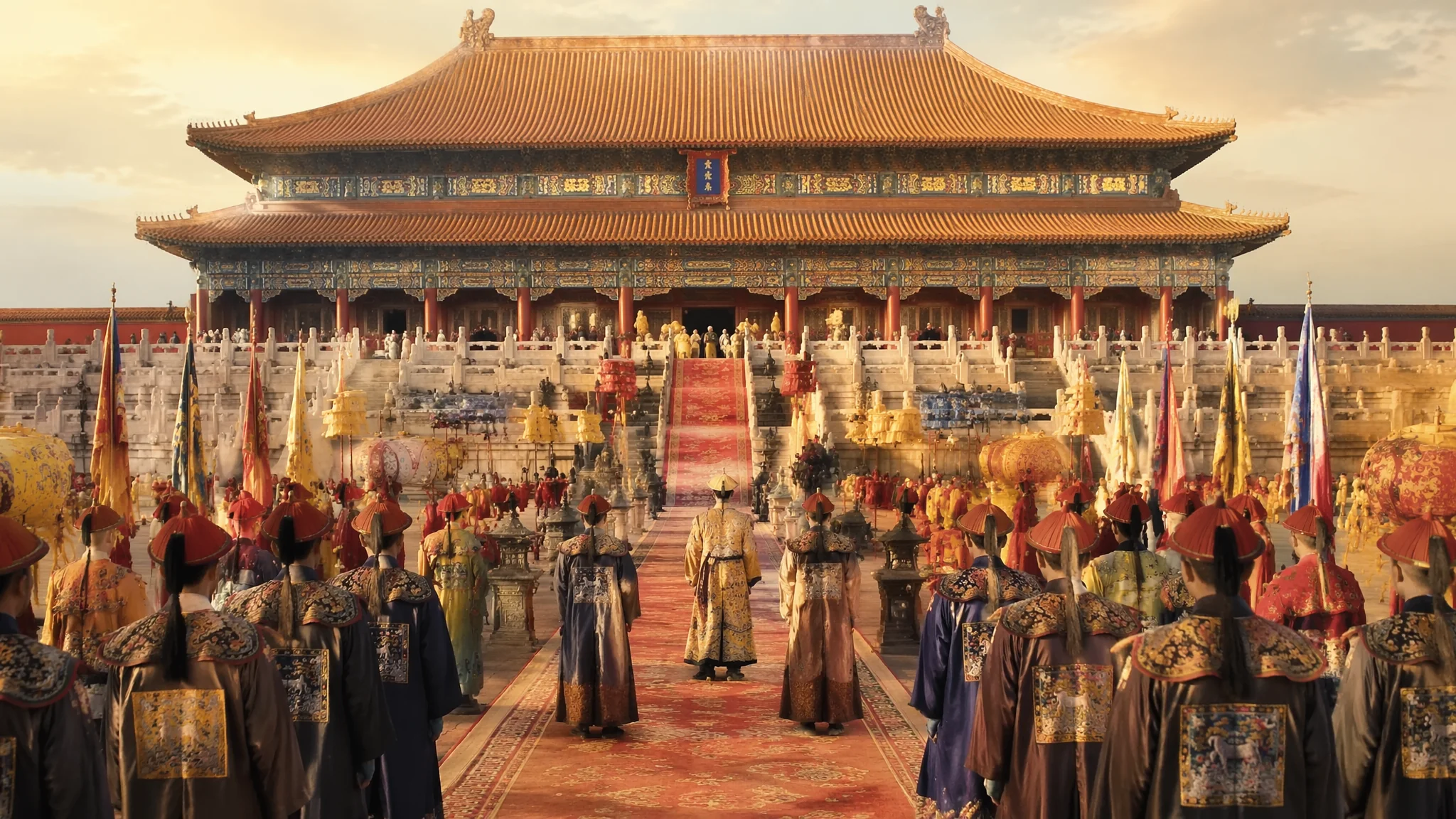
简单说:AI清宫绘画核心是文化锚定+旗装形制+宫廷建筑符号+场景时代元素+光影叙事——旗装后妃traditional Qing dynasty imperial concubine costume+round collar with front opening+wide straight sleeves with horse-hoof cuffs+floor-length robe+three-layered embroidered trim bands+elaborate gold thread embroidery of phoenix and peony+silhouette brocade / 旗头大拉翅elaborate Qing dynasty court lady headdress dalachi+black silk fan-shaped headpiece+kingfisher feather hairpins+dangling pearl tassels / 皇帝龙袍Chinese Qing dynasty emperor dragon robe+bright imperial yellow silk+embroidered five-clawed gold dragons+twelve imperial symbols+wave and mountain pattern at the hem+chaozhu court necklace / 官员朝服mandarin square badge on chest with crane embroidery、宫殿外景Forbidden City palace architecture+golden glazed roof tiles+vermillion red palace walls+white marble balustrades+bronze lion statues / 宫殿内景interior of Qing dynasty imperial hall+polished golden floor bricks+coiled golden dragons+caisson ceiling+cloisonné incense burners / 御花园imperial garden of the Forbidden City+traditional pavilion with double-eaved roof+Taihu scholar rocks+winding covered corridor、光影正剧质感dim candlelit interior+chiaroscuro lighting / 仪式感symmetrical composition+emperor seated on dragon throne at center+soft overhead lighting from palace lanterns / 后宫隐秘感light streaming through carved window lattice creating stripe patterns。清宫参考可以看 故宫博物院官网 的文物档案,Pinterest 搜 Qing dynasty court 也有大量专业作品。
清宫AI绘画教程:清朝宫廷风格和古装角色的画法
前年接了一个历史科普号的插画需求,要画一套清朝后宫生活场景图。甲方是清史专业的,第一张图就给我退了回来——"旗装的滚边宽度是身份标识,你这画成一条线了,看不出品级差"。我当时才知道,清宫题材的门槛比我想的高得多。不是穿个旗袍、戴个旗头就是清宫了,从服装的镶滚道数到头饰的点翠工艺、从地砖的尺寸规制到灯笼的形制等级,处处是坑。
但这件事反而让我觉得清宫是AI绘画里最好玩的题材之一。因为它的规则极其严格——严格到你可以通过精确的Prompt来"驯服"AI的随机性。一旦你掌握了清宫视觉体系的"密码",就能稳定产出有历史厚重感的宫廷画作,而不是那种影楼古装风的廉价感画面。
这篇文章是我在清宫题材上反复翻车之后总结的全套提示词体系。如果你对AI古装绘画感兴趣,建议配合阅读智能绘画AI完全指南建立底层认知,以及AI古装修图教程中的历史服饰还原思路。
清宫服装体系:旗装的Prompt关键词谱系
清宫人物画得对不对,70%看服装。清朝的服饰制度是中国历史上最复杂的之一,几乎每个细节都有等级含义。
后妃旗装:这是清宫题材里出镜率最高的服装。核心元素:圆领对襟、大襟右衽、平直宽袖(有马蹄袖)、袍长及脚面。高级后妃的旗装有三层镶滚(领口、袖口、下摆各镶一道花边),太后级别可以到五层。Prompt:"traditional Qing dynasty imperial concubine costume, round collar with front opening, wide straight sleeves with horse-hoof cuffs, floor-length robe, (three-layered embroidered trim bands on collar and cuffs:1.3), elaborate gold thread embroidery of phoenix and peony patterns, silk brocade fabric, rich imperial colors"。
旗头(大拉翅):清宫剧里那种黑色牌楼状的头饰,正式名称叫"大拉翅",是晚清才出现的形制。搭配头饰的还有两侧的流苏(穗子)和正中的大朵绢花首饰。Prompt:"elaborate Qing dynasty court lady headdress (dalachi), black silk fan-shaped headpiece, decorated with fresh flowers and kingfisher feather hairpins, dangling pearl tassels on both sides, intricate gold filigree ornaments, imperial court hairstyle"。
皇帝龙袍:明黄色底、绣九龙纹(前后各三、两肩各一、内襟一)、十二章纹样、海水江崖纹下摆。Prompt:"Chinese Qing dynasty emperor dragon robe, bright imperial yellow silk, (embroidered five-clawed gold dragons:1.3), twelve imperial symbols ornamentation, wave and mountain pattern at the hem (sea water and river cliff pattern), elaborate cloud collar, jewel-encrusted court necklace (chaozhu), formal court attire"。
官员朝服:胸前的补子(方形刺绣徽章)是区分官阶的核心——文官绣禽(一品仙鹤、二品锦鸡…)、武官绣兽(一品麒麟、二品狮子…)。Prompt里写"mandarin square badge on chest with crane embroidery (civil official rank)"就能锚定到正确的视觉元素。
如果你要做角色系列创作,保持服装一致性是关键,AI卡通绘画教程里介绍的角色LoRA训练思路同样适用于古装角色。
清宫建筑场景:从紫禁城到御花园
清宫建筑有极其鲜明的视觉符号体系,把这些符号写进Prompt,场景质感立刻拉满。
宫殿外景:黄琉璃瓦、红色宫墙、汉白玉栏杆、铜鎏金门钉、朱漆大门。这是清宫建筑最有辨识度的组合。Prompt:"Forbidden City palace architecture, golden glazed roof tiles with upturned eaves, vermillion red palace walls, white marble balustrades with carved dragon motifs, massive red gates with golden door studs, bronze lion statues guarding the entrance, majestic and solemn atmosphere, wide angle architectural photography"。
宫殿内景:金砖墁地(苏州产的特制大砖,敲之有金石声)、盘龙金柱、藻井天花板(斗拱层层出挑的八角形穹顶)、掐丝珐琅香炉、紫檀木家具。Prompt:"interior of Qing dynasty imperial hall, polished golden floor bricks reflecting light, massive red columns with coiled golden dragons, intricate caisson ceiling with layered brackets, cloisonné incense burners on sandalwood tables, silk embroidered screens, warm lantern light, atmospheric and opulent"。
御花园:亭台楼阁、太湖石假山、曲径游廊、古柏老槐。御花园的空间尺度比一般园林更开阔,因为要满足皇家仪仗通行的需求。Prompt:"imperial garden of the Forbidden City, traditional pavilion with double-eaved roof, Taihu scholar rocks arranged as artificial mountain, winding covered corridor with red pillars, ancient cypress trees, peony flower beds in full bloom, afternoon sunlight filtering through leaves, tranquil and elegant"。
一个特别有用的技巧:在建筑场景的Prompt里加上具体的拍摄地点名,比如"Forbidden City Beijing"或"Summer Palace Beijing",AI训练数据里这些地标的图片量很大,能有效提升建筑细节的准确性。
清宫场景的氛围营造:光影、色彩与叙事
光线的运用在清宫题材中决定了一张画的"时代质感"——是历史正片还是古装偶像剧,光说了算。
正剧质感(低调光+暖色温):借鉴《甄嬛传》和《如懿传》的摄影风格——烛光为主光源、面部半明半暗、背景隐入深影。这种光线呈现出一种"窥视感",让观众觉得自己在偷看一段历史。Prompt:"dim candlelit interior, chiaroscuro lighting, half of face illuminated half in shadow, warm amber tones, smoke from incense curling in the air, cinematic composition, historical drama atmosphere, shallow depth of field"。
仪式感(顶光+对称构图):朝会、大婚、册封等场景需要庄重的仪式感。用顶部散射光(模拟殿内天窗或巨大宫灯的照明),画面严格对称构(Throne在正中央,两侧人物对称排列)。Prompt:"symmetrical composition, emperor seated on dragon throne at center, court officials kneeling in two symmetrical rows, soft overhead lighting from palace lanterns, grand ceremonial atmosphere, wide establishing shot, solemn and majestic"。
后宫隐秘感(缝隙光+低饱和度):后宫争斗题材适合用"缝隙光"——光线从门缝、窗棂、屏风间隙中穿过来,在人物脸上留下条形光斑。这种光自带"偷听秘密"的叙事暗示。Prompt:"light streaming through carved window lattice creating stripe patterns across the scene, a palace lady hiding behind a silk screen, tense atmosphere, muted color grading, secretive and dramatic"。
在色彩控制上,建议使用低饱和度+暖色偏移的策略——宫廷场景的色彩如果太鲜艳,容易像舞台布景。可以加"desaturated color grading with warm tonal shift, film-like color science"来做色彩调性控制。
清宫AI绘画的常见翻车与对策
翻车一:旗装配汉服——朝代混搭。AI常常分不清明清两朝的服饰差异,把明朝的披风、比甲和清朝的旗装混在一起。解决:Prompt首句明确写"Qing dynasty (1644-1912), specifically Qing court fashion, NOT Ming dynasty clothing"。在Negative Prompt里加"Ming dynasty hanfu, Tang dynasty clothing"。
翻车二:发型变日式或者韩式。你可能写的是"清宫旗头",AI出来一个日本艺伎的发髻。解决:地域限定词+"Chinese Qing dynasty"去锚定文化背景。Midjourney对"Chinese"的地域识别比较强,SD需要用具体朝代词。
翻车三:男性剃发留辫变成光头。清朝男性是"前额剃光、脑后蓄辫"(金钱鼠尾),AI经常理解成"光头"或者"长发"。解决:给参考图(ControlNet Reference),或者Prompt明确写"(front half of head shaved bald:1.3), (long braided queue hanging from back of head:1.3)"。
翻车四:龙变成西方龙。写"dragon robe"可能出来欧洲喷火龙。解决:"Chinese dragon (long), serpentine body with four claws, NOT Western dragon with wings"。清宫场景可借鉴富豪AI绘画教程中奢华质感的营造技巧。
常见问题
清宫AI绘画和汉服AI绘画在Prompt结构上有什么区别?
核心区别在于"文化锚定点"的选择。汉服题材可以依赖AI训练数据中的"hanfu"标签——这个标签在英文数据集中已经被广泛认知。但"清宫"在英文训练数据中的标注极其混乱,很多清宫图被误标为"hanfu"或"Chinese traditional clothing"。所以清宫Prompt不能只写风格词,必须写具体的形制特征——不是"traditional Chinese dress",而是"Qing dynasty court robe with horse-hoof cuffs and standing collar"。这种"用形制替代风格"的Prompt策略是清宫题材独有的。
哪些AI绘画工具画清宫最好?
Midjourney对中国宫廷题材的理解整体好于Stable Diffusion——可能是因为其训练数据中包含了更多中国影视剧和纪录片的剧照。如果追求极致历史准确性,SD配合专门的清宫LoRA是最佳选择(目前Civitai上已有3-4个清宫服饰LoRA,质量参差不齐需要测试挑选)。DALL·E 3对清宫的理解偏差最大,经常产出"文化混搭"的奇怪结果,不推荐用于严肃清宫题材。
用AI画清宫题材有文化敏感性方面的考量吗?
有,而且很重要。清宫题材涉及到真实的历史朝代和人物,建议不要用AI生成以真实历史人物(如慈禧太后、光绪皇帝)为主体的讽刺性或戏谑性图像。如果是艺术创作和科普用途,在画面中保持对历史文化的尊重态度。另外注意清宫剧中的"宫斗"元素如果涉及暴力场景,相关生成内容可能触碰到部分AI平台的敏感词过滤机制。
清宫题材的AI绘画是一个"门槛高但天花板也高"的垂直方向。因为门槛高——大部分人画不出正确的旗装和建筑,所以会的人就稀缺。因为天花板高——清宫视觉体系极其丰富(从服装到器物到建筑),所以精通之后能持续产出差异化的优质内容。
如果你对清宫历史有真正的兴趣,AI可以成为你"可视化"那段历史的最佳工具。把史料里的文字记载变成画面——那些只在故宫档案里存在过的场景,通过你的Prompt第一次以视觉的形式出现。这件事本身就是一种创作的价值。分享给同样痴迷清宫文化和AI绘画的朋友——一起用Prompt'重建'那段被影像遗漏了的历史。