AI柒文风格绘画:独特个人IP与原创世界观角色的视觉艺术创作
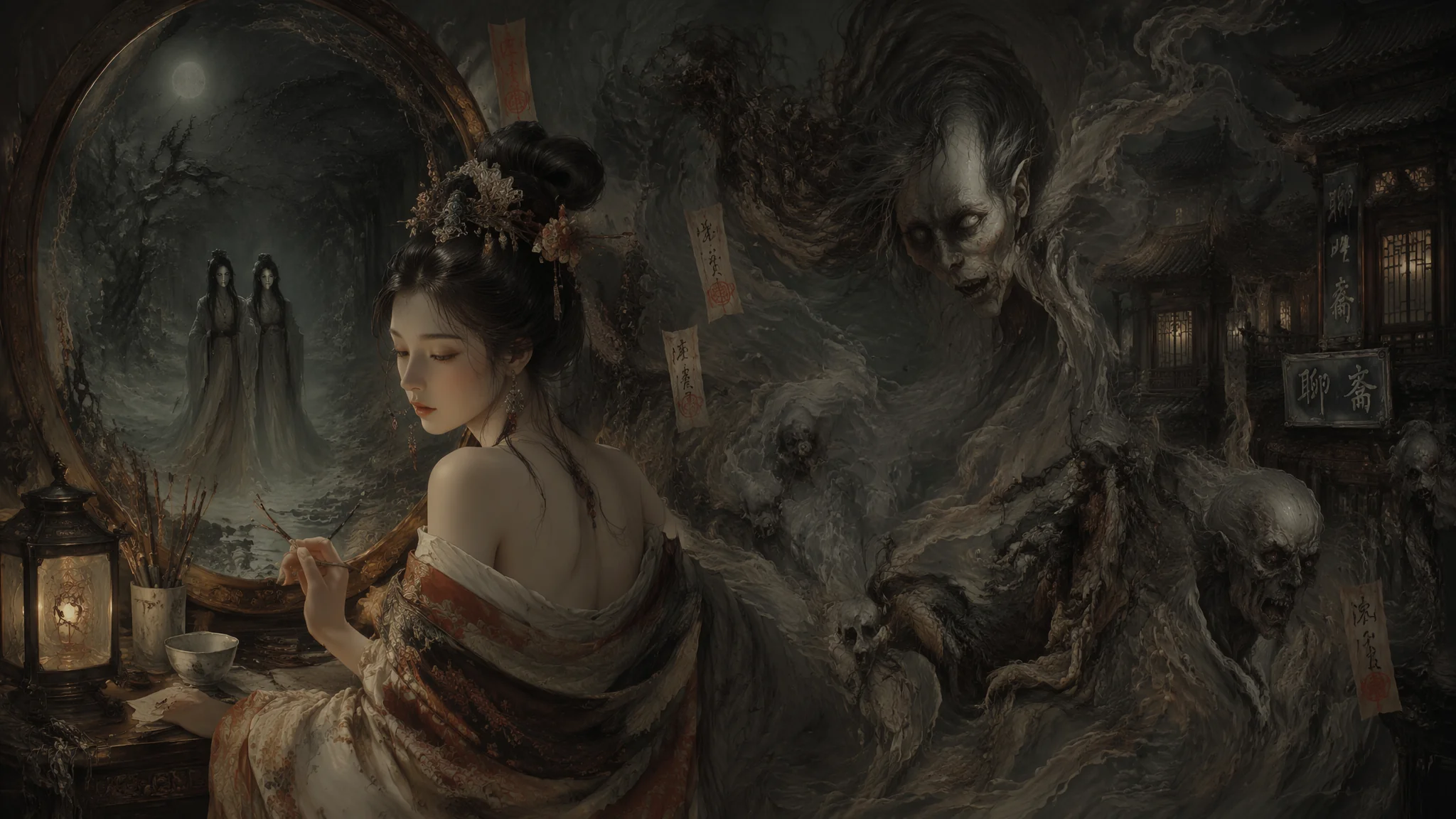
半年前我在B站刷到一个叫"柒文"的UP主——她的视频封面有一种让人看一眼就忘不掉的风格:暗黑的底色上飘着深红色的花瓣,人物的眼神总是看向画面以外的某个地方,像在等人又像在告别。我点进去看了几个视频——她不只是在画画,她是在创造一个"世界"——这个世界有自己的一套视觉语言、一套情感逻辑、一组反复出现的角色和符号。我当时想:我能不能用AI"反向工程"这种个人风格——不是模仿柒文的作品——而是理解她是怎么从零构建一个个人视觉IP的?之后我花了几个月研究"个人风格化AI绘画"这件事——从风格的定义到固化到LoRA训练。这篇把这条路径完整地梳理出来——不管你是想增强自己的个人IP辨识度,还是想帮一个有原创世界观但没有绘画技术的创作者完成视觉化——这套方法都适用。
个人风格的"风格宪法"——不是"你喜欢的颜色"而是一套可执行的规则
大多数人描述自己的风格只会说"我喜欢暗黑风""我偏好唯美""我想要带点中国风"——这些描述AI无法执行——因为"暗黑"对AI来说可能是哥特教堂地窖、也可能是酒吧后巷、也可能是游戏《黑暗之魂》的Boss战——完全取决于训练数据中的概率分布。你必须把风格翻译成一组"如果…那么…"的规则。以色调规则为例——不是"暗黑为主"——而是:"the base tone of every image is dominated by deep charcoal (not pure black——charcoal has a subtle warmth that pure black lacks), approximately 60% of the image area uses this tone as background or shadow areas, the mid-tones are dark crimson (#8B0000 direction) occupying about 25% of the image area——used on fabrics, flowers, and edge highlights, the remaining 15% is reserved for accent colors: a muted antique gold (#B8860B direction) used only on metallic details (jewelry, embroidery, weapon edges) and a pale ivory (#FFFFF0 direction) used only on skin and the brightest highlights"。
光影规则——不是"柔和的光"——而是精确的光源行为:"there is always exactly one dominant light source positioned above and slightly behind the subject at approximately 45 degrees——this creates a rim light effect that separates the character from the dark background, the rim light traces the edges of the hair, shoulders, and flowing fabric, the front of the character is illuminated by very subtle ambient bounce light——just enough to see facial features but not enough to eliminate the mystery of shadow"。构图规则——不是"人物居中"——而是画面重心的精确分布:"the subject occupies the center or slightly off-center (rule of thirds intersection) of the frame, the visual weight of the composition is always pulled slightly downward——through heavy dark fabric at the bottom of the frame, falling petals, or the direction of the subject's gaze, approximately 40% of the frame is negative space (solid dark background or subtle atmospheric texture), the negative space is never empty——it contains very faint details: floating dust particles, distant architectural silhouettes, or barely visible text in an invented script"。关于风格系统的构建逻辑,AI扁平化插画绘画讲过类似的"风格说明书"方法——个人艺术风格和商业设计风格在"系统化"这一点上是共通的。
暗黑唯美风格的色彩密码——不是"黑+红"那么简单
暗黑唯美(Dark Aesthetic)最大的配色陷阱是"黑色饱和到发死+红色鲜艳到刺眼"——看起来像恐怖片海报而不是"唯美"。高级的暗黑唯美配色操作的是"黑色里的颜色"和"红色里的灰度"。黑色不是#000000——是加了5%-10%深蓝或深紫的"有色调的黑"。"the black used in the image is not pure RGB black——it is a chromatic black: 95% black mixed with 5% deep indigo in the shadow areas, 90% black mixed with 10% dark crimson in the areas near warm light sources, this chromatic black has a richness and depth that pure black lacks"。
红色不是#FF0000——是降低了饱和度和明度的"旧红"。"the red used is a desaturated deep crimson with a slight brown undertone——imagine red silk that has aged for a hundred years, the color of dried rose petals, the red of blood that has oxidized on old parchment"。金色不是亮金色——是哑光的古董金。"the gold accents are not bright shiny gold——they are tarnished, matte, warm gold-bronze with dark patina in the crevices, the gold of an artifact excavated from a tomb"。色彩之间的关系——不是"黑背景上放一个红色人物"——而是"红色从黑色的边缘渗出来"。"the crimson bleeds into the black at the edges——there is no sharp line between darkness and color, the transition is a gradual fade like dye spreading through water"。参考ArtStation上暗黑风格的概念艺术家——注意他们的黑色里有什么颜色——你会发现纯黑几乎不存在。
原创世界观的"碎片化叙事"——让一张静态图讲出一个世界的厚度
一个有深度的原创世界观不能靠"画面上写满设定文字"来传达——需要靠"碎片化叙事":画面中散布着让观众自行拼凑的叙事碎片。这些碎片分四种:一,遗留物——"objects left behind that tell their own stories: a single earring on an empty dressing table, a handwritten letter that has been partially burned, tea in a cup that has gone cold with a faint skin of dust on the surface"。
二,未完成状态——"actions frozen in mid-process: a door ajar with a hand just visible pulling it closed from the other side, a brush with wet ink hovering above paper with only half a character written, a candle that has just been blown out with the wisp of smoke still intact"。三,多重时间线索——"elements from different time periods coexisting in one frame suggesting a long and complex history: a character wearing traditional hanfu standing in a room with modernist furniture, ancient calligraphy scrolls hung on a concrete wall with peeling paint, a smartphone lying next to a jade seal on a desk"。四,符号系统——"recurring symbols across images that hint at the world's underlying logic: a specific geometric symbol that appears as a tattoo on one character and carved into the architecture in another scene, a specific flower species that blooms in every important location, numbers or dates that recur in different contexts"。碎片化叙事的核心——不是"把故事讲完"——是"让观众想把这个故事拼完整"。关于系列创作和世界观构建,AI梦女角色绘画从角色设计的角度讲过类似的方法——角色是世界观中的"人",世界观是角色存在的"理由"。
从零训练个人LoRA——让你的风格"长"在AI里
当"风格宪法+锚点Prompt"已经无法满足你对风格控制的需求时——下一步是训练个人LoRA。不是所有人都需要LoRA——但如果你的目标是:一,频繁创作同一风格的大量作品;二,风格非常独特——即使最详细的Prompt也无法稳定复现;三,想节省每次写详细Prompt的时间——那么LoRA值得投入。训练流程简化版:第一步——收集训练集。至少50张风格高度一致的图像(你满意的AI生成图或你自己的作品),所有图必须符合同一套风格宪法。第二步——统一尺寸和格式。所有图裁剪为512×512或768×768的正方形PNG。第三步——打标签。每张图配一个文本文档描述该图的内容(不是风格——因为风格是LoRA要学的,标签应该只描述内容)。
第四步——选择基础模型和训练参数。一般用SD 1.5或SDXL作为基础模型。关键参数:network_dim=32或64(风格复杂的用64),network_alpha=16,learning_rate=0.0001,repeat=10-15。第五步——训练和测试。训练完成后用同一个"内容Prompt"分别在不加载LoRA和加载LoRA的情况下生成图片——对比风格差异。如果LoRA强度太高(加载后所有图都长得一样)——降低训练时的network_dim或推理时的LoRA weight。第六步——迭代。第一版LoRA通常不完美——收集失败案例、分析Lora在哪个风格维度上表现不好、调整训练集(增加或替换图片)后重新训练。LoRA训练的技术细节更新很快——推荐关注Civitai的训练教程板块和本文中提到的风格宪法方法论——两者结合才是完整的个人风格AI化路径。
常见问题
没有绘画基础——"风格宪法"里的那些术语我不懂怎么办?
不需要懂绘画术语——需要懂"观察与翻译"。找20张你认为"这就是我的风格"的图片,对每张图写下你能观察到的内容:"这张图里黑色占了多少面积(大概百分之多少)""红色出现在哪些地方(衣服、花瓣、血迹)""光是从哪个方向来的(左边、上面、后面)""人物的眼睛看哪里(看镜头、看远方、看地面)"。不需要用专业术语——用你自己的语言就行。然后统计20张图的共同点——出现频率最高的共同点就是你的"风格宪法"雏形。AI能理解日常语言——只要你描述的是具体的、可观察的东西。
我想做"柒文风格"——但不想变成"复制别人的风格",怎么找到自己的风格?
"喜欢柒文风格"是一个很好的起点——但终点应该是"柒文风格+你自己的东西"。方法:做一个"风格方程"——你的风格=柒文风格中你最喜欢的元素(选1-2个)+ 其他你喜欢的视觉来源中你最喜欢的元素(比如浮世绘的线条、北欧设计的留白、90年代港片的色调)+ 你的个人经历带来的独特视觉记忆(你童年老家的建筑、你最喜欢的书的封面、你手机相册里拍得最多的颜色)。这个方程的结果是任何人(包括柒文本人)都复制不了的——因为你的个人经历是独一无二的。
AI画的原创世界观角色——版权属于我还是属于AI平台?
当前的行业惯例(以Midjourney和Stable Diffusion为例):你通过AI生成的图像,版权通常归属于你——前提是你对该图像进行了足够的"创造性投入"(写Prompt、选择、修改、后处理)。But: 如果你的风格是通过LoRA训练了某位在世艺术家的作品而得到的——使用该LoRA生成的图像如果与原艺术家的作品"实质性相似"——可能构成侵权。个人IP安全的最佳实践:一,用自己的作品或公共领域作品训练LoRA。二,不训练模仿任何在世艺术家的风格LoRA。三,在风格宪法的层面保持独特性——让"你的风格"无法被追溯到某一单一来源。关于AI绘画版权的更多讨论,美国版权局有关于AI生成作品版权的最新政策——值得持续关注。