AI攀岩运动绘画:悬崖峭壁与极限挑战的动态视觉表现
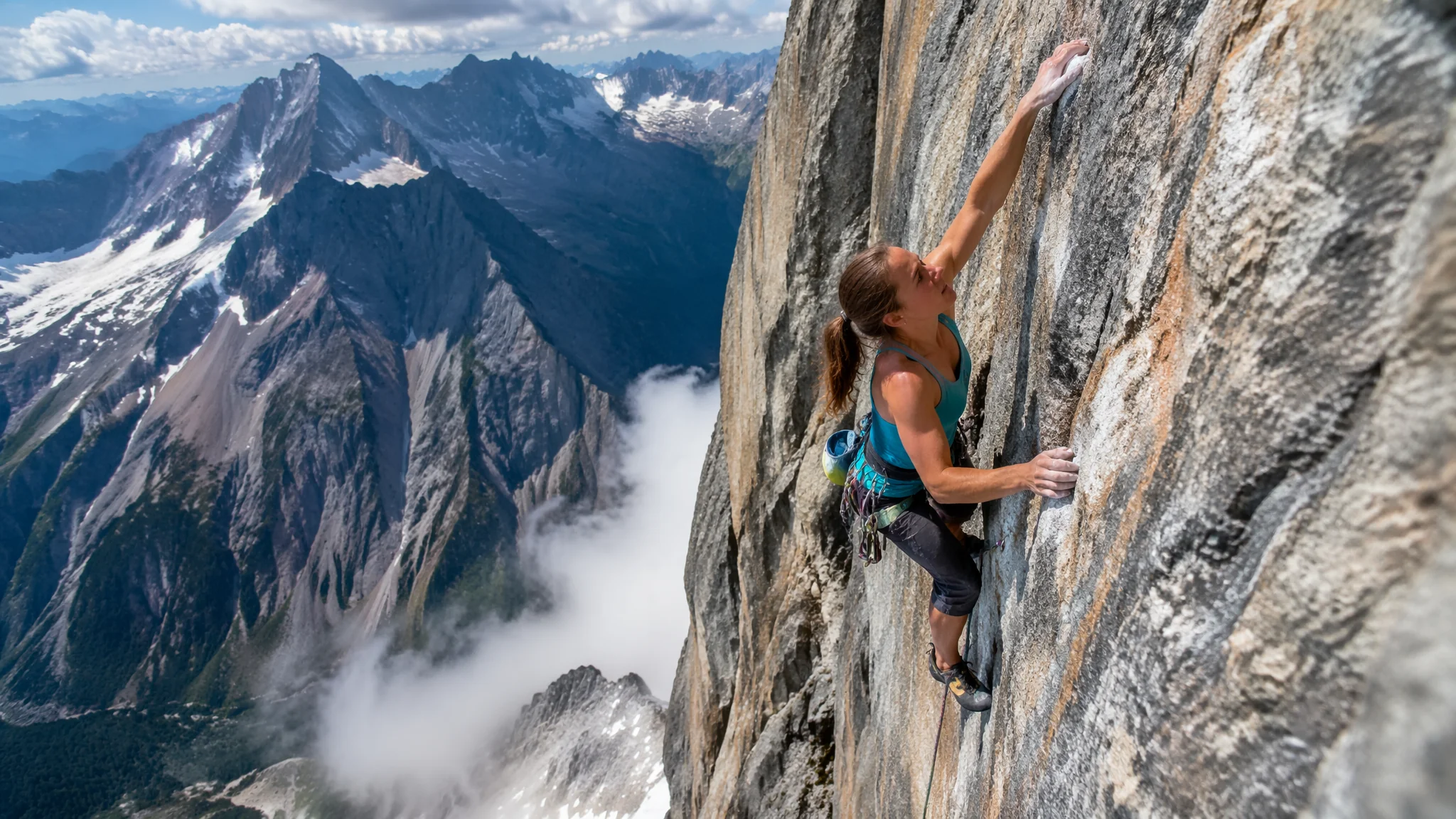
简单说:攀岩是AI运动类绘画里「构图张力最强」的题材。垂直向的天然画幅、岩壁纹理的密集细节、人体在极端姿势下的肌肉拉伸——每一个要素都在挑战AI模型的极限。画好了就是一张不输任何体育杂志封面的作品。
我有个大学室友是攀岩教练,上个月看了我用AI画的几张攀岩图之后,直接拿去印在了他的攀岩馆墙上。他说那些图里有种「真实照片拍不出来的戏剧张力」——AI把岩壁的高度夸大了15%、把攀岩者的肌肉线条锐化了20%,但恰恰是这种「夸张的真实」让画面比现场照片更有冲击力。体育视觉设计的核心不是还原,是煽动。
垂直构图的力学美学:把重力「画」出来
攀岩图的灵魂在垂直方向上的张力。竖构图天然适合攀岩——但竖不是目的,让观众感受到重力才是。「vertical composition emphasizing the sheer cliff face, dramatic perspective from below looking up, feeling of immense height and exposure」。垂直构图配合仰角视角(worm's eye view),会让岩壁显得比实际更高、更压迫。
还有一个摄影师常用的技巧:在画面中放一个微小的参照物——比如岩壁底部一棵树、或者远处地面上的车辆。有了参照物,岩壁的「大」才有了说服力。「tiny trees visible at the base of cliff providing sense of scale, the climber appearing as a small figure against the massive rock face」。这个尺度对比法和AI鲸鱼海洋绘画里用船做参照物的原理完全相同。
岩壁纹理的密度控制:让石头不是一块灰板
AI画岩壁最容易犯的错——把岩石简化成一块光滑的灰色曲面。真实岩壁有裂纹、有层次、有矿物纹理的颜色变化。写:「weathered limestone cliff face with visible horizontal strata lines, rough textured rock surface with deep cracks and crevices, patches of lichen in muted green-grey, chalk dust marks left by previous climbers on handholds」。
岩壁的类型也得明确:花岗岩写「granite rock face with crystalline texture, large crack systems splitting the wall」。砂岩写「sandstone cliff with smooth rounded features and horizontal bands of different red-orange hues」。石灰岩则写「limestone overhang with sharp pockets and tufa formations, steep and technical terrain」。岩石类型的视觉差异在Midjourney上对生成结果的影响极大——泛写「rock」和精确写「limestone」是完全两种画面。地质准确性和AI工业设计绘画里材质指定思维一脉相承。
攀岩者的身体语言:动态姿势的肌肉叙事
攀岩者的身体是「全身肌肉同时高张力」的极限范例。不同攀岩动作需要不同的提示词侧重。动态跳跃抓点(dyno):「climber mid-air leaping from one hold to another, fully extended body, chalk dust exploding from hands, intense focus on face」。静态平衡(slab climbing):「climber in precise balance on a low-angle slab, body pressed close to the rock, tip-toeing on tiny footholds, arms extended for maximum reach」。仰角悬垂(overhang):「climber hanging from an overhanging roof section, core tension visible through clothing, chalked hands gripping a sharp crimp, feet cutting loose from the wall」。
细节提示词:「defined forearm muscles with visible veins from exertion, climbing harness and chalk bag around waist, climbing shoes with distinctive downturned toe profile」。这些装备细节既是专业性的体现,也是画面真实感的关键锚点。运动解剖学级别的身体刻画,在AI写真人像绘画里有更系统的肌肉呈现方法。
高空俯拍和极端视角的视觉冲击
大部分攀岩照片是仰拍,但最好的攀岩视觉往往来自非传统视角。俯拍——「aerial view looking straight down from above the climber, dizzying height perspective, the climber clinging to the vertical wall, distant ground far below partially obscured by clouds」。第一人称——「first person POV looking down at own hands gripping a rock hold, legs dangling over the abyss below, vertigo-inducing perspective」。剪影——「climber silhouette against glowing sunset sky at summit, arms raised in victory, entire valley spread out below in golden light」。
我在Behance上研究过攀岩摄影的获奖作品,发现80%的高分作品使用了非平视角度。AI在极端透视上的表现比中规中矩的视角更出色——可能是因为训练数据里极端视角的照片本身就更容易被标注和记忆。这个构图策略和AI电影风格绘画里的镜头语言完全互通。
常见问题
攀岩者的手和岩点接触画得不自然,像悬浮的?
写「fingers crimping tightly on a sharp rocky edge, chalk dust visible between fingers and rock, skin slightly compressed against the hold」。接触点的物理形变——皮肤被压、粉笔灰被挤——是表现「真实接触」的关键。
岩壁太高画面太空,元素太少?
添加中间层次的细节:半空中的飞鸟、岩缝里长出的松树、远处另一面岩壁上的其他攀岩者。这些元素不仅填充画面,还能增强空间深度感。
怎么表现攀岩的「危险感」而不只是「运动感」?
加高空特有的元素:「rope stretching taut into the void below, small pieces of rock falling and frozen mid-air, the climber's expression a mix of concentration and fear」。危险感藏在细节里——一根绷紧的绳索、一块脱落的碎石。
觉得有用的话分享给朋友吧。